10 Best Brushless Motor Manufacturers Worldwide
brushless motor technology has moved from specialist equipment into electric vehicles, factory automation, medical devices, and everyday appliances. Its appeal is practical: no brushes to wear, precise speed control, and strong performance in compact designs. Yet efficiency depends on the whole system, not the motor alone. The controller, cooling method, and operating load matter too.
The International Energy Agency has estimated that electric motor systems consume about 45% of global electricity. That figure makes motor efficiency more than a component-level concern. Grand View Research valued the global brushless DC motor market at approximately USD 17.6 billion in 2023 and projected a 9.1% compound annual growth rate from 2024 to 2030. Market estimates vary by scope, so treat forecasts as indicators, not guarantees.
R. Krishnan, author of Electric Motor Drives, emphasizes a useful engineering principle: motor selection must account for the drive and control strategy. That point matters when comparing manufacturers. A polished specification sheet may not reveal winding quality, thermal limits, or support after installation. Small details count. A hot motor housing, noisy bearings, or unstable low-speed operation can change the buying decision. This guide examines ten worldwide manufacturers through product capability, application fit, and industry standing. No ranking can replace testing under real operating conditions. That is an imperfect, but necessary, caveat.
What Brushless Motors Are and How They Work
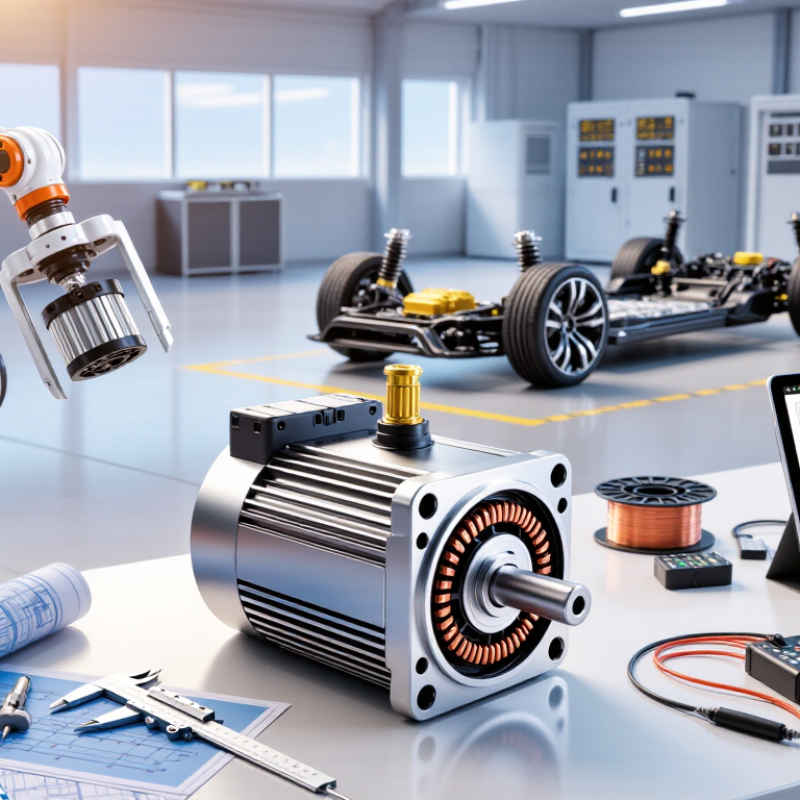
A brushless motor uses a wound stator and a rotor fitted with permanent magnets. Unlike a brushed motor, it has no carbon brushes rubbing against a commutator. No brushes. Less friction. An electronic controller takes over the switching job, directing current through the stator coils in a timed sequence. This changing magnetic field pulls the rotor around and produces torque.
The controller must track rotor position. Some motors use Hall sensors; others estimate position from the electrical signals generated as the rotor moves. In a small fan, this process keeps the blades turning smoothly without visible sparks at the motor. It can also reduce brush wear and maintenance, though it does not make the whole assembly maintenance-free. Bearings can still wear, and heat can shorten component life. One detail is easy to overlook: the controller matters as much as the motor itself. Poor timing may cause noise, heat, or uneven motion. The comparison is not perfectly simple, either; efficiency depends on load, speed, and design. A brushless motor is a useful engineering choice, not an automatic upgrade for every machine.
Brushless Motors: How They Work
In a typical three-phase brushless DC motor, an electronic controller switches current through the stator windings in sequence. This idealized six-step commutation chart shows each phase’s voltage relative to the DC bus voltage across six 60-degree electrical sectors.
During each step, two phases are energized with opposite polarities while the third phase is left floating. The values are normalized: +0.5 and −0.5 represent approximately half the DC bus voltage relative to the motor’s neutral point, and 0 represents the floating phase in this idealized model. Actual waveforms vary with the motor, controller, and operating conditions.
Key Criteria for Evaluating Brushless Motor Manufacturers
When evaluating brushless motor manufacturers, compare measured performance, not just catalogue ratings. Check efficiency at several speeds and torque points, since a motor rarely runs at one ideal condition. The International Energy Agency’s 2011 report, Energy-Efficiency Policy Opportunities for Electric Motor-Driven Systems, estimates motor-driven systems consume about 45% of global electricity. The U.S. Department of Energy’s 2014 motor-systems sourcebook puts their share at roughly 68% of U.S. manufacturing electricity. Efficiency deserves scrutiny.
Ask for test reports showing voltage, load, temperature, and measurement method. Without those details, two efficiency figures may not be comparable. Review torque-speed curves, winding temperature limits, vibration data, and performance after repeated thermal cycles. For compact equipment, request dimensions and mounting tolerances; a few millimeters can force a costly redesign. Bench numbers can mislead.
Quality evidence matters too. Look for documented inspection plans, component traceability, and consistent sampling records. Ask how the supplier handles bearing noise, rotor imbalance, and failed units, then verify responses with field-service data where available. Confirm that samples match production materials and assembly processes. A polished prototype is not proof of repeatable output. Lead times, spare-part availability, and engineering support also affect lifecycle cost. One caution: published data may be incomplete, so validate critical claims with independent testing before committing.
Ten Leading Brushless Motor Manufacturers Worldwide
Ten leading brushless motor manufacturers worldwide are best compared by engineering capability, production consistency, and application support—not by claims alone. A useful shortlist considers motor efficiency, torque density, thermal behavior, noise, and expected service life. These details matter in robotics, electric mobility, medical equipment, and industrial automation. A motor that performs well on a test bench may behave differently inside a compact product with limited cooling.
Manufacturers also differ in customization, testing methods, and delivery capacity. Ask for performance curves, temperature-rise data, and clear operating limits. Check whether the supplier can explain winding choices, bearing options, and controller compatibility in practical terms. Independent test reports and traceable quality procedures offer stronger evidence than broad marketing language. Still, rankings are imperfect; public information can be uneven, and a capable supplier may not publish every technical detail.
Tips: Share your real load, speed range, duty cycle, and available space before requesting a quotation. Compare test conditions carefully. A small mismatch can change the result. Request a sample and measure heat, vibration, and sound in your own assembly. Keep room for revision; early specifications are often incomplete.
Industries and Applications Served by These Manufacturers
Brushless motor manufacturers serve industries where efficiency, precise speed control, and reduced maintenance matter. In factory automation, their motors drive conveyor belts, compact pumps, robotic joints, and machine tools. Engineers often compare torque, operating speed, heat limits, and available mounting options before choosing a motor. A small mismatch can cause vibration or shorten bearing life.
In heating and cooling equipment, brushless motors power fans and compressors, helping systems adjust airflow to changing demand. Electric bicycles, scooters, and other mobility products use them for smooth, responsive propulsion. Medical equipment may rely on compact motors in pumps or imaging mechanisms, where consistent motion and controlled noise are important. Details matter. Even a quiet motor can be unsuitable if it runs too hot inside a sealed enclosure.
Agricultural machinery uses brushless motors in sprayers, ventilation systems, and precision equipment exposed to dust or moisture. Manufacturers may also support aerospace and defense applications, but requirements there demand specialized testing and careful qualification. Not every supplier serves every sector, and published specifications rarely reveal the whole picture. Buyers should ask about environmental testing, service support, and performance under real operating loads; those checks are easy to overlook.
 Skip to content



 English
 Russian
 German
 Spanish
 French
 Portuguese