SUNDI TOOLS
- Copyright © Wuxi Sundi Precision Tools Co.,LTD All rights reserved.
- Site Map
 Skip to content
The 2026 search for the best Chipboard Slotting Machine begins with demand, not machinery brochures. Global corrugated and paperboard packaging continues expanding across food, e-commerce, electronics, and household products. Smithers’ “The Future of Global Corrugated Packaging to 2029” forecasts sustained market growth, driven by recyclable fiber formats and automated production. PMMI reports also identify labor shortages, equipment flexibility, and connected manufacturing as major packaging investment priorities.
These trends make slotting accuracy increasingly important. A modern Chipboard Slotting Machine must produce clean grooves, stable dimensions, and repeatable output. It should also handle different board thicknesses without excessive setup time. Dr. Ron Sasine, a packaging industry consultant and former packaging executive, states, “Packaging decisions should begin with the product, not the machine.” That principle applies directly to slotting equipment selection. Board caliper, folding design, production speed, dust control, and operator skill should guide the purchase.
A global buyer should inspect more than maximum speed. Ask for verified samples, tolerance records, blade-life data, and service response times. Request a factory trial using your actual chipboard. Small details matter, such as edge tearing around a slot or dust collecting near the scoring unit. No ranking fits every plant. That limitation deserves attention. A machine designed for short custom runs may disappoint in continuous production. Conversely, a high-speed model may waste money in a smaller workshop. This guide compares leading 2026 options through measurable performance, ownership cost, safety design, and supplier reliability. Yet specifications can look impressive on paper. Real production evidence remains the stronger test.
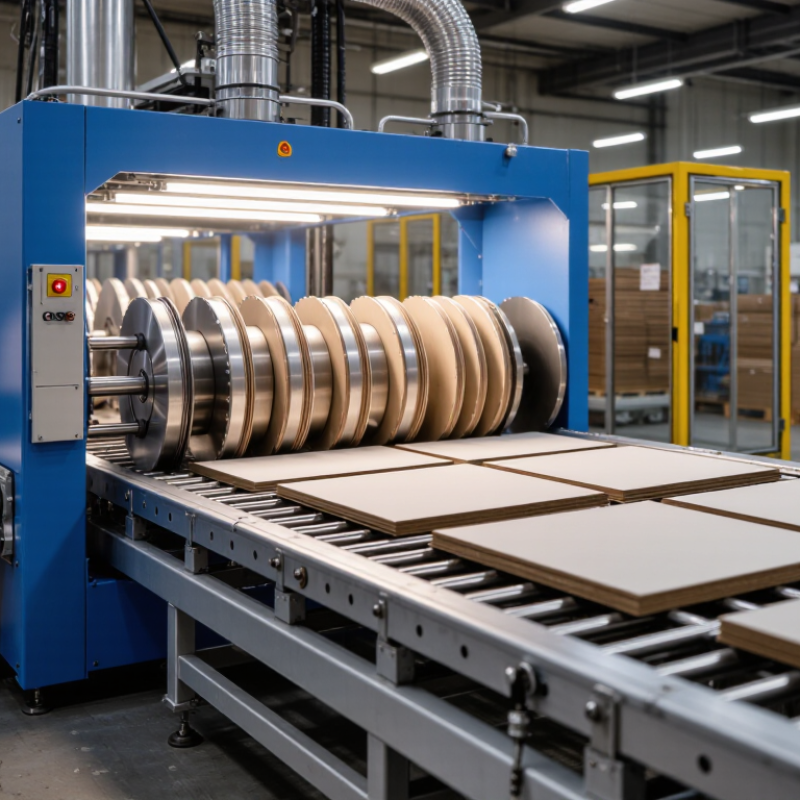
2026 Best Chipboard Slotting Machine for Global Buyers?
Chipboard slotting machines create accurate grooves, channels, and recesses in engineered wood panels. These machines guide a cutting tool along a programmed or fixed path. The slot may hold a back panel, shelf, connector, or decorative insert. In practical production, operators value repeatable depth more than impressive speed. A clean 3-millimeter groove can prevent loose joints and visible assembly gaps. Dust extraction also matters, because chipboard produces fine particles during cutting. Some machines use automatic feeding, while others depend on careful manual positioning. The right choice depends on panel thickness, slot dimensions, production volume, and available workshop space.
Industrial users apply slotting machines in cabinet production, office furniture, shelving, doors, and retail displays. They can reduce marking errors across repeated panels. They also support faster assembly when several parts share identical dimensions. However, machine accuracy can decline when blades become dull or panels vary in density. Real workshops are not laboratories. Small calibration mistakes can become costly batches. Buyers should examine spindle stability, adjustment range, emergency controls, maintenance access, and operator training requirements. Reliable documentation is essential for international installation and daily use.
Tips: Test sample boards before purchase. Measure slot width, depth, edge distance, and dust levels. Ask for service instructions and replacement-tool specifications. Keep a record of calibration checks. A short trial often reveals problems that brochures overlook.
| Data Dimension | Typical Specification or Definition | Function and Industrial Relevance | Buyer Considerations for 2026 |
|---|---|---|---|
| Machine Definition | Industrial equipment designed to cut narrow, controlled slots or grooves in chipboard and similar engineered wood panels. | Creates joints, channels, assembly openings, ventilation paths, and fitting locations without cutting the entire panel. | Confirm that the machine is designed for the required board density, thickness range, slot profile, and production volume. |
| Compatible Materials | Particleboard, melamine-faced chipboard, laminated panels, medium-density fibreboard, and selected plywood grades. | Supports furniture manufacturing, cabinet production, interior fittings, packaging structures, and modular panel assembly. | Verify tool compatibility with coated, laminated, abrasive, or moisture-resistant surfaces before purchase. |
| Typical Board Thickness | Approximately 6–40 mm, depending on machine configuration and cutting-tool design. | Allows processing of thin backing panels, standard furniture boards, shelves, partitions, and structural cabinet components. | Choose a working range that covers both current products and expected future panel sizes. |
| Slot Width | Commonly about 2–20 mm; the achievable range depends on the cutter diameter and tooling system. | Produces narrow grooves for back panels, connectors, dividers, hardware, and interlocking components. | Check whether the machine supports fixed, adjustable, or interchangeable slotting tools. |
| Slot Depth | Typically adjustable from approximately 1–15 mm, subject to board thickness and tooling limitations. | Enables partial-depth grooves for concealed joints while reducing the risk of cutting through the panel. | Look for repeatable depth adjustment, clear scale markings, and automatic depth control where precision is important. |
| Processing Accuracy | Industrial systems commonly target repeatability within approximately ±0.1–0.3 mm under suitable operating conditions. | Improves joint alignment, component interchangeability, cabinet squareness, and finished-product consistency. | Ask for verified accuracy data based on the actual board material, feed speed, cutter, and production environment. |
| Spindle Speed | Often adjustable within roughly 8,000–24,000 revolutions per minute, depending on motor and cutter design. | Higher cutting speeds can improve edge quality when matched with the correct tool, feed rate, and material. | Prioritize variable-speed control and overload protection rather than maximum speed alone. |
| Feed Rate | Approximately 5–30 metres per minute for many automated panel-processing applications. | Determines throughput, surface finish, heat generation, and cutter life during continuous production. | Select a feed range that matches the required daily output and the finish quality of the board surface. |
| Drive System | May use servo motors, stepper motors, pneumatic positioning, or mechanical feed systems. | Controls panel movement, tool positioning, repeatability, and synchronization between cutting operations. | Servo-driven positioning is generally preferable for complex programs and frequent product changes. |
| Control Method | Manual adjustment, digital control panel, programmable controller, or computer numerical control. | Determines how easily operators can set slot position, depth, spacing, speed, and production sequences. | For mixed-batch production, choose recipe storage, parameter backup, diagnostics, and multilingual interface support. |
| Workpiece Positioning | Mechanical stops, clamping fixtures, vacuum tables, or automated loading and positioning systems. | Maintains panel stability and ensures consistent slot location across repeated workpieces. | Vacuum or pneumatic clamping is useful for lightweight panels and high-speed production. |
| Dust Extraction | Usually connected to a central dust collector through one or more extraction ports; airflow requirements vary by design. | Removes wood dust, improves cutting visibility, protects moving parts, and supports safer workplace conditions. | Check extraction-port diameter, required airflow, filter compatibility, and local occupational-safety requirements. |
| Tooling | Carbide-tipped or diamond-tipped cutters, slotting blades, grooving saws, and profile-specific tooling. | Tool selection affects slot width, edge quality, service life, noise, and processing cost. | Confirm tool availability, sharpening options, arbor dimensions, replacement cost, and changeover time. |
| Common Slot Profiles | Straight grooves, shallow channels, concealed slots, edge slots, cross slots, and application-specific profiles. | Supports knock-down furniture joints, rear-panel insertion, divider installation, cable routing, and component assembly. | Request sample testing if the application requires angled, stepped, interrupted, or multi-pass slots. |
| Production Capacity | Ranges from workshop-scale batch production to continuous industrial operation; actual output depends on slot count, panel size, and automation. | Helps manufacturers balance labour requirements, cycle time, product variety, and overall equipment utilization. | Compare complete cycle time rather than advertised cutting speed alone, including loading, clamping, tool changes, and unloading. |
| Automation Level | Manual, semi-automatic, automatic feeding, or integrated production-line configuration. | Reduces handling time and operator variation while improving repeatability in medium- and high-volume operations. | Choose automation according to batch size, labour availability, floor space, and return-on-investment targets. |
| Typical Industrial Uses | Cabinet doors, shelving, wardrobes, office furniture, kitchen units, shopfitting panels, partitions, and modular interiors. | Enables accurate panel joints and repeatable component preparation for flat-pack and assembled products. | Match the machine layout and tooling to the dominant product categories rather than purchasing excessive capacity. |
| Panel Size Capability | Working dimensions vary widely; many systems are configured for furniture panels from small components to full-size sheets. | Determines whether panels can be processed in one setup or require repositioning and multiple operations. | Specify maximum length, width, diagonal movement, support requirements, and allowable panel overhang. |
| Electrical Requirements | Industrial models may require single-phase or three-phase power, commonly within approximately 220–480 V depending on the market. | Ensures compatibility with the facility’s electrical infrastructure and available production capacity. | Confirm voltage, frequency, phase, installed power, protection rating, plug standards, and commissioning requirements. |
| Safety Features | Emergency-stop switches, protective guards, interlocked access panels, overload protection, and safety-rated controls. | Reduces exposure to rotating tools, moving parts, flying debris, and unexpected machine movement. | Check conformity with applicable machinery-safety rules in the destination country and request documented risk assessment information. |
| Noise and Workplace Control | Noise level depends on motor speed, cutter geometry, material, enclosure, and dust-extraction system. | Influences operator comfort, hearing-protection requirements, and suitability for indoor production areas. | Request measured sound-pressure data and evaluate enclosure design, extraction noise, and hearing-protection needs. |
| Maintenance Requirements | Routine cleaning, cutter inspection, lubrication where applicable, dust-system maintenance, alignment checks, and electrical inspection. | Maintains cutting accuracy, reduces unplanned downtime, and extends the service life of mechanical and electrical components. | Prefer accessible service points, clear maintenance schedules, standard replacement parts, and documented troubleshooting procedures. |
| Best Selection Criteria | Material compatibility, slot accuracy, working envelope, tooling flexibility, automation, safety, serviceability, and total ownership cost. | Provides a balanced basis for comparing machines across different production environments and export markets. | Use production samples, total cycle-time analysis, installation requirements, training, warranty terms, and after-sales support in the final evaluation. |


 English
 Russian
  German
  Spanish
  French
  Portuguese