...

2026 Best Crankshaft Bearing Manufacturers for Global Buyers

Selecting the right Crankshaft Bearing manufacturer requires more than comparing catalog prices. Global buyers must examine material quality, machining accuracy, fatigue resistance, and technical support. A bearing may look perfect on a workbench, yet fail after thousands of hot, high-load cycles. Small details matter.

Dr. Bharat Bhushan, a widely cited tribology expert, has stated, “Tribology is the science and engineering of interacting surfaces in relative motion.” This principle explains why crankshaft bearings deserve careful evaluation. Their performance depends on oil-film stability, surface finish, clearance control, and resistance to contamination. These factors become critical in diesel engines, marine power systems, agricultural machinery, and heavy industrial equipment.

This 2026 guide reviews leading Crankshaft Bearing manufacturers for international buyers. It considers production capability, quality systems, bearing materials, customization, delivery reliability, and after-sales engineering. Certifications can support trust, but they cannot replace verified testing. That is easy to overlook.

Factory audits, sample inspections, and dimensional reports provide stronger evidence. Buyers should also ask how manufacturers manage copper-lead alloys, aluminum overlays, coating adhesion, and batch traceability. Some suppliers communicate well before the order, then respond slowly after installation. That weakness deserves attention.

No ranking can fit every engine. A high-volume automotive producer may not suit a low-speed marine application. This guide therefore combines technical evidence with practical purchasing experience, while acknowledging that supplier data may change. Careful judgment remains necessary.
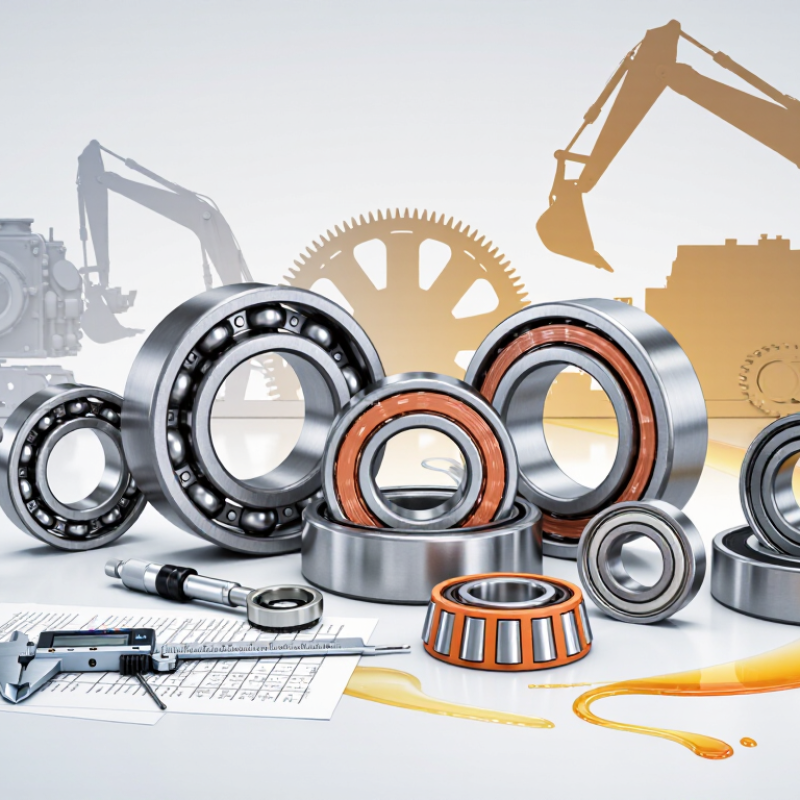
2026 Best Crankshaft Bearing Manufacturers for Global Buyers

Crankshaft Bearing Manufacturing Standards and Product Types

Crankshaft bearing manufacturers should follow controlled standards for material quality, dimensional accuracy, and production traceability. ISO 9001-based quality systems support consistent processes, but certification alone does not guarantee reliable bearings. Buyers should also review material specifications, batch records, and inspection methods.

Common products include bi-metal bearings, tri-metal bearings, flanged bearings, thrust washers, and polymer-coated shells.

Bi-metal designs often suit moderate loads and cost-sensitive applications. Tri-metal bearings provide stronger fatigue resistance under higher loads.

Flanged bearings control crankshaft movement, while thrust washers manage axial force. Coated bearings can improve protection during poor lubrication or repeated starts.

Important checks include bore diameter, wall thickness, oil-hole position, surface roughness, and crush height.

Oil clearance must match the engine maker’s technical requirements. Too little clearance can cause seizure. Too much may reduce oil pressure.

Testing may include hardness checks, bonding inspection, fatigue testing, and simulated lubrication trials. The details matter.

Global buyers should request sample reports before approving large orders. A clean-looking report may still hide weak sampling practices. This is an area worth questioning.

Manufacturing tolerance charts should match actual inspection equipment and calibration records.

Packaging also deserves attention, because damaged bearing edges can create installation problems.

No single bearing type fits every engine, load condition, or maintenance schedule. Careful application matching remains essential.


Key Criteria for Evaluating Global Bearing Manufacturers

Global buyers should evaluate crankshaft bearing manufacturers through evidence, not polished presentations.

OICA’s 2024 Production Statistics recorded approximately 92.5 million motor vehicles worldwide. That scale demands stable capacity, repeatable metallurgy, and dependable export planning.

Request monthly output data, equipment lists, and documented backup capacity. A factory tour should show clean storage, calibrated gauges, and controlled plating areas.

Material quality deserves close inspection.

Ask for certificates covering alloy composition, hardness, bonding strength, and surface finish. Review process capability records, especially Cpk results for thickness and oil-groove dimensions. Independent fatigue and wear testing can reveal weaknesses missed by final inspection. IATF 16949 certification is useful evidence of automotive process discipline, but certification alone proves little. Audit the actual production line.

Market change adds another filter.

The International Energy Agency’s Global EV Outlook 2025 reported over 17 million electric car sales in 2024. Hybrid and combustion platforms will still require bearings, but demand planning may become less predictable.

Manufacturers should explain how they manage mixed-volume programs, tooling changes, and obsolete inventory. Traceability must reach the heat, coating batch, and inspection record.

One uncomfortable lesson remains: a low quotation can hide expensive downtime. Delivery history, corrective-action speed, and technical communication often matter more than a small unit-price difference. Perfect suppliers do not exist. Evidence should be current.

Leading Crankshaft Bearing Manufacturers in 2026

Leading Crankshaft Bearing Manufacturers in 2026 are defined by more than production volume. Global buyers now examine material control, machining accuracy, testing depth, and after-sales engineering support. Reliable manufacturers typically produce bearings with steel-backed, aluminum, or tri-metal structures. Each design must match the engine’s load, speed, oil temperature, and housing condition.

Experienced manufacturers measure wall thickness, crush height, oil grooves, and surface finish during production. They also check bearing clearance with calibrated micrometers and controlled assembly methods. In practical inspections, a difference of only a few microns can affect oil pressure and crankshaft wear. Strong suppliers maintain batch records, sample retention, and traceable inspection reports. This evidence matters when buyers compare factories across different regions.

Testing should reflect real operating stress, not only laboratory appearance. Leading facilities use fatigue testing, heat cycling, dimensional checks, and material bonding analysis. Some manufacturers provide engineering support for unusual loads or older engine platforms. That service can prevent costly fitting mistakes. However, no manufacturer is perfect. Catalog data may not reflect every operating environment, and buyers still need independent verification. I would request samples, drawings, tolerance data, and recent quality records before approving a large order. Small details matter. A clean bearing surface, accurate oil-hole position, and consistent packaging often reveal the discipline behind the factory.

How to read this chart: The values show common engineering reference ranges for crankshaft bearing selection and inspection. Actual specifications vary by engine design, bearing material, load, lubricant, and OEM service requirements. Global buyers should verify final dimensions against the applicable engine manufacturer’s service data.

Comparing Quality, Technology, Capacity, and Export Support

For global buyers, crankshaft bearing selection should begin with measurable quality, not attractive brochures. OICA recorded 93.5 million motor vehicles produced in 2023, sustaining demand for dependable engine components. Grand View Research valued the global automotive bearing market at approximately USD 31.4 billion in 2023, with continued growth expected through 2030. These figures reward manufacturers with stable processes and scalable capacity.

Quality evidence should include material certificates, dimensional reports, fatigue testing, and traceable batch records. Buyers should request bearing clearance data, overlay thickness, surface roughness, and oil-groove inspection results. ISO 9001 certification helps, but it does not replace factory audits. Not even close. Advanced suppliers use automated vision systems, coordinate-measuring machines, and statistical process control. A reported Cpk above 1.33 is useful, although sampling methods must be examined carefully.

Technology must support production, not merely impress visitors. Capacity should include monthly output, backup tooling, heat-treatment control, and realistic lead times. Export support also matters. Strong suppliers provide multilingual technical files, PPAP-style documentation, packaging tests, HS classification assistance, and clear Incoterms. The World Bank’s 2023 Logistics Performance Index shows how customs, tracking, and delivery reliability influence international purchasing. Some factories still underestimate after-sales communication. That weakness deserves scrutiny. A supplier may produce excellent shells, yet fail when replacement batches, port delays, or field reports require quick decisions.

2026 Best Crankshaft Bearing Manufacturers for Global Buyers - Comparing Quality, Technology, Capacity, and Export Support

Anonymous Manufacturer Profile Primary Market Position Bearing Materials Manufacturing Technology Typical Dimensional Tolerance Indicative Annual Capacity Quality Systems to Request Testing and Traceability Export Support Best Fit for Buyers
Profile A — OE-Level Integrated Producer Original-equipment and major engine-program supply Steel-backed aluminum, copper-lead, and tri-metal constructions; polymer-coated options may be available Automated stamping, precision forming, controlled plating, CNC machining, and in-line dimensional inspection Often controlled to approximately ±0.01–0.03 mm, subject to drawing and engine specification More than 10 million bearing shells per year ISO 9001; IATF 16949 where automotive production applies; customer-specific process audits Material certificates, coating-thickness checks, hardness testing, profile measurement, batch traceability, and PPAP documentation Multi-language technical files, export packing, container planning, Incoterms support, and structured claims handling High-volume automotive and engine-platform programs
Profile B — Advanced Aftermarket Specialist Replacement parts for passenger cars, commercial vehicles, and light trucks Aluminum-based and tri-metal bearing families with standard and high-performance grades Progressive stamping, precision boring, controlled surface finishing, and automated optical inspection Commonly around ±0.02–0.05 mm, depending on part size and product class Approximately 3–10 million bearing shells per year ISO 9001; documented incoming-material control; application-specific quality plans Lot identification, dimensional reports, surface inspection, random destructive testing, and retained samples Catalog matching, mixed-SKU orders, private-label packaging, barcode support, and routine export documentation Distributors requiring broad coverage and stable replenishment
Profile C — Precision Performance Producer Motorsport, rebuilt engines, high-load diesel, and performance applications High-strength tri-metal, copper-lead, overlay-coated, and grooved performance designs Specialized alloy control, precision coating, selective grooving, micro-polishing, and application engineering Often specified near ±0.01–0.03 mm for critical dimensions Approximately 0.5–3 million bearing shells per year ISO 9001 or equivalent; documented metallurgical controls; engineering change management Alloy analysis, bond-strength testing, overlay-thickness measurement, fatigue testing, and application-specific validation Engineering consultation, prototype quantities, custom packaging, technical drawings, and small-batch air freight Specialized rebuilders and low-to-medium-volume performance buyers
Profile D — High-Volume Commercial Vehicle Supplier Heavy-duty trucks, buses, agricultural machinery, and industrial engines Heavy-duty aluminum and tri-metal structures designed for high-load and extended-service applications High-strength backing, controlled wall thickness, precision oil-hole production, and automated batch inspection Generally around ±0.02–0.05 mm, depending on engine design requirements Approximately 5–20 million bearing shells per year ISO 9001; IATF 16949 where applicable; process capability monitoring and endurance validation Load testing, fatigue testing, hardness checks, oil-hole verification, batch records, and corrective-action reports Palletized export packing, long-term supply planning, container-load optimization, and warranty support Fleet programs, machinery distributors, and service networks
Profile E — Flexible Custom-Order Manufacturer Low-to-medium-volume replacement, obsolete, and custom applications Standard aluminum and tri-metal materials, with selected custom alloy or coating options Flexible tooling, CNC-assisted forming, manual engineering review, and inspection by production lot Typically around ±0.03–0.08 mm unless a tighter drawing is agreed Below 3 million bearing shells per year ISO 9001 preferred; documented inspection procedures; customer drawing approval before production First-article inspection, drawing-based dimensional reports, material declarations, and lot-level identification Low minimum order quantities, mixed cartons, sample approval, export labeling, and courier shipment options Specialty importers, repair shops, and obsolete-engine applications
Buyer qualification note: Capacity, tolerances, certifications, materials, and export services are indicative market benchmarks rather than claims about any named company. Confirm the latest drawing, engine application, material certificate, inspection report, warranty terms, minimum order quantity, and Incoterms before placing an order.
Recommended comparison priorities: Application compatibility, bearing material and overlay design, fatigue resistance, dimensional consistency, traceability, quality-system evidence, lead time, minimum order quantity, packaging protection, and after-sales response.

How Global Buyers Can Select and Purchase the Right Supplier

2026 Best Crankshaft Bearing Manufacturers for Global Buyers

How Global Buyers Can Select and Purchase the Right Supplier

Choosing a crankshaft bearing supplier requires more than comparing unit prices. Experienced buyers inspect alloy composition, wall thickness, oil groove design, and dimensional tolerances. Ask for material certificates, production records, and recent fatigue-test results. A reliable manufacturer should explain its testing process clearly, not hide behind attractive brochures. Request samples from the same production line used for bulk orders. Small differences can affect engine life.

Supplier evaluation also includes purchasing details. Confirm minimum order quantities, lead times, packaging methods, and replacement procedures before signing an agreement. Check whether the supplier can maintain consistent quality across different sizes and engine applications. Independent pre-shipment inspections may add cost, but they can prevent expensive returns. I have found that written specifications reduce misunderstandings, although they never remove every risk. No checklist catches everything.

Tips: Compare at least three qualified suppliers. Ask for traceability from raw material to final inspection. Use a sample approval document with exact measurements and acceptance limits. Discuss corrosion protection for long-distance transport, especially in humid routes. Confirm communication response times and technical support after delivery. A lower quotation may reflect thinner testing, weaker packaging, or uncertain tolerances. Review the details twice. Then decide based on verified performance, not promises.

en_USEnglish

PCD Inserts

PCBN Inserts

Solid CBN Inserts

PCD Milling Cutter

PCD Drilling Tools

PCD Reamer

Diamond Special Tool

Diamond Dressers