...

2026 Top Heavy Duty Chipper Shredder Types for Global Buyers

Global buyers are entering 2026 with more biomass, forestry, and land-clearing projects to evaluate. The FAO’s Global Forest Resources Assessment 2020 reports that forests cover about 4.06 billion hectares, or 31% of global land area. That scale creates steady demand for dependable processing equipment. Yet purchasing a Heavy Duty Chipper Shredder is not simply a horsepower decision.

Feedstock changes everything. Fresh softwood, dense hardwood, bamboo, storm debris, and dry construction timber behave differently inside the cutting chamber. The IEA’s Renewables 2024 report also identifies bioenergy as a significant renewable energy source, while stressing that sustainable supply chains and efficient conversion remain essential. Buyers must therefore compare drum, disc, horizontal, and mobile configurations against actual material flows.

Dr. R. Bruce Rummer, a respected forest operations researcher, has emphasized a practical rule: “Match the machine to the material, site, and operator.” That advice remains easy to overlook. A large engine may impress during a factory demonstration, but it cannot compensate for poor access, unsuitable screens, or weak after-sales support. Real-world productivity also depends on knife design, discharge control, dust management, fuel use, and operator training.

This guide examines the leading Heavy Duty Chipper Shredder types for 2026. It considers capacity, mobility, maintenance, feedstock tolerance, and ownership risk. Some specifications look precise. Field conditions are not. A careful buyer should treat published throughput as a reference, not a promise, and request evidence from comparable operating environments.

2026 Top Heavy Duty Chipper Shredder Types for Global Buyers

Heavy-Duty Chipper Shredder Basics and Core Processing Functions

Heavy-duty chipper shredders reduce branches, logs, and green waste into manageable material. Their core functions include feeding, cutting, shredding, sizing, and discharge. A chipper usually produces more uniform wood chips. A shredder handles mixed, softer materials more aggressively. Some machines combine both actions.

The feeding system controls productivity and operator safety. Hydraulic rollers pull material toward rotating knives or hammers. A disc cutter suits clean branches and timber. A drum design can process varied diameters efficiently.

Screens help control the final particle size. Discharge conveyors then move chips into trucks, containers, or storage areas. Dust control matters in dry operating conditions.

In practical equipment assessments, feedstock causes many performance differences. Wet vines, hard timber, and sandy roots demand different settings. Buyers should examine rotor balance, knife access, bearing protection, and emergency stops. Power supply and transport limits also require careful checking. No machine performs perfectly in every material. A specification sheet may look convincing, yet real feed trials can reveal feeding jams or uneven output. Keep maintenance records. Small delays often become expensive downtime.

Main Machine Types for Different Materials and Workloads

Heavy duty chipper shredders differ mainly in cutting design, feed opening, and material tolerance. Disc chippers suit straight branches and logs, producing relatively uniform chips for biomass, mulch, or board production. Drum chippers handle mixed branch sizes efficiently and often maintain steady output during long shifts. Their knives still require regular inspection.

For green waste, a horizontal grinder usually performs better than a narrow chipper. It can process brush, leaves, roots, and uneven yard debris through a wide chamber. Tub grinders accept bulky piles and irregular feedstock, but they need generous working space and careful material feeding. Wet material may reduce throughput and increase screen blockage.

Pallets, clean timber, and construction offcuts require a shredder with reinforced cutting tools and strong hydraulic feeding. Contaminated wood is a different challenge. Stones, metal, and soil can damage knives, rotors, and screens within minutes. Operators should verify the feedstock before selecting machine power. A larger engine alone will not solve poor material preparation.

Workload also changes the best choice. A contractor moving between sites may value transportability and fast setup. A recycling yard may prioritize continuous feeding, dust control, and easy screen changes. Measure expected tons per hour, not only peak capacity. Real output is often lower than catalogue figures. That gap deserves honest planning.

Power Systems, Cutting Mechanisms, and Capacity Ratings

2026 Top Heavy Duty Chipper Shredder Types for Global Buyers

Power Systems, Cutting Mechanisms, and Capacity Ratings

Heavy-duty chipper shredders differ mainly by power system, cutter design, and rated throughput. Diesel systems suit remote forestry sites, while electric drives offer quieter operation near processing yards. Hybrid systems remain less common but can reduce fuel use during variable workloads. The U.S. Energy Information Administration reported that bioenergy supplied about 5% of total U.S. renewable energy consumption in 2023, supporting continued demand for dependable biomass preparation equipment.

Capacity ratings need careful reading. Some manufacturers list loose cubic metres per hour, while others use tonnes per hour. These figures are not directly comparable. The FAO Global Forest Resources Assessment 2020 recorded about 4.06 billion hectares of global forest area, but feedstock density varies sharply by region and species. A machine rated at 30 tonnes per hour may perform far below that level with wet, stringy branches.

Cutting mechanisms also shape output quality. Disc cutters produce consistent chips, while drum cutters often handle irregular branches more smoothly. Hammer systems are better suited to secondary shredding and mixed green waste. Practical buyers should inspect feed opening size, hydraulic-feed torque, knife access, and screen configuration. Small details matter. Moisture changes everything. The USDA Forest Products Laboratory notes that wood density and moisture content strongly influence handling and energy requirements. Published ratings are useful, but field trials remain essential; even experienced operators can overestimate real-world throughput.

2026 Top Heavy-Duty Chipper Shredder Types for Global Buyers

Representative heavy-duty equipment ratings by power system, cutting mechanism, and processing capacity. Values reflect typical commercial specifications and may vary by configuration, material, and operating conditions.

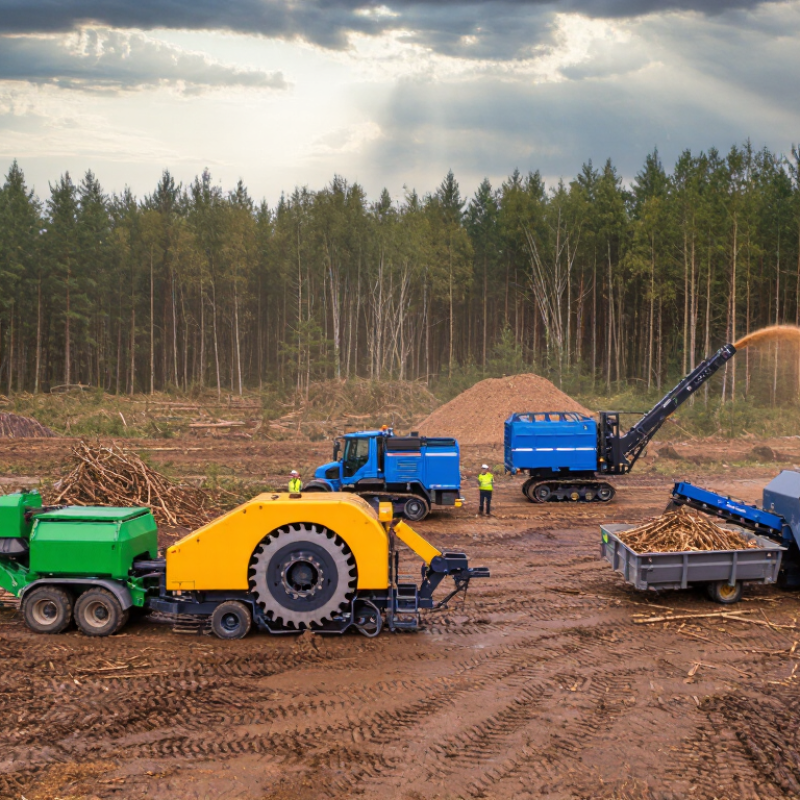
Towable drum machines provide a balance of mobility and output, tracked units suit difficult terrain, PTO-driven models depend on tractor capacity, and horizontal grinders deliver the highest throughput for large-diameter material.

Safety, Mobility, Maintenance, and Environmental Requirements

Global buyers should judge heavy-duty chipper shredders beyond engine power. Safety starts at the feed table, discharge chute, and emergency controls. OSHA guidance emphasizes guarding, lockout procedures, and training for caught-in hazards. A practical machine should provide a visible emergency stop, reverse-feed control, and a clear exclusion zone around the hopper. Operators need eye, hearing, hand, and foot protection. Small shortcuts become serious risks.

Mobility also affects daily productivity. Large pneumatic tires, balanced weight distribution, and a reliable tow system help crews move between uneven work areas. However, excessive weight can damage soft ground and increase transport costs. Buyers should check axle ratings, braking requirements, turning clearance, and actual operating weight. A compact design is not automatically safer.

Maintenance planning should include accessible knives, replaceable screens, protected bearings, and simple belt inspection. The U.S. Department of Energy’s Operations and Maintenance Best Practices report notes that preventive maintenance can reduce downtime and improve equipment reliability, although results vary by operating conditions. Environmental selection deserves equal attention. FAO’s Global Forest Resources Assessment 2020 reported 4.06 billion hectares of global forest area and an average annual forest loss of 4.7 million hectares from 2010 to 2020. Chipped material should be reused locally when possible, while invasive seeds and contaminated waste require controlled handling. Low-emission engines, dust suppression, and measured fuel use matter. Tier compliance alone is not enough. Field habits still decide the real impact.

2026 Top Heavy Duty Chipper Shredder Types for Global Buyers - Safety, Mobility, Maintenance, and Environmental Requirements
Equipment Type Typical Feed Capacity Typical Power Range Typical Throughput Mobility and Site Suitability Key Safety Requirements Maintenance Priorities Environmental Requirements
Tow-Behind Drum Chipper Shredder Branches and woody material up to approximately 150–300 mm in diameter, depending on rotor design and feed system. Approximately 25–75 hp diesel or petrol engine. About 1–5 tonnes per hour, depending on material moisture, feed size, operator loading, and screen configuration.
  • Road-towable when equipped with compliant axle, brakes, lighting, coupling, and safety chains.
  • Suitable for municipal parks, roadside work, landscaping, and distributed job sites.
  • Requires firm ground and adequate turning space.
  • Emergency-stop controls accessible from the feed position.
  • Feed-table guarding and a compliant operator exclusion zone.
  • Interlocked access doors and protected belts, shafts, and rotating parts.
  • Hearing, eye, hand, foot, and high-visibility protection for operators.
  • Inspect knives, counter-knives, anvil clearances, belts, bearings, and fasteners daily.
  • Sharpen or replace cutting tools when production quality and fuel consumption deteriorate.
  • Grease bearings according to the service manual and check trailer tires and brakes.
  • Use an engine emissions configuration accepted in the destination market.
  • Control dust and debris with suitable discharge direction, covers, or misting where permitted.
  • Manage noise near residences and comply with local transport and exhaust rules.
PTO Tractor-Mounted Chipper Shredder Approximately 200–450 mm for common heavy-duty configurations; actual capacity depends on tractor power and rotor size. Approximately 50–150 PTO hp. About 3–15 tonnes per hour under suitable feeding conditions.
  • Uses an existing agricultural tractor and is suitable for farms, forestry operations, and large estates.
  • High mobility across unpaved terrain, but total combination weight must remain within tractor and road limits.
  • Requires a compatible three-point hitch, PTO speed, hydraulic system, and ballast arrangement.
  • Fully guarded PTO shaft with correctly fitted restraining chains.
  • Shielding around the flywheel, belts, hydraulic components, and feed rollers.
  • Lockout and isolation before clearing jams or servicing the machine.
  • Operator training for tractor stability, reversing, slope operation, and material handling.
  • Check PTO shaft alignment, guards, universal joints, hydraulic hoses, knives, and anvil daily.
  • Inspect hitch pins and attachment points for wear and cracking.
  • Maintain the tractor separately, including PTO clutch, cooling system, filters, and brakes.
  • Lower local emissions may be possible when powered by an existing compliant tractor, but total fuel use still depends on tractor load.
  • Use low-leak hydraulic connections and collect oils and filters for approved disposal.
  • Limit operation near sensitive receptors during high-noise periods.
Tracked Self-Propelled Chipper Shredder Approximately 200–500 mm, with larger forestry configurations available. Approximately 75–275 hp diesel engine. About 4–20 tonnes per hour, depending on feed opening, wood density, and material preparation.
  • Low-ground-pressure tracks improve access on slopes, soft ground, and forestry sites.
  • Can be repositioned without a separate towing vehicle at the work site.
  • Road transport usually requires a trailer or other approved transport arrangement.
  • Remote or clearly accessible emergency stops around the machine.
  • Audible and visual warnings for track movement, reversing, and discharge hazards.
  • Guarding and interlocks for feed rollers, rotor housing, conveyors, and access panels.
  • Stability assessment before operation on slopes, banks, or uneven ground.
  • Inspect track tension, rollers, sprockets, undercarriage, hydraulic lines, and cooling screens.
  • Remove accumulated chips from hot surfaces and engine compartments.
  • Check knives, counter-knives, feed rollers, conveyor belts, and automatic lubrication systems.
  • Specify an engine certification suitable for the country of use and applicable off-road regulations.
  • Use dust suppression or controlled discharge where dry feedstock creates airborne particles.
  • Plan refueling and spill response to protect soil and surface water.
Electric Stationary Chipper Shredder Approximately 100–300 mm for heavy-duty fixed-site systems. Approximately 30–150 kW electric motor input, subject to rotor design and feed rate. About 0.5–8 tonnes per hour.
  • Designed for recycling yards, biomass preparation, sawmills, and fixed green-waste facilities.
  • Requires a level foundation, appropriate electrical service, and controlled material-flow layout.
  • Not normally intended for public-road or remote-site operation without auxiliary equipment.
  • Electrical isolation, lockout/tagout, and verified absence of voltage before service.
  • Overload protection, motor protection, emergency stops, and guarded transmission components.
  • Dust and fire-risk assessment where dry chips or fine organic particles accumulate.
  • Safe access platforms, handrails, and maintenance clearance around the machine.
  • Inspect knives, rotor balance, bearings, screens, belts, and electrical connections.
  • Keep air inlets, control cabinets, and cooling systems free of dust and chips.
  • Monitor motor current and vibration to identify blockages, imbalance, or bearing wear.
  • Produces no direct exhaust emissions at the point of use.
  • Overall carbon impact depends on the electricity source and operating efficiency.
  • Use dust extraction, enclosure, or suitable filtration where fine particles are generated.
  • Manage noise, electrical waste, lubricants, and end-of-life cutting components responsibly.
Industrial Horizontal Chipper Shredder Approximately 300–750 mm or more, depending on the feed table, rotor, and material-handling system. Approximately 150–600 hp or equivalent electric drive. About 10–60 tonnes per hour for prepared wood waste and similar feedstock.
  • Best suited to fixed recycling plants, transfer stations, biomass yards, and large processing lines.
  • Usually integrated with conveyors, magnets, screens, loaders, and dust-control equipment.
  • Requires engineered foundations, traffic separation, and planned maintenance access.
  • Comprehensive guarding, perimeter fencing, interlocked access doors, and emergency-stop circuits.
  • Isolation procedures for electrical, hydraulic, pneumatic, stored mechanical, and thermal energy.
  • Magnetic or manual removal of metal contamination before it reaches the cutting chamber.
  • Fire detection, suppression, and housekeeping controls for large chip and dust inventories.
  • Use condition monitoring for bearings, rotor vibration, gearbox temperature, and motor load.
  • Schedule inspection of knives, anvils, screens, conveyors, magnets, and hydraulic systems.
  • Maintain documented preventive-maintenance intervals and critical spare parts inventory.
  • Use enclosed transfer points, dust extraction, water mist, or other approved controls as required.
  • Assess noise at the site boundary and install acoustic barriers when necessary.
  • Control stormwater runoff, contaminated drainage, fuel storage, and lubricant handling.
  • Screen output to meet the intended biomass, composting, or recycling specification.
Self-Loading Forestry Chipper with Crane Approximately 250–600 mm, depending on feed rollers, rotor design, and crane-assisted loading arrangement. Approximately 100–350 hp diesel engine. About 5–30 tonnes per hour, depending on log length, branch structure, operator skill, and site layout.
  • Combines material handling and chipping for roadside clearing and forestry work.
  • Reduces manual lifting but requires a stable operating platform and adequate crane working radius.
  • May require a dedicated transport trailer or road permit for relocation.
  • Crane load charts, rated-capacity indicators, and a clearly marked exclusion zone.
  • Protection from falling branches, suspended loads, ejected material, and overhead power lines.
  • Emergency stops and guarded feed mechanisms accessible from normal operating positions.
  • Seat-belt use, rollover protection where applicable, and trained crane operation.
  • Inspect crane pins, bushings, hoses, outriggers, slew components, knives, and feed rollers.
  • Check hydraulic oil, filters, leaks, structural welds, and load-bearing attachments.
  • Maintain accurate inspection records for lifting equipment and safety devices.
  • Use destination-market-compliant engine emissions equipment and maintain it correctly.
  • Prevent hydraulic-fluid and diesel spills during forestry and roadside operations.
  • Use discharge and work-zone controls to limit chips, dust, and noise near public areas.

Note: Specifications are typical planning ranges for global procurement comparisons. Actual capacity, power, emissions certification, road legality, noise limits, guarding, electrical requirements, and operator-protection measures must be confirmed against the final machine configuration and the regulations of the destination country.

How Global Buyers Can Compare Suppliers and Select the Right Model

Global buyers need more than a high horsepower figure when comparing heavy-duty chipper shredders. FAO’s 2024 Global Forest Products Facts and Figures reports about 3.88 billion cubic meters of global roundwood production in 2023. This scale creates different feedstock challenges across regions. Fresh branches, dry logs, bamboo, and demolition wood require different rotor designs and screens.

Ask every supplier for a witnessed test using your actual material. Record throughput, particle size, fuel or electricity use, vibration, dust control, and screen-change time. Small details matter. A machine rated at 30 tonnes per hour may reach that figure only with clean, dry timber. Wet, twisted feedstock can reduce output sharply. Compare tonnes per hour per kilowatt, not capacity alone.

Supplier reliability needs evidence. Request production records, inspection procedures, spare-parts lead times, operator training, and destination-market conformity documents. ISO 9001 certification can support process confidence, but it does not prove machine performance. The World Bank’s 2023 Logistics Performance Index also shows why delivery planning matters; customs delays and weak tracking can disrupt seasonal operations. Check the rotor balance report and warranty exclusions carefully. A catalogue number can mislead. I would also budget for wear parts earlier than expected, because field conditions are rarely as clean as a factory test.

en_USEnglish

PCD Inserts

PCBN Inserts

Solid CBN Inserts

PCD Milling Cutter

PCD Drilling Tools

PCD Reamer

Diamond Special Tool

Diamond Dressers