7 Best Prefab Metal Buildings for Global Buyers
Choosing the right Prefab Metal Buildings supplier can shape a project’s cost, safety, and long-term performance. Global buyers often compare factories, designs, materials, and delivery terms from different markets. This guide examines seven strong options for warehouses, workshops, agricultural storage, retail spaces, and modular offices. Each selection reflects practical factors, including structural strength, corrosion resistance, insulation, customization, and installation support.
Real projects reveal the details that brochures often miss. A 24-gauge steel panel may perform differently under coastal humidity or heavy snowfall. Door clearances, roof pitch, ventilation, and foundation requirements deserve careful attention. Small errors can create expensive delays. Practical details matter.
International purchasing also requires disciplined verification. Buyers should review engineering drawings, material specifications, fire-resistance information, warranties, and quality-control records. Local building codes remain essential, because an approved design in one country may need changes elsewhere. Shipping volume, port access, customs documentation, and on-site labor can affect the final budget. The lowest factory price is rarely the complete project cost. Not always.
The seven buildings discussed here are not universal winners. Climate, land conditions, intended use, and local approval procedures can change the best choice. A reliable supplier should explain limitations clearly, answer technical questions, and provide traceable project information. Our comparison aims to support informed decisions, not promise identical results for every buyer. There is room for judgment.
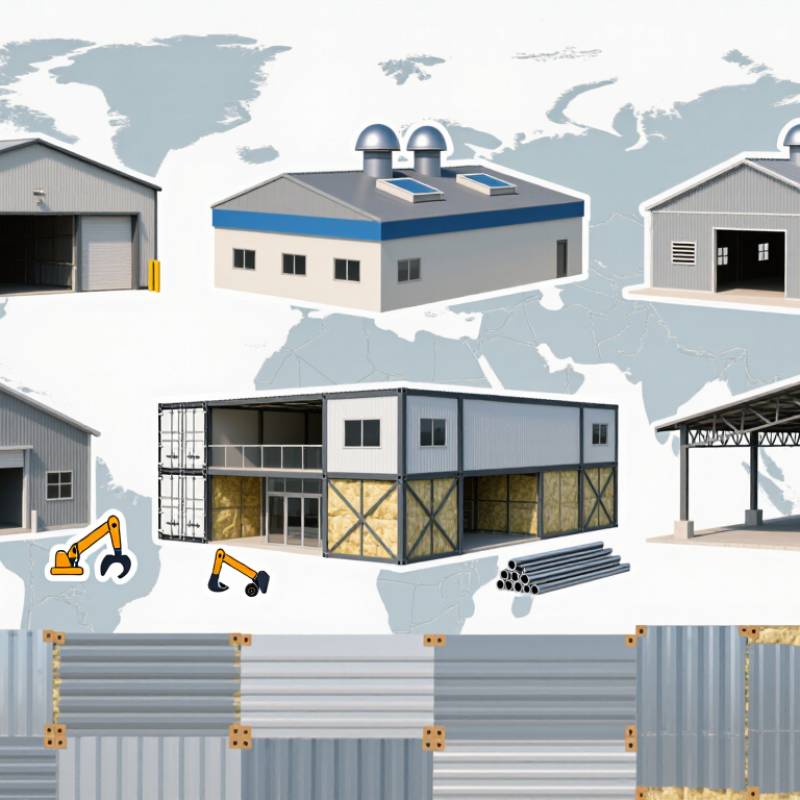
What Makes a Prefab Metal Building Suitable for Global Buyers
A prefab metal building suits global buyers when it can travel, adapt, and comply. The frame should use standardized dimensions, clear assembly drawings, and replaceable components. This simplifies shipping, local installation, and future repairs. The World Steel Association reported 1.84 billion tonnes of crude steel production in 2024, showing the material’s broad industrial availability.
Local conditions matter more than appearance. Engineers should check wind speed, seismic risk, snow load, soil quality, and corrosion exposure before selecting a frame. A building near a humid coast may need protective coatings, sealed joints, and stainless fasteners. Insulation also deserves attention. The 2024 UNEP Global Status Report for Buildings and Construction states that buildings and construction represented 32% of global energy demand and 34% of global carbon emissions in 2022. Better insulation, ventilation, and daylight design can reduce operating costs.
Documentation is essential. Buyers should request structural calculations, material certificates, fire-performance data, and installation tolerances. These documents help local professionals verify compliance instead of trusting attractive drawings. A lower purchase price can become expensive after customs delays, missing parts, or redesign work. That weakness is often overlooked. No design fits every country. Even standardized buildings need local engineering review, qualified supervision, and a realistic maintenance plan. I would also compare delivered cost, not just factory price, using freight, duties, labor, foundations, and replacement parts.
How Design, Materials, and Climate Affect Building Performance
Prefab metal buildings perform differently across climates. Design decisions matter more than low purchase prices. A steep roof can shed heavy snow, while wide overhangs reduce solar heat gain in hot regions. In coastal areas, sealed joints and corrosion-resistant coatings protect exposed steel. Windy sites also need stronger connections, deeper anchoring, and carefully designed openings. A beautiful layout can still fail if local weather data is ignored.
Material selection affects comfort and maintenance. Galvanized steel resists moisture, but it does not prevent condensation by itself. Continuous insulation helps reduce thermal bridges around columns, panels, and fasteners. Vapor control must match the climate, or damp air may collect inside the wall. In humid zones, ventilation and drainage deserve equal attention. Small details matter.
I have seen projects use thick insulation while leaving unsealed roof penetrations. That weakened the real performance. It looked efficient on paper. It was not. Buyers should request verified load calculations, insulation values, coating specifications, and installation records. They should also confirm seismic, snow, wind, and fire requirements with qualified local professionals. A standard package may need changes for frozen ground, salt air, desert dust, or extreme heat. Design assumptions deserve questioning.
How to Choose and Order the Right Prefab Metal Building Internationally
Choosing among the seven best prefab metal building types starts with the site, not the catalog. Options may include warehouses, workshops, agricultural sheds, garages, offices, cold-storage units, and multi-use halls. Define the building’s purpose, floor area, clear height, door size, insulation level, and expected service life. Measure twice. Details matter.
International buyers should confirm local wind, snow, seismic, fire, drainage, and energy requirements before requesting a quote. Ask for structural drawings, steel grades, coating specifications, load calculations, and installation instructions. A reliable supplier should explain tolerances, packaging, replacement parts, and quality inspections clearly. Request samples or independent verification when specifications affect safety. Do not assume one design fits every climate.
Ordering also requires careful logistics. Confirm the shipping dimensions, gross weight, port responsibilities, customs documents, delivery terms, and unloading equipment. A complete quotation should separate materials, engineering, freight, taxes, and installation support. Check whether bolts, seals, flashings, and fasteners are included. Small omissions can delay assembly for weeks. An experienced buyer may still miss a local approval detail, so have a qualified engineer review the final package. Keep all drawings, revisions, inspection records, and payment milestones in writing. Expect some uncertainty, especially when measurements come from an unfinished site. That is where practical judgment matters.
7 Best Prefab Metal Buildings for Global Buyers
Typical clear-span planning ranges for selecting and ordering prefab metal buildings internationally
Clear span indicates the unobstructed interior width of a building. Agricultural buildings and workshops generally suit smaller spans, while warehouses, cold-storage facilities, commercial buildings, and aircraft hangars require wider structural systems. Final dimensions, steel grade, insulation, wind and snow loads, seismic requirements, local building codes, shipping distance, and installation method should be confirmed before ordering.
 Skip to content



 English
 Russian
 German
 Spanish
 French
 Portuguese