SUNDI TOOLS
- Copyright © Wuxi Sundi Precision Tools Co.,LTD All rights reserved.
- Site Map
Choosing the best Tractor Hydraulic Ram in 2026 depends on the job, the tractor, and the existing hydraulic system. A compact tractor lifting a light attachment needs different cylinder dimensions from a machine working with a loaded front-end loader. Bore, stroke, mounting style, operating pressure, and available space all affect fit and performance. Small mismatches can cause poor movement, leaks, or installation problems. That matters.
This guide explains how to compare hydraulic rams using practical specifications rather than a product name alone. It also considers seal quality, materials, replacement-part availability, and the conditions the tractor regularly faces. A specification sheet can look convincing, but it cannot reveal every fitment issue; check the manufacturer’s documentation and measure the original cylinder before ordering. Confirm connection sizes, pin diameters, and stroke length. If replacing a ram, compare its working pressure and mounting points with the tractor’s requirements. Measurements are worth repeating.
One point deserves a second look: a higher-rated cylinder is not automatically the better choice. Compatibility and safe system limits matter more than headline numbers. The best option is the one that matches the tractor, performs the intended task, and can be maintained reliably. There may be trade-offs between price, durability, and availability, so this comparison will make those choices clear.
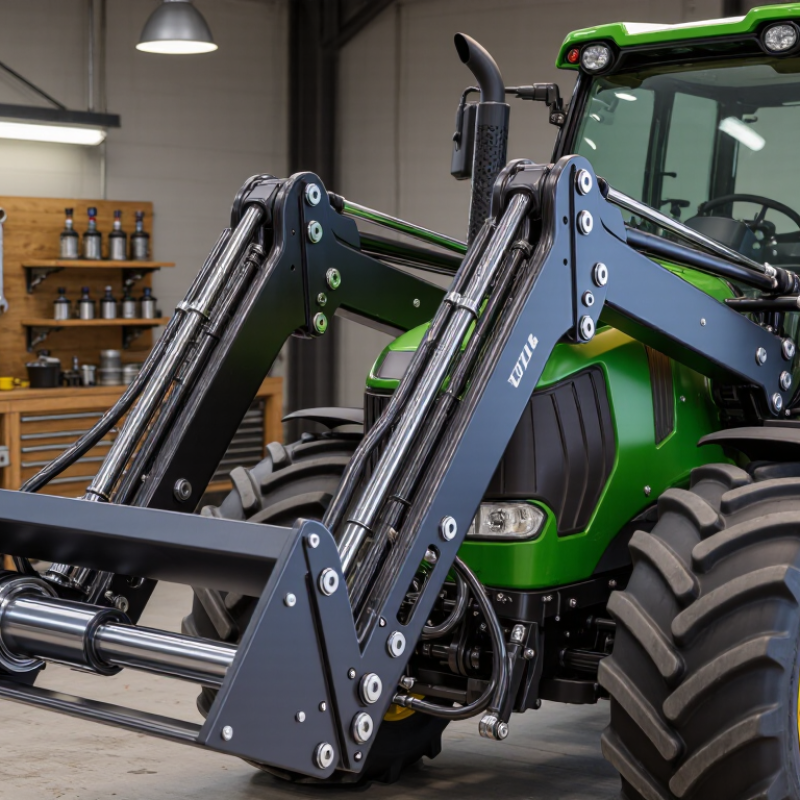
A tractor hydraulic ram is a hydraulic cylinder that turns pressurized oil into straight-line force. It may raise a loader, tilt an implement, or extend a three-point hitch. In the circuit, the pump supplies oil, the control valve directs it, and the ram converts pressure into movement. Return oil flows back through the valve to the reservoir. Small component. Big leverage.
For a double-acting ram, oil enters one port to extend the rod and the other to retract it. A single-acting cylinder uses hydraulic pressure in one direction, then relies on gravity or a spring to return.
Force depends on pressure and piston area; rod-side force is lower because the rod reduces the effective area. ISO 6020-1 specifies a 16 MPa cylinder series, while ISO 6022 covers a 25 MPa series. These are design references, not proof that a tractor circuit should run at either pressure. Check the machine’s rated limits.
A practical check starts with the ram’s ports, hoses, and mounting pins. A wet rod seal, bent rod, or jerky movement can point to leakage, side loading, or air in the circuit. They do not identify the fault by themselves. Never judge pressure by how slowly a cylinder moves; load, oil temperature, and valve condition also matter. The ram is one part of a circuit, and replacing it without checking the valve or load path can leave the real problem untouched.
What Is the Best Tractor Hydraulic Ram in 2026?
Many farm tractors operate around 2,000–3,000 psi, but this is a working range, not a universal specification. The OECD Code 2 tractor test reports and Nebraska Tractor Test Laboratory reports publish model-specific performance data, underscoring why one pressure figure cannot fit every machine. Check the operator or service manual before choosing a ram. Pressure is not horsepower.
Measure at the tractor’s hydraulic test port with a suitable, calibrated gauge, following the service procedure. A pressure reading taken under load can differ from a static reading. Note the result, engine speed, oil temperature, and test conditions. Small details matter. If pressure falls below specification, the cause may be a relief valve, pump wear, leakage, or restricted plumbing—not a ram that is simply too large.
Match the ram’s pressure rating to the system, then confirm bore, rod diameter, stroke, and mounting dimensions. A larger bore can increase pushing force, but it also needs more oil to extend at the same speed. That trade-off is easy to overlook. Never assume a cylinder’s label reflects the tractor’s actual working pressure; verify both ratings and leave room for pressure spikes.
| Selection Factor | Reference Data | What to Check | Why It Matters |
|---|---|---|---|
| Tractor system pressure | Many farm tractors operate in the approximate 2,000–3,000 psi range, but pressure varies by tractor and hydraulic circuit. | Confirm the specified pressure in the tractor operator’s or service manual. Do not assume the system operates at the top of this range. | The cylinder and related components must be suitable for the actual circuit pressure. |
| Cylinder pressure rating | There is no single pressure rating that is right for every tractor or application. | Check the cylinder manufacturer’s rated operating pressure and ensure it is appropriate for the tractor circuit. Also verify hose, fitting, and valve ratings. | A component’s rating should not be exceeded. The lowest-rated component can limit the safe working pressure of the circuit. |
| Theoretical extend force: 2-inch bore | About 6,283 lbf at 2,000 psi; 7,854 lbf at 2,500 psi; 9,425 lbf at 3,000 psi. | Use the cylinder’s bore diameter and the tractor’s verified pressure when estimating force. | Extend force is estimated as pressure multiplied by piston area; actual force is affected by system losses and operating conditions. |
| Theoretical extend force: 2.5-inch bore | About 9,817 lbf at 2,000 psi; 12,272 lbf at 2,500 psi; 14,726 lbf at 3,000 psi. | Confirm that the cylinder’s dimensions and mounting arrangement fit the implement and its intended load. | A larger bore increases theoretical extend force at the same pressure, but also requires more fluid to move through the same stroke. |
| Theoretical extend force: 3-inch bore | About 14,137 lbf at 2,000 psi; 17,671 lbf at 2,500 psi; 21,206 lbf at 3,000 psi. | Check tractor flow, implement design limits, pin loads, and structural capacity—not just cylinder force. | Higher cylinder force does not mean the tractor or implement structure can safely withstand that force. |
| Retract force | Lower than extend force for a typical single-rod cylinder at the same pressure. | Compare the bore and rod diameters, and calculate force using the annular area on the rod side. | The rod occupies part of the piston area, reducing the effective area and force during retraction. |
| Stroke and retracted length | Must match the implement’s required travel and available mounting space. | Measure pin-to-pin dimensions when retracted and extended; check clearance through the full movement. | An unsuitable stroke or retracted length can prevent proper fit or cause mechanical interference. |
| Mounts and pins | Mount style, pin diameter, and pin-to-pin dimensions are application-specific. | Match the cylinder ends to the implement and verify pin fit, alignment, and clearance. | Misalignment or incompatible mounts can create side loading and premature wear. |
| Fluid, seals, and connections | Compatibility depends on the tractor’s hydraulic fluid, operating conditions, and connection type. | Check seal-fluid compatibility, port size and thread, hose routing, and any required adapters. | Correct compatibility and connections help prevent leaks, damage, and poor operation. |
Force figures are theoretical extend-force estimates calculated from piston bore area × pressure and rounded to the nearest pound-force. They do not account for friction, pressure losses, or implement geometry. Verify the tractor’s specified pressure and the cylinder’s ratings before selecting or operating a hydraulic ram.
For a tractor hydraulic ram, extension force starts with bore area. A 3-inch bore has about 7.07 square inches of piston area. Multiply that area by 2,500 psi, and the ideal push is roughly 17,700 lbf. The equation is simple: pressure × piston area. This figure describes force at the cylinder, not necessarily force at the bucket, blade, or linkage.
Real output can be lower. Seal friction, fluid temperature, hose losses, and a relief valve set below 2,500 psi all matter. Linkage geometry matters too: a ram mounted at a shallow angle may deliver less useful force at the implement. Small detail, big difference. Check the tractor’s operating pressure and cylinder specifications instead of treating a rating as guaranteed performance. A pressure gauge can help confirm what the circuit actually reaches.
When comparing the best tractor hydraulic ram in 2026, match bore, stroke, pin size, and retracted length to the task. Also check rod diameter and working pressure. Extension force uses the full bore area; retraction force is lower because the rod takes up space. Measure before ordering. Worn parts and cold oil can change performance, so the calculation is useful, but it is not the whole job.
A useful ram starts with the job, not a catalog number. A single-acting ram uses hydraulic pressure in one direction and relies on gravity or an implement’s weight to return. It can suit a dump bed or simple lift. Double-acting rams push and pull under hydraulic power, giving better control when lowering a heavy attachment. That extra control matters.
Stroke length is the distance the rod travels. Measure the implement between its fully raised and lowered positions, then check that the ram can reach both without topping out or binding. A longer stroke is not automatically better; it may interfere with nearby tires, hoses, or frame parts. Leave room for movement.
Mounts deserve a close look. Pin diameter, clevis width, and alignment must match the tractor or implement, or the ram may wear unevenly. Duty ratings matter, too: compare rated pressure and load with the tractor’s hydraulic system and the task’s peak demands. Keep the ram straight under load. I would measure the old setup twice, though worn pins can make those measurements misleading. Check them separately. Shortcuts here are tempting, and sometimes wrong. For frequent cycles or sustained loads, choose a ram rated for that service, not just one that fits.
The best tractor hydraulic ram is the one that fits and works safely with your machine. Match the OEM reference or measure pin-to-pin length, stroke, pin diameter, mount width, port thread, and clearance. A few millimeters can affect linkage movement. Check the tractor’s working pressure and relief-valve setting, too. Pressure and piston area determine pushing force; a pressure spike can exceed normal operating conditions.
ISO 6020-2:2015 specifies a compact-cylinder series rated at 16 MPa (160 bar). Treat that as an engineering reference, not a universal tractor specification. Verify the cylinder rating against the machine’s documentation. Retraction force is lower than extension force because the rod reduces the effective piston area. Choose rod diameter for the load, stroke, and possible side loading. A thicker rod is not automatically the better choice.
Match seal material to hydraulic fluid, operating temperature, and contamination exposure. Nitrile, polyurethane, and fluorocarbon compounds have different compatibility limits; check the seal supplier’s published fluid and temperature data. Inspect the rod finish, wiper, and wear rings. Misaligned pins can damage a rod, even when the cylinder rating looks suitable. I still remind myself to check alignment before ordering, especially on older tractors with undocumented repairs.