Explore the Best UV Flatbed Printers in China for Your Business?
In the rapidly evolving printing industry, the demand for high-quality, efficient UV Flatbed Printers is on the rise. As businesses seek innovative solutions, these printers are becoming essential tools. Tom Li, a renowned expert in printing technology, states, “UV Flatbed Printers revolutionize how we think about quality and versatility.” His insight underscores the importance of embracing these advanced machines.
These printers offer unparalleled print quality on diverse materials. From wood to glass, UV Flatbed Printers deliver impressive results. The ability to print directly onto substrates enhances creativity and efficiency in production. Businesses are discovering how crucial these printers are for staying competitive in the market.
However, investing in a UV Flatbed Printer requires careful consideration. Costs can vary widely, and the learning curve may present challenges. Companies must evaluate their specific needs and potential return on investment. In this dynamic environment, understanding the capabilities and limitations of UV Flatbed Printers is vital for making informed choices.
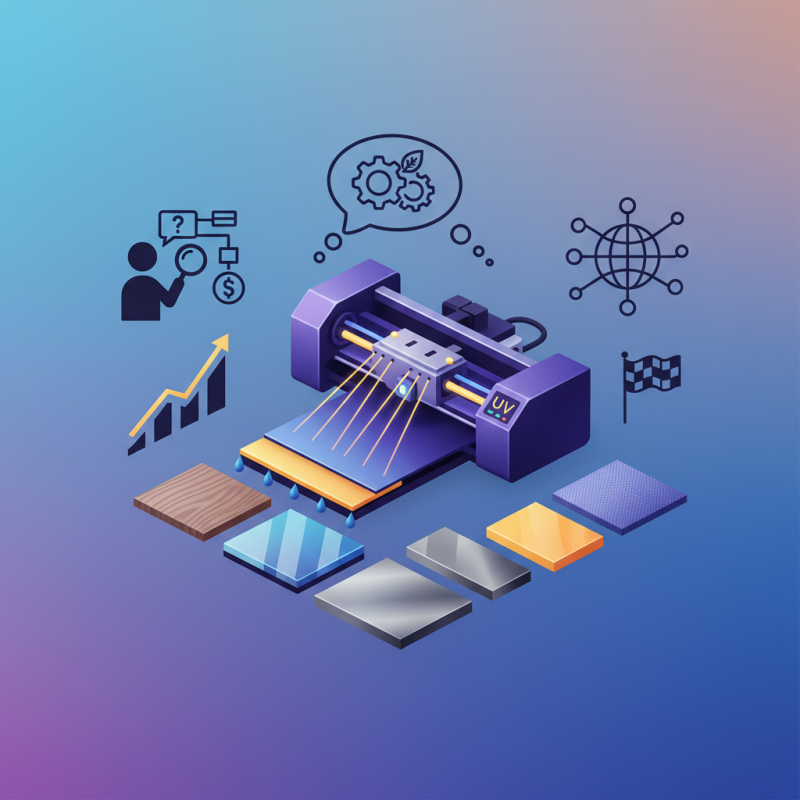
Understanding UV Flatbed Printers and Their Importance for Businesses
UV flatbed printers have gained significant traction in various industries, thanks to their versatility and efficiency. According to a recent market report, the global UV printer market is expected to grow at a CAGR of 6.5% from 2021 to 2028. This underscores the increasing adoption of UV technology for its ability to print on various materials, including glass, metal, and wood. Businesses can leverage these printers to create unique products and packaging, enhancing their competitive edge.
The importance of UV flatbed printers lies in their capabilities for high-quality and durable prints. They utilize ultraviolet light to cure inks instantly, allowing for faster production times. Many companies report reduced waste and improved profitability due to lower operational costs. However, potential users should note that the initial investment can be considerable. Additionally, proper maintenance is crucial for optimal performance. Ignoring this can lead to costly downtimes and repairs. The sustainability of materials used is another aspect to reflect on, as businesses need to balance quality with environmental responsibilities.
Incorporating UV printing technology can yield significant benefits. These printers open new opportunities for customization and creativity, which are vital for today’s consumer-driven market. However, understanding the long-term implications of such investments is essential. Some businesses may experience a learning curve as they adapt to this technology. Balancing innovation with practical insights is key to harnessing the true potential of UV flatbed printers.
Explore the Best UV Flatbed Printers in China for Your Business
| Model | Print Area (mm) | Print Speed (sqm/h) | Resolution (dpi) | Ink Type |
| Model A | 2500 x 1300 | 20 | 1200 | UV Curable |
| Model B | 3000 x 2000 | 15 | 1440 | Eco-Solvent |
| Model C | 1500 x 1200 | 25 | 600 | UV Curable |
| Model D | 2000 x 1000 | 12 | 720 | Latex |
Key Features to Consider When Choosing a UV Flatbed Printer
When selecting a UV flatbed printer for your business, several key features should be at the forefront of your decision-making process. Print quality is paramount. This involves evaluating the resolution and color accuracy. Industry studies show that printers with higher DPI (dots per inch) produce sharper, more vibrant prints. Many businesses report a need for clarity, especially in signage and promotional materials. A minimum resolution of 1200 DPI is often recommended for professional applications.
Speed is another critical factor. The market trend indicates an increasing demand for faster production times. Businesses seek printers that can deliver quality while maintaining efficiency. The most effective printers can produce up to 50 square meters per hour, catering to high-volume needs. This balance between speed and quality can significantly impact deadlines and customer satisfaction.
Moreover, consider the versatility of the printer. A model capable of handling various materials, such as wood, glass, and metal, opens up more opportunities. Recent data suggests that businesses utilizing multi-material capabilities increase their market reach. However, it’s essential to reflect on the maintenance costs associated with advanced features. Ensuring the longevity of your printer while addressing operational expenses is crucial for sustainable business growth.
Explore the Best UV Flatbed Printers in China for Your Business
This chart represents the key features considered when choosing a UV flatbed printer, showing the average ratings based on essential criteria such as print quality, speed, versatility, and cost-effectiveness.
Top UV Flatbed Printer Brands in China: A Comprehensive Overview
In recent years, UV flatbed printers have gained traction in China’s printing industry. These printers excel in producing high-quality images on various substrates. According to industry reports, the UV printer market in China is projected to reach $3 billion by 2025, driven by advancements in printing technology and growing demand in sectors like advertising and packaging. The versatility of UV printing can cater to custom solutions, allowing businesses to innovate.
The leading brands demonstrate strong commitment to quality and efficacy. For instance, manufacturers focus on incorporating high-performance UV lamps and precision print heads. A notable study revealed that UV flatbed printers can reduce production time by up to 30%. Nevertheless, some users report challenges with initial setup and maintenance. The learning curve can hinder efficiency for new operators.
Additionally, sustainability is becoming a pressing issue. UV inks are less volatile and contain fewer harmful chemicals compared to traditional inks. However, the environmental impact of disposal still raises concerns. Addressing these issues requires continuous improvement in manufacturing processes. Investing in the right UV flatbed printer is essential for staying competitive in the evolving market landscape.
Cost Analysis: Budgeting for a UV Flatbed Printer in Your Business
Investing in a UV flatbed printer can significantly enhance your business capabilities. However, understanding the costs involved is crucial. The initial purchase price is just one part of the equation. Businesses should consider setup costs, maintenance, and operational expenses. These can accumulate quickly, affecting your overall budget.
A thorough cost analysis includes ink, substrates, and labor. Ink prices can fluctuate, impacting your bottom line. Additionally, the choice of substrates will influence print quality and durability. Equipment requires routine maintenance, leading to potential downtime. Budgeting for these factors can ensure smooth operations and reliable output.
Evaluating potential returns is essential. Assess the market demand for UV prints in your area. It may be beneficial to trial different models before making a significant investment. This approach allows for adjustments based on actual performance. Being aware of the entire financial landscape will support informed decision-making. Balancing initial costs with expected profits is not always clear-cut. This makes reflection on financial strategies important for long-term success.
Maintenance Tips for UV Flatbed Printers to Ensure Longevity and Performance
Proper maintenance of UV flatbed printers is essential for maximizing their lifespan and ensuring optimal performance. Regular cleaning is crucial; dust and ink residues can affect print quality. Use a lint-free cloth and specific cleaning solutions that do not harm the printer. Pay close attention to the print heads. They can become clogged if not cleaned frequently, leading to expensive repairs and downtime.
Monitoring ink levels is another important tip. Low ink can cause inconsistent print output, which affects quality. Regularly check the printer's settings and replace ink cartridges when needed. Over time, belts and rollers may wear out. Inspect these components regularly for signs of wear. Replace them promptly to avoid further damage.
Finally, software updates can enhance performance. Ensure that the printer's firmware is up to date. Ignoring updates may lead to compatibility issues with graphic design software. Reflect on your maintenance routine periodically. Is it comprehensive enough? Address any gaps to keep your business running smoothly.
 Skip to content


 English
 Russian
  German
  Spanish
  French
  Portuguese