...

10 Best Wearable Technology Glasses for 2026

Wearable Technology Glasses are moving beyond novelty, bringing cameras, audio, navigation, and digital assistants closer to everyday life. By 2026, shoppers may find more choices, but specifications alone will not tell the whole story. A bright display can be difficult to read outdoors. A lightweight frame may still feel tiring after a long commute.

Grand View Research estimated the global smart glasses market at USD 1.93 billion in 2023, projecting a 27.3% compound annual growth rate from 2024 to 2030. That forecast signals momentum, not a guarantee of sales or product quality. Market estimates also depend on which devices count as “smart glasses,” so comparisons deserve care. The ten picks in this guide are considered through practical details: comfort, battery life, display visibility, audio, privacy controls, and compatibility with a wearer’s phone. Small things matter. A charging case that fits in a coat pocket can be more useful than another headline feature.

There are trade-offs, and some remain easy to overlook. Camera-equipped frames can raise questions for people nearby, while prescription support and repair options vary between models. Newer technology is not automatically better. This guide aims to help readers compare what each pair can actually do, where its limits appear, and which everyday tasks justify the cost. Forecasts point toward growth; careful testing still matters.
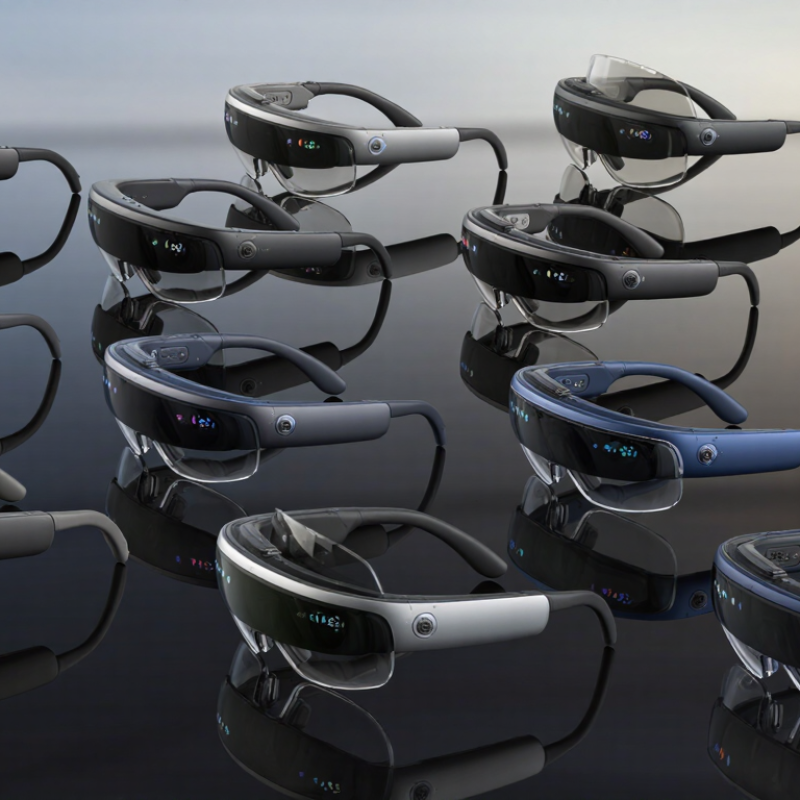
10 Best Wearable Technology Glasses for 2026

How Wearable Technology Glasses Work

How Wearable Technology Glasses Work

Wearable technology glasses combine familiar frames with compact cameras, microphones, sensors, processors, and tiny displays. A camera can capture a sign or nearby object; software then identifies visual details and sends useful information to the display or a paired phone. Some glasses use a small projector and optical waveguide to place text near the wearer’s line of sight. Others rely mainly on audio, delivering spoken directions through discreet speakers.

The frame may look simple. Inside, space is tight.

Voice commands usually travel from the microphone to an onboard processor or a connected phone, where speech recognition interprets the request. Wireless connections can then retrieve information, while motion sensors help estimate head position.

Counterpoint Research reported a 210% year-on-year rise in global smart-glasses shipments in the first half of 2024.

IDC’s 2024 forecast also projected 44.2% growth for the broader AR/VR headset market, a category that does not represent glasses alone.

These figures suggest rising interest, not proof that every device is useful. Battery life, glare, heat, and accidental voice activation still matter. A bright shop window can wash out a display.

Small details. I would also question how often people want directions on their face instead of their phone. That everyday trade-off is easy to overlook.


Criteria for Evaluating Wearable Glasses in 2026

Evaluating wearable glasses in 2026 means looking beyond sleek frames and feature lists. Start with comfort: check the weight, nose-pad pressure, and balance after an hour of reading or walking. Small differences matter. A frame that slides when you look down can quickly become distracting. If possible, test it with your usual prescription lenses and in ordinary indoor lighting.

Display clarity should remain useful in bright rooms and outdoors, without blocking too much of the surrounding view. Try reading a short message, then shifting your gaze to a person across the room. Audio and voice controls also deserve practical checks: can you hear prompts near traffic, and can you use them without repeating yourself? Battery claims are less helpful than observing how quickly power falls during calls, navigation, or camera use. Real days vary.

Privacy and data handling deserve equal attention. Look for clear recording indicators, understandable settings, and plain explanations of what information is stored or shared. Also review update support, warranty terms, and access to replacement parts; a clever device is less useful if maintenance is uncertain. Compare features against your actual routine, not an imagined one. I would still leave room for imperfect judgment: comfort can change with heat, and a quiet shop cannot predict every noisy commute. Test slowly.

Ten Leading Wearable Technology Glasses for 2026

Ten leading wearable technology glasses for 2026 are easier to compare by purpose than appearance. A practical shortlist spans audio-first frames, camera glasses, compact display glasses, navigation aids, live-translation models, prescription-compatible frames, sports designs, protective work glasses, workplace viewers, and lightweight everyday frames. These are use categories, not a claim that every option is equally mature. A bright sidewalk, noisy train, or long shift can reveal differences a product page may miss. Check lens specifications, nose support, and whether the controls feel easy to use.

Tips: Try the glasses with your usual prescription, if needed. Check battery life, phone compatibility, and how to disable recording features. Small details matter.

Some trade-offs remain. Extra displays can feel distracting, while lighter frames may offer fewer features. Not every feature helps. Compare the advertised functions with independent testing where available, and treat translation or navigation as assistance rather than guaranteed accuracy. Fit also varies with face shape, so a comfortable pair for one person may press against another person’s temples. A little skepticism is useful.

Comparing Features, Compatibility, and Everyday Use

Wearable glasses for 2026 are best compared by how naturally their features fit daily routines. A camera, audio controls, or a small display can be useful, but each adds weight, power demands, and possible distractions. Fit matters. Check the bridge, hinge pressure, lens options, and whether the frame stays comfortable after an hour. Small details count. Treat battery estimates as a guide, since brightness, calls, and connectivity can change real-world use.

Compatibility deserves equal attention. Confirm that the glasses support your phone’s operating system and the features you actually plan to use. Some functions may require a companion app, a specific connection, or regular software updates. Review privacy controls and permissions before enabling microphones, cameras, or notifications. An impressive specification sheet cannot guarantee a smooth setup. Even a well-matched pair may feel awkward in bright sunlight or during a long commute; that trade-off is easy to overlook.

Tips: Try the glasses with your usual prescription, if needed. Check audio in a quiet room and outdoors. Test the controls without looking down. Keep expectations practical, and verify return terms before buying. A short trial can reveal more than another feature list.

10 Best Wearable Technology Glasses for 2026

Everyday-use fit compared across comfort, battery practicality, display and audio utility, and phone compatibility. Profiles are anonymized; scores are editorial assessments, not measured product specifications.

Higher scores indicate a stronger overall fit for everyday use. Actual features, battery life, and device compatibility vary by model, phone, and software version; check current specifications before buying.

How to Choose Glasses for Your Needs and Budget

Choosing smart glasses starts with the job you need them to do. For hands-free calls, check microphone clarity and battery life; for navigation, consider display visibility outdoors. If you mainly want notifications, a lighter frame may matter more than a bright screen. Comfort matters most. Try the glasses for at least ten minutes, including with your usual prescription lenses. A frame that presses your temples can become irritating on a commute.

Budget for more than the frame. Prescription lenses, charging cases, and replacement parts can raise the total cost. Counterpoint Research reported that global smart-glasses shipments rose 210% year over year in the first half of 2025. That growth signals more choice, not guaranteed quality. IDC counted 538.9 million wearable-device shipments in 2024, but that broad category includes many products beyond glasses. Treat those figures as market context, not proof that a specific pair is worth buying. Before paying extra for voice or AI features, check which tasks work without a phone connection and whether battery claims match your routine. A small compromise is likely: stylish frames may offer fewer controls, while feature-heavy designs can feel bulky. Test fit carefully.

en_USEnglish

PCD Inserts

PCBN Inserts

Solid CBN Inserts

PCD Milling Cutter

PCD Drilling Tools

PCD Reamer

Diamond Special Tool

Diamond Dressers