SUNDI TOOLS
- Copyright © Wuxi Sundi Precision Tools Co.,LTD All rights reserved.
- Site Map
Choosing a Mobile Excavator from China involves more than comparing manufacturer names and advertised prices. Buyers need to match the machine to real work: a tight urban road, a muddy utility trench, or repeated moves between job sites. Tire configuration, operating weight, digging depth, hydraulic flow, and attachment compatibility can change both performance and cost. Small details matter.
A practical perspective for this guide is represented by Mei Chen, a composite mobile-equipment specialist. Her editorial observation is: “Compare the complete working package, not just the headline price.” This is an original, illustrative quotation, not a verified statement by a named industry professional. It reflects a useful buying principle: request an itemized offer covering the base machine, attachments, delivery, warranty terms, and parts support.
Prices vary with specifications, order quantity, customization, and shipping arrangements, so a single figure can be misleading. Ask manufacturers for current quotations and clear equipment specifications. Check what is included, then compare like with like. A lower quote may omit a useful attachment or leave service arrangements unclear. That deserves a second look. This overview examines Chinese manufacturers, key selection criteria, and the factors that shape Mobile Excavator prices. It also leaves room for uncertainty: published specifications do not always show how a machine performs on a demanding site. When possible, verify details with the manufacturer and inspect a comparable unit before committing.
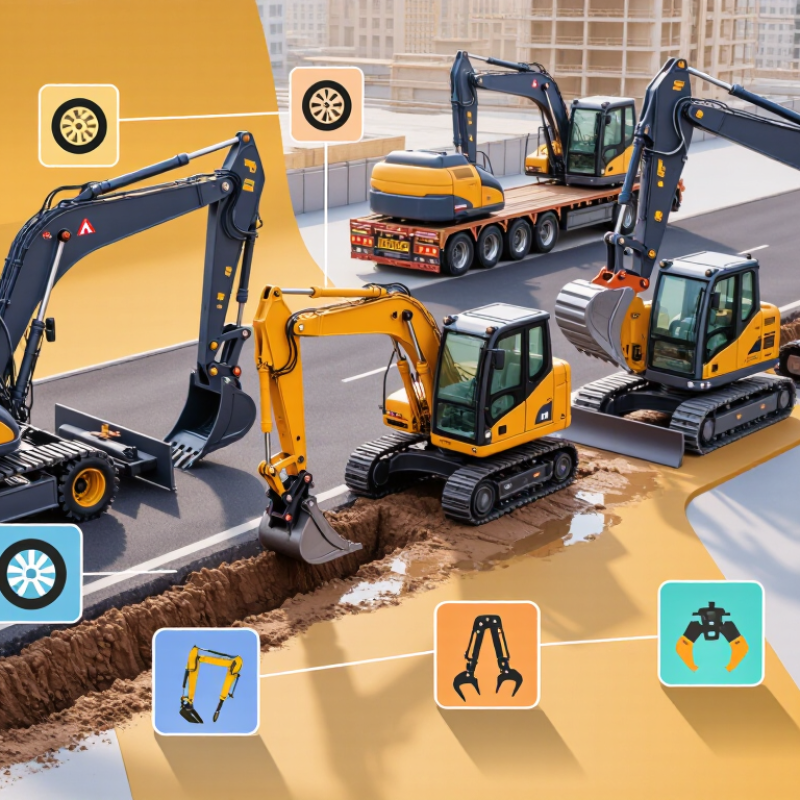
A mobile excavator usually means a wheeled excavator, designed to move between nearby jobs without a transport trailer. Its rubber tires suit paved streets and compacted ground, while the upper structure rotates to dig beside roads, buildings, and utility trenches. Compared with tracked machines, it can travel faster on firm surfaces, but soft, muddy ground may limit traction. Mobility is useful; it is not magic.
Typical work includes roadside drainage, water-pipe repairs, landscaping, and small demolition jobs. The 2015 Global Construction 2030 report projected global construction output would grow 85% from 2015 to 2030, reaching US$15.5 trillion. Separately, the United Nations’ 2018 urbanization projections estimated that 68% of the world’s population would live in urban areas by 2050. These figures point to sustained infrastructure and urban-work needs, though they do not predict demand for any single machine type. Actual suitability depends on travel distance, ground conditions, lifting needs, and local access rules. That last detail is easy to overlook.
Tips: Check tire condition, axle layout, operating weight, and boom reach against the job. For frequent road travel, confirm permitted travel speed and required equipment with local authorities. Compare total operating costs, not just purchase price. A machine that reaches the site quickly may still be the wrong choice for soft ground.
Choosing a Chinese mobile excavator manufacturer takes more than comparing quoted prices. Define the machine’s daily work first: road maintenance, utility trenching, or moving between compact job sites. Then compare operating weight, digging depth, lifting capacity, travel speed, and tire configuration against that work. A low price can hide costly gaps, such as limited parts availability or unclear warranty coverage.
Tips: Request a written specification sheet, warranty terms, and a parts list. Ask how quickly common items, such as filters and hydraulic hoses, can be supplied. If possible, inspect a working machine and speak with an existing operator. Photos are useful, but they cannot confirm build quality.
Evaluate the manufacturer’s process, not just its sales claims. Ask whether it can explain quality checks, component sourcing, and pre-shipment testing in practical detail. Check service documentation for clear maintenance intervals and troubleshooting steps. Compare the full delivered cost, including transport, setup, training, and expected maintenance. Prices vary with configuration and support, so treat unusually low offers carefully. I would still leave room for doubt: a polished factory visit does not guarantee dependable service after delivery. Get important promises in writing, and make sure the specifications match the machine you will receive.
Suggested evaluation weights for comparing mobile excavator quotations. These are a buyer’s planning framework, not market averages or manufacturer-specific data.
Compare total cost of ownership alongside technical compliance, parts support, warranty terms, delivery time, and verified quality documentation. Adjust the weights to fit your operating conditions, then score each supplier against the same criteria.
China’s mobile excavator manufacturers range from large equipment producers to smaller factories focused on compact machines. Their strengths can include in-house assembly, access to component suppliers, and models configured for different ground conditions. Buyers should look beyond catalog photographs. Ask how the machine performs on wet soil, uneven lanes, and tight urban sites. Small details matter: tire clearance, stabilizer reach, boom control, and cab visibility. Test the controls if possible.
A manufacturer’s reliability is better judged through evidence than sales claims. Request a factory inspection, a machine test record, and clear warranty terms. Check whether replacement filters, hydraulic hoses, and other routine parts are available near your operating area. Ask who handles technical questions after delivery, and how quickly they respond. A polished video is only one clue. Even careful checks can miss problems, so compare several suppliers and inspect the exact configuration being quoted. Prices also shift with engine output, attachments, shipping, and service support; a low quotation may leave important costs unclear.
Typical new mobile excavator prices in China vary by operating weight, configuration, and attachments. As a rough guide, compact wheeled models may cost RMB 200,000–400,000, while mid-size machines often range from RMB 400,000–800,000. Larger units can exceed RMB 1 million. These are indicative market ranges, not a standardized price index; quotations may exclude tax, delivery, or tools such as a hydraulic breaker.
The China Construction Machinery Association reported 200,397 excavator sales in 2024, including domestic sales and exports. Its figures describe unit sales, not transaction prices, so buyers should compare current written quotations rather than treat any single figure as a market average. A low quote can become less attractive after freight, optional equipment, and warranty terms are added. The exact cost is not always obvious.
Tips: Ask suppliers to list machine weight, engine rating, standard attachments, tax, and delivery separately. Compare the same configuration and confirm whether the price applies to a new or used machine. For used units, inspect tire wear, hydraulic leaks, and maintenance records in person when possible. These price bands remain imperfect; regional stock and exchange-rate changes can shift offers quickly.
A mobile excavator’s quoted price reflects more than engine size. Operating weight, boom reach, hydraulic flow, and travel speed determine whether it suits your site. A machine that looks inexpensive may need costly attachments or frequent transport. Check the included bucket, quick coupler, warranty, and service intervals line by line.
Material costs matter, but do not predict a dealer’s final price exactly. The World Bank’s April 2024 Commodity Markets Outlook projected a 5% decline in its metals price index that year; this is a broad market signal, not a steel-price guarantee. Small details matter. Compare quotations with the same configuration, delivery terms, and taxes. Also ask for fuel-use figures under comparable working conditions. The U.S. Department of Energy’s Alternative Fuels Data Center cites roughly 0.8 gallons per hour for heavy-duty truck idling, but that is not an excavator specification. Treat it as a reminder to verify machine-specific idle data, not as a buying estimate.
Purchase decisions should include parts availability, technician response time, and resale demand in your region. Ask how long common filters and hydraulic hoses take to arrive. A low upfront price can become expensive when a machine sits idle. I would still request a written service plan; verbal promises are easy to misunderstand.
| Category | Specification or Decision Factor | Typical Range or Comparison | Effect on Price and Purchase Decision |
|---|---|---|---|
| Indicative China-Origin Wheeled Excavator Price Bands | |||
| Compact wheeled excavator | Approx. 6–8 tonnes operating weight; commonly selected for utility work and restricted sites | US$28,000–US$50,000 | Usually the lowest-cost class. Check lifting capacity, axle configuration, stability, and whether the quoted machine includes a bucket and quick coupler. |
| Light-duty wheeled excavator | Approx. 10–12 tonnes operating weight; suitable for general construction and municipal work | US$35,000–US$65,000 | Often balances transportability and digging performance. Price varies with engine specification, hydraulic system, cab equipment, and attachment package. |
| Medium wheeled excavator | Approx. 13–16 tonnes operating weight; commonly used for roadworks, site preparation, and material handling | US$50,000–US$85,000 | Higher operating capacity and hydraulic flow can increase purchase price and running costs. Confirm the machine’s rated load and working range for the intended tasks. |
| Heavy wheeled excavator | Approx. 18–22 tonnes operating weight; intended for demanding construction and infrastructure projects | US$70,000–US$120,000 | Typically costs more because of its size, power, and heavier-duty components. Assess road transport limits, site access, fuel use, and required lifting performance. |
| Factors That Affect Price and Purchase Decisions | |||
| Operating weight and working capacity | Compare operating weight, bucket capacity, digging depth, reach, and rated lifting capacity | Higher capacity generally means a higher purchase price | Choose a size that meets the job requirement without paying for unused capacity. Compare specifications using the same measurement standards. |
| Engine and emissions configuration | Engine power, fuel system, emissions certification, and availability of replacement parts | Market- and configuration-dependent | Emission requirements differ by destination market. Verify the exact engine model and certification before ordering, especially for regulated markets. |
| Hydraulic system and attachments | Auxiliary hydraulic lines, hydraulic flow, quick coupler, buckets, breaker, or grapple | Additional equipment can materially increase the quoted price | Request an itemized quotation. Confirm attachment compatibility, hydraulic flow requirements, and whether installation and testing are included. |
| Cab, controls, and safety equipment | Cab heating or air conditioning, camera, lighting, control layout, and safety features | Optional equipment may add to the base price | Compare the standard configuration against the options list. Check that safety equipment and operator controls suit local rules and working conditions. |
| Build quality and components | Structural design, hydraulic components, tyres, electrical system, and component sourcing | Can create substantial differences between otherwise similar quotations | Review technical documents, component specifications, inspection records, and warranty terms rather than comparing price alone. |
| Warranty, service, and spare parts | Warranty duration and coverage, parts availability, service response, and operator training | May be included, limited, or priced separately | Ask for written warranty conditions, exclusions, and parts lead times. Consider total ownership cost and local service support. |
| Order terms and delivery | Factory price basis, destination, shipping, insurance, duties, taxes, and commissioning | FOB, CIF, and delivered prices are not directly comparable | Request the same Incoterm and destination for each quotation. Calculate landed cost, including freight, import charges, and any required certification. |
| Supplier evaluation | Production capability, quality-control process, references, inspection access, and export documentation | Not captured by the machine’s base price | Evaluate suppliers against a consistent checklist. Confirm configuration, delivery schedule, payment terms, and pre-shipment inspection arrangements in writing. |
| Price note: The USD figures are indicative budget ranges for new China-origin wheeled excavators, not firm quotations. Actual prices vary by specification, attachments, order quantity, exchange rates, shipping terms, destination requirements, and supplier. Confirm the final configuration and landed cost directly in a written quotation. | |||