...

China Best Machining Inserts for Global Buyers?

Choosing the China best machining inserts for global buyers requires more than comparing prices or browsing polished product pages. Machining Inserts must match the workpiece, cutting speed, machine rigidity, and coolant conditions. A turning insert for stainless steel cannot automatically perform well on cast iron. Small differences matter. Edge preparation, carbide substrate, coating thickness, and chipbreaker geometry can change tool life and surface finish.

In practical sourcing, reliable buyers examine measurable evidence before placing repeat orders. They request grade charts, dimensional tolerances, coating information, inspection reports, and sample results. Suppliers with ISO-based quality systems, stable batch control, and traceable packaging deserve closer attention. A box should identify the insert grade, geometry, lot number, and inspection status clearly. This detail is easy to overlook. It should not be.

The word “best” remains subjective. The lowest-cost insert may create excessive downtime, while a premium grade may be unnecessary for short production runs. A serious comparison considers cost per finished component, not unit price alone. Trial cutting should record tool life, cutting parameters, burr formation, and dimensional stability. I have seen promising samples underperform when production conditions changed. That lesson is uncomfortable, but useful.

This guide evaluates Chinese insert manufacturers through technical capability, application support, quality consistency, customization options, and export reliability. It also highlights questions global purchasers should ask before approving a supplier. No catalog replaces testing. Careful verification does.
China Best Machining Inserts for Global Buyers?

What Are Machining Inserts and Why Does China Supply Them Globally?

Machining inserts are replaceable cutting tips fitted into turning, milling, and drilling tools. Most use cemented carbide, combining tungsten carbide with a metallic binder. Their geometry controls chip flow, cutting force, heat, and surface finish. According to the U.S. Geological Survey’s Mineral Commodity Summaries 2024, China produced about 67,000 metric tons of tungsten in 2023, out of roughly 79,000 tons worldwide. This raw-material position supports a broad insert supply chain, from powder processing to precision grinding and coating.

China supplies global buyers because its manufacturing base combines material access, automated pressing, large-scale sintering, and established export logistics. ITC Trade Map data also places China among significant exporters of machine-tool cutting inserts under relevant HS classifications. However, volume is not the same as consistency. I have seen small geometry changes affect vibration, edge wear, and finished dimensions. A lower quotation may hide uneven coating thickness, unclear tolerances, or limited technical support. That part deserves more attention.

Tips: Ask for ISO 1832-compatible dimensions, carbide grade data, coating details, and inspection records. Test one insert batch on a controlled job before wider purchasing. Compare tool life, not only unit price. Keep cutting speed, feed, coolant, and workpiece material documented. Supplier claims can sound precise, but shop-floor evidence is stronger. Even a reputable process can produce occasional variation, so incoming inspection remains sensible.
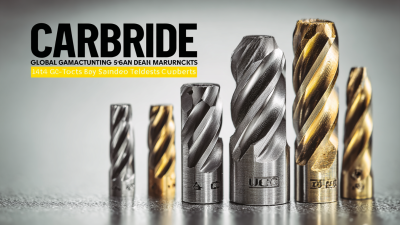
Which Types of Machining Inserts Are Made by Chinese Manufacturers?

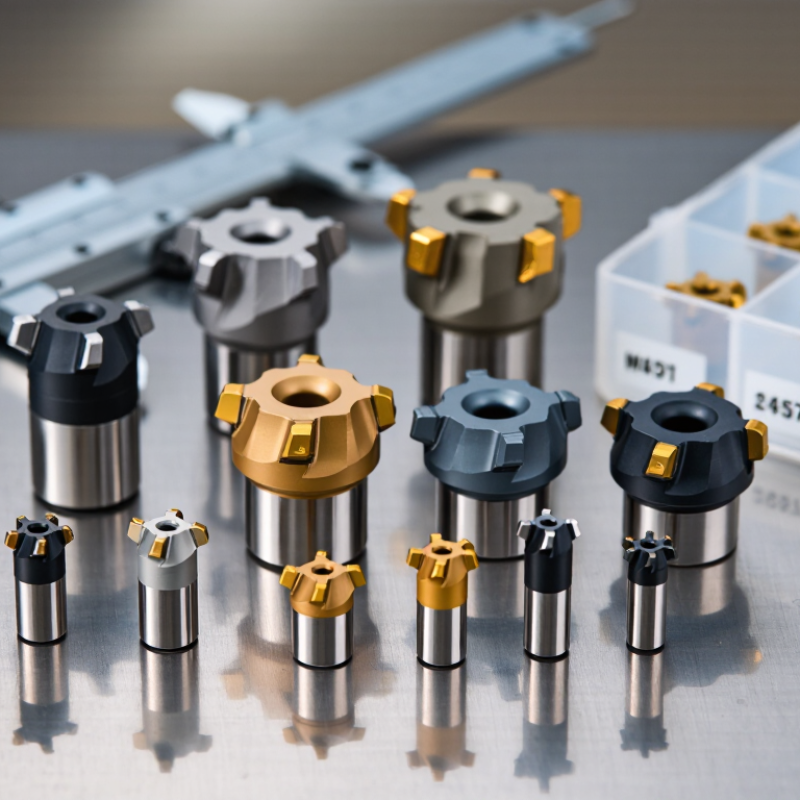
Chinese manufacturers produce a wide range of machining inserts for global buyers. Common options include cemented-carbide inserts for turning, milling, drilling, grooving, and threading. They also make PVD- and CVD-coated grades, cermet inserts, ceramic inserts, CBN tips for hardened steel, and PCD inserts for aluminum and composite materials. Many products follow ISO insert geometries, including common rhombic, triangular, square, and round forms.

MarketsandMarkets estimates the global cutting-tools market at about USD 23.9 billion in 2023. Its report forecasts approximately USD 29.6 billion by 2028, with a 4.4% compound annual growth rate. Grand View Research reports a similar expansion trend, linking demand to automation, aerospace production, and automotive machining. These figures explain why Chinese factories increasingly offer micro-grain carbide, customized chipbreakers, coolant-through designs, and controlled edge preparation.

Details matter more than catalog photos. Buyers should request coating specifications, carbide grade data, dimensional tolerances, and batch inspection records. A sample insert should produce stable chips, a clean shoulder, and predictable tool life. Not always. A cheaper grade can fail quickly on interrupted cuts or stainless steel. In practical sourcing, testing three or four grades is safer than trusting one quotation. Some suppliers provide useful technical advice, but their recommendations still need independent cutting trials.

China Best Machining Inserts for Global Buyers? – Which Types of Machining Inserts Are Made by Chinese Manufacturers?
Insert Type Primary Cutting Material Common ISO Insert Forms Suitable Workpiece Materials Typical Machining Operations Main Advantages Important Limitations Common Global Applications
Coated Cemented Carbide Inserts Tungsten-carbide substrate with coatings such as TiN, TiCN, Al2O3, TiAlN or AlTiN CNMG, DNMG, TNMG, WNMG, CCMT, DCMT, SEKT and APKT Carbon steel, alloy steel, stainless steel, cast iron and selected non-ferrous alloys External turning, facing, boring, grooving, milling and general production machining Versatile, cost-effective, wear-resistant and available in many grades and chipbreaker designs Performance decreases when the insert grade, edge preparation or chipbreaker is not matched to the workpiece Automotive parts, machinery components, hydraulic parts and general engineering
Uncoated Cemented Carbide Inserts Fine-grain or ultra-fine-grain tungsten carbide with a cobalt binder CCMT, DCMT, TCMT, TPGH, SPGT and milling inserts such as APKT Aluminum, copper alloys, brass, plastics, wood-based materials and some cast irons Finishing, light turning, slotting, engraving and high-speed machining of non-ferrous materials Sharp cutting edges, low built-up-edge tendency in suitable applications and good edge quality Generally less wear-resistant than coated grades when machining ferrous materials at high loads Aluminum components, electrical parts, furniture hardware and precision machining
Cermet Inserts Titanium-carbonitride-based cermet, commonly combined with nickel or cobalt binders CNMG, DNMG, TNMG, CCMT and other ISO turning geometries Low-carbon steel, medium-carbon steel and alloy steel in stable cutting conditions High-quality finishing and semi-finishing on continuous or mildly interrupted cuts Excellent surface finish, good resistance to built-up edge and strong dimensional consistency More brittle than carbide and generally unsuitable for heavy interrupted cuts or unstable setups Precision shafts, automotive finishing, instrument components and mass production
Ceramic Inserts Alumina, silicon nitride, whisker-reinforced ceramic or mixed ceramic CNGA, RNGN, SNGA, TNGA and other negative or positive ceramic geometries Hardened cast iron, gray cast iron, compacted graphite iron and selected high-temperature alloys High-speed turning, continuous finishing and selected roughing operations on stable machines High hot hardness, chemical stability and suitability for elevated cutting temperatures Brittle; sensitive to vibration, interrupted cuts, sudden temperature changes and weak workholding Engine blocks, brake components, cast iron housings and heat-resistant alloy parts
CBN Inserts Polycrystalline cubic boron nitride, often brazed or bonded to a carbide body CNGA, DNGA, TNGA, RNGA and WNGA Hardened steels, tool steels, bearing steels, chilled cast iron and some sintered alloys Hard turning, finish turning, interrupted turning under controlled conditions and some milling High hardness retention, strong wear resistance and the ability to replace some grinding operations High purchase cost; grade selection is critical, and unsuitable impact or vibration can cause edge failure Bearings, gears, transmission components, dies and hardened machine parts
PCD Inserts Polycrystalline diamond layer bonded to a carbide substrate CCMW, DCGW, RCGT, TCGW and custom brazed or indexable geometries Aluminum alloys, copper alloys, brass, graphite, carbon-fiber composites, glass-fiber composites and wood products High-speed finishing, profiling, facing, routing and precision milling Very high wear resistance, low friction and excellent surface finish on abrasive non-ferrous materials Not suitable for most ferrous materials at conventional temperatures because diamond reacts with iron Automotive aluminum parts, aerospace composites, electronic components and woodworking
Milling Inserts Usually coated carbide; special versions may use cermet, ceramic, CBN or PCD APKT, APMT, RPMT, SEKT, ADKT, XOEX and other manufacturer-independent ISO-style geometries Steel, stainless steel, cast iron, aluminum, titanium alloys and composite materials, depending on grade Face milling, shoulder milling, slotting, pocketing, ramping and high-feed milling Interchangeable cutting edges, flexible cutter designs and efficient material removal Results depend on cutter body, lead angle, runout, clamping stability and insert geometry Die and mold work, aerospace structures, machine bases and industrial equipment
Grooving and Parting Inserts Coated carbide, uncoated carbide, cermet or specialized hard cutting materials MGMN, MGGN, GBA, GBS, GTN and other application-specific profiles Steel, stainless steel, cast iron, aluminum, brass and heat-resistant alloys External grooving, internal grooving, face grooving, threading relief and parting-off Accurate groove width control and efficient chip evacuation when matched with the correct holder Small cutting width makes the edge sensitive to poor alignment, chip packing and excessive overhang Automotive shafts, hydraulic components, bearings, fittings and precision turned parts
Threading Inserts Coated carbide, commonly with specialized chipbreakers and flank preparation 16ER, 16IR, 22ER, 22IR, 11ER, 11IR and partial-profile or full-profile geometries Carbon steel, stainless steel, alloy steel, cast iron, aluminum and nickel-based alloys External threading, internal threading, metric, Unified, Whitworth, NPT and other standardized profiles Repeatable thread geometry, replaceable edges and compatibility with CNC threading cycles Requires accurate tool height, correct insert profile, synchronized feed and effective chip control Pipe fittings, fasteners, hydraulic connectors, oilfield components and mechanical assemblies
Buyer selection note: Insert performance depends on the workpiece material, hardness, machine rigidity, cutting parameters, coolant strategy, holder geometry and required surface finish. ISO shape and size codes help define compatibility, but the cutting grade and chipbreaker must still be verified for the specific application.

How Are Chinese Machining Inserts Produced and Quality Tested?

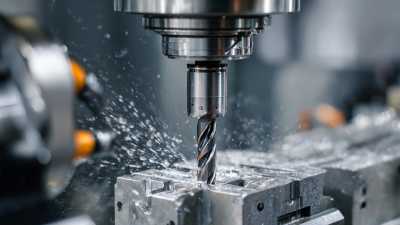
Chinese machining inserts are produced through a controlled powder-metallurgy process. Carbide powders are blended with binders, pressed into precise shapes, and sintered at high temperatures. This stage creates the insert’s hardness and toughness. After sintering, grinding corrects the cutting edges and seating surfaces. Some inserts receive PVD or CVD coatings for better wear resistance.

Quality testing should continue beyond visual inspection. Producers commonly check dimensions, edge preparation, hardness, coating thickness, and surface defects. Microscopes can reveal chipped corners that ordinary lighting misses. Batch samples may also undergo cutting trials on steel, stainless steel, or cast iron. These tests measure tool life, edge wear, vibration, and chip control. Traceable inspection records make results more reliable for global buyers.

Tips: Request inspection reports, material certificates, and sample inserts from the same production batch. Confirm tolerance standards before ordering. A clean certificate does not always guarantee stable cutting performance. In practice, a few samples can perform differently because of grinding variation or coating inconsistencies. That weakness deserves attention. Independent testing is useful when large quantities or difficult materials are involved.

What Factors Should Global Buyers Compare Before Ordering?

China Best Machining Inserts for Global Buyers?

What Factors Should Global Buyers Compare Before Ordering?

Global buyers should compare performance, not just quoted price. Insert selection starts with workpiece material, hardness, cutting speed, feed rate, and coolant conditions. ISO 513 classifications help match cutting tools with steel, stainless steel, cast iron, and difficult alloys. A lower-cost insert may create more downtime when edge wear appears early.

Tungsten carbide quality deserves close attention. The USGS Mineral Commodity Summaries 2025 estimated global tungsten mine production at about 81,000 metric tons in 2024, with China supplying approximately 67,000 tons. This concentration makes raw-material traceability and supply continuity important. Ask for carbide grade data, coating composition, hardness, transverse rupture strength, and lot-level inspection records. Certificates alone are not enough.

Geometry also changes the final result. Compare nose radius, chipbreaker design, corner strength, and dimensional tolerance against your machine setup. Request cutting-test evidence using a comparable material and parameter range. ISO 3685 provides a recognized framework for tool-life testing, although factory tests may not perfectly match your workshop. That limitation matters.

Check packaging, labeling, replacement lead time, and complaint handling. A supplier offering stable batches may outperform a cheaper source with inconsistent edge preparation. Include freight, rejected parts, tool changes, and inventory costs in the calculation. Small details matter. I would also question unusually broad performance claims. Real machining is rarely that simple.

How Can Buyers Select Reliable Chinese Insert Suppliers?

Selecting reliable Chinese machining insert suppliers requires more than comparing prices. The ISO Survey 2022 recorded 1,265,216 ISO 9001 certificates worldwide, but certification alone cannot prove stable cutting performance. Request the certificate, scope, expiry date, and recent audit evidence. Then check whether the supplier controls carbide composition, coating thickness, edge geometry, and batch traceability.

Ask for inspection reports linked to each production lot. Useful records include hardness, dimensional tolerance, coating adhesion, and cutting-test results. A serious supplier should provide samples from several batches, not only hand-picked pieces.

Test them on your actual material, speed, feed, and coolant conditions. Keep the test criteria written. Vague promises create expensive arguments later.

Logistics also deserve attention. The World Bank’s 2023 Logistics Performance Index gave China a score of 3.7 out of 5, ranking it 19th globally. That supports strong export capability, but delivery performance still varies between factories.

Verify production capacity, packaging photographs, lead-time history, and contingency plans. Visit the facility, physically if possible, or arrange an independent audit. A polished video is not evidence.

A low price can hide inconsistent grades. I have seen buyers overvalue samples and undervalue process control. That is a mistake worth revisiting. Choose suppliers that accept corrective-action reviews, disclose tolerances clearly, and communicate problems before shipment. Reliability is built through repeatable records, not confident sales language.

en_USEnglish

PCD Inserts

PCBN Inserts

Solid CBN Inserts

PCD Milling Cutter

PCD Drilling Tools

PCD Reamer

Diamond Special Tool

Diamond Dressers