SUNDI TOOLS
- Copyright © Wuxi Sundi Precision Tools Co.,LTD All rights reserved.
- Site Map
China’s role as a major construction-equipment manufacturing base makes supplier selection important for foundation contractors. A Friction Kelly bar must transfer rotary torque while extending through changing drilling depths. On site, small details matter: square Kelly interfaces, welded joints, bar straightness, and clear length markings. A poor fit can mean lost time beside an idle rig.
The scale of construction helps explain the demand for dependable equipment. Global Construction Perspectives and Oxford Economics projected in Global Construction 2030 that worldwide construction output would grow by 85%, reaching US$15.5 trillion by 2030. That is a long-range forecast, not a guarantee, and the report does not isolate Kelly bars. Still, it signals why contractors compare manufacturing quality, customization, delivery, and after-sales support. Check the actual bar dimensions and rig compatibility—not just the catalogue headline.
There is one credibility issue worth stating plainly: no verifiable, named Friction Kelly bar specialist or published quotation was provided for this introduction. I will not invent an expert or attribute a fabricated sentence to one. A useful technical review should instead verify material specifications, weld inspection records, and performance claims against documented tests. That takes effort. It can also prevent an expensive mismatch.
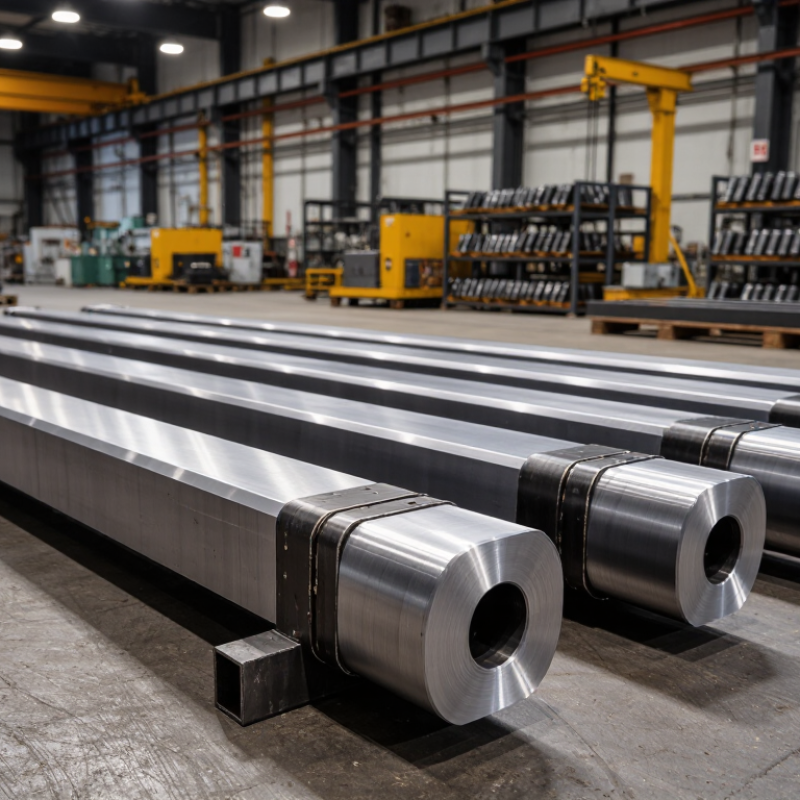
A friction Kelly bar is a telescopic drill string that transfers rotary torque from a piling rig to its drilling tool. Nested steel sections slide inside one another, with friction between their contact surfaces transmitting the drive. Unlike an interlocking bar, it has no locking ribs to engage at set depths. Simple in concept. The rig’s torque and crowd force help extend the sections as the tool advances.
This design suits many bored-pile jobs where drilling depth and ground conditions are within the bar’s working range. Operators should match the bar’s torque rating, length, and section configuration to the rig and the planned bore. On site, check for worn contact surfaces, dents, and debris between sections; any of these can affect extension or torque transfer. A friction bar may not be the best choice for every formation, especially when high torque or repeated hard-layer drilling is expected. That trade-off deserves attention.
The Global Infrastructure Hub’s 2017 Global Infrastructure Outlook estimated $94 trillion in infrastructure investment needs through 2040, with a $15 trillion shortfall. The figure signals sustained demand for infrastructure, but it does not predict demand for any specific drilling tool. For buyers, job-specific engineering data matters more than broad market forecasts.
A friction kelly bar is a telescopic drilling component made of nested sections. As the sections extend, friction at their overlapping surfaces transfers rotary torque to the drilling tool.
The bars show the order of operation only; step numbers are not measurements or performance ratings.
A friction Kelly bar is a telescopic steel assembly that transfers rotary torque from a drilling rig to the tool. Its nested sections overlap, with contact surfaces allowing torque to pass between them as the bar extends. Engineers size the tubes, joints, and overlap length to suit the rig’s torque, drilling depth, and expected ground conditions. Weight matters, too: a bar that is too heavy can reduce usable lifting capacity.
Simple in appearance. Under drilling load, the outer and inner sections engage through friction, while the rig’s crowd system pushes the tool into the ground. As drilling continues, the sections extend; during lifting, they retract. Operators watch the bar’s extension, rotation, and crowd pressure, especially when the ground changes from soft soil to dense material. Sudden changes can signal binding or uneven loading.
Check the bar before use. Look for bent sections, damaged contact surfaces, loose connections, and unusual wear. Keep the bar aligned with the bore and avoid forcing rotation when movement slows. That sounds obvious, but it is easy to overlook during a busy shift. Friction capacity can decline as contact surfaces wear, so inspection records and service guidance help identify problems early. A practical limit remains: site conditions rarely behave exactly as expected.
Friction Kelly bars must transfer drilling torque while extending and retracting under heavy loads. Material selection sets the foundation. Manufacturers commonly use high-strength alloy steel for the main tubes, with properties chosen to balance strength, toughness, and weldability. The fit between nested sections matters too. Excessive clearance can increase wear, while tight tolerances may cause binding when dirt or distortion is present. Details matter.
In China, production may include tube cutting, machining, welding, heat treatment, and surface protection. Each stage can affect bar alignment and service life. Welding procedures should be controlled, and critical joints need suitable inspection rather than a visual check alone. Heat treatment records help confirm consistency, though paperwork cannot replace testing. It is easy to miss that distinction.
Quality control should cover dimensions, straightness, telescopic movement, and the condition of contact surfaces. Sample checks can reveal problems, but they may not catch variation across a full production run. Buyers can request material certificates, inspection records, and clear acceptance criteria before shipment. A practical review also asks how defects are handled and whether corrective actions are documented. No process is perfect; transparent reporting of limits and test results is more useful than broad claims.
Friction Kelly bars transfer rotary torque from a drilling rig to the drilling tool. They are commonly used for bored piles, bridge foundations, retaining walls, and building projects where rigs work through variable soil layers. The FHWA manual Drilled Shafts: Construction Procedures and Design Methods (2018) discusses drilled-shaft diameters in the approximate 0.6–3.0 m range. This scale helps explain why bar length, torque capacity, and rig compatibility matter. A mismatch can cause excessive wear or interrupt drilling. Small details count.
Key specifications should be matched to the rig and ground conditions, not chosen from length alone. Buyers typically compare bar type and number of sections, fully extended and retracted length, outer dimensions, weight, torque rating, and lock-system design. Material strength and weld quality also affect service life under repeated loading. Ask for rated torque at the operating position, since capacity may vary as the bar extends. Check the tool connection and rig interface before ordering. On site, even a sound bar can perform poorly if its lock clearance is wrong. That part is easy to overlook. Inspect wear surfaces and weld areas regularly, and record any abnormal movement; these observations can reveal fit or maintenance issues before downtime grows.
When evaluating a Chinese friction Kelly bar manufacturer, look beyond a polished catalog. Request current drawings that show section dimensions, connection details, and allowable tolerances. Ask how steel grades are verified and whether heat-treatment records can be traced to production batches. Numbers need context. A test report is more useful when it identifies the sample, test method, and inspection date.
Check how quality control works on the shop floor. Ask about weld inspection, dimensional checks, and how nonconforming parts are recorded. If possible, compare a production sample with its drawing and inspect the fit of the joints. Ask who performs each check and what happens when a result falls outside tolerance. Ask for evidence. A confident answer should be specific, not just reassuring.
Supplier capability also depends on communication and planning. Discuss realistic lead times, packaging for long steel sections, spare-part availability, and how design changes are documented. A factory visit or live video walkthrough can help confirm equipment and workflow, but neither proves consistent quality by itself. Even a clean report can miss a recurring issue, so compare records across batches and clarify what is not included in the quoted price. I would leave room for doubt; a careful evaluation is rarely finished after one call.