...

China Top 10 Gas Insulated Switchgear Manufacturers?

China has a broad base of electrical equipment manufacturers serving utility, industrial, and infrastructure projects. Gas Insulated Switchgear (GIS) is often selected where installation space is limited or reliable switching is essential. Its enclosed compartments can help protect key components from dust, moisture, and other environmental factors. Details matter. Voltage ratings, insulation design, operating mechanisms, and maintenance access all affect whether a unit fits a project.

This guide introduces ten Chinese manufacturers associated with GIS equipment. The list is intended as a starting point for research, not a definitive ranking. Company capabilities and product offerings can change, and public information may not reveal how a system performs in a specific installation. Buyers should review current technical datasheets, test documentation, applicable certifications, and project references directly with each supplier.

A useful comparison goes beyond price and name recognition. Consider rated voltage, short-circuit performance, footprint, control and protection options, delivery capacity, and after-sales support. Ask how the manufacturer handles commissioning, spare parts, and service in your region. A polished catalogue is helpful, but it cannot answer every practical question. Even established suppliers may differ in manufacturing scope or project experience. Careful verification is still necessary. The following overview provides context for comparing potential partners and identifying which questions deserve closer attention.
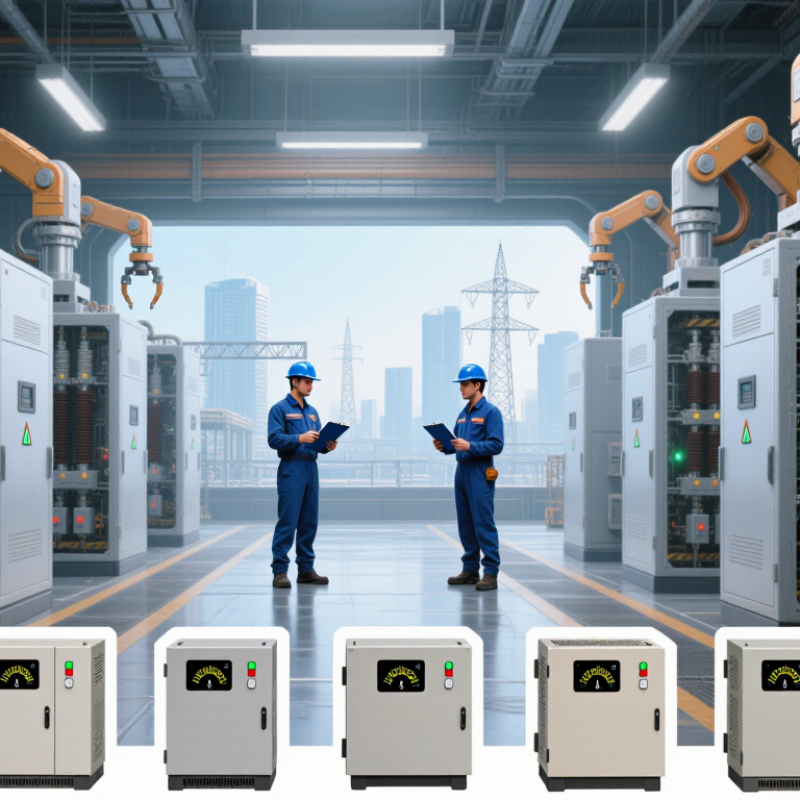
China Top 10 Gas Insulated Switchgear Manufacturers?

Gas-Insulated Switchgear Explained: Systems Rated from 72.5 to 1,100 kV

Gas-insulated switchgear, or GIS, places live conductors inside sealed, grounded metal enclosures. Gas provides insulation, while compact modules combine switching and protection functions. Systems rated from 72.5 to 1,100 kV serve applications ranging from urban substations to ultra-high-voltage transmission. IEC 62271-203:2022 covers AC GIS above 52 kV, providing a technical reference for these installations.

At 72.5 kV, GIS can help fit a substation into a tight city site. At 1,100 kV, insulation coordination, thermal performance, and control of switching transients become especially demanding.

The International Energy Agency’s 2023 report, Electricity Grids and Secure Energy Transitions, says about 80 million kilometres of grids must be added or refurbished by 2040—roughly the length of today’s global grid. That expansion makes dependable, space-efficient equipment increasingly important.

CIGRE Technical Brochure 802 examines alternatives to SF6 in high-voltage applications, including their technical readiness and limitations. Gas choice is not a simple swap; equipment design, testing, and operating conditions matter.

Maintenance teams also need reliable checks for moisture, gas leakage, and partial discharge. Details matter. A compact footprint can reduce land needs, but it does not remove the need for careful inspection or long-term planning.


How to Assess Chinese GIS Makers Under IEC 62271-203

China Top 10 Gas Insulated Switchgear Manufacturers?

How to Assess Chinese GIS Makers Under IEC 62271-203

IEC 62271-203 covers gas-insulated metal-enclosed switchgear for rated voltages above 52 kV. Use it as a technical benchmark, not a shortcut to choosing a supplier. Ask for type-test reports from qualified laboratories, then check that the tested configuration matches the offered equipment. Small differences in busbar layout, enclosure design, or insulation distances can matter.

Look closely at routine testing and factory quality records. Request documented checks for dielectric performance, partial discharge, gas leakage, and mechanical operation. Ask how production teams trace materials and control assembly cleanliness. A factory visit can reveal practical details: calibrated instruments, sealed work areas, and clear inspection records. Paperwork can look perfect. Cross-check it.

Assess the design against your project’s voltage, short-circuit duty, altitude, temperature range, and installation conditions. Confirm the applicable IEC edition and any project-specific requirements. Ask about installation supervision, spare parts, response times, and staff training. References from comparable substations are useful, but verify scope and operating history independently. One weakness in this assessment is that a short audit may miss inconsistent practices across shifts, so request evidence from multiple production batches.

China’s Top 10 GIS Manufacturers: Company Profiles and Product Portfolios

China’s GIS manufacturers serve utilities, industrial plants, rail networks, and renewable-energy projects. A useful company profile should show more than factory size. Compare voltage classes, rated current, short-circuit withstand, busbar configurations, and whether monitoring systems are included. Product portfolios commonly span high-voltage GIS, medium-voltage switchgear, circuit breakers, disconnectors, and gas-insulated bus sections. Check project references by application, not just total sales. A substation serving a coastal wind farm faces different corrosion and maintenance demands from an indoor urban installation.

The International Energy Agency’s Electricity Grids and Secure Energy Transitions report estimates that 80 million kilometres of grids may need to be added or refurbished by 2040. It also calls for annual grid investment to rise above 600 billion US dollars by 2030. Those figures support closer scrutiny of production capacity and lifecycle service. Ask each supplier for factory test records, partial-discharge limits, seismic options, and documented maintenance intervals. Details matter. Catalogues can look polished, but public data rarely shows field failure rates. That gap deserves attention. A balanced top-ten comparison should therefore distinguish verified operating evidence from claims, while noting where comparable data is unavailable.

China’s Top 10 GIS Manufacturers: Company Profiles and Product Portfolios

An anonymized overview of common gas-insulated switchgear product segments and representative industry ratings.

Profile Typical GIS Segment Representative Rated Voltage Common Rated Current Range Common Short-Time Withstand Current Typical Product Portfolio Common Applications
Profile 1 Compact distribution GIS 12 kV 630–2,500 A 20–31.5 kA Metal-enclosed gas-insulated switchgear, circuit-breaker panels, load-break switch units, busbar sections, and cable connection compartments Urban substations, commercial buildings, industrial plants, and distribution networks
Profile 2 Medium-voltage GIS 24 kV 630–2,500 A 20–31.5 kA Indoor GIS panels, feeder and transformer bays, bus couplers, metering panels, and ring-main configurations Utility distribution, renewable-energy collector systems, and large industrial facilities
Profile 3 Substation distribution GIS 40.5 kV 1,250–3,150 A 25–40 kA Single-bus and double-bus assemblies, circuit-breaker bays, bus-section bays, and transformer connection bays Primary distribution substations, mining, rail power supply, and heavy industry
Profile 4 High-voltage compact GIS 72.5 kV 1,250–4,000 A 31.5–40 kA Gas-insulated circuit-breaker bays, disconnectors, earthing switches, instrument transformers, and busbar modules Regional substations, power plants, and constrained urban sites
Profile 5 Transmission GIS 126 kV 2,000–4,000 A 31.5–50 kA Line bays, transformer bays, bus couplers, bus-section bays, and complete substation GIS assemblies Transmission substations, power generation facilities, and grid interconnection points
Profile 6 Extra-high-voltage GIS 252 kV 2,000–5,000 A 40–63 kA Modular GIS bays, high-current busbars, circuit-breaker modules, disconnectors, and gas monitoring systems Major transmission substations and high-capacity power plants
Profile 7 Ultra-high-voltage GIS 550 kV 4,000–6,300 A 50–63 kA Ultra-high-voltage GIS bays, high-current bus systems, switching modules, and integrated substation equipment Backbone transmission grids and large-scale generation projects
Profile 8 Renewable-energy GIS solutions Typically 12–252 kV 630–4,000 A 20–50 kA Collector-substation GIS, feeder bays, transformer bays, compact switchgear, and grid-connection equipment Wind farms, solar plants, and energy-storage grid connections
Profile 9 Rail and transportation GIS Typically 12–72.5 kV 630–3,150 A 20–40 kA Compact indoor GIS, feeder and bus-section panels, traction-substation switchgear, and protection-ready assemblies Railway traction substations, metro systems, and transportation infrastructure
Profile 10 Customized turnkey GIS systems Typically 40.5–550 kV 1,250–6,300 A 25–63 kA Project-engineered GIS bays, control and protection interfaces, gas handling and monitoring provisions, and substation integration packages Utility projects, industrial substations, power plants, and space-limited installations

Note: This anonymized table describes common GIS product segments and representative rating ranges found in industry standards and product literature. It does not rank or identify individual manufacturers, and actual ratings, configurations, and environmental conditions vary by product and project specification.

Comparing GIS Ratings: Current Capacity, 63 kA Fault Duty, and Voltage Class

When comparing GIS manufacturers in China, start with the project’s voltage class, not a headline rating. The class determines insulation coordination and clearances, so verify that the equipment’s highest voltage suits the system. Check continuous current against ambient temperature, enclosure conditions, and bus arrangement. A 2,000 A nameplate does not tell the whole story. Ask for temperature-rise test data from the specific configuration. Small detail, big difference.

Treat 63 kA as a defined duty, not a standalone figure. Confirm whether it applies for one or three seconds, and distinguish rated short-time withstand current from peak making current. These values describe different stresses on conductors and contacts. Request type-test evidence and check that the tested voltage class and arrangement match the proposed GIS. Also review interfaces, operating mechanisms, and maintenance access. Paper comparisons can still mislead; I would verify the test scope before ranking suppliers. Do the details match?

SF₆ and Lower-Emission GIS: SF₆ Has a 100-Year GWP of 25,200

SF₆ and Lower-Emission GIS: Understanding the Climate Impact

Gas-insulated switchgear saves space by placing electrical components inside sealed gas compartments. SF₆ has excellent insulating and arc-quenching properties, but its climate impact is substantial. Its 100-year global warming potential is 25,200, meaning one kilogram has the warming effect of 25,200 kilograms of CO₂ over that period. The figure is a comparison metric, not a measure of toxicity.

Small losses matter. During installation or servicing, technicians may handle gas connections, valves, and recovery equipment. Careful leak checks and gas recovery can reduce avoidable emissions. A pressure reading that seems ordinary deserves attention. It is easy to overlook.

Lower-emission GIS designs may use alternative gas mixtures, vacuum interruption, or other insulating technologies. Their suitability depends on voltage, site conditions, safety requirements, and maintenance capacity. Buyers should compare verified gas leakage rates, operating performance, and end-of-life recovery plans—not just equipment size or purchase price. Alternatives are not automatically better in every application; that deserves honest review. Sound decisions rely on documented data and trained service teams, because a small maintenance gap can weaken the climate benefit.

SF₆ and Lower-Emission GIS: 100-Year Global Warming Potential

Global warming potential (GWP) compares the warming impact of one kilogram of a gas with one kilogram of CO₂ over 100 years.

SF₆ has a GWP₁₀₀ of 25,200. Values shown are for individual gases, not GIS gas mixtures; the GWP of a mixture depends on its composition. Lower-GWP insulating options can reduce climate impact, while actual emissions also depend on equipment design, handling, and leakage. Source: IPCC Sixth Assessment Report, Working Group I.

en_USEnglish

PCD Inserts

PCBN Inserts

Solid CBN Inserts

PCD Milling Cutter

PCD Drilling Tools

PCD Reamer

Diamond Special Tool

Diamond Dressers