What Are China Top 10 Lifting Bolt Manufacturers?
Choosing reliable Lifting Bolts manufacturers requires more than comparing factory size or online visibility. This guide examines ten notable Chinese suppliers through practical, measurable criteria. These include forging capability, thread accuracy, material control, heat treatment, surface protection, testing procedures, and export experience. The focus is not simply on low prices. Safety comes first.
A dependable manufacturer should provide clear material certificates, batch traceability, dimensional reports, and load-testing evidence. Buyers may also inspect production details, such as calibrated torque tools, marked steel grades, and protected threads inside export cartons. These small details often reveal whether a supplier controls quality consistently. The selected companies are reviewed according to their product range, lifting hardware expertise, customization capacity, production scale, and communication reliability.
No ranking can represent every buyer’s needs. A construction contractor may value fast delivery, while an equipment maker may require drawings, private labeling, or special coatings. Some manufacturers appear strong online but provide limited technical documentation. That deserves careful review. This article aims to offer a balanced starting point, not an unquestionable verdict. Readers should confirm current certifications, factory capabilities, test standards, and sample performance before placing an order. Real verification matters. Supplier claims can change, and even an experienced evaluation may miss important details. With that limitation in mind, the following overview highlights China’s top ten Lifting Bolts manufacturers and explains where each company may fit different industrial applications.
Definition and Applications of Lifting Bolts
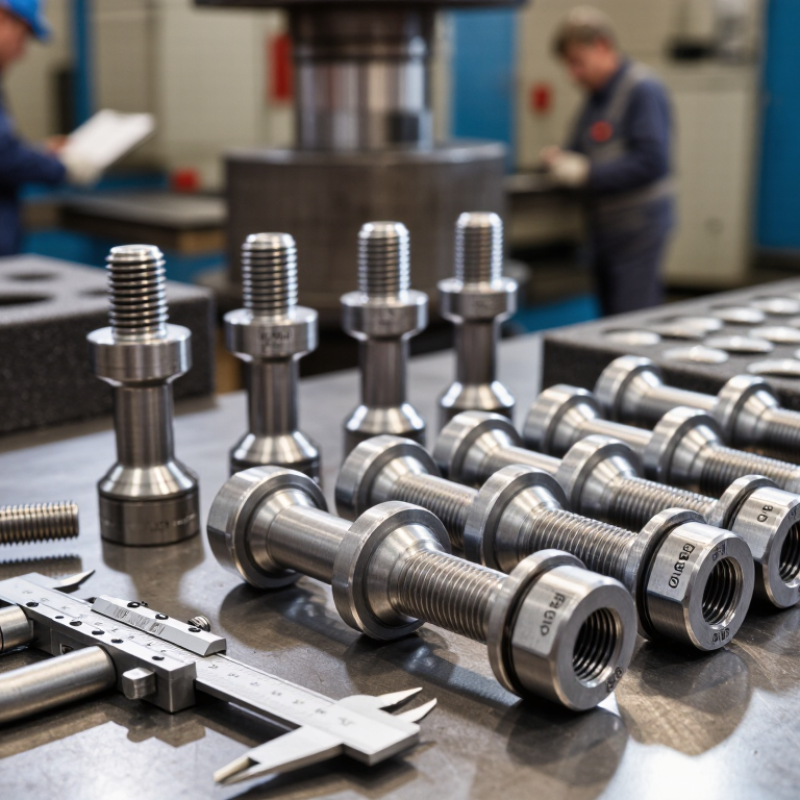
Lifting bolts are threaded load-bearing fasteners designed to connect equipment with slings, shackles, or lifting fixtures. Unlike ordinary bolts, they are engineered for controlled lifting forces. Many include a forged eye, shoulder, or special head that helps transfer weight through the bolt body. Their safe working load depends on material strength, thread engagement, installation position, and loading direction.
In industrial workshops, lifting bolts support motors, pumps, steel frames, molds, and maintenance covers. A vertical lift is usually the simplest application. Side loading, sudden movement, or an angled sling can reduce capacity sharply. The bolt must match the tapped hole, with full thread contact and a clean seating surface. Damaged threads, bent eyes, corrosion, or missing markings require rejection, not improvisation.
When comparing China’s top 10 lifting bolt manufacturers, buyers should examine test records, dimensional consistency, traceability, and quality-control procedures. Factory samples can look excellent while production variation remains unnoticed. That is an uncomfortable point, but it matters. Inspectors should check load ratings against real lifting conditions and review certificates before installation. A larger bolt is not automatically safer. Over-tightening may distort the part, while poor alignment can create hidden bending stress. Periodic inspection remains necessary, especially in dusty workshops, outdoor yards, and equipment exposed to vibration.
Key Standards for Evaluating Chinese Lifting Bolt Manufacturers
What Are China’s Top 10 Lifting Bolt Manufacturers?
Key Standards for Evaluating Chinese Lifting Bolt Manufacturers
The strongest manufacturers are not identified by factory size alone. They are judged through repeatable engineering and controlled production. Ask whether the supplier follows relevant standards, such as DIN 580, DIN 582, ISO 898-1, or applicable Chinese standards. The correct standard depends on bolt design, loading direction, material, and market requirements. A reliable factory should provide drawings, declared working load limits, thread dimensions, and surface treatment details. Vague answers deserve caution.
Material traceability is essential. Each production batch should connect to a mill certificate, heat number, and inspection record. Check whether steel composition matches the specified grade. Heat treatment records should show controlled temperature and holding time. Testing should include tensile strength, hardness, proof loading, and dimensional inspection. For forged lifting bolts, examine forging flow, cracks, thread quality, and eye alignment. Small defects can become serious under repeated lifting.
Factory evaluation also needs evidence beyond paperwork. Request recent sample reports, calibration records, and photographs of testing equipment. An independent inspection can verify marking, batch identity, and actual load performance. Confirm that the working load limit is clearly marked and never confused with breaking load. This mistake is surprisingly common. Procurement teams may also review complaint handling and corrective-action records. No supplier is perfect. A manufacturer willing to disclose an error, investigate its cause, and improve the process may be more dependable than one presenting flawless documents. Audits should still remain skeptical.
Top 10 Lifting Bolt Manufacturers in China
Top 10 Lifting Bolt Manufacturers in China should be evaluated by engineering evidence, not catalog size.
China produced about 1.02 billion tonnes of crude steel in 2023, according to the World Steel Association. This large industrial base supports forging, heat treatment, machining, and surface finishing. However, steel volume alone proves little. A reliable lifting bolt manufacturer should provide material certificates, dimensional inspection records, and traceable batch numbers.
The top ten candidates should demonstrate compliance with ISO 3266 for forged lifting eye bolts and relevant ISO 898-1 mechanical requirements. Their factories should verify proof loads using calibrated equipment, with test results linked to each production batch. Look for controlled thread gauges, hardness testing, and documented coating thickness. Small details matter. A clear rejection procedure matters too. Industry buyers often compare load ratings, safety factors, lead times, and export experience. The World Steel Association’s 2023 data confirms China’s manufacturing scale, but it does not confirm every supplier’s reliability. That distinction is easy to miss. An honest ranking should also examine independent audits, complaint handling, and performance after installation. Product photographs are not enough. Semi-finished testing is another weakness worth questioning. Real lifting conditions include shock loading, corrosion, and awkward angles, while many factory samples remain perfectly clean. Selecting among China’s top ten manufacturers therefore requires technical records, site evidence, and cautious verification rather than marketing claims.
Product Comparison: Materials, Designs, and Load Capacities
Comparing China’s top ten lifting bolt manufacturers requires more than checking price or polished photographs. Material choice matters first. Common products use forged carbon steel, alloy steel, or stainless steel. Alloy steel usually offers higher strength and better fatigue resistance. Stainless steel performs better in humid or corrosive areas, but it may carry less load at the same size.
The World Steel Association’s World Steel in Figures 2024 reported about 1.89 billion tonnes of crude steel production worldwide in 2023. China accounted for roughly 1.02 billion tonnes. This scale supports broad material access, yet it does not prove consistent bolt quality. Buyers should request heat numbers, chemical reports, and mechanical test results. Traceability matters. A clean surface is not enough.
Design differences also affect safe working load. Fixed eye bolts suit aligned vertical lifting. Shoulder patterns handle limited angular loading more effectively. Swivel designs offer greater flexibility, but their joints require careful inspection. ISO 3266 covers forged steel eyebolts for general lifting purposes, while ASME B30.26 addresses rigging hardware practices. Always compare working load limits, not breaking loads. A one-ton marking may apply only to vertical loading. Thread engagement, sling angle, proof testing, and installation torque can change performance. Some catalogs remain unclear here. That deserves questioning. Independent certification and documented factory inspections provide stronger evidence than a high load figure alone.
What Are China Top 10 Lifting Bolt Manufacturers? - Product Comparison: Materials, Designs, and Load Capacities
| No. | Anonymized Manufacturer Profile | Typical Product Design | Common Material / Grade | Typical Diameter Range | Typical Working Load Limit* | Thread Configuration | Surface Finish | Relevant Standards / Tests |
| 1 | Profile 01 | Shoulder lifting bolt with captive washer | Alloy steel, Grade 10.9 | M8–M30 | 0.3–6.3 t | Metric coarse, rolled thread | Black oxide or zinc plated | Proof-load and hardness testing |
| 2 | Profile 02 | Rotating lifting point with swivel eye | Quenched and tempered alloy steel | M10–M36 | 0.6–10.0 t | Metric coarse, high-strength class | Phosphate or electro-galvanized | Functional rotation and magnetic-particle inspection |
| 3 | Profile 03 | Fixed eye lifting bolt for vertical loading | Alloy steel, Grade 8.8 or 10.9 | M8–M24 | 0.2–4.0 t | Metric coarse, machined thread | Zinc plated | Dimensional, tensile, and visual inspection |
| 4 | Profile 04 | Heavy-duty shoulder eye bolt | Heat-treated alloy steel, Grade 12.9 | M12–M42 | 1.0–16.0 t | Metric coarse or fine | Black oxide with corrosion protection oil | Load testing and hardness verification |
| 5 | Profile 05 | Swivel hoist ring with load-bearing washer | Forged alloy steel | M12–M48 | 1.5–20.0 t | Metric coarse, precision rolled | Painted, zinc plated, or phosphate coated | Proof load, rotational torque, and NDT |
| 6 | Profile 06 | Stainless-steel lifting eye bolt | AISI 304 or AISI 316 stainless steel | M6–M24 | 0.1–2.5 t | Metric coarse | Natural stainless finish or electropolished | Material certification and tensile testing |
| 7 | Profile 07 | Extended-shank lifting bolt for recessed mounting | Alloy steel, Grade 10.9 | M10–M30 | 0.4–6.0 t | Metric coarse, full or partial thread | Zinc flake or black oxide | Thread gauge, tensile, and dimensional testing |
| 8 | Profile 08 | Low-profile lifting point for machinery bases | Forged alloy steel, Grade 10.9 | M8–M24 | 0.3–4.0 t | Metric coarse | Black oxide or powder coated | Proof-load and seating-surface inspection |
| 9 | Profile 09 | Custom forged lifting bolt with machined shoulder | Custom heat-treated alloy steel | M16–M56 | 2.0–25.0 t | Metric or imperial, according to drawing | Painted, zinc plated, or customer specified | Traceability, proof load, and third-party inspection available |
| 10 | Profile 10 | Corrosion-resistant lifting bolt for marine environments | AISI 316 stainless steel or coated alloy steel | M10–M36 | 0.4–8.0 t | Metric coarse or fine | Passivated, electropolished, or marine-grade coating | Salt-spray, material, and tensile testing |
*Working load limits are representative comparison ranges for commonly manufactured lifting-bolt configurations. Actual capacity depends on diameter, thread engagement, installation orientation, base material, loading angle, product geometry, inspection results, and the manufacturer’s certified rating. Always verify the product certificate and applicable lifting regulations before use.
How to Choose the Right Chinese Lifting Bolt Supplier
Choosing among China’s top lifting bolt manufacturers requires more than comparing prices. Start with the intended load, bolt diameter, thread type, working load limit, and operating environment. A reliable supplier should provide material certificates, heat-treatment records, dimensional reports, and clear traceability for each batch. Ask whether the bolts are forged from suitable alloy steel, not simply machined from unknown stock.
Request recent proof-load and tensile-test reports from an independent laboratory. Check whether testing follows the standards required in your market. Sample inspection matters. Examine thread accuracy, surface cracks, marking quality, and corrosion protection. One polished sample proves little.
Visit the factory when possible. Observe forging equipment, heat-treatment controls, calibration records, and final inspection areas. A serious manufacturer will explain rejected-product handling without hesitation. Confirm production capacity, minimum order quantities, packaging, lead times, and replacement procedures in writing. Communication also reveals technical maturity. Vague answers can become expensive delays.
Do not select the cheapest quotation automatically. A low price may exclude testing, traceability, or suitable coating. I have seen buyers focus on unit cost and overlook inconsistent thread gauges. That mistake is easy to repeat. Even experienced purchasing teams should recheck assumptions, especially when drawings change. Compare at least three qualified suppliers, approve a pre-production sample, and keep inspection records for future orders.
How to Choose the Right Chinese Lifting Bolt Supplier
This supplier-evaluation model assigns practical purchasing weights to the factors most relevant to lifting bolts, including compliance with applicable standards such as EN 1677, ASME B30.26, and ISO 898-1, material traceability, proof testing, dimensional accuracy, corrosion protection, customization, quality documentation, production capacity, export experience, and after-sales support. The percentages are evaluation weights rather than market-share data or a company ranking.
 Skip to content


 English
 Russian
 German
 Spanish
 French
 Portuguese