China Top Prefab Container House Suppliers and Prices?
Choosing a China-based supplier for a Prefab Container House can look straightforward when product photos and price lists are easy to find. Yet a tidy showroom image cannot show how a unit is packed, delivered, or assembled on site. The final quote may also change with dimensions, insulation, windows, interior finishes, and order quantity. Small omissions can matter. Details matter. A useful supplier comparison looks beyond the headline price and asks what the quoted package actually includes.
This guide explores how buyers can assess Chinese suppliers and compare prices with greater care. It outlines common cost factors, from basic shell units to more customized layouts, without treating any estimate as a universal market price. Freight, installation, site preparation, and local requirements may sit outside a factory quote, so confirm them in writing. Request clear specifications, recent project examples, material details, and a breakdown of any optional upgrades. Check whether the supplier’s stated production capacity and delivery schedule fit your project, then verify the details independently. A low quote may be attractive, but it is not proof of better value. No article can inspect every factory or predict every project cost. Use this overview as a starting point, and leave room to question assumptions before making a decision.
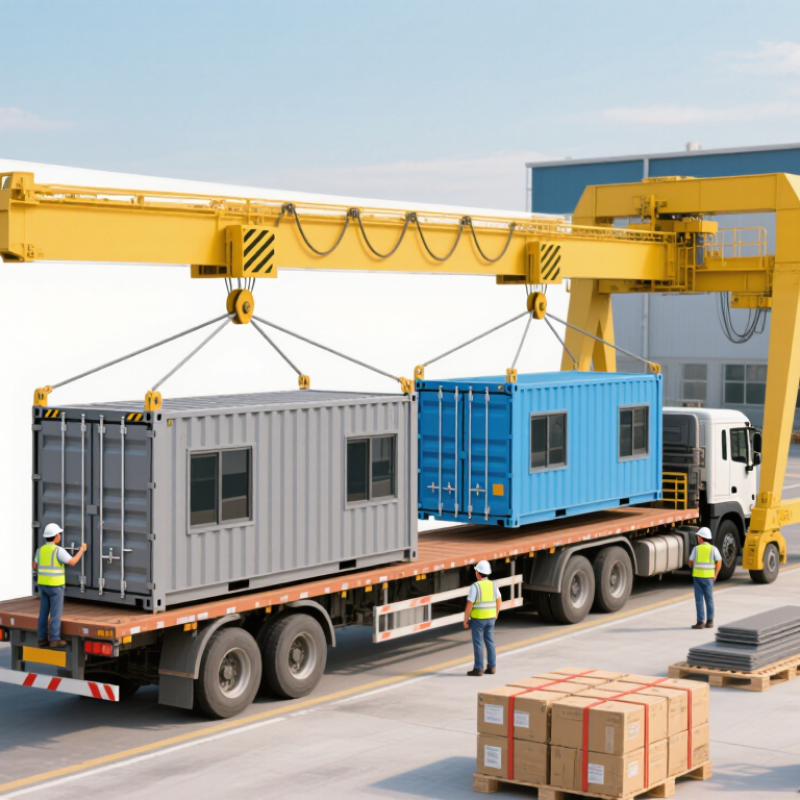
What Prefabricated Container Houses Are and How They Are Used
A prefabricated container house is a building assembled from factory-made modules, often using a steel frame and insulated wall panels. The modules arrive with openings for doors and windows, while electrical wiring, plumbing, and interior finishes depend on the project. Some units connect side by side or stack vertically. Their layout can be adjusted, but not every design suits every site.
They are commonly used as construction offices, worker accommodation, ticket booths, classrooms, and small clinics. For example, a site office may include a desk, lighting, sockets, and an air conditioner, ready for delivery and installation. Units can also provide temporary housing after emergencies, where suitable services and safe access are available. Fast setup is useful. Still, delivery access and ground preparation matter; a narrow road or uneven base can cause delays.
For longer-term use, buyers should check insulation, ventilation, fire safety features, and the quality of doors and seals. Ask for drawings and material specifications, not only a price per unit. Installation and utility connections may add cost. A container house can be practical, but it is not automatically comfortable or suitable for every climate. I have seen the simple box idea oversold; careful site planning makes a real difference. Local building requirements should also be checked before use.
How China’s Container House Supplier Market Is Organized
China’s container-house market is organized around three supplier roles: factory fabricators, trading companies, and project integrators. Fabricators cut steel, weld frames, install insulation, and fit doors and windows. Trading companies coordinate orders across factories, while integrators may add transport, foundations, utilities, and on-site assembly. These roles can overlap. Ask who handles installation and warranty before comparing quotations.
The distinction matters because a low factory price may exclude packing, inland delivery, lifting, or electrical work. Compare specifications line by line: steel thickness, insulation type, floor finish, and window dimensions.
McKinsey’s 2019 report, “Modular construction: From projects to products,” estimated that modular construction in the United States and Europe could reach $130 billion by 2030. This is broader than China’s container-house sector, so it signals modular growth, not a local sales forecast.
A container unit may look standardized. Details still vary. One weakness in supplier comparisons is that quotation sheets often use different scopes; without a shared specification, the “cheapest” offer may simply leave more work to the buyer.
Major Chinese Suppliers and How to Evaluate Their Capabilities
China’s prefab-container suppliers generally fall into three groups: factory manufacturers, engineering integrators, and export-focused assemblers. Their brochures can look similar. Factory visits reveal more: check welding consistency, corner fittings, insulation seams, and whether production records match the quoted specification. Ask for material certificates, structural calculations, and test reports for the exact model—not a similar unit.
Capability matters more than a low headline price. McKinsey’s 2019 report on modular construction estimated that well-executed projects could be delivered 20–50% faster, with potential cost savings of up to 20%. These are benchmarks, not guarantees for every container house. Compare quotes on the same basis: steel thickness, coating, insulation, electrical fittings, packing, shipping, and installation. Small omissions add up. I would still verify whether promised delivery dates include inspection and export packing.
Ask how the supplier controls changes between prototype and batch production, and request dated photos or third-party inspection records. The 2023 Global Status Report for Buildings and Construction, published by UNEP and GlobalABC, attributed 37% of global energy- and process-related CO2 emissions to buildings and construction in 2022. For buyers, that makes insulation data and material specifications worth checking, not just paint color. ISO 20887:2020 also provides guidance on design for adaptability and disassembly; ask whether units can be repaired or reconfigured without excessive waste. A neat sample is not proof of repeatable quality.
What Determines Prefabricated Container House Prices in China
A China prefab container-house quote depends on the specification, not just the unit’s floor area. The main cost drivers are steel-frame thickness, corrosion protection, insulation, windows, wiring, plumbing, and interior finishes. A 50 mm insulated wall and a thicker roof panel do not perform or cost the same. Neither do an empty site office and a unit fitted with bathrooms and cabinets. Ask suppliers to itemize these details.
Scale matters, too. China’s Ministry of Housing and Urban-Rural Development reported about 860 million square metres of newly started prefabricated buildings in 2022, equal to 26.2% of new construction area. This signals a mature production sector, but it is not a price index for container homes. Factory location, order quantity, customization, transport distance, crane access, and site installation can all change the delivered price. Steel-market movements may also affect quotes, so check the quote date and validity period. A low headline price can hide excluded freight or basic fittings. I would compare the drawings and itemized scope before comparing totals; small omissions matter.
China Prefabricated Container House Prices: What Drives the Cost?
Indicative price ranges by configuration (USD per unit). Larger sizes and added insulation or interior finishes generally increase the purchase price.
Budgetary estimates only, not a supplier survey or quotation. Actual prices depend on dimensions, steel specifications, insulation, doors and windows, interior fit-out, order quantity, and customization. Transport, foundations, installation, and applicable taxes may be charged separately.
How to Compare Supplier Quotes and Select a Suitable Partner
China Top Prefab Container House Suppliers and Prices?
Compare supplier quotes on an equal scope, not just the headline price. Ask each supplier to price the same layout, steel thickness, insulation, windows, electrical fittings, and finish. Details matter. A low factory price may exclude packing, inland transport, shipping, lifting, installation, or site preparation. Put every exclusion in a comparison sheet, then calculate the delivered and installed cost for your project location.
The McKinsey report Modular construction: From projects to products (2019) estimates that modular construction can shorten project timelines by 20–50% and reduce costs by up to 20%. These are potential gains, not guaranteed savings; design, transport, and site conditions change the result. Ask suppliers for an itemized quote, production schedule, material specifications, and recent inspection records. Request photos of concealed connections and insulation layers, not only finished rooms. Ask for proof.
Check how defects, replacements, and delays are handled in writing. Confirm warranty coverage and the process for spare parts. A spreadsheet helps, but it can hide differences in material quality. Compare technical documents and sample details before paying a deposit. One weak point in this process: drawings may look complete while omitting small but costly items, such as stairs or drainage. Ask the supplier to mark inclusions directly on the quotation and drawings.
 Skip to content



 English
 Russian
 German
 Spanish
 French
 Portuguese