China Top S250 Air Compressor Rock Drill Price?
China’s S250 Air Compressor Rock Drill market attracts contractors seeking practical drilling power at a controlled cost. Prices can differ widely, even when machines appear similar in photographs. Air delivery, working pressure, engine brand, drilling depth, and included accessories all influence the final quotation. Shipping terms, spare parts, warranty coverage, and after-sales support also matter.
“Price should follow the drilling task, not lead it,” says Li Wei, an independent drilling equipment engineer with more than fifteen years of field experience in quarry and foundation projects. His point is direct. A cheaper S250 Air Compressor Rock Drill may reduce the purchase budget, yet poor airflow stability can slow drilling and increase bit consumption. In muddy quarry conditions, weak filtration can create another expense. Small details become costly.
A dependable comparison should request the complete technical sheet, not only the headline price. Buyers should verify compressor capacity, rated pressure, fuel consumption, drill compatibility, operating weight, and maintenance access. Factory inspection records and real customer references provide stronger evidence than promotional claims. China suppliers may offer competitive factory prices, but export packing, inland transport, customs charges, and local taxes can change the landed cost.
The word “top” needs careful handling. It may describe output, value, reliability, or popularity, and these are not identical. That is easy to overlook. This guide examines China’s S250 Air Compressor Rock Drill pricing through practical specifications, supplier credibility, ownership costs, and field suitability. Some estimates may remain imperfect because configurations and markets change. That uncertainty deserves honest attention.
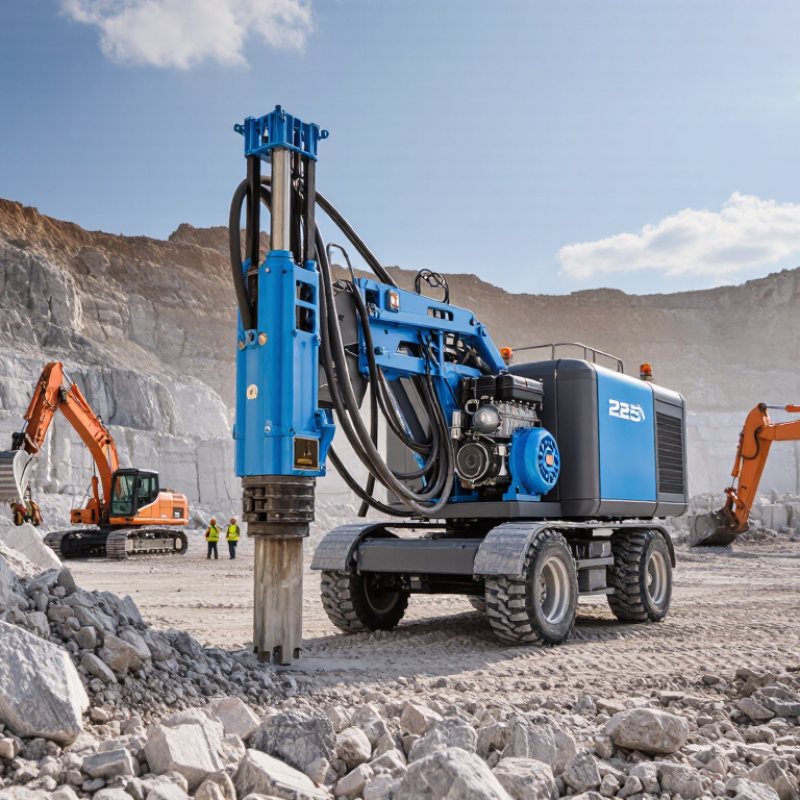
S250 Rock Drill Compressor Specs: 250 CFM, 7–12 Bar Working Pressure
China Top S250 Air Compressor Rock Drill Price?
The S250 rock drill compressor is designed for demanding pneumatic drilling work. Its rated air delivery reaches 250 CFM, supporting steady tool performance on active sites. Working pressure usually ranges from 7 to 12 bar. That range suits different drilling depths, rock conditions, and air-tool requirements.
Pressure is not the only buying factor. Check whether the stated 250 CFM means free air delivery or theoretical displacement. These figures can differ noticeably. A reliable supplier should provide test conditions, engine details, tank capacity, cooling method, and fuel consumption. Ask for a pressure gauge photo and a factory test report. Small details matter.
The final China price depends on configuration, export packaging, spare parts, and delivery terms. A basic unit may cost less, but reduced cooling capacity can create trouble in hot, dusty locations. Inspect the air filter design and drain points carefully. I would also compare noise levels and service access before accepting a low quotation. Cheap is not always efficient. Sometimes the specification looks complete, yet the continuous-duty rating remains unclear. That gap deserves a written answer before payment or shipment.
S250 Rock Drill Compressor Specifications
The compressor is rated at 250 CFM air delivery and operates within a working pressure range of 7–12 bar. The chart shows the lower and upper limits of the specified pressure range.
Air Delivery: 250 CFM
Working Pressure: 7–12 bar
Equivalent Pressure: 101.5–174.0 psi
China S250 Air Compressor Price Range by Power, Pressure, and Configuration
China Top S250 Air Compressor Rock Drill Price?
China S250 air compressor prices vary with power, pressure, and configuration. S250 is not a universal specification, so buyers should confirm airflow before comparing quotations. A unit delivering around 250 CFM may use 37–45 kW power. Typical factory prices range from USD 7,000 to USD 15,000. Freight, taxes, and spare parts are usually excluded.
Pressure changes the cost. A 7–8 bar configuration is often the economical choice for general drilling. Models rated at 10–12 bar may cost 10%–20% more. Higher pressure also increases motor load and operating expenses. Electric versions suit stable job sites. Diesel configurations offer mobility but require fuel management and stricter maintenance. Air tanks, coolers, dryers, remote controls, and cold-weather packages can add several hundred dollars.
Tips: Request airflow, working pressure, motor power, and noise data on one quotation. Ask for a factory test report and warranty terms. Check whether the price includes filters, oil, valves, and delivery. I have seen low quotes become expensive after missing accessories appear. That mistake is easy to make. A careful comparison should include energy use over twelve months, not only the purchase price. Some advertised “S250” units may deliver less airflow than expected, so verify performance under real operating conditions.
China Top S250 Air Compressor Rock Drill Price? - China S250 Air Compressor Price Range by Power, Pressure, and Configuration
Indicative China market price ranges for S250-class diesel screw compressors used with pneumatic rock drills. Prices are in USD, EXW, and exclude tax, freight, drilling tools, and optional accessories. | Configuration | Rated Power | Working Pressure | Free Air Delivery | Recommended Rock-Drill Use | Typical Price Range |
| S250 Standard Low-Pressure | 45 kW / 60 hp | 7 bar / 102 psi | 250–280 cfm
7.1–7.9 m³/min | Light surface drilling and small pneumatic tools | US$7,500–10,500 |
| S250 Medium-Pressure | 55 kW / 74 hp | 10 bar / 145 psi | 230–260 cfm
6.5–7.4 m³/min | General rock drilling and quarry maintenance | US$8,500–12,000 |
| S250 High-Pressure | 75 kW / 101 hp | 15 bar / 218 psi | 210–240 cfm
5.9–6.8 m³/min | Hard-rock drilling and longer hose runs | US$11,500–16,500 |
| S250 Deep-Hole High-Pressure | 90 kW / 121 hp | 21 bar / 305 psi | 180–220 cfm
5.1–6.2 m³/min | Deep-hole drilling and demanding blast-hole work | US$16,000–23,000 |
| S250 Trailer-Mounted Configuration | 55–75 kW
74–101 hp | 7–15 bar
102–218 psi | 210–280 cfm
5.9–7.9 m³/min | Mobile construction sites and remote quarry work | US$12,000–19,000 |
| S250 Skid-Mounted Configuration | 45–90 kW
60–121 hp | 7–21 bar
102–305 psi | 180–280 cfm
5.1–7.9 m³/min | Fixed plant installation and mine workshops | US$7,000–18,500 |
| Price factors: engine and air-end specification, pressure setting, airflow certification, aftercooler, filtration, cold-weather package, trailer or skid design, remote monitoring, spare parts, and order quantity can materially change the final quotation. |
Comparing New, Used, and OEM S250 Compressors by Service Life and Warranty
China Top S250 Air Compressor Rock Drill Price?
When comparing S250 compressors, purchase price should not stand alone. A new unit usually costs more, but it offers predictable performance, full inspection records, and stronger warranty protection. In field maintenance, a new compressor may deliver 8,000 to 15,000 operating hours when filters, oil, and cooling systems receive regular care. Warranty coverage often lasts 12 to 24 months, but exclusions can include wear parts and improper installation.
Used S250 compressors can reduce the initial budget considerably. However, operating hours may not reveal the whole story. A machine with clean oil lines, stable discharge pressure, and no unusual vibration can be a better choice than a cheaper, neglected unit. Ask for service logs, compression tests, and photographs of the air end. Used warranties are commonly limited to 30 or 90 days. That is a short safety net.
OEM compressors and remanufactured units sit between new and used options. Their price may be attractive, especially when key components are replaced. Check whether the air end, motor, seals, and control panel were actually renewed. Warranty terms vary widely, often from six to twelve months. I have seen buyers focus too heavily on hourly cost. That can mislead. Freight, installation, downtime, and spare parts may change the final price. A careful inspection is worth the extra time.
Key Buying Data: Airflow, CFM, Bar, Noise Level, and Spare-Part Support
China Top S250 Air Compressor Rock Drill Price?
The S250 designation may describe different configurations, so price alone can mislead buyers. Request airflow at working pressure, not free-air delivery. ISO 1217 recommends controlled compressor performance testing. For many pneumatic rock drills, 60–100 CFM at 6–8 bar is a practical starting range. Larger bits may require more airflow. A small receiver can cause pressure drops during continuous drilling.
The U.S. Department of Energy reports that compressed-air leaks can waste 20–30% of system output. Check hoses, couplings, filters, and drain valves before comparing offers. Noise also needs attention. NIOSH identifies 85 dB(A) as an important daily exposure level. Many pneumatic tools can exceed it near the operator’s ear. Ask for measured noise data, test conditions, and distance. Spare-part support matters more than a slightly lower quotation. Confirm piston seals, drill chucks, filters, valves, and delivery times. I once focused too heavily on purchase price. That was a poor estimate.
Tips: Compare CFM, bar, noise, and parts support on one sheet. Verify whether CFM is measured at 7 bar. Request a test video or inspection report. Leave a pressure margin of 10–15%, although site conditions can change. A cheaper unit may become expensive when filters or seals are unavailable.
 Skip to content

 English
 Russian
  German
  Spanish
  French
  Portuguese