...

How to Choose a Car Wiring Harness Duct Machine in 2026

Choosing a Car Wiring Harness Duct Machine in 2026 requires more than comparing speeds and prices. The machine must handle the duct materials, profiles, and tolerances used in your actual production. Small differences matter. A poorly matched feed system can leave ducts scuffed, miscut, or inconsistent at the bend.

The market context is changing. The International Energy Agency’s Global EV Outlook 2025 reports that electric car sales exceeded 17 million worldwide in 2024, representing more than one-fifth of new car sales. OICA’s 2024 production statistics record approximately 92.5 million motor vehicles produced globally. These figures show the scale of vehicle manufacturing, but they do not directly predict demand for any particular duct-processing machine. That distinction matters.

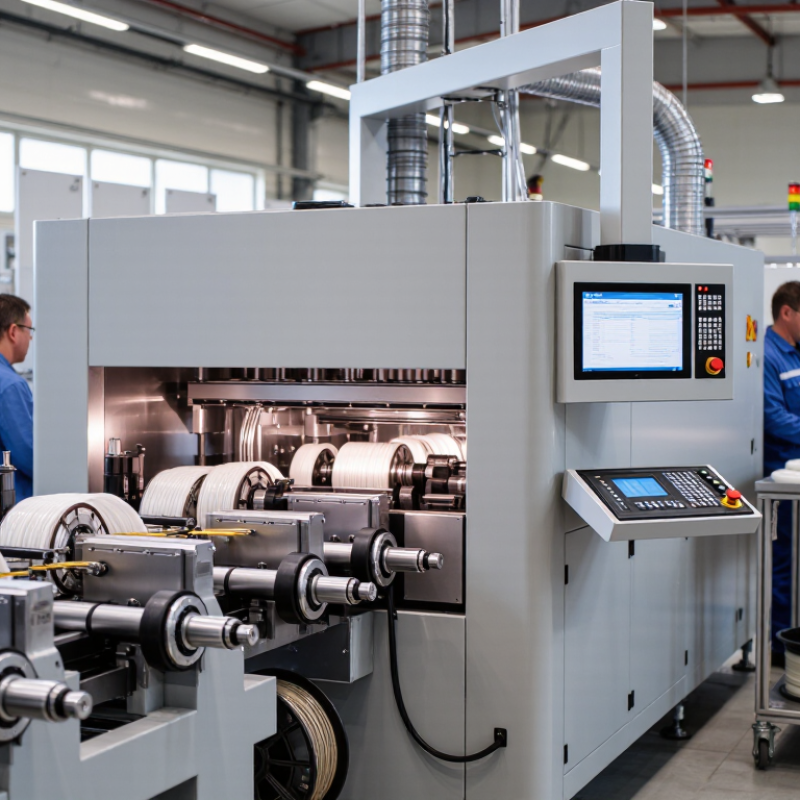
A practical evaluation should connect machine specifications to measurable shop-floor needs: cutting accuracy, bending repeatability, changeover time, operator access, and service support. Ask suppliers to process your own duct samples, including the tightest bends and longest production runs. Watch what happens at the feed rollers and cutting station. Review the test results, not just the demonstration. Also check whether the controls can store recipes for different vehicle programs. A high output rate is useful only when quality holds.

One point is easy to overlook: a machine that performs well on a sample may struggle during a full shift. This guide examines the key selection criteria, supplier questions, and validation steps. Use it to build a shortlist based on evidence, not impressive claims alone.
How to Choose a Car Wiring Harness Duct Machine in 2026

Define the Harness Duct Types and Production Requirements

How to Choose a Car Wiring Harness Duct Machine in 2026

Start by identifying the duct types your line will process. Corrugated plastic conduit may need controlled feeding and clean cutting without crushing its ribs. Split ducts require reliable opening and closing, while rigid channels may need precise length cutting and edge finishing. Textile sleeves follow different handling rules. One machine setup rarely suits every material equally well.

Then define production requirements using actual parts and order data. Record duct diameter, wall thickness, cut-length range, branch locations, and material stiffness. Estimate daily volume, shift length, and acceptable changeover time. Ask suppliers to run representative samples, including the smallest duct and the toughest material. Check cut accuracy, deformation, scrap rate, and operator access. A fast cycle is not useful if parts need hand correction. Our assumptions may miss unusual variants, so test those early.

Tips: Bring sample ducts, drawings, and a few difficult assemblies to the machine evaluation. Confirm how recipes are stored and how quickly operators can adjust feed, cutting, or slitting settings. Keep a little room for future sizes. That buffer matters.


Compare Machine Designs and Forming Methods

How to Choose a Car Wiring Harness Duct Machine in 2026

Compare Machine Designs and Forming Methods

Start with the duct, not the machine brochure. A rigid open channel, a covered profile, and a flexible corrugated tube need different forming paths.

OICA reported 93.5 million motor vehicles produced worldwide in 2023. That scale makes stable output important, but a high-speed line is not automatically the right choice for a plant running many short orders.

Continuous extrusion suits long, consistent thermoplastic profiles. Check melt control, cooling, calibration, and cutting accuracy; a slight dimensional drift can make clips or covers fit poorly.

For flexible conduit, corrugation lines form the tube around a moving die, supporting bends near tight harness routes. They need careful control of wall thickness and pitch.

Batch thermoforming can handle custom shapes, though tool changes may slow repeat production. Fit matters more.

Compare usable output, not headline speed. Ask suppliers to run your resin and a representative cross-section, then measure dimensions, surface marks, scrap, and changeover time.

The IEA’s Global EV Outlook 2024 reported nearly 14 million electric car sales in 2023, about 18% of global car sales. This signals changing vehicle demand, not a guaranteed forecast for duct orders.

Still, changing layouts can reward flexible tooling. Test scrap, too. A perfect cycle-time figure can mislead.

The best design is the one that holds tolerance across real shifts and material batches.

Assess Capacity, Precision, and Automation Options

Choosing a car wiring harness duct machine starts with the duct you actually run, not a headline speed. Check its supported widths, heights, cut lengths, and material range against current and planned jobs. Ask how output changes during long shifts, when operators reload material or switch sizes. A machine that meets peak demand on paper may struggle with frequent changeovers. Small details matter.

Precision affects fit and assembly time. Review cutting repeatability, feed control, and the quality of finished edges. Request sample parts made from your own duct material, then measure them across several runs. Look for crushed walls, burrs, uneven cuts, and length variation. These flaws can be easy to miss in a short demonstration. Also ask how settings are stored and restored; clear, repeatable setup reduces dependence on one experienced operator.

Automation should solve a real bottleneck. Options such as automatic feeding, length measurement, cutting, and fault alerts can reduce handling, but they add cost and maintenance needs. Match each feature to your production mix and available floor space. Check whether operators can safely clear jams and perform routine adjustments without lengthy training. I would leave room for future volume, but not buy automation merely because it sounds efficient. That judgment can be wrong; a simple workflow may suit a varied, low-volume line better.

Review Safety, Maintenance, and Supplier Support

How to Choose a Car Wiring Harness Duct Machine in 2026

Safety should be visible on the machine, not just in its manual. Check guarding, emergency stops, interlocks, and safe access for clearing jams. Ask how energy is isolated during maintenance. OSHA estimates that lockout/tagout practices prevent about 120 workplace fatalities and 50,000 injuries each year in the United States. That figure covers many industries, not duct machines specifically, but it shows why practical isolation procedures matter.

Maintenance needs to fit the real production floor. Look for reachable wear parts, clear fault messages, and routine tasks that operators can perform without awkward tool access. The U.S. Department of Energy’s Operations & Maintenance Best Practices guide reports that predictive maintenance can reduce maintenance costs by 8–12% compared with preventive maintenance. Treat that as a broad industrial estimate, not a guaranteed saving. No machine is maintenance-free. A missed detail? Check whether filters, blades, or guides can be inspected quickly during a normal shift.

Supplier support matters after installation. Ask for a sample response-time commitment, a spare-parts list, and hands-on training for operators and technicians. Confirm that manuals include wiring diagrams, maintenance intervals, and troubleshooting steps. If support depends on one distant specialist, downtime may stretch longer than expected. Request a reference installation with similar production demands, then ask what failed and how quickly it was resolved.

How to Choose a Car Wiring Harness Duct Machine in 2026

Suggested evaluation weights for comparing machines. Adjust them to match your production requirements; these weights are a buyer’s decision framework, not survey or market data.

Prioritize documented safety features and safeguards, then assess routine maintenance needs, spare-parts availability, training, and technical support. Confirm each specification with the supplier before purchase.

Calculate Costs and Verify Performance Before Purchase

Compare car wiring harness duct machines by total operating cost, not purchase price alone. Include tooling, installation, operator training, electricity, compressed air, maintenance, scrap, and planned downtime. Spread these costs across expected yearly output, then calculate cost per accepted duct. Deloitte and MAPI’s 2024 Smart Manufacturing Survey found that 86% of surveyed manufacturing executives viewed smart manufacturing as a competitiveness driver over the next five years. Investment matters, but payback depends on usable output.

A neat spreadsheet can still lie. IFR’s World Robotics 2024 reported 135,461 industrial robot installations in automotive manufacturing during 2023. That figure shows automation’s scale, not any duct machine’s performance. Ask suppliers to run your actual duct material, diameters, and bend profiles. Record cycle time, changeover time, scrap, and dimensional variation across repeated runs. Small checks matter.

Set acceptance limits before the trial. Measure cut length and bend angles with calibrated tools, then inspect samples from different points in the run. Test a full shift if production demands it. Watch for jams, heat buildup, and operator adjustments; these can be missed in a short demonstration. I would also price spare tooling and service response. The estimate may still be imperfect, so revisit it with your own shift data before signing.

en_USEnglish

PCD Inserts

PCBN Inserts

Solid CBN Inserts

PCD Milling Cutter

PCD Drilling Tools

PCD Reamer

Diamond Special Tool

Diamond Dressers