SUNDI TOOLS
- Copyright © Wuxi Sundi Precision Tools Co.,LTD All rights reserved.
- Site Map
Global projects rarely fail because steel is unavailable. They fail when material choices ignore pressure, corrosion, welding, transport, or local conditions. Custom Steel Pipe addresses these risks by matching diameter, wall thickness, grade, coating, and connection design to the actual service environment. A pipe crossing a desert pipeline route needs different protection from one installed beneath seawater. Small details matter.
The World Steel Association reported global crude steel production of approximately 1.88 billion tonnes in 2024. That scale confirms steel’s continuing importance, but volume alone does not guarantee project performance. The International Energy Agency estimates that the steel sector produces about 2.6 gigatonnes of carbon dioxide annually. Therefore, responsible procurement must consider durability, maintenance frequency, and material efficiency, not only the purchase price.
Dr. R. K. Gupta, a steel-pipe engineering specialist, states, “The best pipe is not the strongest pipe; it is the pipe designed for its service.” This principle supports engineering-based customization. Manufacturers can align chemical composition, dimensional tolerances, inspection procedures, and documentation with international project requirements. Traceability records can follow each bundle from mill certification to site installation.
Custom is not automatically better. Poor specifications create delays, excess weight, and unnecessary cost. That is an uncomfortable point, but it deserves attention. The OECD’s recent steel-market assessments also warn of persistent global overcapacity, making supplier evaluation especially important. Buyers should verify test certificates, welding qualifications, coating performance, and production experience before signing contracts. A carefully engineered Custom Steel Pipe can reduce field adjustments, extend service life, and give global projects a more dependable foundation.
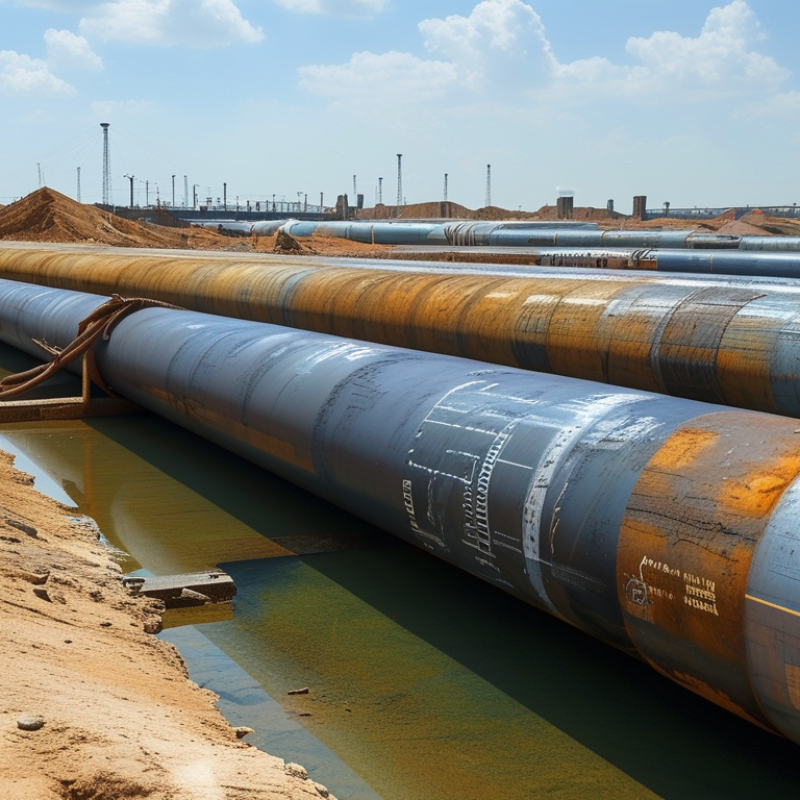
Custom steel pipe is pipe made to meet a project’s specific requirements. Its diameter, wall thickness, length, steel grade, and end treatment can be adjusted. Manufacturers may also add bends, coatings, grooves, or special connection details. Engineers select these features after reviewing pressure, temperature, soil, and installation conditions. The pipe is not simply a larger stock product. It is a controlled solution for a defined application.
Custom steel pipe plays an important role in global projects. It can improve fit during installation and reduce field cutting or welding. This matters on remote sites, where labor, equipment, and replacement materials may be limited. Reliable suppliers provide material certificates, dimensional reports, weld records, and inspection results. These documents support traceability across borders and help teams verify compliance with project specifications. International projects may require different standards, so technical review must happen before production. Field experience shows that small drawing errors can cause serious delays. Customization is useful, but it is not automatically better.
Tips: Confirm standards, pressure ratings, and tolerances early. Check coating needs for humid or corrosive locations. Request sample drawings before fabrication. Keep inspection records organized. Allow time for independent testing when safety risks are high.
Custom steel pipe is engineered to meet project-specific requirements such as pressure, diameter, wall thickness, welding method, corrosion resistance, and transportation conditions. The chart compares the minimum specified yield strength of common API 5L line-pipe grades, helping project engineers match pipe strength with pipeline design requirements.
Custom steel pipes are designed around the real conditions of a project, not a standard catalog size. Engineers review flow rate, pressure, temperature, pipe length, and connection type before selecting dimensions. Wall thickness must handle operating loads and possible corrosion. A coastal water system may need extra corrosion allowance, while a high-temperature process line requires suitable steel and controlled expansion. Small details matter. A few millimeters can affect installation.
Project drawings also define tolerances, surface treatment, testing, and end preparation. For example, beveled ends can support reliable welding, while precise outer diameters help pipes fit prefabricated supports. Engineers may use stress analysis to examine bends, vibration, and thermal movement. Material certificates, inspection records, and pressure tests provide traceable evidence of quality. These documents are essential when pipes cross borders and pass through different inspection systems.
Why Choose Custom Steel Pipe for Global Projects?
Material selection begins with the service environment, not the catalog. Carbon steel suits many water, structural, and low-temperature applications. Stainless steel performs better against corrosion, chlorides, and repeated cleaning. For sour or high-pressure service, engineers should verify chemistry, toughness, weldability, and traceability against project standards. The World Steel Association’s World Steel in Figures 2024 reports nearly 1.9 billion tonnes of crude steel production in 2023. That scale does not guarantee quality. It makes specification discipline more important.
Size affects flow, weight, installation, and long-term stress. A pipe with a larger internal diameter can reduce pressure loss, but it increases material and transport costs. Wall thickness must reflect pressure, corrosion allowance, external loads, and fabrication tolerances. ASME B31.3 and ISO 3183 provide useful design and manufacturing frameworks, while local codes still control final acceptance. Field inspections often find small dimensional deviations around welds. They matter. A custom pipe can match flange faces, supports, and bends more accurately, reducing difficult site adjustments.
Performance testing should mirror real service. Hydrostatic testing, ultrasonic inspection, impact testing, and coating verification can expose weaknesses before shipment. The International Energy Agency estimates iron and steel production creates roughly 7% of global energy-related emissions. Therefore, reducing unnecessary steel through accurate sizing can support both cost and environmental goals. Yet thinner is not always better. That assumption deserves scrutiny. Engineers should balance lifecycle reliability, repair access, inspection records, and regional supply conditions before approving a final design.
Why Choose Custom Steel Pipe for Global Projects?
Advantages of Custom Steel Pipes for International Construction
Custom steel pipes help international construction teams match materials to real site conditions. Diameter, wall thickness, length, and connection details can follow the project drawings. This reduces unnecessary cutting and field welding. It also limits material waste.
In my project experience, small dimensional differences can create major installation delays. A pipe that arrives ready for lifting can save hours beside a busy foundation trench. Custom fabrication also supports different pressure, temperature, and corrosion requirements. Engineers can request inspection records, heat numbers, weld examinations, and coating details. These documents improve traceability across borders. They also help local inspectors review the shipment with greater confidence.
However, customization is not automatically the best answer. It may cost more for small orders. Design changes can disrupt production if approval is slow. An overlooked flange position can affect an entire connection sequence. That risk deserves attention. Clear drawings, agreed tolerances, and pre-shipment checks reduce these problems. International projects also need packaging suited to long sea routes, humid storage yards, and repeated handling. Practical details matter. A well-designed custom pipe should fit the structure, the installation method, and the destination’s technical requirements.
| Project Dimension | Custom Steel Pipe Solution | Typical Standard-Pipe Limitation | Value for International Construction |
|---|---|---|---|
| Dimensional Fit | Outside diameter, wall thickness, length, end preparation and dimensional tolerances can be specified for the project design. | Available sizes may not match structural, mechanical or hydraulic design requirements, leading to adapters, fillers or redesign. | Improves installation fit and helps reduce field modification, cutting and welding. |
| Material Selection | Steel grade can be selected according to strength, toughness, weldability, temperature and service-environment requirements. | A limited stock range may force the project to use a grade that is stronger than necessary or unsuitable for the service conditions. | Supports safer and more economical engineering decisions while aligning the pipe with the intended application. |
| Applicable Standards | Requirements can be aligned with recognized specifications such as ASTM, EN, ISO, API or project-specific technical documents. | One standard may not cover every requirement related to design, testing, documentation and installation in different countries. | Facilitates technical approval, inspection planning and communication among international stakeholders. |
| Corrosion Protection | Surface preparation and protection may be selected for the environment, including painting systems, galvanizing or internal and external coatings. | Stock pipes may be supplied with a general finish that does not fully address marine exposure, buried service, humidity or aggressive soil. | Extends service reliability by matching protection requirements to the actual operating environment. |
| Connection Design | Ends may be supplied with plain, beveled, threaded, grooved, flanged or other specified preparations where technically suitable. | Additional end processing may be required after delivery, increasing handling, inspection and site-work requirements. | Supports faster connections and helps maintain consistency across equipment, structures and pipeline sections. |
| Mechanical Performance | Wall thickness and steel grade can be engineered for internal pressure, external loads, bending, buckling and structural duty. | Using an unsuitable diameter-to-thickness combination can create unnecessary weight or insufficient resistance for the design load. | Balances strength, weight and material usage while supporting project-specific safety requirements. |
| Inspection and Traceability | Inspection plans may include chemical analysis, tensile testing, hydrostatic testing, dimensional checks, visual inspection and non-destructive testing when specified. | Standard stock documentation may not provide all records required by the contract, local regulations or the project quality plan. | Creates clearer quality records for audits, acceptance inspections and long-term asset documentation. |
| Logistics and Handling | Pipe lengths, bundling, marking, protective packaging and shipping documentation can be planned around the destination and transport method. | Unplanned lengths or inadequate protection can increase handling, storage and repacking requirements during international transportation. | Improves shipment coordination and helps reduce damage risks during multimodal transport. |
| Lifecycle Cost | The design can account for material efficiency, installation method, corrosion exposure, maintenance access and expected service conditions. | A lower purchase price may be offset by extra fabrication, installation, coating, maintenance or replacement costs. | Optimizes total project cost instead of focusing only on the initial pipe price. |
| Typical Applications | Suitable for tailored requirements in infrastructure, energy, water transmission, industrial facilities, marine works and structural construction. | Off-the-shelf products are most effective when the project requirements closely match readily available specifications and sizes. | Provides greater design flexibility for projects operating across different climates, regulations and construction methods. |
Note: Final pipe dimensions, steel grades, tolerances, testing requirements and protective systems should be confirmed by the project engineer and specified in the applicable contract, code or material standard.
Custom steel pipe supports global projects when dimensions, pressure ratings, and connection details must match demanding site conditions. A pipe may need a specific outside diameter, wall thickness, length, or bevel angle. Small deviations can delay installation. Experienced suppliers confirm drawings before production and record each heat number for traceability.
Quality control should cover chemical analysis, tensile testing, dimensional checks, and hydrostatic testing. Non-destructive examination may include ultrasonic or radiographic inspection. Mill test certificates must match the delivered pipes, not just the purchase order.
Standards such as ASTM, API, EN, and ISO can guide production, but the project specification and local requirements remain decisive. Standards can overlap. They should not be treated as interchangeable.
Supply planning matters just as much. Protective end caps, moisture-resistant wrapping, and clear bundle markings reduce damage during long ocean shipments. Customs documents should identify grade, size, quantity, and origin accurately. Delivery schedules also need realistic production and port buffers. A two-week delay can affect cranes, labor, and commissioning. No system is perfect. Inspection plans may still miss packaging damage or late design changes. Regular video checks, independent inspections, and written approval records create stronger control. Dual sourcing can improve resilience, although it may create inconsistent tolerances if specifications are not shared precisely.