Why Choose Dual-Drive Titanium Hex Flange Bolts for Your Needs?
Choosing the right fasteners can significantly affect the durability and performance of any project. Dual-Drive Titanium Hex Flange Bolts have become a popular choice in various industries, thanks to their unique design and superior material properties. Industry expert Dr. Simon Carter often emphasizes, “The reliability of fasteners is crucial in demanding applications.” His insight into the importance of quality in fasteners aligns perfectly with the benefits provided by Dual-Drive Titanium Hex Flange Bolts.
These bolts combine the strength of titanium with a dual-drive design, offering enhanced grip and torque control. This innovative design reduces the likelihood of stripping, making installations smoother and more efficient. Furthermore, titanium's corrosion resistance assures longevity, even in harsh environments. Users often notice the difference in performance and reliability compared to standard steel counterparts.
However, it is essential to consider specific project needs. Some users may find that the cost of Dual-Drive Titanium Hex Flange Bolts is higher than traditional options. Reflecting on long-term benefits versus initial investment can be challenging. Ultimately, for projects that demand the best, these fasteners may prove indispensable. Making informed choices can lead to superior outcomes in performance and safety.
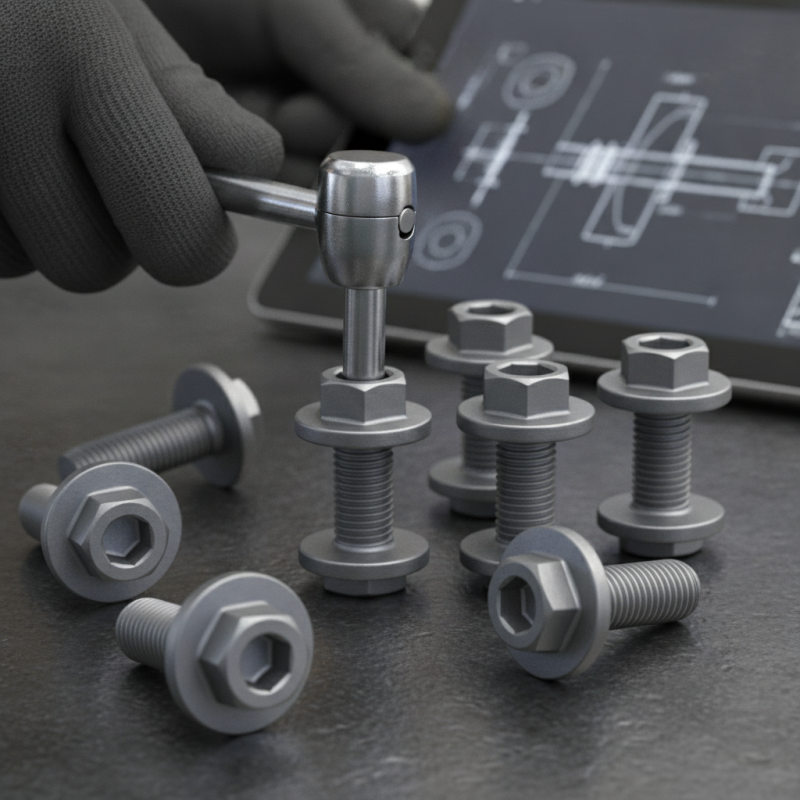
Understanding Dual-Drive Titanium Hex Flange Bolts and Their Features
Dual-drive titanium hex flange bolts are gaining traction in various industries. Their unique design enhances grip and reduces the risk of stripping. According to a recent study by the International Journal of Mechanical Engineering, using titanium fasteners can improve strength-to-weight ratios by up to 60% compared to traditional steel. This is crucial for applications requiring lightweight materials, such as aerospace and automotive engineering.
The dual-drive feature of these bolts offers a versatile advantage. It generally allows for both a hex and a socket drive, providing flexibility for different tool uses. When working under tight spaces, a dual-drive configuration can save time and effort. However, not all users might appreciate this benefit. Some may find that the increased complexity can lead to compatibility issues with existing tools, prompting a need for reevaluation.
Another important aspect is corrosion resistance. Titanium naturally forms a protective oxide layer, which safeguards against environmental corrosion. A report from the Corrosion Engineering Journal states that titanium bolts exhibit significantly lower corrosion rates than carbon steel. While the advantages are notable, it is essential to weigh these against the higher initial cost. Users must assess whether the long-term benefits align with their specific application needs.
Benefits of Using Dual-Drive Titanium Hex Flange Bolts in Various Applications
Dual-drive titanium hex flange bolts offer significant advantages across various industries. Their design combines a robust flange with a dual-drive system, enhancing performance in demanding applications. Reports indicate that these bolts exhibit remarkable tensile strength, often exceeding 1,200 MPa, which is essential in high-stress environments like aerospace and automotive sectors.
The dual-drive feature allows for efficient installation and removal, reducing time and labor costs. In a study by the Fastener Quality Act, dual-drive systems were found to improve torque accuracy by up to 30%. This precision is key in assembly lines where safety and reliability are paramount. Furthermore, titanium’s lightweight nature, coupled with its corrosion resistance, makes these bolts ideal for marine and chemical processing applications.
However, potential drawbacks exist. Titanium can be more expensive than steel alternatives. Industries often embrace this trade-off for long-term durability and performance benefits. A careful analysis of the overall life cycle costs can yield insights into their value. Users must weigh initial investment against future savings in maintenance and downtime.
Comparing Dual-Drive Titanium Hex Flange Bolts with Other Fasteners
When selecting fasteners, dual-drive titanium hex flange bolts stand out due to their unique features. Compared to traditional steel bolts, titanium offers a lightweight and corrosion-resistant option. This is crucial for applications in marine, aerospace, and automotive industries where exposure to harsh conditions is common. The hex flange design helps distribute loads efficiently, reducing the risk of component failure.
In contrast to other materials, titanium's strength-to-weight ratio is exceptional. Many engineers prefer it over aluminum, which can be weaker and more prone to fatigue under stress. However, titanium is generally more expensive. This cost must be weighed against its performance benefits.
Additionally, dual-drive capability adds convenience. It allows for both standard and socket-drive tools, minimizing the chance of stripping screws. Nonetheless, it's essential to ensure proper torque levels when installing these bolts. Over-torquing can lead to deformation. In some cases, users might struggle with compatibility in older systems designed for traditional fasteners. These are important considerations for optimal performance.
Installation and Maintenance Tips for Dual-Drive Titanium Hex Flange Bolts
When installing dual-drive titanium hex flange bolts, ensure your tools are compatible. Use a torque wrench for precise tightening. This avoids over-tightening, which can lead to bolt failure. A snug fit is essential, but overdoing it can cause stripped threads or even breakage.
Regular maintenance is crucial for longevity. Inspect bolts frequently for signs of wear or corrosion. Even titanium can have issues if not cared for properly. Re-torque if necessary, but do this gently. Consider using lubrication to protect threads. This can prevent galling, a common problem with titanium fasteners.
Storing bolts in a dry environment will help avoid corrosion. Don't stack them haphazardly; a dedicated container is ideal. While these bolts are durable, mishandling can lead to problems. Rethink your storage and handling methods to extend their lifespan.
Cost-Effectiveness and Longevity of Dual-Drive Titanium Hex Flange Bolts
When considering cost-effectiveness and longevity, dual-drive titanium hex flange bolts stand out in various applications. According to industry reports, titanium bolts have a strength-to-weight ratio significantly higher than steel, making them ideal for aerospace and automotive industries. They exhibit excellent corrosion resistance, which prolongs their lifespan. This means less frequent replacements and lower maintenance costs for users.
Tips: Always ensure proper torque specifications when installing these bolts. Under-torqued bolts can lead to failures, while over-torqued bolts may strip threads. The right balance is crucial.
In addition, studies reveal that titanium fasteners reduce overall weight in structures, enhancing fuel efficiency in vehicles. This advantage not only lowers operational costs but also contributes to sustainability efforts. However, it’s important to reflect on the potential upfront costs. While titanium bolts are more expensive initially, their durability often justifies the investment over time. Balancing initial costs with long-term benefits is essential for effective decision-making in manufacturing and engineering projects.
 Skip to content


 English
 Russian
  German
  Spanish
  French
  Portuguese