How to Choose the Best Hot Stamping Plate?
Choosing a Hot Stamping Plate is not simply a matter of picking a metal and matching its size to a machine. The right plate must transfer foil cleanly, preserve fine details, and withstand the temperatures and pressures used in production. A tiny gap in the artwork can become a broken line on a finished carton. Small details matter.
Start with the job itself: the substrate, foil type, image complexity, run length, and press specifications. Magnesium plates may suit shorter runs and simpler designs, while brass is often chosen for durability or detailed work. These are useful starting points, not fixed rules. Plate thickness, relief depth, mounting method, and the machine’s heating system also affect results. Compare the plate maker’s specifications with the press manufacturer’s requirements.
A reliable choice comes from evidence, not guesswork. Ask for material and tolerance details, confirm that the plate can reproduce the smallest features, and review a production sample when possible. A controlled test can reveal uneven foil coverage, softened edges, or excessive pressure before a full run begins. It is tempting to blame the plate when a stamp looks poor, but foil, make-ready, temperature, and substrate can create similar defects. That is worth remembering. This guide explains how to weigh these factors, ask useful supplier questions, and choose a Hot Stamping Plate suited to both the design and actual production conditions.
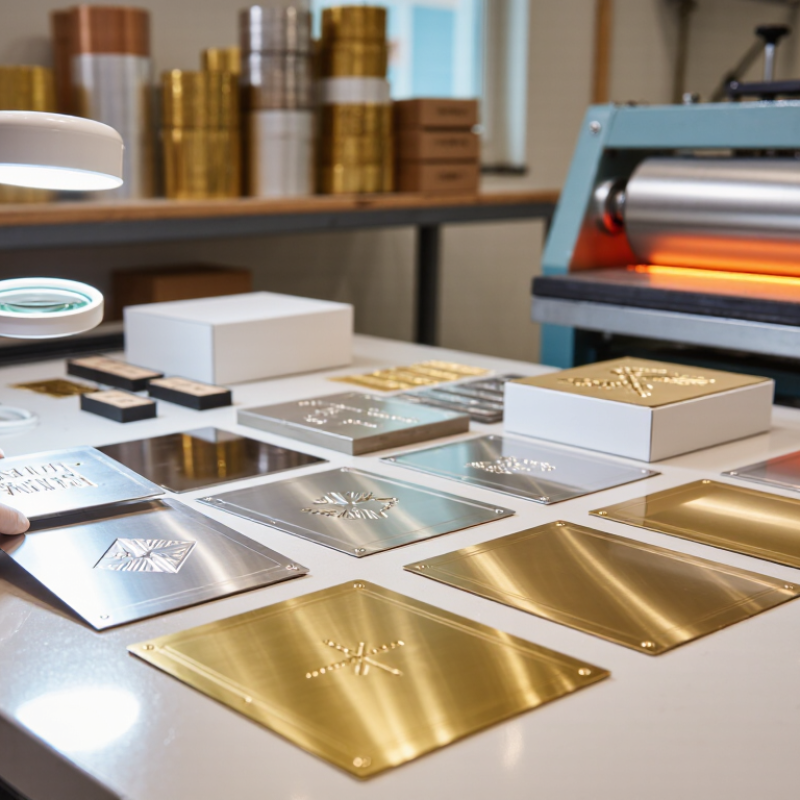
Identify the Material and Surface to Be Stamped
Start with the exact material, not just the job name. Paper, coated board, leather, and plastic transfer heat differently. FAO’s Forest Products Annual Market Review reported about 401 million tonnes of global paper and paperboard production in 2022, illustrating how broad the substrate category is. That figure does not predict stamping performance; the coating, texture, and finish on your actual stock matter more. A smooth, sealed surface may release foil cleanly, while an absorbent or textured surface can produce gaps around fine lettering.
Check a sample under the intended lighting. Note its coating, grain, and any varnish, then run a small test at the planned temperature and pressure. For detailed artwork or longer runs, a durable brass die is often worth considering. Magnesium can suit shorter runs, but fine lines and repeated impressions deserve careful testing. There is no universal setting. I would record the results, though one test sheet can still mislead if the stock varies across a batch. ISO 534 provides a method for measuring paper thickness; use measured stock, not an assumed specification, when discussing die clearance and impression depth.
Match Plate Material to Production Volume and Detail
Choosing a hot stamping plate starts with expected production volume and artwork, not price alone. Magnesium is often practical for short runs and prototypes because it machines quickly and can reproduce crisp, small features. It is less suited to repeated high-volume work, where wear and replacement can add cost.
Brass generally costs more and takes longer to machine, but its durability can support longer runs and consistent detail. For especially demanding production cycles, hardened steel may be worth evaluating, though it is not automatically the best choice. Detail matters.
Inspect the smallest lettering, narrow lines, and solid areas in the design. A delicate logo may need a plate that holds edges cleanly; broad, simple graphics may not justify the added expense. Match the material to the foil, stock, press temperature, and pressure, since these affect transfer too.
This rule is imperfect: actual results vary with machine setup and substrate. Run a sample and check both foil coverage and edge definition before committing to a large quantity. Small tests help.
Choose the Right Plate Size, Thickness, and Engraving Depth
How to Choose the Best Hot Stamping Plate?
Choose the Right Plate Size, Thickness, and Engraving Depth
Match the plate size to the artwork and the press area. Leave enough room around the image for alignment and clamping. A plate that barely fits can shift during setup, especially when the substrate is uneven. Check the machine holder’s specifications before ordering; a few millimeters can matter. Plate thickness should suit the press and provide firm, even support. Thicker is not automatically better.
Tips: Measure the holder, not just the artwork. Confirm dimensions with a sample setup when possible.
Engraving depth affects how the foil releases and how sharply fine details appear. Too shallow, and small areas may not transfer cleanly. Too deep, and narrow lines can lose support or collect excess heat. The right depth depends on the plate material, foil, substrate, and press settings, so avoid relying on a universal number. Test a small run, then inspect edges and filled areas under consistent light. One adjustment may improve the result, but it can also expose another weakness. That is worth checking before committing to a full production run.
Check Compatibility with the Press, Heat, and Pressure
How to Choose the Best Hot Stamping Plate?
Check Compatibility with the Press, Heat, and Pressure
A plate must match the press’s chase size, mounting method, and available impression force. Check whether the press heats the plate evenly; a cold corner can leave foil dull or incomplete. FSEA technical guidance places many paper-based foil jobs in roughly the 100–150°C range, but the foil supplier’s specification should take priority. Treat that range as a starting point, not a recipe. Substrate, foil release layer, and plate thickness all affect results.
Pressure needs equal care. Too little leaves gaps in fine lettering; too much can crush paper fibers or spread edges. Run a small test using the actual stock, foil, and plate, then inspect solid areas and the smallest type under angled light. FSEA process guidance recommends adjusting heat, pressure, and dwell together, rather than changing several settings blindly. I may be overcautious, but a single test sheet can hide uneven contact.
Tips: Confirm plate clearance and heating limits before mounting. Start with the foil maker’s temperature range, then adjust in small steps. Record the settings. A short note can save a long setup next time.
How to Choose the Best Hot Stamping Plate?
Check compatibility with the press, heat, and pressure. Thermal conductivity affects how quickly heat moves through a plate, making it a useful factor when comparing plate materials.
Approximate thermal conductivity at room temperature, in watts per meter-kelvin (W/m·K). Actual values vary by alloy and grade. Before selection, also confirm plate dimensions, operating temperature, and pressure limits against the press and material specifications.
Compare Durability, Maintenance Needs, and Total Cost
A hot stamping plate should match the job’s heat, pressure, and production volume. A harder plate may resist wear during long runs, while a softer material can suit shorter jobs or finer details. Check the supplier’s stated temperature and pressure limits against your press settings. Then test a sample. Small differences in substrate or foil can change the result.
Maintenance affects usable life. After a run, remove foil residue with a compatible cleaner and a non-abrasive cloth. Scratches matter. Store the plate dry, protected from impact, and away from loose tools. Inspect engraved edges and the mounting surface regularly; uneven contact can cause weak or inconsistent impressions. Cleaning routines vary, so follow material-specific guidance rather than assuming one method fits every plate.
Compare total cost, not just purchase price. Include engraving, setup time, cleaning supplies, inspection, replacement, and downtime if a plate needs repair. For a high-volume line, a more durable plate may reduce interruptions. For occasional work, that extra cost may not pay back. The calculation can be imperfect: actual wear depends on pressure, operator handling, and the materials being stamped. Keep basic maintenance and replacement records to refine your estimate.
 Skip to content



 English
 Russian
 German
 Spanish
 French
 Portuguese