...

How to Choose a Road Marking Machine in 2026?

Choosing a Road Marking Machine in 2026 requires more than comparing prices and engine power. Road contractors must consider surface type, line width, marking material, daily output, and local working conditions. A machine used on a smooth airport apron may perform poorly on older asphalt with cracks, dust, and uneven patches. The details matter.

This guide examines practical factors from real jobsite experience. Airless sprayers can create sharp lines quickly, while screed systems may suit thicker thermoplastic applications. Equipment with adjustable pressure, reliable pumps, and accessible controls can reduce interruptions during long shifts. Cleaning should also be simple. Dried paint inside a hose can stop production at the worst moment.

Operator safety and consistent results remain essential. Buyers should review manufacturer documentation, maintenance support, spare-part availability, and applicable road-marking standards before making a decision. Demonstration testing is valuable because brochures rarely show how a machine behaves in wind, heat, or humid conditions. Small wheels may feel harmless in a showroom. They can become exhausting after several hours on rough pavement.

No selection guide can remove every uncertainty. That limitation matters. Budget pressure may encourage a cheaper purchase, yet weak calibration or frequent repairs can increase long-term costs. A reliable Road Marking Machine should match the contractor’s actual workload, crew skills, materials, and future projects. Careful evaluation creates safer markings, steadier productivity, and fewer unwelcome surprises in 2026.
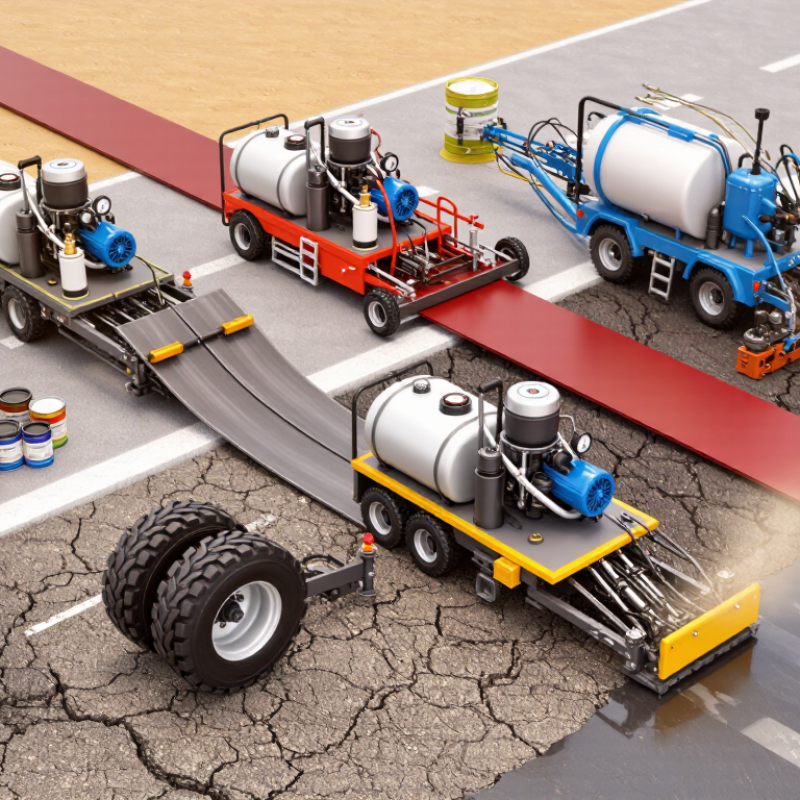
How to Choose a Road Marking Machine in 2026?

Define the Road Marking Project Requirements

How to Choose a Road Marking Machine in 2026?

Define the Road Marking Project Requirements

Before choosing a road marking machine, define the project in measurable terms. Record the total marking area, line lengths, widths, and daily output target. A small parking area needs different equipment from a highway rehabilitation project. Measure the surface condition, too. Rough asphalt, smooth concrete, and recently repaired sections affect material flow and line quality. Field experience shows that inaccurate measurements often cause delays, even when the machine itself performs well.

Decide whether the project uses water-based paint, thermoplastic, or cold plastic material. Each option requires different heating, pressure, and cleaning capabilities. Check the planned line thickness and application speed. A machine that moves too quickly may create uneven edges. One that is too slow can increase labor costs. Consider transport space, power supply, operator skill, and access to spare parts. These details seem ordinary. They are often overlooked. My own planning has sometimes focused too much on output and not enough on cleanup time.

Tips: Walk the site before purchasing. Photograph slopes, drains, tight corners, and damaged pavement. Test the material on a small section. Ask operators to evaluate handle comfort, visibility, control layout, and maintenance access. Keep a written requirement sheet, including acceptable line tolerance and drying time. It may feel excessive, but unclear requirements create expensive compromises. Review the plan with an experienced pavement professional before final selection.


Compare Road Marking Machine Types and Application Methods

Choosing a road marking machine in 2026 starts with the application method, not the machine’s advertised speed.

Airless sprayers suit long roads and waterborne paint, producing sharp lines with limited overspray. Conventional air spray costs less initially, but wind can spread droplets and weaken edge definition. For high-build thermoplastic, screed and extrusion machines deliver thicker, more durable lines. Two-component systems cure quickly and fit busy intersections, although they demand accurate mixing and cleaning.

Material choice changes the equipment decision. The FHWA’s Pavement Marking Handbook identifies retroreflectivity, wet-night visibility, and durability as key performance factors.

A 2024 MarketsandMarkets report estimated continued growth in the global road-marking materials market, driven partly by infrastructure renewal and stricter visibility expectations.

That growth does not mean every project needs advanced equipment. A small urban crew may work better with a compact spray unit and precise bead dispenser. Large highways usually justify automated guidance, larger tanks, and thermoplastic heating capacity.

Watch the details on site.

A practical operator checks pavement moisture, surface temperature, line width, glass-bead flow, and traffic-control space before starting. FHWA guidance also links marking performance to proper bead embedment and consistent application rates.

Bigger is not always better. That assumption often fails. A machine can spray quickly yet waste paint on rough pavement or poor turns.

Compare daily output, cleanup time, operator training, calibration access, and spare-part availability. Trial a short road section first; field results may challenge the brochure’s numbers.

Evaluate Key Technical Specifications and Operating Features

How to Choose a Road Marking Machine in 2026?

Technical specifications should match the road, material, and daily workload. WHO’s Global Status Report on Road Safety 2023 estimates 1.19 million annual road deaths worldwide. Clear markings support safer decisions, especially at night and during rain. Check the machine’s line-width tolerance, spray pressure, bead-drop accuracy, and curing speed. A useful baseline is the guidance in NCHRP Report 676, which links marking performance with material choice, surface condition, and application control.

Choose a pump that maintains stable pressure across changing speeds. Uneven pressure can create thin edges and poor retroreflectivity. For thermoplastic work, examine kettle temperature control and heating recovery time. For waterborne coatings, check nozzle cleaning and hose flushing. Tank capacity also matters. A larger tank reduces refilling stops, but increases weight on narrow roads. More power is not always better. Fuel use, vibration, turning radius, and operator visibility affect real productivity. I have seen impressive machines lose time through awkward controls and slow setup.

Tips: Request a wet-film test before purchase. Measure the first 100 meters, then inspect width, bead coverage, and edge sharpness. Ask for maintenance records and spare-part availability. Do not trust brochures alone. Field performance can be less perfect than the specification sheet.

How to Choose a Road Marking Machine in 2026? - Evaluate Key Technical Specifications and Operating Features

Evaluation Dimension Cold-Paint Airless Machine Cold-Paint Air-Spray Machine Thermoplastic Machine Two-Component Spray Machine
Primary Material Water-based or solvent-based traffic paint Water-based or solvent-based traffic paint Preformed or hot-applied thermoplastic material Two-component reactive resin, commonly MMA or similar systems
Typical Application Road centerlines, edge lines, parking lots, bicycle lanes, and maintenance work Large-area line marking where a softer spray finish is acceptable High-wear road markings, intersections, urban roads, and heavy-traffic areas Long-life markings, symbols, textured surfaces, and high-performance installations
Line-Width Adjustment Usually about 50–600 mm, depending on the spray tip and configuration Usually about 50–600 mm, depending on the air cap and nozzle setup Commonly about 50–500 mm; wider markings may require multiple guns Commonly about 50–600 mm, depending on the mixing and spray system
Line-Width Consistency Moderate to high; wind and atomizing-air settings can affect overspray
Material Heating Requirement No heating normally required No heating normally required Required for hot-applied thermoplastic; material temperature is commonly controlled around 180–220°C, subject to the material specification Normally no bulk heating, although some formulations and equipment use controlled heating
Application Speed Often about 3–12 km/h, depending on paint, line width, surface, and required wet-film thickness Often about 3–10 km/h, depending on atomization and coverage requirements Often about 3–10 km/h, depending on material flow, thickness, and cooling conditions Often about 3–12 km/h, depending on resin system, mixing ratio, and curing time
Wet-Film or Layer Thickness Commonly about 0.3–0.8 mm wet film, subject to paint and specification Commonly about 0.3–0.8 mm wet film, subject to paint and specification Commonly about 1.5–3.0 mm for hot-applied lines Commonly about 0.5–2.0 mm, depending on the resin and performance requirement
Glass-Bead System Optional or integrated gravity-drop or pressurized bead dispenser Optional or integrated bead dispenser; overspray control is important Usually integrated bead dispenser for retroreflective performance Often integrated bead dispenser; compatible beads must be confirmed with the resin system
Transfer Efficiency Moderate; atomized paint can create more overspray in windy conditions High when spray pressure, mixing, and gun distance are correctly adjusted
Power Source Petrol engine, diesel engine, battery-electric, or hydraulic power unit Typically petrol or diesel engine with an air compressor Engine-driven system with fuel-fired or electric material heating Engine-driven, hydraulic, pneumatic, or electric system depending on machine size
Typical Operating Pressure Approximately 100–230 bar for many airless paint systems; verify the paint and pump limits Paint pressure is generally lower, with atomizing air commonly around 2–7 bar Material pressure varies by pump design; temperature and flow control are more critical than a single pressure value Component and atomizing pressures vary significantly; the equipment must maintain the specified mixing ratio
Surface Preparation Surface must be clean, dry, structurally sound, and free from oil, loose dust, and standing water Requires the same basic preparation; additional attention is needed to control wind and dust Surface must be dry and sufficiently clean; primer may be required on certain substrates Requires strict cleanliness and dryness; moisture and contamination can reduce adhesion or curing quality
Control Features to Prioritize Adjustable pressure, reversible tips, dead-man trigger, line-width control, and digital speed display Independent paint and air controls, compressor capacity, adjustable fan pattern, and dead-man trigger Thermostatic temperature control, insulated hoses, heated guns, material-level monitoring, and bead synchronization Accurate metering pumps, ratio monitoring, heated or insulated lines where required, purge system, and static mixer control
Navigation and Layout Functions Laser guide, front-wheel tracking, adjustable handlebar, and optional digital distance measurement Laser guide, adjustable handlebar, and distance counter for long straight lines Laser guide, steering alignment, automatic bead control, and programmable line-gap settings Laser or mechanical guide, programmable line-gap control, and component-flow monitoring
Cleaning and Maintenance Flush the pump, hose, gun, and filters with the approved cleaning fluid after use Clean paint passages, air caps, nozzles, filters, and compressor moisture traps Remove residual material safely, inspect heaters and hoses, and follow hot-surface procedures Clean the mixer and gun promptly; cured resin may require mechanical removal or approved solvent procedures
Operator Safety Priorities Pressure-injection protection, eye protection, gloves, ventilation, and traffic-control measures Respiratory protection where required, ventilation, hearing protection, and overspray control Burn protection, insulated gloves, face protection, hot-material procedures, and traffic separation Chemical-resistant gloves, eye and skin protection, ventilation, and strict component-handling procedures
Best Selection Scenario Useful when a softer spray pattern and broad coverage are more important than maximum transfer efficiency Best where durability, thickness, and resistance to traffic wear justify heating equipment Best for specialized, long-life markings when operators can manage precise chemical metering and cleaning
Key Purchase Check Confirm pump output, maximum tip size, compatible paint viscosity, bead dispenser, and spare-tip availability Confirm compressor airflow, air-pressure stability, nozzle compatibility, and overspray-control capability Confirm heating capacity, temperature uniformity, hose insulation, hopper volume, and emergency shut-off functions Confirm component capacity, mixing-ratio accuracy, cure-time compatibility, purge design, and chemical-resistant seals
Technical ranges are typical planning values rather than universal limits. Always verify the machine manual, material safety data sheet, road authority specification, and local traffic-safety requirements before operation.

Check Material Compatibility, Productivity, and Maintenance Needs

How to Choose a Road Marking Machine in 2026?

Material compatibility should come before engine power. Waterborne paint needs clean circulation and controlled spray pressure. Thermoplastic requires heated hoses, insulated tanks, and stable application temperatures around 400–450°F, as noted in the FHWA Pavement Marking Handbook. Cold plastic can demand different mixing and curing arrangements. Test the exact paint, glass beads, and nozzle together. A machine that sprays well in the warehouse may clog beside a dusty road.

Productivity is more than advertised line speed. Measure usable output per hour, including refilling, heating, cleaning, and turning. NCHRP Report 576 links marking performance with traffic, climate, pavement texture, and application quality. A 20-liter tank may suit short urban repairs, but it creates frequent stops on rural corridors. A wider spray bar can increase coverage, yet it may reduce accuracy around symbols and curves. Faster is not always better.

Maintenance needs deserve an honest calculation. Flush pumps after every shift, inspect filters, and check bead dispensers before application. Heated systems also need temperature checks and safe pressure release. The FHWA handbook emphasizes preparation and equipment calibration as key factors in durable markings. Field crews often underestimate cleaning time. I have seen a small blockage waste more material than a larger motor saves. Choose a machine with accessible filters, simple controls, and documented replacement intervals. Perfect forecasts are rare, so leave capacity for weather delays, operator learning, and one disappointing test run.

Assess Safety, Compliance, Total Cost, and Supplier Support

How to Choose a Road Marking Machine in 2026?

Safety should be judged before production speed. During site trials, check visibility, braking, guarding, and emergency-stop access. The operator must see the spray path clearly, even near curves or temporary lighting. Test the machine on dry and uneven surfaces. Small steering errors can create expensive corrections. Confirm that electrical, fuel, noise, and road-work requirements match local authority rules. Keep inspection records, manuals, and training certificates together. Compliance is easier to prove when evidence is organized.

Total cost includes much more than the purchase price. Measure paint and glass-bead consumption over a realistic test area. Review cleaning time, calibration needs, tire wear, battery life, and replacement parts. A cheaper machine may need frequent adjustment. That difference becomes visible after months, not during a showroom demonstration. Ask for written service intervals and estimated annual maintenance costs. I have learned that rushed estimates are often too optimistic. The spreadsheet may still be wrong.

Supplier support deserves practical testing. Ask how quickly technicians respond, which parts are held locally, and whether training includes fault diagnosis. Request a demonstration using your preferred marking material and line width. Watch how easily the operator adjusts pressure and cleans the system. A reliable supplier explains limitations instead of promising perfect results. Confirm warranty terms, delivery times, and software or control-panel support. Try calling before purchase. Silence is useful information.

How to Choose a Road Marking Machine in 2026?

Use a balanced procurement model that prioritizes worker and road-user safety, regulatory compliance, total cost of ownership, and reliable supplier support.

How to use this chart: Score each machine against the four criteria, then apply the recommended weights. Safety should include operator protection, traffic visibility, and controlled spray performance. Compliance should cover local road-marking regulations, emission requirements, and documentation. Total cost should include purchase price, materials, maintenance, energy, labor, and downtime. Supplier support should consider spare-parts availability, training, warranty response, and technical service coverage.

en_USEnglish

PCD Inserts

PCBN Inserts

Solid CBN Inserts

PCD Milling Cutter

PCD Drilling Tools

PCD Reamer

Diamond Special Tool

Diamond Dressers