How to Choose the Best Ceramic Mixer Machine for Your Needs?
Choosing the right ceramic mixer machine is crucial for your projects. With various models available, selecting one that meets your specific needs can be challenging. You might feel overwhelmed by options. However, understanding the core requirements and functionalities is essential.
Consider your project size and type. A small-scale operation may not need a high-capacity mixer. Conversely, large projects require powerful machines to ensure consistency. Think about the materials you will be mixing as well. Some machines handle specific materials better than others. It's common to overlook these details, which can lead to dissatisfaction.
Price is a significant factor, too. While cheaper options are appealing, they may lack durability. Investing in a quality Ceramic Mixer Machine might save you time and resources in the long run. Reflecting on these aspects can help you make a more informed decision. Don't rush the process; take your time to evaluate what fits best.
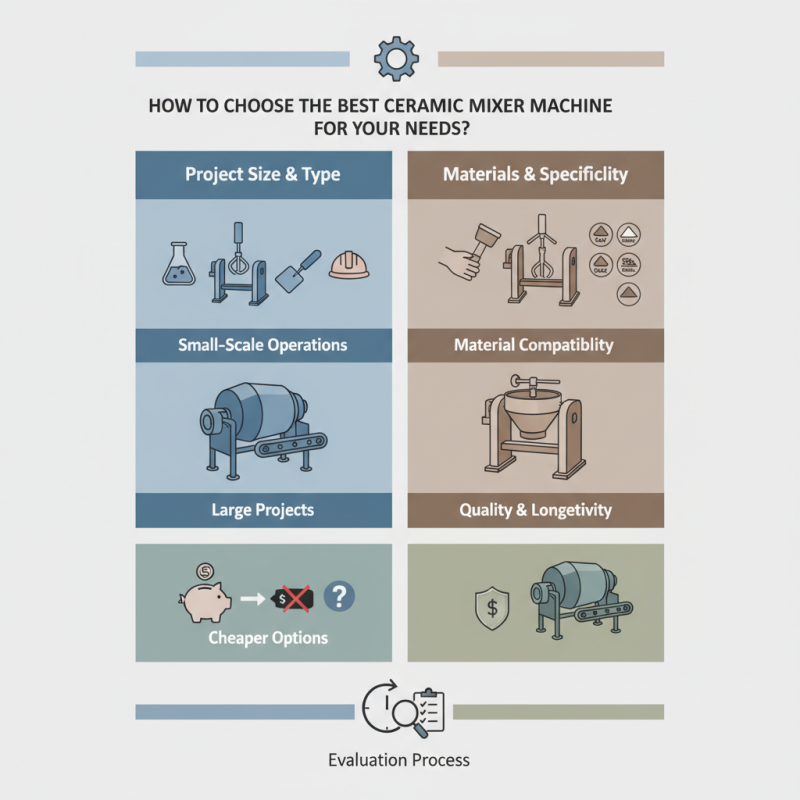
Understanding Your Ceramic Mixing Needs and Applications
Understanding your ceramic mixing needs is essential before investing in a mixer machine. Different applications require varying levels of performance and efficiency. For instance, tile manufacturing may necessitate a higher viscosity than pottery production. A recent industry report noted that 70% of manufacturers prioritize mix consistency in their selection process. Poor mixing can lead to defects in the final product, impacting both quality and profitability.
When choosing a ceramic mixer, consider the volume of material you'll be working with. A small studio might only need a compact, low-capacity mixer. In contrast, larger factories may require high-capacity options. It's also vital to understand the properties of the materials being mixed. For example, materials with high solid content may need a different mixing technique than more liquid mixtures.
**Tip:** Assess your mixing volume and material properties before making a decision.
Take a moment to reflect on your production needs. Are you focused on speed or quality? Sometimes, higher speeds can compromise the mixture's uniformity. Balancing these factors will help in selecting the right machine for your specific needs. Additionally, explore the machine's durability and maintenance requirements. Are you fully ready for the upkeep that higher-end machines often demand? Remember to weigh the trade-offs carefully.
**Tip:** Don’t overlook maintenance costs in your budget.
How to Choose the Best Ceramic Mixer Machine for Your Needs?
Key Features to Look for in a Ceramic Mixer Machine
Choosing the right ceramic mixer machine involves understanding key features. Start by considering the capacity. A machine that is too small for your needs can cause delays. On the other hand, an oversized mixer can waste energy and space. Think about your production goals carefully.
Another important feature is the mixing technology. Look for machines with versatile settings. Different materials require different mixing techniques. This flexibility is crucial for consistent quality. Some mixing processes can be inefficient. Always analyze how the machine operates with various clay types.
Tips: Consider the ease of cleaning. A complex design can be a hassle later. Focus on durability. Cheaper machines may break easily under pressure. Investments in quality can save you money in the long run.
Lastly, keep an eye on noise levels. A loud machine might disrupt your workspace. Test sound levels if possible. Reflect on how often you’ll use the mixer. Daily use can reveal flaws or advantages you didn’t consider. Taking time to evaluate these factors ensures you find the best fit for your needs.
Types of Ceramic Mixer Machines and Their Functions
When selecting a ceramic mixer machine, understanding the types available is crucial. Industrial ceramic mixers fall into categories: batch mixers, continuous mixers, and planetary mixers. Batch mixers work well for smaller productions and versatile mixes. They can handle different materials at once, which is beneficial. Continuous mixers are ideal for large-scale operations. They allow for a constant flow of material, which can improve efficiency.
Planetary mixers excel in achieving a homogeneous mixture. They rotate on one axis while also spinning on another. This dual motion ensures that every part of the mix is processed evenly. Reports from industry analysts show that planetary mixers can reduce mixing times by up to 40%. This means better productivity and lower energy consumption.
Tips: Choose a mixer based on your production scale. Check if the machine meets your material requirements. Ensure you’re aware of maintenance needs. Sometimes, overlooked details can lead to costly repairs. Balancing cost with functionality often poses challenges. Investing in a suitable mixer improves quality but requires research to avoid mistakes.
Evaluating Brands and Models for Quality and Reliability
When choosing a ceramic mixer machine, brand selection is crucial. Some brands stand out for their quality and performance. Others may offer lower prices but compromise on reliability. It’s vital to read thorough reviews and testimonials. Analyze how each brand is perceived by users. Look for common praises or complaints. This step can save time and money.
Next, consider the specific models available. Different models cater to unique needs. Some are designed for professional use, while others suit hobbyists. Pay attention to features like mixing speed and capacity. These details affect overall functionality. Don’t rush into a decision. Experimenting with different machines, if possible, helps too. A hands-on approach reveals what feels right and efficient.
Lastly, think about after-sales support. A reliable brand should have a responsive customer service team. This can greatly impact your experience. If issues arise, having support is essential. Look for warranties that reflect confidence in the product. Not all brands provide this reassurance. This lack of accountability can lead to frustration. Aim for a warranty that includes necessary coverage. This can enhance peace of mind while using your ceramic mixer.
How to Choose the Best Ceramic Mixer Machine for Your Needs? - Evaluating Brands and Models for Quality and Reliability
| Model | Power (Watts) | Capacity (Liters) | Speed Settings | Price ($) | Warranty (Years) |
| Model A | 1200 | 15 | 3 | 299 | 2 |
| Model B | 1500 | 20 | 5 | 399 | 3 |
| Model C | 900 | 10 | 2 | 199 | 1 |
| Model D | 1100 | 12 | 4 | 249 | 2 |
Budget Considerations and Cost-Benefit Analysis in Choosing a Mixer
When selecting a ceramic mixer machine, budget considerations are crucial. The initial cost of the mixer can vary greatly. It’s tempting to choose the cheapest option. However, lower prices often come with hidden costs. These could be maintenance, durability, or efficiency issues. You may end up spending more in the long run.
Conducting a cost-benefit analysis can clarify your needs. Evaluate the features critical for your work. A more expensive machine may offer better performance. It might save time and resources over time. Look into energy consumption too. Machines that use less power can save money monthly.
Investment in quality often pays off. Consider potential production volume. If you require high output, budget for a more robust mixer. Sometimes, spending additional funds might yield better returns. Think about the warranty and support as well. A good warranty can save you from unexpected repair costs. Always remember to balance price with functionality for the best choice.
 Skip to content

 English
 Russian
  German
  Spanish
  French
  Portuguese