How to Choose the Right Frequency Converter for Your Needs?
Choosing the right Frequency Converter is crucial for various industries, from manufacturing to renewable energy. According to the Global Frequency Converter Market Report 2023, the market is expected to grow by 8% annually. This growth indicates a rising demand for reliable power management solutions. Industries seek efficient frequency converters to enhance equipment lifespan and operational efficiency.
Frequency converters help match power supply characteristics with motor requirements. They help in minimizing energy wastage and optimizing performance. A study from the International Energy Agency highlights that improper converter usage can lead to energy losses of up to 30%. This emphasizes the need for careful selection and application.
When choosing a frequency converter, consider your specific needs. Factors include voltage range, power capacity, and application type. Not all converters suit every scenario. Ignoring these details can lead to performance issues or increased costs. It's essential to weigh options and consult experts to ensure you select the most suitable frequency converter for your operations.
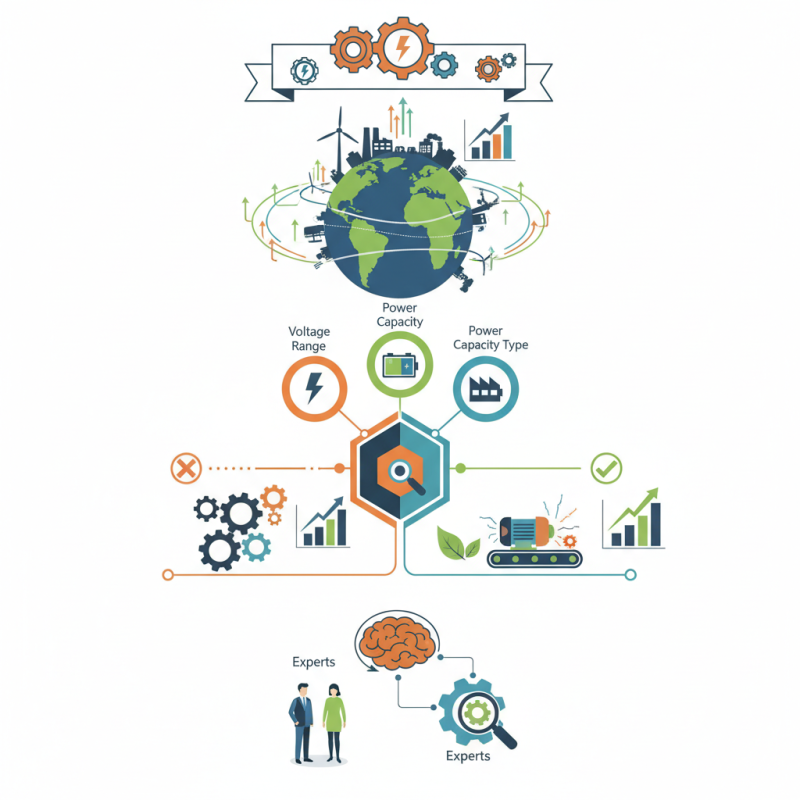
Understanding Frequency Converters and Their Applications
Frequency converters play a crucial role in various industrial applications. They adjust the frequency of electrical power supplied to motors and other equipment. This adjustment helps in controlling speed and torque effectively. In manufacturing, precise speed control leads to improved product quality. A well-selected frequency converter can enhance energy efficiency in systems. However, choosing the right one can be complex.
Understanding your specific needs is vital. Assess the load characteristics and operational requirements of your equipment. Is it for a constant load or variable load? Consider the environment, too. High temperatures, humidity, and dust can affect performance. Take note of the power supply voltage and the desired frequency output.
Selecting the wrong frequency converter can lead to inefficiencies or equipment damage. Overheating is common if the converter is undersized. On the other hand, oversizing can waste energy. Review case studies or consult with experts to make informed decisions. It may be helpful to obtain feedback from others in your sector. Remember, the correct frequency converter can make a significant difference. Understanding your application is the first step in this process.
How to Choose the Right Frequency Converter for Your Needs?
This chart illustrates the various applications of frequency converters in different industries and their respective usage percentages. Understanding these applications can help you choose the right frequency converter for your specific needs.
Key Factors to Consider When Selecting a Frequency Converter
When selecting a frequency converter, several key factors come into play. The power rating is crucial. It must match your application’s requirements. Underestimating this can lead to poor performance. Equally important is the input and output voltage. Different applications may require varying voltages, so ensure compatibility.
Another critical consideration is the type of motor you plan to use. Synchronous and asynchronous motors each have specific needs. Understanding these differences can have a significant impact on efficiency. Installation environment also matters. Dusty or humid environments may require additional protective features.
Cooling methods might be overlooked, but they are vital for performance. Some converters need active cooling, while others manage well with passive solutions. Additionally, look into the control characteristics. Some applications benefit from precise control, while others may not. Balancing these factors requires reflection on your exact needs.
Types of Frequency Converters and Their Specific Uses
When selecting a frequency converter, understanding the types available is essential. There are several categories to consider. The most common are voltage source inverters (VSI) and current source inverters (CSI). VSIs are widely used for general applications where control of motor speed is crucial. In contrast, CSIs handle power systems with significant inductive loads.
Another type is the matrix converter, which is less common but useful in specific situations. Its ability to directly connect AC power sources can improve efficiency in limited spaces. Each converter type has unique characteristics. Some applications may require customization for better performance.
It's important to assess your needs carefully. Consider load requirements and energy efficiency. Will you need a compact solution for a confined area? Or perhaps a high-performance converter to manage extensive loads? Each scenario requires a thoughtful approach. Reflecting on these questions will help avoid mismatched choices.
Evaluating Power Requirements and Specifications for Frequency Converters
When selecting a frequency converter, power requirements rank first among your considerations. Begin with understanding your application’s voltage and current demands. Calculate the total power needed, factoring in any potential future growth. It’s essential to choose a converter that exceeds your current needs, ensuring it can handle unexpected loads. Don’t underestimate inrush currents, which may spike during startup. Knowing how much power your equipment requires will lead to informed choices.
Specifications play a crucial role in performance. Look closely at the converter's input and output ranges. Make sure these align with your equipment. Not all converters can handle variable loads effectively. If your application varies significantly, consider advanced options that offer better adaptability. Examine the efficiency ratings as well. A more efficient converter reduces operational costs over time. Always check the reliability of the specifications. They should come from credible sources or testing labs. Actual performance can differ, so inquire about real-world usage from professionals in your field.
Evaluating these factors can be daunting. Trial and error may reveal shortcomings in your initial choice. Feedback from your team can be enlightening. Gathering insights about how the converter performs under load can help in future decisions. Stay open to reassessing your needs as technology evolves.
How to Choose the Right Frequency Converter for Your Needs?
| Parameter | Description | Recommended Value |
| Input Voltage | The voltage of the power source that feeds the converter. | 230V - 480V |
| Output Voltage | The voltage needed for the load connected to the converter. | Customizable |
| Input Frequency | Frequency of the incoming power supply, typically 50Hz or 60Hz. | 50Hz / 60Hz |
| Output Frequency | Frequency required by the output device, which may differ from input frequency. | 0.5Hz - 400Hz |
| Power Rating | The capacity of the converter to handle power loads without overheating. | 1kW - 1000kW |
| Control Type | Method used for controlling output frequency and voltage. | V/f Control, Vector Control |
| Cooling Method | The system used to manage heat produced by the converter. | Air-Cooled, Liquid-Cooled |
Comparing Brands and Models for Optimal Performance and Reliability
Choosing the right frequency converter is crucial for various applications. When comparing brands and models, think about performance and reliability. Every industry has unique requirements. A converter for HVAC might differ from one for industrial automation.
Tips: Check load requirements carefully. Each frequency converter has specific capacities. An underestimated converter can lead to failures. Look at user reviews. They reflect real-world experiences. Performance might differ from specifications.
Reliability is just as vital. Some models may promise high efficiency but fail under pressure. Research brands known for quality. Frequent breakdowns can hinder productivity and increase costs. Make informed decisions based on long-term value. Remember, cheaper isn't always better.
Tips: Analyze warranty terms. A robust warranty often indicates manufacturer confidence. Don’t skip installation guidance. Poor installation can lead to operational issues. Seek expertise when in doubt.
 Skip to content

 English
 Russian
  German
  Spanish
  French
  Portuguese