How to Choose Safety Lockout Padlocks for Global Sourcing
A lockout padlock may look simple: a colored body, a key, and a shackle. Yet in a maintenance area, those small details affect whether workers can identify and apply it consistently. Safety Lockout Padlocks help keep equipment isolated during servicing, but the right choice depends on the people, machinery, and procedures involved. Color alone is not enough.
For global sourcing, buyers need to compare more than unit price. Check body and shackle materials, key-retention behavior, available keying options, and resistance to the site’s heat, moisture, dust, or cleaning chemicals. Ask suppliers for clear specifications, product samples, and documentation that can be verified. A sample tested beside actual equipment can reveal awkward clearance or hard-to-read labels. Details matter.
Supply consistency deserves equal attention. Confirm lead times, reorder availability, packaging, and whether replacement keys can be managed securely. Ask how the supplier controls product changes between batches. These questions may seem routine, but a padlock that cannot be replenished can disrupt a carefully planned program. Requirements also vary by workplace and region, so buyers should check applicable standards and consult qualified safety personnel before approval. A catalogue description is not proof of suitability.
There is no universal best model. A compact nylon-body lock may suit one application, while another needs a different shackle or identification method. Even experienced teams can overlook small usability issues. That is worth admitting. A practical sourcing decision balances verified product information, worker feedback, and dependable supply—not just a low quotation.
Define the Safety Requirements for Global Lockout Padlock Sourcing
Global lockout padlock sourcing should begin with a hazard assessment, not a catalog search. OSHA’s Lockout/Tagout Fact Sheet, 3120-12R, estimates that effective hazardous-energy control prevents 120 deaths and 50,000 injuries annually in the United States. Your specification should identify electrical, hydraulic, pneumatic, thermal, and mechanical energy sources. It should also define who applies each lock, who removes it, and how emergency removal is documented.
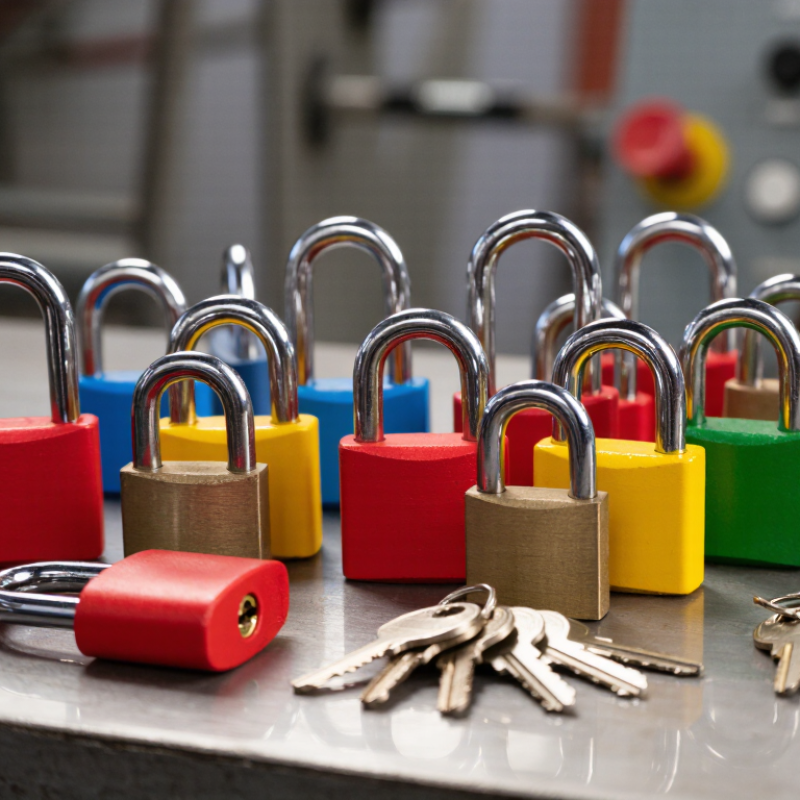
Make the padlock visibly different from ordinary maintenance locks. Use a standardized color, durable identification label, and a key system supporting one worker, one lock, and one key. A nonconductive body can reduce electrical contact risks, but it does not replace isolation verification. Specify shackle diameter, clearance, corrosion resistance, temperature range, ultraviolet exposure, and resistance to common site chemicals. Check compatibility with disconnect handles and valve holes using physical samples.
Standards matter, but paperwork can mislead. ISO 14118:2018 addresses prevention of unexpected machine start-up, while OSHA 29 CFR 1910.147 defines U.S. control requirements. Local rules may differ. Ask suppliers for material declarations, test methods, inspection records, and serial-number traceability. Require samples from production tooling, not only polished prototypes. A factory audit should examine key control, rejected-lock handling, and packaging labels. One overlooked master key can weaken the entire program. I have seen specifications focus on colors while ignoring shackle clearance. That mistake deserves a second review.
Compare Padlock Types, Materials, and Keying Systems
When sourcing safety lockout padlocks globally, compare their operating role, not only color or price. Nylon-bodied padlocks resist electrical conductivity and remain light for maintenance teams. They suit indoor panels and dry workshops. However, nylon may wear faster under sunlight, solvents, or repeated impact. Steel bodies provide stronger physical resistance, while stainless steel handles moisture better. Aluminum is lighter and easier to carry, but it may not tolerate harsh abuse. Check shackle diameter, clearance, corrosion resistance, temperature range, and label durability. A padlock that fits poorly creates a practical failure.
Keying systems also require careful review. Keyed-different systems give each worker a unique key, reducing accidental access. Keyed-alike systems simplify controlled team use, but one missing key affects more locks. Master-keyed structures can support supervisors, yet access must be recorded carefully. Consider duplicate-key controls, cylinder quality, and whether keys remain removable when unlocked. Test samples with gloves, cold hands, and common lockout points. Real handling reveals more than catalog images. Small key heads can become frustrating during winter work.
Tips: Ask suppliers for material certificates, weather data, sample locks, and documented inspection procedures. Confirm consistent key codes across shipments. Define acceptance checks before ordering. Review packaging, too; scratched bodies may hide early corrosion. Do not select by unit cost alone. A cheaper lock may need earlier replacement, creating inconsistent protection across sites. Is the system simple for every shift? That question deserves a written answer.
Evaluate Customization, Packaging, and International Logistics
How to Choose Safety Lockout Padlocks for Global Sourcing
A sourcing audit should begin with the lock’s safety function, not its color. WHO and ILO estimates published in 2023 linked 2.93 million annual deaths to work-related factors. That figure makes traceable specifications essential. Define shackle diameter, clearance, corrosion resistance, key-retention behavior, and temperature range. Request samples from production, not only catalog photographs. Customization may include keyed-alike systems, laser marking, employee identification, and department colors. However, excessive color options can complicate inventory control. Simple is often safer.
Packaging needs equal attention. Each padlock should remain protected from moisture, scratches, and accidental opening. Use individual sleeves, molded separators, and cartons sized to prevent movement. Add batch numbers, quantity labels, handling symbols, and bilingual instructions where required. ISO 780 provides recognized handling symbols for transport packages. A drop test is useful, but it cannot replace warehouse trials. We sometimes overestimate packaging quality after one successful shipment.
International logistics can change the landed cost more than the unit price. UNCTAD reports that maritime transport carries over 80% of world merchandise trade by volume. Plan for port delays, carton compression, humidity, and customs documentation. The World Bank’s Logistics Performance Index evaluates customs, infrastructure, shipment quality, and tracking. Therefore, ask suppliers for carton dimensions, gross weight, production lead time, and shipment tracking procedures. Confirm tariff classification with a qualified customs professional. A perfect lock with poor documentation may still arrive late.
How to Choose Safety Lockout Padlocks for Global Sourcing
The chart presents a practical sourcing scorecard based on six verifiable procurement requirements: durability, standardization, identification, customization, packaging traceability, and export documentation. Each item is rated from 1 to 5 for supplier evaluation.
Prioritize products that are durable, clearly identifiable, and standardized, then verify customization options, carton-level traceability, and complete international shipping documents before placing a global order.
Select Suppliers and Establish a Reliable Procurement Process
Global sourcing of safety lockout padlocks begins with supplier discipline, not a low quotation. The ILO reported nearly three million work-related deaths and 395 million non-fatal injuries annually. That risk makes reliable energy-control equipment a procurement responsibility. Supplier selection should examine materials, shackle strength, key control, corrosion resistance, and identification methods. Ask for test reports, batch records, material declarations, and documented quality procedures. Verify certificates with the issuing body when practical.
The World Bank’s 2023 Logistics Performance Index used 4,090 assessments across 139 economies. Its findings highlight uneven logistics performance between markets. Build this variation into your sourcing process. Compare supplier lead times, export experience, packaging standards, customs documentation, and contingency capacity. Request production samples before approving a full order. Inspect key operation, label durability, shackle movement, and lock performance after exposure to moisture and dust. Test physically.
A dependable process uses an approved supplier list, written specifications, and lot-level traceability. Set measurable acceptance criteria before requesting quotations. Include change-notification requirements for materials, factories, tooling, and subcontractors. Review supplier performance monthly, using defect rates, delivery accuracy, response time, and corrective-action closure. Maintain a qualified second source for critical volumes, but do not assume two suppliers guarantee resilience. A scorecard still misses field behavior. Periodic user feedback matters. In my view, procurement teams often overvalue certificates and underestimate sample inspection. That weakness deserves review. Keep records for each shipment, including inspection results, photographs, quantities, and nonconformity decisions.
 Skip to content


 English
 Russian
  German
  Spanish
  French
  Portuguese