...

How to Choose Skin Remodeling Devices in 2026?

Choosing a Skin Remodeling device in 2026 means looking beyond polished marketing and impressive before-and-after photos. The right choice depends on your skin concerns, medical history, budget, and tolerance for downtime. Different technologies, including radiofrequency, lasers, and ultrasound, work in different ways and may suit different people. More features do not automatically mean better results.

Start with the details that affect your safety and experience. Ask who will operate the device, what training they have, and whether the treatment is appropriate for your skin type. Request a clear explanation of expected benefits, common side effects, recovery time, and the number of sessions likely to be recommended. Check that the device is properly maintained and that the provider can discuss credible evidence, not just testimonials. Small details matter: the room should feel clean, and the consultation should leave time for questions. That matters.

This guide will help you compare device types, evaluate providers, and spot claims that sound too certain. It will also consider practical factors, such as treatment cost and how results may vary between individuals. Some evidence may be limited, and devices can change faster than independent research. That uncertainty deserves honest attention. A careful decision is not always the most exciting one, but it can help you set realistic expectations and choose a treatment plan with a qualified professional.
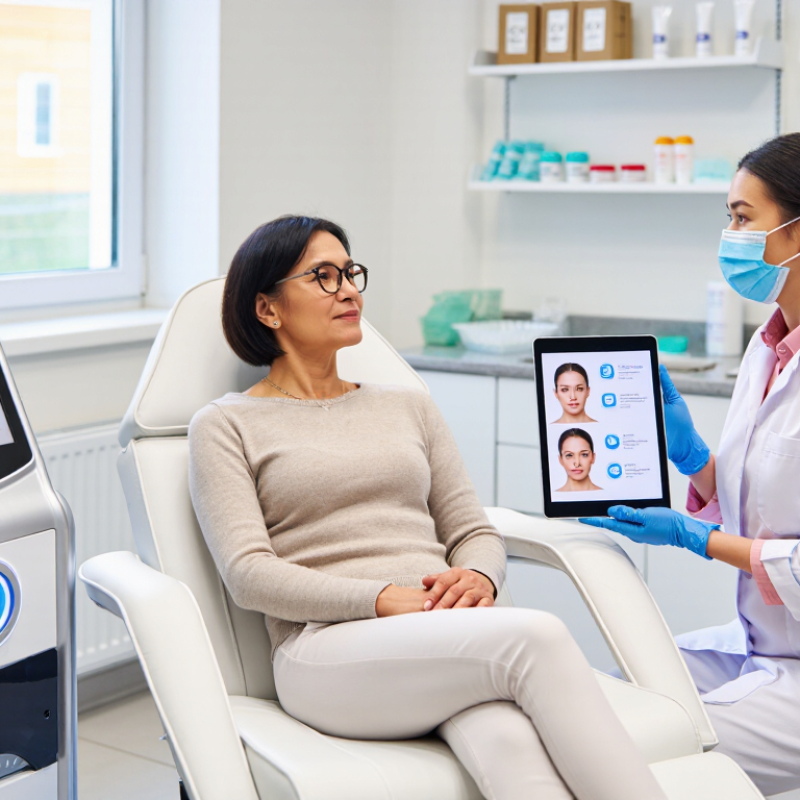
How to Choose Skin Remodeling Devices in 2026?

Define the Remodeling Goal: Texture, Scars, Pigment, or Laxity

Choosing a skin remodeling device in 2026 should start with your goal, not a device’s name or strongest setting. Texture concerns may include rough patches, visible pores, or fine lines. A qualified clinician can assess whether controlled resurfacing is appropriate. Acne scars need closer inspection. Rolling scars, narrow pits, and raised scars are different concerns; one treatment rarely suits all. Pigment is trickier: brown spots differ from redness, and melasma may worsen with excess heat or irritation. Laxity involves deeper support, so surface-focused treatments may have limited effect. Expectations matter.

Tips: Take photos in consistent daylight and mark the areas that concern you. Ask what tissue a device targets, how many sessions may be needed, and what downtime or pigment risks apply to your skin tone. Share your medications, past reactions, and recent tanning with a qualified clinician. Small details matter.

These categories can overlap. A scar may also be pigmented, while loose skin can have uneven texture. The distinction is not always tidy. A careful assessment is more useful than a one-size-fits-all menu. Ask for a staged plan, when results should be reviewed, and what might change the approach. There is no perfect device for every face, and even a sensible plan may need adjustment.


Compare Laser Wavelengths: 10,600-nm CO₂ vs 2,940-nm Er:YAG

Choosing a skin remodeling device in 2026 means looking beyond the wavelength printed on its specification sheet. Both 10,600-nm CO₂ and 2,940-nm Er:YAG lasers target water in skin, but they deliver energy differently. CO₂ energy generally creates more residual heat around treated tissue, which can support deeper remodeling. It may also mean more redness, swelling, and recovery time. Treatment depth and downtime vary with settings and technique.

Er:YAG energy is absorbed very strongly by water, allowing precise removal of thin layers of tissue. It typically leaves less surrounding thermal injury than CO₂, though the result depends on treatment intensity and delivery mode. Less heat. Less does not mean risk-free: temporary redness, pigment changes, and infection are possible with either device. Fractional settings can leave untreated skin between treatment zones, but they do not guarantee a quick recovery.

It is easy to overvalue a wavelength and overlook the person operating the device. Skin tone, scar type, treatment area, medical history, and tolerance for downtime all matter. A qualified clinician should explain why one wavelength suits your goals and how they reduce risks for your skin. Ask to discuss expected healing with real examples, not just idealized timelines. Even careful plans can be imperfect; settings may need adjustment, and results are not identical from person to person.

Assess Downtime and Risk: Ablative vs Nonablative Resurfacing

Ablative resurfacing removes part of the skin’s outer layers, so it can produce more dramatic change alongside more recovery. The American Academy of Dermatology describes about one to two weeks of healing after ablative laser resurfacing; redness may last longer. Nonablative devices heat tissue without removing the surface. They usually involve less downtime, but often need several sessions. The AAD notes that recovery is generally minimal. Not risk-free. Burns, infection, scarring, and pigment changes remain possible with either approach, especially when settings or aftercare are unsuitable.

The American Society of Plastic Surgeons’ 2023 procedural statistics report recorded roughly 3.4 million skin-resurfacing procedures in the United States. That figure signals demand, not proof that one treatment suits everyone. Skin tone, treatment depth, medical history, and tolerance for visible redness all affect the risk-benefit choice. Darker skin tones may face greater risk of lasting pigment changes, so a qualified clinician should assess candidacy and settings. I would not treat “nonablative” as a synonym for “safe for every skin.”

Tips: Ask for the expected healing timeline for your specific device and settings. Plan for peeling, redness, and sun avoidance, not just the appointment. If a clinician promises no downtime, ask what that means in practice: a pink face at work may still matter.

Verify FDA Clearance, Intended Use, and Clinical Evidence

How to Choose Skin Remodeling Devices in 2026?
Verify FDA Clearance, Intended Use, and Clinical Evidence

A device’s name or sleek console cannot tell you whether it fits your needs. In 2026, check its regulatory status, intended use, and evidence for the specific treatment being offered. If it is marketed as FDA-cleared, verify the device and indication in FDA records; clearance is not the same as FDA approval. Details matter. A clearance for one use does not establish safety or effectiveness for every skin concern.

Tips: Ask for the device’s exact model and treatment indication. Compare those details with FDA records, not just a clinic’s brochure. Request published clinical studies, and check whether they examined the same device, settings, and patient concerns. Ask who will operate it and what training they have.

Evidence should describe outcomes and risks, not only impressive before-and-after photos. Look for study details, follow-up duration, participant characteristics, and reported side effects. Small studies may be useful, but they cannot answer every question. It is tempting to trust confident claims; pause if the evidence does not match the proposed treatment. Ask what results are realistic for your skin, how many sessions may be needed, and what warning signs require follow-up. A thoughtful provider should explain uncertainty plainly, including when a device may not be suitable.

How to Choose Skin Remodeling Devices in 2026? - Verify FDA Clearance, Intended Use, and Clinical Evidence

Device Category Technology and Typical Use What to Verify in FDA Records Clinical Evidence to Review Practical Safety Checks
Fractional laser systems Deliver light energy in fractional patterns. Depending on the specific device and labeling, intended uses may include treatment of wrinkles, scars, or other skin conditions. Search the exact device and model in FDA records. Confirm the cleared indication, treatment area, patient population, and any required accessories; do not infer an indication from the technology category alone. Look for peer-reviewed studies on the same device or a clearly comparable system. Check study design, number of participants, follow-up duration, outcome measures, and adverse-event reporting. Review the device instructions for use, eye-protection requirements, skin-type considerations, operator training, and post-treatment care.
Radiofrequency (RF) microneedling Combines needle insertion with RF energy delivery. Intended uses and treatment parameters differ by device and cleared labeling. Confirm the exact device, needle configuration, and FDA-cleared indication. A clearance for one use or configuration does not establish clearance for every use or setting. Assess whether studies report validated outcomes, follow-up beyond the immediate recovery period, and complications as well as benefits. Evidence for one device should not automatically be treated as evidence for another. Check practitioner qualifications, sterile single-use components where specified, contraindications, and the manufacturer’s instructions. Discuss risks such as burns, scarring, pigment changes, and infection.
Non-invasive RF systems Apply RF energy to tissue without needles. Some device-specific clearances may cover particular cosmetic indications, but indications are not uniform across devices. Verify the precise cleared indication and whether the labeling describes temporary improvement, a specific treatment area, or a defined patient group. Prefer controlled studies with clearly described treatment protocols and objective or validated assessment methods. Check the duration of follow-up and whether results were independently assessed. Review energy settings, cooling or temperature controls, contraindications, and instructions for managing discomfort or skin reactions.
Focused ultrasound systems Use focused acoustic energy at specified tissue depths. Some systems have device-specific aesthetic indications; the intended use must be verified for the exact model. Check the FDA record and labeling for the cleared treatment area, indication, applicators, and intended user. Do not assume that all ultrasound devices share the same clearance. Review the evidence for the exact indication and treatment protocol. Note sample size, follow-up length, outcome measures, and whether the study was controlled. Confirm operator training, appropriate applicator selection, contraindications, and the device’s instructions for use.
Intense pulsed light (IPL) systems Use filtered, broad-spectrum light. Device-specific indications may include selected hair-removal or skin-treatment uses; IPL is not interchangeable with a laser. Verify which indication is cleared for the exact device and applicator. Check labeling for skin-tone limitations, treatment areas, and eye protection. Look for studies that identify the light source, settings, treatment schedule, and participant skin types. Assess whether outcomes and adverse events were reported consistently. Review photosensitivity warnings, eye-safety procedures, skin-type guidance, and the risk of burns or pigment changes.
Regulatory status check FDA “cleared,” “approved,” and “authorized” describe different regulatory pathways and should not be used interchangeably. Search the FDA 510(k) database by device name or 510(k) number and read the decision summary and labeling where available. A 510(k) clearance is not the same as FDA approval. Registration or device listing alone does not mean FDA clearance or approval. Regulatory status does not by itself establish that a device is superior to alternatives or that every advertised outcome is supported by clinical evidence. Match the record to the device in use, including its model and accessories. Ask the provider to explain how the proposed treatment fits the device’s cleared intended use.
Evidence and claims review Separate the device’s cleared intended use from broader promotional language such as “rejuvenation,” “tightening,” or “remodeling.” Compare each proposed claim with the exact FDA-cleared labeling. Do not assume that a clearance for one indication supports different areas, outcomes, or patient groups. Give greater weight to well-designed human studies with transparent methods, relevant comparison groups, meaningful follow-up, and complete safety reporting. Check for conflicts of interest and independent replication. Ask about expected results, number of sessions, recovery time, possible complications, alternatives, and what follow-up is available if a problem occurs.

Official references: FDA 510(k) Premarket Notification database | FDA overview of 510(k) submissions | FDA device registration and listing information. Clearance and indications are specific to individual devices; this table is a general evaluation guide, not a recommendation for a particular treatment.

Benchmark Demand: ASPS Counted 25.4M Minimally Invasive Procedures in 2023

The American Society of Plastic Surgeons (ASPS) reported 25.4 million minimally invasive cosmetic procedures in the United States in 2023, a 7% increase from 2022. That figure offers a useful demand benchmark for clinics considering skin-remodeling equipment. It signals substantial interest in nonsurgical aesthetic care, but it does not show how many patients sought skin tightening or resurfacing specifically. Counts are not patients. One person may receive multiple procedures, and procedure categories do not map neatly to device types.

The International Society of Aesthetic Plastic Surgery’s 2023 Global Survey recorded about 19.1 million nonsurgical procedures worldwide. Its scope differs from ASPS, so the totals should not be combined. For device selection, demand is only one part of the decision. Compare published clinical evidence for the intended treatment, patient suitability, treatment time, consumable costs, and expected downtime. Ask how the device performs across varied skin tones, and review training and maintenance requirements. A busy treatment calendar can look persuasive. Still, local patient needs and realistic outcomes matter more than a broad market number. The reports measure procedures, not satisfaction, repeat visits, or profitability. That gap deserves attention.

How to Choose Skin Remodeling Devices in 2026?

Benchmark Demand: ASPS Counted 25.4M Minimally Invasive Procedures in 2023

ASPS-reported minimally invasive cosmetic procedures rose to approximately 25.4 million in 2023. This overall volume provides market context—not a device-specific demand forecast—when evaluating skin remodeling technologies.

Source: American Society of Plastic Surgeons (ASPS), annual plastic surgery statistics. Values rounded to the nearest 0.1 million.

en_USEnglish

PCD Inserts

PCBN Inserts

Solid CBN Inserts

PCD Milling Cutter

PCD Drilling Tools

PCD Reamer

Diamond Special Tool

Diamond Dressers