How to Choose the Best AI Floor Cleaner for Your Business
Choosing an Ai Floor Cleaner for a business is less about chasing the newest feature and more about matching equipment to daily conditions. A polished hotel lobby, a grocery aisle, and a warehouse floor place very different demands on a machine. Start with floor material, cleaning area, spill patterns, operating hours, and the level of staff supervision available. Small details matter. A narrow doorway, wet entrance mat, or crowded lunch period can change whether a robot works smoothly. That is easy to overlook.
Look beyond marketing claims. Compare cleaning coverage, battery life, water capacity, navigation, obstacle detection, and how easily staff can empty or maintain the unit. Ask how the machine handles edges, furniture, and changing layouts, not just open floors. AI navigation may reduce repetitive work, but it does not remove the need for clear floor preparation, routine checks, or staff training. Those limits matter. Before purchasing, run a supervised pilot in the actual space. Note missed corners, interruptions, drying time, and how often someone needs to intervene. No specification sheet captures every shift.
A practical choice should also fit your budget, cleaning schedule, and service expectations. Check warranty terms, replacement-part availability, software support, and whether performance reports are understandable to your team. Compare results against your current routine, rather than relying on a polished demonstration. Some sites may need more than one machine, while others may find automation unnecessary in certain areas. The right decision is not always the most advanced one. It is the cleaner that reliably meets your site’s needs, with realistic expectations about what it can—and cannot—do.
Define Your Business’s Floor-Cleaning Requirements
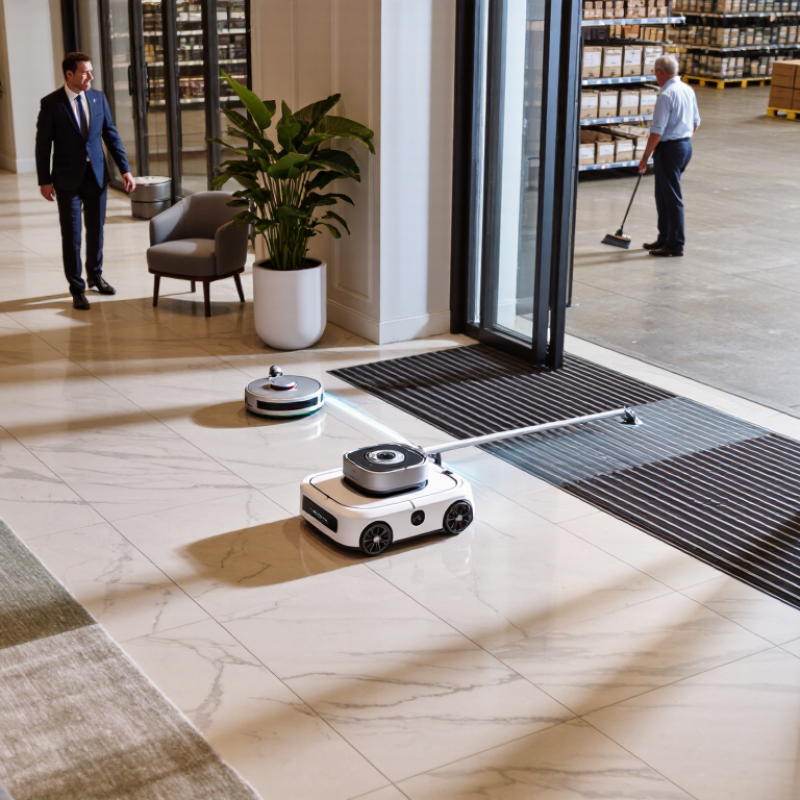
Start with the floor, not the machine. Record the surface types in each area, such as sealed concrete, tile, or textured vinyl. Note where grout, floor mats, ramps, and thresholds interrupt a route. These details affect how consistently a cleaner can travel and scrub. That matters.
Measure the cleanable area, then observe it during a normal workday. A 2,000-square-foot showroom with scattered displays may take longer to clean than an open warehouse of the same size. Track foot traffic, dust, packaging scraps, tracked-in grit, and spills. Also note when floors must be cleaned and how much time is available between shifts. A quiet overnight window is different from a busy lunch period. Don’t guess from a single visit; conditions can change by weekday.
Ask cleaning staff which areas need repeated passes and where cords, carts, or narrow aisles cause delays. Their experience can expose problems a floor plan misses. Define the result you need, too: light daily upkeep, visible spill pickup, or more intensive scrubbing. Check whether the site has suitable charging access and a place to refill or empty the machine. Keep a simple trial log of coverage, missed spots, and staff interruptions. It may be imperfect at first. Revise it after observing real cleaning runs.
Assess Floor Types, Layouts, and Operating Conditions
Choosing an AI floor cleaner starts with the surface beneath it. Sealed concrete, ceramic tile, and low-pile carpet each respond differently to brushes, suction, and moisture. Check whether floors are level, textured, or interrupted by thresholds. A machine that handles a smooth showroom may struggle with grout lines or a damp entryway. Small details matter.
Tips: Map the space during a normal workday, not just when it is empty. Note narrow aisles, glass partitions, chair legs, floor mats, and areas where people gather. Check door widths and charging locations, too. These details affect route planning and how much floor the cleaner can cover between charges.
Operating conditions shape performance as much as floor type. Consider dust, tracked-in grit, spills, shift changes, and the hours when cleaning can happen safely. Ask for a supervised trial on representative floors, and watch how the machine turns, avoids obstacles, and recovers from interruptions. Test before scaling. A tidy floor plan can still mislead; real sites change, and staff may move fixtures or leave carts in new places. Record missed patches and maintenance needs over several shifts, then compare those observations with the cleaner’s stated coverage and runtime.
How to Choose the Best AI Floor Cleaner for Your Business
Compare floor types against layout and operating conditions before selecting a cleaner.
How to read this chart: Ratings use an illustrative 1–5 planning scale, not measured product-performance data. Smooth, sealed surfaces are generally simpler to clean than uneven or carpeted floors, but actual suitability depends on the machine’s specifications and a site trial. Assess your layout for obstacles and narrow passages, and check operating conditions such as moisture, debris, and cleaning hours.
Evaluate Integration, Maintenance, and Total Cost of Ownership
An AI floor cleaner earns its place only when it works with your building and daily routines. Check whether it can use existing floor maps, Wi-Fi, access rules, and scheduling tools. A machine that cannot pass through a fire door or use an elevator may need constant staff help. Run a pilot during a normal shift, not an empty showroom demonstration. Observe missed edges, route changes, and handoffs between the cleaner and custodians. Small friction adds up.
Ask about routine maintenance tasks, service intervals, and who performs them. Check how easily staff can remove tangled hair, clean sensors, replace filters, and swap batteries. Confirm parts availability and technician response times in writing. A clogged brush or dirty sensor can reduce coverage before anyone notices. Keep a simple log of faults and cleaning hours. It will be imperfect.
Compare purchase or lease costs with setup, training, software, consumables, repairs, electricity, and downtime. Include labor realistically; do not assume every automated hour becomes a saved hour. Some staff time shifts to monitoring, spot-cleaning, and moving furniture. Estimate cost per cleaned square meter over several years, using conservative utilization and repair assumptions. Then compare that figure with current costs and service quality. The estimate may change.
How to Choose the Best AI Floor Cleaner for Your Business - Evaluate Integration, Maintenance, and Total Cost of Ownership
Use this scorecard to compare proposals on the same site conditions. The weights are suggested evaluation priorities, not industry standards. Request written evidence for each item and calculate costs over the same ownership period.
| Evaluation Area | Suggested Weight | What to Measure | Evidence and Decision Rule |
| Cleaning performance | 25% | Verified cleaning area per hour, cleaning result, and coverage of edges, corners, and busy zones. | Run a site trial on representative floors and soil levels. Compare measured results with the required area and cleaning schedule; do not rely only on a rated maximum speed. |
| Site fit and navigation | 15% | Access through doors and aisles, performance around people and obstacles, floor transitions, and operation in wet or reflective areas. | Test the actual route, including narrow passages, elevators if needed, and peak-traffic periods. Confirm required clearances and any site modifications in writing. |
| Integration and deployment | 15% | Network and cybersecurity requirements, fleet-management interfaces, reporting, charging location, and setup effort. | Request a documented list of supported interfaces, data collected, connectivity needs, and deployment tasks. Include mapping, training, network work, and integration fees in the implementation estimate. |
| Runtime and availability | 10% | Usable cleaning time per charge, charging time, automatic recharge behavior, and scheduled coverage during operating hours. | Ask for test results under comparable cleaning settings and site conditions. Verify that charging and refill or recovery stops still allow the required schedule to be completed. |
| Maintenance and service | 15% | Daily operator tasks, preventive-maintenance intervals, wear-part replacement, support coverage, and expected repair turnaround. | Obtain the maintenance schedule, parts list, labor requirements, warranty terms, service response commitments, and local parts availability. Confirm who performs each task and its cost. |
| Total cost of ownership (TCO) | 15% | Purchase or lease, deployment, software, labor, consumables, utilities, maintenance, downtime, and end-of-term costs. | Compare options over the same 3–5-year planning period and operating schedule. Use: TCO = acquisition + deployment + software + labor + consumables + utilities + maintenance + downtime costs − residual value. State assumptions and exclude unsupported savings. |
| Safety and compliance | 5% | Risk assessment, emergency stops, obstacle detection, operator training, and applicable local safety requirements. | Request applicable conformity and safety documentation for the intended workplace and jurisdiction. Have the site safety team review the operating plan before deployment. |
Scoring method: Rate each area from 1 (does not meet requirements) to 5 (fully meets requirements with verified evidence). Multiply each rating by its suggested weight, then compare the weighted totals alongside the documented TCO and site-trial results.
Verify Vendor Support and Conduct an On-Site Trial
A capable AI floor cleaner is only useful when your team can keep it working. Ask vendors who handles setup, staff training, software updates, and repairs. Get response times in writing, and check whether replacement parts are readily available. Speak with customers who operate similar buildings, if possible. Ask about missed service calls, not just successful installations. A polished demo can still mislead.
Arrange an on-site trial during normal operations. Test the cleaner on your actual floor types, around carts, doorways, and busy areas. Observe how it handles clutter and changing foot traffic. Track cleaning coverage, staff intervention, downtime, and battery use across several shifts. One shift may not reveal much. Your team might also score results differently, so agree on simple measures before the trial begins.
Tips: Have a support contact join the trial. Record faults with time, location, and a photo. Ask staff to note where they had to step in. Compare results with your current routine, using the same area and schedule. If the vendor cannot explain a failure clearly, pause before signing. That may sound cautious, but reliability matters more than a tidy demonstration.
 Skip to content



 English
 Russian
 German
 Spanish
 French
 Portuguese