SUNDI TOOLS
- Copyright © Wuxi Sundi Precision Tools Co.,LTD All rights reserved.
- Site Map
Choosing the right Sds Plus Hammer Drill starts with the material, hole size, and daily workload—not the largest number on the box. SDS-plus tools use a slotted bit connection designed for quick changes and effective impact drilling in concrete and masonry. For a homeowner fitting shelves, a compact corded or cordless model may be enough. For repeated anchor holes, a stronger hammer mechanism, low vibration, and a dependable clutch matter more.
The need for careful tool selection is practical. The U.S. Bureau of Labor Statistics reported 1,075 fatal work injuries among construction and extraction occupations in 2023. That figure does not measure drill-related incidents, but it underlines why control, training, and suitable equipment deserve attention on job sites. Dust matters too. OSHA’s Respirable Crystalline Silica standard sets an eight-hour permissible exposure limit of 50 micrograms per cubic meter, with an action level of 25 micrograms. Look for compatible dust extraction or shrouds when drilling concrete.
Small details count. Check weight, grip, battery availability, service support, and the tool’s recommended bit range. Compare impact energy carefully; manufacturers may measure and present specifications differently. A higher figure alone does not guarantee faster, cleaner work. This guide will explain how to match power, comfort, and useful features to real tasks. One honest caveat: no single model suits every user. A drill that feels balanced in a shop may feel heavy above shoulder height. Test the grip if possible, and leave room to reconsider.
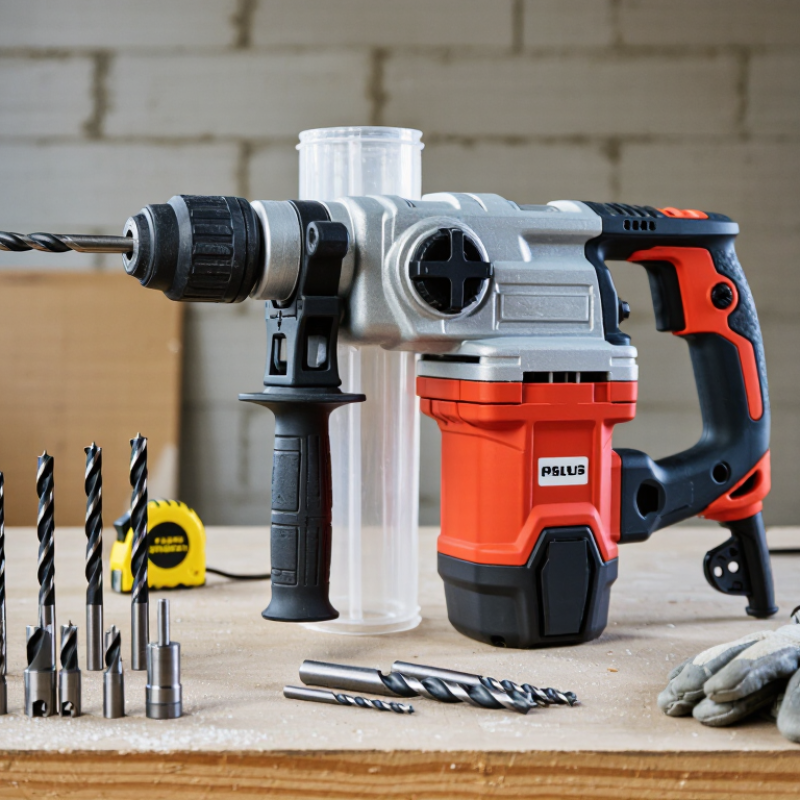
An SDS Plus hammer drill is a rotary hammer designed mainly for drilling into concrete, brick, and block. Its slotted bit shank fits into a locking holder, allowing the bit to move slightly as the hammer mechanism delivers repeated impacts. That impact action helps the bit cut masonry more efficiently than a standard drill’s hammer setting.
Common jobs include making holes for wall anchors, running small cables through masonry, and drilling into concrete for fixings. With a suitable chisel and the correct mode, many models can also remove tile or chip away a small section of mortar. They are not ideal for every task. Drilling clean holes in wood or metal usually calls for a regular drill and the appropriate bit. Small detail. Using the wrong mode can damage the bit or work surface.
Match the tool to the material and the size of the job. For occasional small anchor holes, a lighter model is easier to control overhead; frequent, larger holes may need more impact energy. Check the stated drilling capacity, tool weight, and whether it offers rotation-only, hammer drilling, and chiseling modes. A common oversight is bit length: a long bit may reach a deeper cavity, but it can wander if the hole starts off-center. Pause to clear dust from deep holes, and let the tool’s impact do the work rather than forcing it.
How to Choose the Best SDS Plus Hammer Drill?
Define Your Drilling Tasks, Materials, and Required Hole Sizes
Start with the hole, not the tool’s advertised power. A few 6 mm anchor holes in brick demand less from a drill than repeated 16 mm holes in reinforced concrete. Note the material, hole depth, diameter, and number of holes. Check that the drill accepts SDS Plus bits and that its stated capacity covers your largest planned hole. Leave some margin for demanding work. Capacity figures are not a promise of equal speed in every material.
Match the drilling mode to the task. Rotary hammer action suits masonry and concrete; rotation-only mode is useful for certain non-masonry materials when the bit allows it. For large or deep holes, consider whether the tool’s weight and vibration will remain manageable through repeated passes. A heavy drill can feel reassuring for one hole, then tiring by the tenth. This detail is easy to overlook.
Dust control belongs in the task plan, too. OSHA’s construction silica standard, 29 CFR 1926.1153, lists drills with a shroud and dust collector rated at least 99% filtration, with a filter-cleaning mechanism. Its guidance also calls for a HEPA-filtered vacuum when cleaning drilled holes. Indoors, dust can linger around the work area. Measure the intended hole and choose a bit with a suitable working length; a long bit may wobble more, and I would reassess the setup before drilling a series of precise holes.
| Drilling Task | Typical Material | Common Hole Diameter | Suggested Bit or Accessory | What to Look for in the Drill |
|---|---|---|---|---|
| Small holes for wall plugs and light-duty fixings | Brick, mortar joints, or concrete | 5–8 mm | SDS Plus masonry drill bit | Good speed control and a comfortable grip for accurate, repeated drilling. |
| General-purpose fixing holes | Concrete, dense brick, or block | 8–12 mm | SDS Plus masonry drill bit matched to the fixing | A hammer-drilling mode and enough impact energy for the material and drilling frequency. |
| Medium-duty anchors and service fixings | Concrete or solid masonry | 12–16 mm | SDS Plus bit of the specified anchor diameter | Check the tool’s stated drilling capacity in concrete and its recommended continuous-use limits. |
| Larger anchor holes or heavier fixings | Reinforced or unreinforced concrete | 16–26 mm, where supported by the tool | Longer or larger-diameter SDS Plus masonry bit | Compare the required diameter with the manufacturer’s maximum concrete capacity; larger holes may call for a more powerful tool or a different system. |
| Small cable or pipe pass-through holes | Brick, block, or concrete | Approximately 20–40 mm, depending on the opening | SDS Plus-compatible core bit, if approved for the drill | Confirm core-bit compatibility and the tool’s permitted accessory size. Use the accessory’s specified drilling method. |
| Shallow chiselling or removal of tile and loose mortar | Tile adhesive, mortar, or light masonry | Not applicable | SDS Plus pointed or flat chisel | A rotation-stop chiselling mode is useful; avoid using a chisel where it could damage concealed services or the substrate. |
| Occasional drilling in wood or metal | Wood or metal | As required by the project and accessory | Suitable wood or metal bit in a compatible SDS Plus chuck or adapter | Use rotation-only mode when available. Check the adapter and accessory instructions; hammer action is not suitable for these materials. |
Selection note: Hole-size ranges are common examples, not universal limits. Check the drill’s rated capacity for each material, the accessory’s specifications, and the fixing manufacturer’s required hole diameter and depth. Before drilling, check for concealed electrical cables, pipes, and reinforcement.
When choosing an SDS Plus hammer drill, compare input power with impact energy, not watts alone. A higher wattage rating does not automatically mean faster drilling in concrete. Check the single-impact energy in joules, preferably measured using the European Power Tool Association’s EPTA Procedure 05/2009. It gives a more consistent basis for comparing rotary hammers. Still, real results depend on the bit, concrete hardness, and operator pressure.
Look at both no-load speed, measured in rpm, and impact rate, measured in blows per minute. Speed helps with rotation, while impact energy and rate shape progress in masonry. For tile or light drilling, rotation-only mode can reduce damage. Hammer-only mode suits chiselling; combined mode is for concrete drilling. A few extra modes may help, but controls should be clear with gloves on. Small detail. Easy to overlook.
Tips: Compare the tool’s declared vibration value before long jobs. UK Health and Safety Executive guidance sets daily hand-arm vibration action and limit values at 2.5 and 5 m/s² A(8), respectively. These are exposure thresholds, not a promise that a particular drill is safe for unlimited use. Check the manual and plan breaks. I would not choose on one headline number alone.
Assess Tool Weight, Grip, Vibration Control, and Safety Features
A drill’s weight affects control, especially when working overhead or above shoulder height. Compare the tool’s weight with its balance; a lighter model can still feel awkward if its head pulls forward. Hold it as you would on a real job, not just briefly in a shop. Small details matter. Check whether the side handle adjusts easily and stays firm under pressure. A textured grip helps when hands get sweaty, though gloves can change how comfortably you hold the drill.
Vibration control deserves close attention during longer tasks. Look for a design that reduces vibration through the handle, and take regular breaks rather than relying on the feature alone. A safety clutch, where fitted, can help limit sudden twisting if a bit binds. A depth stop also helps keep holes consistent. Test it unloaded. Notice whether the controls are easy to reach without shifting your grip. It is tempting to focus only on power; I would not overlook how tiring a tool feels after several minutes.
Tips: Try holding the drill at several angles before buying. Check the side handle, trigger, and depth stop. Wear eye and hearing protection, secure the workpiece, and use a suitable dust-control method. If vibration feels uncomfortable, stop and reassess your technique or tool choice. That trade-off matters.
For an SDS Plus hammer drill, accessory fit is not a minor detail. Check that each bit has an SDS Plus shank; SDS Max and ordinary round-shank bits will not fit the chuck directly. Match bit diameter and length to the drill’s stated capacity and the job. A long masonry bit can feel unwieldy in a tight corner, while a short one may not reach a deep anchor hole. Buy a few sizes you actually use, rather than a large set with fillers. Fit matters.
Budget for the whole setup, not just the drill. Include suitable bits, a depth stop, and replacement parts; cheaper accessories can wear quickly in dense concrete. Grand View Research estimated the global power-tools market at about US$32.95 billion in 2023 and forecast 4.9% annual growth through 2030. That market data gives context, not proof that a particular drill is better. Compare chuck compatibility, impact energy, rated drilling capacity, warranty terms, and the cost of common bits. I would still check whether the tool feels balanced with a long bit fitted. Small detail, big difference. A lower-priced drill may be sensible for occasional anchor holes, but frequent work can make durability and accessory availability worth paying for.
Compare the nominal shank diameters of two common rotary-hammer systems. SDS Plus accessories fit SDS Plus tool holders; SDS Max accessories do not fit directly.
SDS Plus uses a nominal 10 mm shank, while SDS Max uses an 18 mm shank. Check the drill’s tool-holder type before buying bits or chisels. To stay within budget, prioritize the features and accessories you need, and avoid paying for a different chuck system.