SUNDI TOOLS
- Copyright © Wuxi Sundi Precision Tools Co.,LTD All rights reserved.
- Site Map
Choosing the best U Panel Machine from China requires more than comparing factory prices. It requires measurable evidence.
The World Steel Association reported global crude steel production of about 1.89 billion tonnes in 2023. That scale supports continuing demand for efficient panel-forming equipment. Grand View Research’s 2024 metal forming machinery analysis also identifies automation, precision, and production efficiency as major market drivers. These trends matter when evaluating Chinese suppliers.
As roll-forming expert George T. Halmos states, “Roll forming is a continuous bending process.” The principle sounds simple. The machine is not.
A reliable U Panel Machine should match your coil width, thickness range, material grade, and required output speed. Ask for a detailed forming-pass layout, not only attractive photographs. Inspect the roll tooling, frame stiffness, servo system, PLC brand, and cutting accuracy. A factory producing 25-meter panels needs different controls than a workshop making short profiles.
Request video evidence of a full production cycle. Watch the coil enter, form, cut, and stack. Small details matter. Listen for abnormal vibration. Check whether the finished panel keeps a consistent width after cooling.
Chinese manufacturers can offer strong value, but quality varies between suppliers. ISO certification helps, though it cannot replace technical inspection. Confirm electrical standards, spare-parts availability, operator training, warranty terms, and remote support before signing.
The lowest quotation may look efficient. It may become expensive after installation. This is where buyers often misjudge the decision. A factory visit, sample test, and independent inspection create stronger evidence than promises. No checklist is perfect, but a disciplined comparison usually reveals the best U Panel Machine for your actual production conditions.
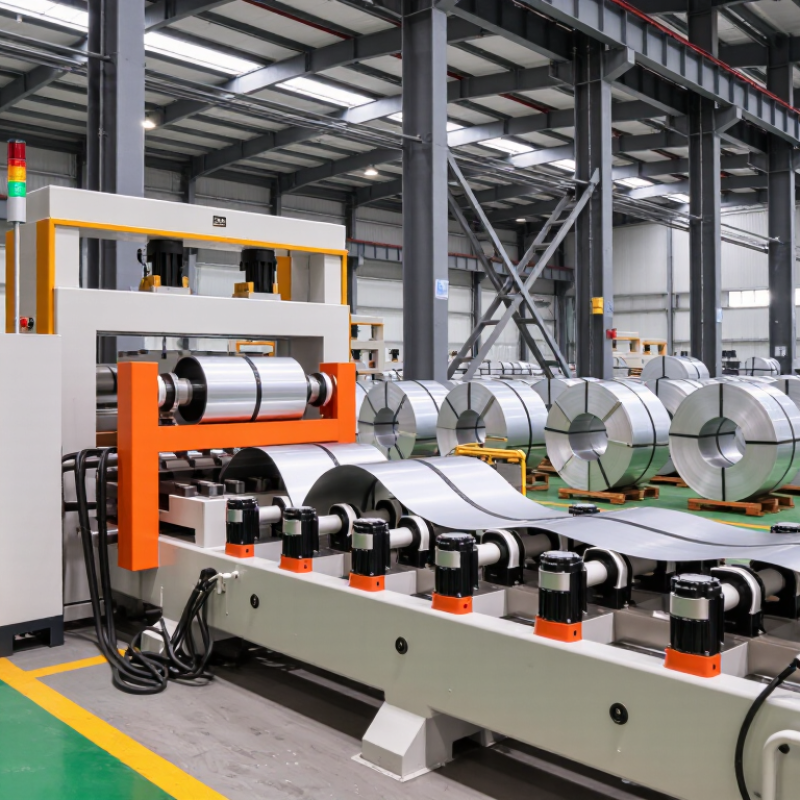
Before comparing a U panel machine from China, define what your factory must produce. Record panel length, width, thickness, material type, and daily output. These details determine the forming structure, cutting capacity, welding method, and automation level. Do not rely on attractive catalog images. A machine designed for light panels may struggle with thicker materials or continuous production.
Review your actual workflow. Measure available floor space, ceiling height, power supply, and material handling routes. Consider whether operators need manual controls or a fully automatic line. Ask for production samples, dimensional tolerances, cycle times, and maintenance records. Reliable suppliers should explain these figures clearly and provide technical documents. Confirm electrical systems, guarding, emergency stops, and installation support against your local requirements. The cheapest option may not be the most economical. Downtime, tool replacement, and training costs can change the calculation. I may overlook one issue here: future product changes often arrive earlier than expected.
Tips: Prepare a written requirement sheet before contacting suppliers. Include target output, acceptable tolerance, raw material specifications, workshop conditions, and inspection methods. Request a trial run using comparable material. Check weld consistency, panel shape, surface marks, and operating noise. Keep photos and test results for comparison. Small details matter.
How to Choose the Best U Panel Machine from China?
Compare U Panel Machine Types and Forming Capabilities
U panel machines usually fall into three practical types: fixed-width, adjustable-width, and interchangeable-profile lines. A fixed-width machine suits stable, high-volume production. Its tooling is simpler and often easier to maintain. Adjustable machines handle several panel widths, but setup changes may reduce daily output. Interchangeable-profile systems offer broader forming options. They also demand stricter tooling control and operator training.
Forming capability matters more than advertised speed. Check the workable steel thickness, coil width, yield strength, and finished panel depth. A strong machine should create clean corners without surface scratches or uneven edges. Roll forming is suitable for continuous production and consistent U-shaped profiles. Press-based equipment can support deeper bends, but it may work more slowly. Ask for sample panels using your actual material. Photos are not enough.
Measure the panel after cooling. Small springback can change installation accuracy. Servo feeding, guided entry, and automatic length control improve repeatability. However, more automation does not fix weak tooling. It may only hide the problem until production increases. During supplier evaluation, inspect weld quality, electrical cabinets, safety guards, and spare-part access. Request a trial with several coil thicknesses. One overlooked detail can become an expensive delay. The best choice balances profile range, forming stability, maintenance skill, and realistic production volume.
| Machine Type | Typical Forming Method | Typical Material | Typical Thickness | Typical Panel Width | Typical Production Speed | Best Application | Main Advantage | Main Limitation |
|---|---|---|---|---|---|---|---|---|
| Standard U-Panel Roll Forming Machine | Continuous roll forming through fixed forming stations | Pre-painted steel, galvanized steel, or stainless steel | Approximately 0.40–1.20 mm | Approximately 300–1,250 mm, depending on the profile | Approximately 8–20 m/min, excluding cutting time | Standard U-shaped wall, roofing, partition, and enclosure panels | Stable output, repeatable dimensions, and relatively high productivity | Usually produces one dedicated profile; changing the profile requires tooling changes |
| Heavy-Gauge U-Panel Roll Forming Machine | Slower multi-pass roll forming with reinforced frame and drive system | Hot-dip galvanized steel, carbon steel, or structural-grade steel | Approximately 1.20–3.00 mm | Approximately 400–1,500 mm | Approximately 3–12 m/min, depending on thickness and profile depth | Structural panels, industrial enclosures, storage systems, and heavy-duty partitions | Higher load capacity and better suitability for thick steel | Higher investment, greater power consumption, and lower forming speed |
| Hydraulic Press-Forming U-Panel Machine | Cut-to-length blanks are shaped by a hydraulic press and matched dies | Carbon steel, galvanized steel, aluminum, or stainless steel | Approximately 1.00–6.00 mm, subject to press capacity and die design | Commonly 500–2,000 mm | Approximately 2–8 pieces/min, depending on blank length and stroke cycle | Deep U-sections, short panels, custom profiles, and thick components | Can form deeper sections and thicker materials than many standard roll formers | Lower continuous-production efficiency and higher die costs for multiple profiles |
| Double-Layer U-Panel Roll Forming Machine | Two independent roll-forming decks installed in one machine frame | Pre-painted steel or galvanized steel | Approximately 0.40–1.00 mm per profile | Usually 300–1,250 mm per profile | Approximately 8–20 m/min when one layer is operating | Factories producing two different U-panel profiles or complementary panel types | Saves floor space compared with two separate machines | Only one forming line can normally run at a time; changeover access may be restricted |
| Cassette-Type U-Panel Roll Forming Machine | Interchangeable roll-forming cassettes or tooling groups | Pre-painted steel, galvanized steel, aluminum, or stainless steel | Approximately 0.40–1.50 mm | Approximately 300–1,500 mm, depending on cassette configuration | Approximately 6–18 m/min | Short production runs requiring several U-panel profiles | Faster profile changeover and lower setup effort than fully separate machines | Higher initial cost and less flexibility for very deep or unusually shaped profiles |
| U-Panel Machine with Automatic Cutting and Stacking | Roll forming combined with encoder-controlled cutting and automatic stacking | Pre-painted steel or galvanized steel | Approximately 0.40–1.20 mm | Approximately 300–1,250 mm | Approximately 8–18 m/min, depending on cut length and stacking cycle | High-volume production with fixed panel lengths and standardized packaging | Reduces manual handling, improves length consistency, and supports higher labor efficiency | Requires more floor space, controls, sensors, and maintenance than a basic line |
Choosing the best U Panel Machine from China starts with evaluating the manufacturer, not the catalog price. Ask how long the factory has produced roll forming equipment and which markets it serves. Request production videos, machine drawings, and recent customer references. A capable engineer should explain steel grade, forming speed, hydraulic pressure, and dimensional tolerance clearly. Ask for sample panels made with your material. Their edges should look even, without twisting or visible cracks. If answers sound polished but remain vague, slow down. Cheap equipment can become expensive after installation.
Tips: Compare at least three manufacturers. Check factory certificates, testing records, and spare-parts availability. Arrange a live video inspection of welding, electrical cabinets, and forming rollers. Do not rely on photographs alone.
Machine quality depends on more than its frame. Inspect roller alignment, motor stability, control-system access, and emergency stopping functions. Request a factory acceptance test using agreed specifications. Measure panel width, height, and repeatability during the test. Also confirm installation training, response times, warranty limits, and troubleshooting procedures. Some suppliers promise fast support but provide little technical detail. That warning matters. No checklist is perfect. I would still keep a written record of every change, because small design assumptions can affect years of production.
The chart shows practical preliminary benchmarks for evaluating a U panel roll-forming machine. At a 1.0 mm steel thickness, a reliable production line commonly targets about 10 m/min, while thicker material normally requires a lower forming speed. Confirm the actual results through material trials, dimensional inspection, continuous running tests, and electrical safety checks before purchase.
Choosing the best U panel machine from China requires more than comparing purchase prices.
Check the usable coil width, material thickness, forming stations, line speed, motor power, and cutting tolerance. A machine rated for 0.3–0.8 mm steel may struggle with thicker galvanized coils. Request test samples using your actual material, not factory stock. Measure panel width, seam fit, surface marks, and production speed.
Customization should match your building panels and workflow. Ask whether the manufacturer can adjust roller design, panel length, punching positions, decoiler capacity, and control language.
Automation also matters. The International Federation of Robotics reported 541,302 industrial robots installed worldwide in 2023, showing continued investment in automated production.
For a U panel line, useful automation includes automatic feeding, encoder-based length control, hydraulic cutting, alarm records, and remote diagnostics. Avoid paying for features your operators cannot maintain. That mistake is common.
Tips:
Check the complete electrical list. Confirm sensor brands, inverter ratings, PLC functions, and spare-part availability. Ask for a factory acceptance test with your drawings.
A faster line is not always better. Higher speed can increase scratches, setup waste, and dimensional variation. Energy consumption deserves attention, too.
The International Energy Agency identifies industry as a major global energy consumer, so compare motor efficiency and standby power. Leave room for doubt, and verify every claimed specification in writing.
Choosing the best U panel machine from China requires more than comparing catalog prices. Ask for a detailed quotation covering the forming unit, molds, electrical parts, packaging, and spare components. A low price may exclude installation guidance or testing. Request production videos, material specifications, and a sample panel report. In my experience, these details reveal practical quality faster than polished sales language. Still, a video cannot replace an independent inspection.
Service support should be measurable. Confirm response times, remote troubleshooting methods, operator training, and replacement part availability. Ask who pays when a damaged component arrives. Delivery terms need equal attention. Check the promised production schedule, loading photographs, export documents, and shipping responsibilities. Build a small time buffer because port delays and factory rework happen. I once treated a delivery estimate as fixed. That assumption created unnecessary pressure.
Tips: Compare three itemized quotations, not three headline prices. Put every promise into the contract. Define acceptance tests for speed, panel size, weld quality, and control accuracy. Read the warranty exclusions carefully. A useful warranty states coverage duration, repair procedures, response deadlines, and shipping costs. Keep inspection records and test videos. They make later discussions clearer, although they cannot solve every dispute.