SUNDI TOOLS
- Copyright © Wuxi Sundi Precision Tools Co.,LTD All rights reserved.
- Site Map
A blocked drain rarely announces its full difficulty. One line may hold grease near a kitchen; another may contain packed sediment far downstream. Choosing a Hydro Jetting Machine therefore starts with the work, not the biggest pressure rating on a sales sheet.
The U.S. Environmental Protection Agency’s 2022 Clean Watersheds Needs Survey estimated $630.1 billion in wastewater infrastructure needs over the following 20 years. That figure does not mean every contractor needs a larger jetter. It does show why dependable maintenance equipment matters. The report covers broad infrastructure needs, not machine performance, so treat it as context—not a buying formula.
Match the unit to pipe diameter, blockage type, access, and daily workload. Compare working pressure and water flow together; pressure alone can mislead. Check whether the water tank, hose length, and nozzle options fit the site. A compact trailer may suit residential calls, while municipal work can demand higher sustained flow and longer hose runs. Small details matter. A hose that barely reaches the cleanout can waste more time than a modest pump saves.
Ask manufacturers for clear performance specifications, service intervals, and parts availability. Confirm that operators can control the equipment safely and follow its manual. A bigger machine is not automatically better. I would still verify the claimed output under realistic operating conditions; product sheets rarely show every job-site constraint. Choose for repeatable results, not impressive numbers alone.
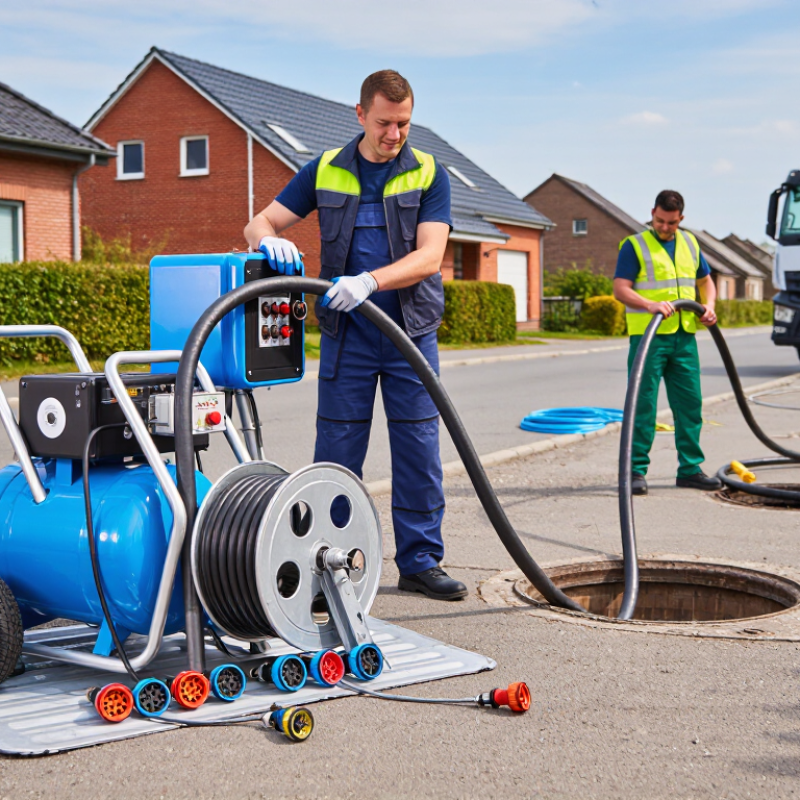
Before comparing pressure ratings, define the work the machine must do. A kitchen line carrying soft grease needs a different setup from a long storm drain with compacted sediment. Note the pipe diameter, material, length, and number of bends. Small details matter. A hose that reaches the cleanout may still struggle around several tight elbows.
Check what the site can actually provide. Measure access openings, confirm a steady water supply, and consider whether the work is indoors or outdoors. Narrow basements may call for a compact unit and a manageable hose reel. Longer runs often need enough flow to carry loosened debris back toward the access point, not merely break it apart.
Roots or hardened scale may require a careful assessment before jetting; pressure alone does not solve every blockage and can damage weakened pipe. I’ve seen equipment choices focus too much on maximum pressure. That’s an easy mistake. Match pressure and flow to the pipe’s condition, the nozzle, and the debris. Also allow room for protective gear, safe hose handling, and cleanup. A simple site checklist can prevent an expensive mismatch, though it will not replace a proper pipe inspection.
A hydro jetting machine should match the drain, not just display an impressive pressure rating. Pressure helps break up grease and loosen deposits, while water flow carries debris away. A high-pressure unit with limited flow may clean less effectively than expected. More pressure is not automatically better. Consider the pipe material, diameter, and blockage type, then compare the machine’s working pressure and gallons per minute with the job requirements.
Hose specifications affect reach and control. Check the hose’s inside diameter, length, pressure rating, and compatibility with the intended nozzle. A longer hose can reach farther, but it may also reduce pressure at the nozzle. A wider hose can support greater flow, though it may feel less flexible in tight access points. That matters. Make sure fittings are secure and rated for the system’s operating pressure, and follow the equipment maker’s instructions.
I would be cautious about choosing by the highest pressure figure alone. It is an easy number to compare, but it does not describe the whole cleaning system. Look for clear specifications and a suitable pressure gauge, then consider how the hose handles bends and movement. When specifications seem close, the right choice may depend on the drain layout—and that can be harder to judge from a product sheet.
Select a Suitable Pump, Nozzle, and Power Source
Choosing a hydro jetting machine starts with matching pump output to the job, not chasing the highest pressure. Pressure helps break deposits; water flow carries loosened debris back through the line. Check the pipe material, diameter, blockage, and hose length before comparing pump ratings. A small residential line may need a different setup from a long commercial run. Keep a margin. Running near the machine’s limit can reduce control and increase wear.
Choose a nozzle for the blockage and pipe condition. Rear-facing jets pull the hose forward and flush debris, while a forward jet can help penetrate a stubborn obstruction. For heavy scale, a rotating nozzle may be useful, but it can be too aggressive for fragile or damaged pipes. Confirm that the nozzle fits the hose and operating range. A careful inspection matters more than an impressive spray pattern.
Match the power source to the worksite. Electric units can suit indoor jobs when the available supply and equipment protections are appropriate. Fuel-powered units need outdoor ventilation because of exhaust. Check access to power, water, and a safe place for the machine before buying. Extra capacity sounds reassuring, but it may add cost and bulk without improving control. I would rather have a properly matched setup than simply more pressure.
Choosing a hydro jetting machine starts with the route to the drain, not the catalog. Measure doorway widths, stair access, and the distance from the vehicle to the work area. Large wheels and balanced handles can matter more than low machine weight on wet, uneven ground. Check whether one worker can safely position it, or whether loading requires a lift. Small detail, big difference.
Safety features deserve a hands-on inspection. Look for a clearly readable pressure gauge, a reliable trigger control, secure hose connections, and accessible emergency shutdowns. Confirm that guards and hose restraints suit the machine’s operating pressure. The U.S. Bureau of Labor Statistics reported 2.4 recordable injury and illness cases per 100 full-time workers in private industry in 2023. That broad figure is not specific to jetting, but it reinforces the value of practical safeguards and training. Check noise, too: NIOSH recommends limiting occupational exposure to 85 dBA over eight hours.
Ease of operation shows up during setup. Can the operator reach the controls while wearing gloves? Are pressure adjustments and nozzle changes clear without guesswork? Review the manual’s startup, shutdown, and hose-inspection steps before purchase. A short demonstration can reveal awkward couplings or controls that are hard to see in rain. No checklist catches every site-specific problem; sometimes the best choice still takes a trial run.
| Machine Type | Typical Flow and Pressure | Portability | Safety Features to Look For | Ease of Operation | Best Suited For |
|---|---|---|---|---|---|
| Compact electric unit | Often around 1.5–3 GPM and 1,000–2,000 PSI; check the machine’s rated working pressure. | Generally the easiest type to move through buildings. Some models are designed to be carried; others use a small cart. | Ground-fault protection where required, a pressure-relief system, a trigger-controlled gun, and clear hose and fitting pressure ratings. | Usually straightforward to start and operate where a suitable electrical supply and water source are available. Extension-cord requirements vary by model. | Light-duty drain maintenance, indoor work, and smaller lines within the machine’s rated capacity. |
| Portable electric cart unit | Common configurations are approximately 2–4 GPM and 1,500–3,000 PSI, depending on pump and power supply. | Wheeled frames make movement easier on level surfaces, though stairs, narrow access points, and long hose runs can be challenging. | Look for a pressure gauge, emergency stop or accessible shutoff, secure hose connections, and protection against electrical hazards. | Requires attention to power supply, water flow, hose routing, and nozzle selection. Controls and setup are often manageable for trained operators. | Routine commercial or residential drain cleaning where a compact, movable setup is useful. |
| Gas-powered skid or trailer unit | Often about 4–8 GPM and 2,000–4,000 PSI; actual output depends on the pump and engine configuration. | Less convenient to carry or move by hand. A skid can be transported in a vehicle; a trailer requires a suitable towing vehicle and access. | Check for an emergency shutoff, pressure-relief device, secure bypass arrangement, guards around hot or moving parts, and appropriate exhaust ventilation. | More setup is involved: fuel, engine starting, water supply, hose management, and pressure adjustment. Engine noise and exhaust require consideration. | Frequent outdoor work, longer lines, and applications requiring higher flow, provided the machine is correctly matched to the pipe and task. |
| Truck-mounted system | Configurations vary widely; many professional systems are designed for higher flow and pressure than compact portable machines. | Transport is integrated with the vehicle, but the system cannot access locations the vehicle cannot reach. Hose length and site access remain important. | Prioritize accessible emergency controls, pressure monitoring, rated hoses and fittings, guarded components, and safe storage of equipment and accessories. | Can reduce setup time at suitable job sites, but requires training in vehicle-mounted controls, hose deployment, maintenance, and job planning. | High-volume, recurring professional work where vehicle access and the larger equipment footprint are practical. |
| Selection check | Match both flow and pressure to the pipe size, blockage, nozzle, and manufacturer’s operating guidance; higher pressure alone is not always better. | Consider equipment weight, stairs, doorway width, vehicle space, hose length, and how often the unit must be moved. | Confirm operator training, personal protective equipment, safe work procedures, and inspection of hoses, fittings, and controls before use. | Compare setup steps, control layout, maintenance access, available instructions, and whether one or more operators are needed. | Choose the smallest practical system that safely meets the application and site requirements. |
| Flow and pressure ranges are indicative examples, not universal specifications. Actual ratings, weight, safety equipment, and operating requirements vary by model. Follow the machine manufacturer’s instructions and applicable workplace safety requirements. | |||||
How to Choose the Right Hydro Jetting Machine
A hydro jetting machine’s purchase price is only one part of its cost. Compare routine service needs, expected working life, and the cost of downtime. Check how easily operators can inspect filters, hoses, seals, and nozzles. Ask how often each part needs replacement, and whether maintenance requires specialist labor. Small checks matter. A machine that is awkward to service may sit idle when a crew needs it.
Tips: Before buying, request a written maintenance schedule and prices for common wear parts. Inspect hose connections and the frame, and ask how the pump is protected from overheating. The U.S. Department of Energy’s Operations & Maintenance Best Practices Guide reports that effective maintenance programs can reduce energy costs by 5–20%. That figure covers facilities broadly, not hydro jetting machines specifically.
For total cost of ownership, estimate fuel or electricity, water use, labor, repairs, and transport over the machine’s expected service life. Compare those costs against likely annual operating hours—not just the supplier’s best-case estimate. A durable unit may cost more upfront but deliver better value if it reduces repairs and delays. Still, service conditions vary, and a forecast can be wrong. Record actual maintenance time and repair costs during the first season, then revise your estimate.