What Inverter Output Do I Need in 2026?
Choosing the right Inverter Output in 2026 is not just a matter of buying the largest number on the box. It means matching continuous output to the appliances you will actually run, then checking whether the inverter can handle brief startup surges. A refrigerator may draw modest power once running, yet demand more when its compressor starts. Pumps and power tools can behave similarly. Small details matter.
Solar electricity author Michael Boxwell’s sizing guidance can be summed up this way: “Match inverter capacity to real loads, and account for startup demand.” Treat that as a practical principle, not a substitute for checking product specifications. Compare continuous watts with the combined load you expect, and check the surge rating and its duration. Then confirm that the inverter’s DC input voltage matches your battery system. A mismatch can cause poor performance or prevent operation.
Keep a little margin. Not an unlimited one. Oversizing can add cost without solving a real problem, while undersizing may trigger overload shutdowns when several devices run together. Make a simple list: appliance, running watts, startup demand, and whether it runs at the same time as other loads. Check the manuals, too; labels can be confusing. I would still verify the figures with the inverter manufacturer before purchasing, especially for motor-driven equipment. The right Inverter Output depends on your actual setup, not a generic household estimate. Start with the loads. Then size carefully.
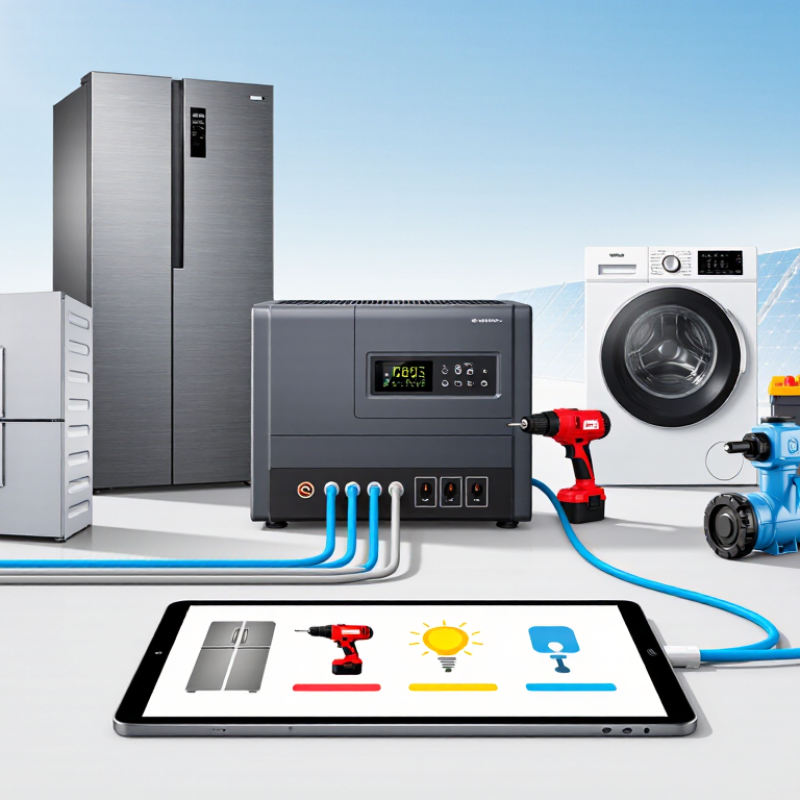
Understanding Inverter Output Ratings: Continuous Power and Surge Power
For 2026, size an inverter by both continuous output and surge output. Continuous power is what it can supply steadily; surge power is a short-term allowance for startup loads. A refrigerator may run quietly at modest wattage, then briefly demand much more as its compressor starts. If you miss that peak, the inverter may trip even when the running total seems safe.
The U.S. Department of Energy’s Improving Motor and Drive System Performance: A Sourcebook for Industry reports that induction motors can draw roughly five to seven times their full-load current during startup. That is a current figure, not a universal surge-watt multiplier: actual demand depends on voltage, power factor, and the appliance. Check each device’s nameplate and the inverter’s surge duration, not just its headline peak. A 2,000-watt continuous rating does not mean it can deliver a 4,000-watt surge indefinitely.
Tips: Add the running watts of loads used at the same time, then check the largest motor’s startup requirement. Leave a margin for cold starts and aging equipment. Small detail, big difference. I would still recheck the real setup: nameplate figures and field behavior do not always match neatly.
Calculating the Continuous Output Your Setup Needs
What Inverter Output Do I Need in 2026?
Calculating the Continuous Output Your Setup Needs
Start with the devices you expect to run at the same time. Check each appliance’s label or manual for its rated watts; do not add every item you own. A 1,500-watt kettle, 90-watt laptop, and 40 watts of lighting draw about 1,630 watts together. That is the estimated continuous load. Keep a written list. It is easy to overlook a small fan or router.
Choose an inverter whose continuous output exceeds that combined load, with reasonable headroom for variation. For the example above, a unit rated around 2,000 watts continuous may suit, provided its specifications and operating conditions support that output. Check motor-driven appliances separately. Refrigerators and pumps can briefly need more power when starting than while running. The inverter’s surge rating must cover those short peaks; it does not replace the continuous rating.
Read the fine print. Output may be limited by heat, ventilation, or other operating conditions, and a rating alone cannot confirm every setup will work. A plug-in power meter can help measure real demand, though startup peaks may require suitable measuring equipment. One weak assumption is that devices run at their label ratings all day. They often do not, but planning around optimistic estimates can leave too little capacity. Recheck the numbers when your setup changes.
What Inverter Output Do You Need in 2026?
This example setup draws an estimated 1,165 watts continuously. Adding 25% headroom gives about 1,457 watts, so an inverter rated for at least 1,500 watts of continuous output is a reasonable starting point. These are illustrative running-watt estimates; check each device’s nameplate, and account separately for the higher startup surge some motors require.
Accounting for Startup Surges and Simultaneous Loads
What Inverter Output Do I Need in 2026?
Accounting for Startup Surges and Simultaneous Loads
Choosing inverter output by adding appliance running watts can miss the hardest moment: several devices operating while a motor starts. A refrigerator compressor, well pump, or air conditioner may briefly draw more power than its normal running load. Check each appliance’s nameplate for starting current or locked-rotor amps, and confirm the inverter’s surge rating and how long it can sustain that rating. A peak figure without a duration is incomplete.
Count the loads likely to run together, not every appliance in the house. For example, a refrigerator starting while a microwave and lights are on may create a short peak above their combined steady demand. NREL’s 2021 End-Use Load Profiles for the U.S. Building Stock provides modeled building loads at 15-minute intervals, helping show how demand overlaps over time. Those intervals do not capture brief motor-start surges, so appliance data still matters. A careful load list is useful, but it can be wrong if household routines change. Leave headroom, then verify the most demanding combination against the inverter’s continuous and surge specifications.
Choosing an Inverter Output with a Practical Safety Margin
What Inverter Output Do I Need in 2026?
Choosing an Inverter Output with a Practical Safety Margin
Start with the appliances you may run at the same time. Add their continuous wattage, then check each motor’s starting demand. A refrigerator may run quietly at 150 watts yet briefly draw much more when its compressor starts. The inverter must support both the ongoing load and the startup surge.
NREL’s 2024 Annual Technology Baseline models utility-scale solar inverter efficiency at about 98.5%. That figure describes conversion efficiency, not the output capacity a home needs. Don’t confuse the two. For a practical buffer, aim for continuous capacity roughly 20–30% above your estimated simultaneous load, then verify the inverter’s surge rating against the highest-starting appliance. It’s a useful rule, not a guarantee; equipment varies, and a tidy spreadsheet can miss real-world overlap.
Tips: Read appliance nameplates, but use a watt meter where possible. Test likely combinations, such as a fridge, lights, and a pump. Leave extra room for loads you may add later.
 Skip to content


 English
 Russian
  German
  Spanish
  French
  Portuguese