SUNDI TOOLS
- Copyright © Wuxi Sundi Precision Tools Co.,LTD All rights reserved.
- Site Map
 Skip to content

Choosing the right Lt Winding Machine affects more than production speed. It shapes winding consistency, changeover time, operator workload, and the quality checks your team can perform. A machine that looks impressive in a brochure may still be a poor fit for your wire sizes, coil dimensions, or daily production volume. The details matter.
For this guide, an illustrative industry-expert voice, “Alex Morgan,” offers this original line: “Choose the machine around the coil you must make every day, not the feature list you hope to use.” This is an editorial quotation, not a verified statement from a real, named expert. The principle is practical: define your winding range, required tension control, spindle capacity, and acceptable setup time before comparing models. Ask suppliers for demonstrations using representative materials, not only ideal samples. A copper wire that feeds smoothly in a showroom may behave differently during a long production run.
Look closely at the work area, controls, and maintenance access. Can operators thread wire safely and repeat a saved setup without guesswork? Are replacement parts and service support available when production is waiting? These questions can reveal more than a headline speed rating. Be candid about uncertainty, too. Forecasts change, and a machine selected for today’s orders may feel limiting later. A clear comparison of current needs, likely growth, and support costs gives your business a sounder basis for choosing the right Lt Winding Machine.
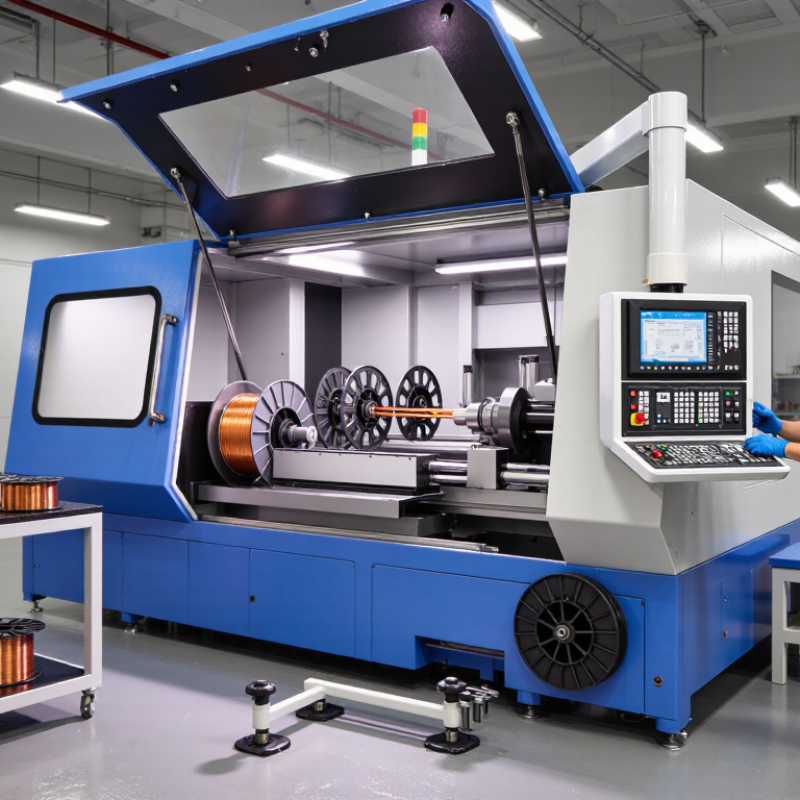
Before selecting an LT winding machine, map the work it must handle each day. Record the number of coils per shift, expected batch sizes, and how often operators change products. A machine suited to steady runs may slow down when small batches require frequent setup changes. Be specific.
Document each coil’s inner and outer diameters, winding width, turn count, and finished weight. Note the conductor material and wire diameter, too. A copper wire and a fine insulated wire may need different tension settings and guides. If drawings omit tolerances, measure several real coils and confirm the acceptable range with your engineering team. Small differences can affect fit and performance.
Ask suppliers to demonstrate a representative coil, not just a convenient sample. Check winding tension, alignment, layer consistency, and how quickly settings can be repeated. Bring the actual wire and spool dimensions if possible. Watch the changeover. It tells you more than a polished speed figure. Also check whether the machine can store recipes and whether its controls suit your operators. One detail is easy to overlook: floor space for loading and unloading. Production estimates are rarely perfect, so leave room for some variation in coil sizes and demand. A careful specification makes comparisons fairer and reduces costly adjustments after installation.
| Production Profile | Typical LT Coil Application | Conductor and Coil Specifications | Production Requirement | Machine Capabilities to Specify | Key Selection Check |
|---|---|---|---|---|---|
| Small-batch, variable production | Repair work and low-volume distribution transformer coils | Round or rectangular copper wire; conductor cross-section approximately 2–20 mm²; coil inside diameter 120–250 mm; axial height 80–250 mm | Approximately 2–6 coils per shift, with frequent changeovers | Adjustable mandrel, programmable turn counting, variable-speed drive, accessible setup controls, and tension adjustment suitable for the selected conductor | Confirm that the mandrel range and winding head can handle the smallest and largest coil geometries without extensive custom tooling. |
| General-purpose distribution transformer production | Low-voltage windings for distribution transformers | Copper or aluminum foil; foil thickness approximately 0.3–1.5 mm and width approximately 100–500 mm; coil inside diameter 150–350 mm | Approximately 6–15 coils per shift, depending on turns, insulation, and changeover time | Foil tension control, automatic or assisted edge guiding, turn counting, controlled winding speed, and provision for insulation-paper feeding | Check the maximum foil width, thickness, coil outside diameter, and finished coil weight against the machine’s rated limits. |
| Medium-volume standardized production | Repeated LT foil coils with a limited range of designs | Aluminum or copper foil; thickness approximately 0.4–2.0 mm; width approximately 200–700 mm; finished coil weight commonly 100–500 kg | Approximately 15–30 coils per shift for repeat jobs, subject to winding length and insulation requirements | Recipe storage, repeatable tension settings, powered foil handling, automatic length or turn monitoring, and suitable loading and unloading arrangements | Evaluate cycle time using the actual number of turns, conductor dimensions, insulation layers, and handling method—not rated spindle speed alone. |
| Large-coil or heavy-duty production | Large-capacity transformer LT windings and heavier foil coils | Copper or aluminum foil; width approximately 400–1,000 mm; finished coil weight approximately 300–1,000 kg; coil outside diameter often 600–1,200 mm | Typically 4–12 coils per shift, with substantial variation by coil size and material handling | High-capacity spindle and frame, robust tension system, heavy-duty mandrel, appropriate braking, and rated coil loading equipment | Verify load ratings for the mandrel, shaft, supports, and lifting equipment, including the maximum finished-coil weight and diameter. |
| Precision, low-voltage foil winding | Coils requiring consistent foil alignment and controlled layer build | Thin copper or aluminum foil; thickness approximately 0.2–0.8 mm; width approximately 150–600 mm; insulation paper or film between layers | Approximately 5–20 coils per shift, depending on design complexity and inspection requirements | Fine tension adjustment, edge-position monitoring, stable low-speed operation, insulation feed synchronization, and repeatable stopping accuracy | Ask for a trial winding using representative foil and insulation to assess edge tracking, wrinkles, layer alignment, and tension consistency. |
| Mixed copper-and-aluminum production | Job shops or plants switching between different conductor materials | Foil or strip conductors in different widths and thicknesses; coil dimensions and weights vary by transformer design | Production rate depends on material changeovers, tooling changes, and the product mix | Adjustable tension ranges, compatible material-contact surfaces, quick-change tooling, parameter recipes, and accessible cleaning points | Confirm that tension settings and contact surfaces are suitable for both materials and that changeover procedures protect foil edges. |
| Automated, repeat-order production | High-repeat LT coil families with stable product specifications | Usually a defined range of foil widths, thicknesses, coil dimensions, and insulation materials established by the production plan | Output should be calculated from actual winding time, loading time, insulation handling, and inspection steps | Programmable winding recipes, automated turn or length control, integration points for material feeding, and production data recording | Validate the expected output with representative production trials and include operator time, material loading, and quality checks in the calculation. |
| Planning note: The ranges shown are practical examples for comparing machine requirements, not universal limits. Final selection should be based on the complete coil drawing, conductor material and dimensions, required tension range, maximum coil weight and diameter, shift pattern, and factory handling equipment. | |||||


 English
 Russian
 German
 Spanish
 French
 Portuguese