How to Choose the Right Nichrome Flat Wire for Your Project?
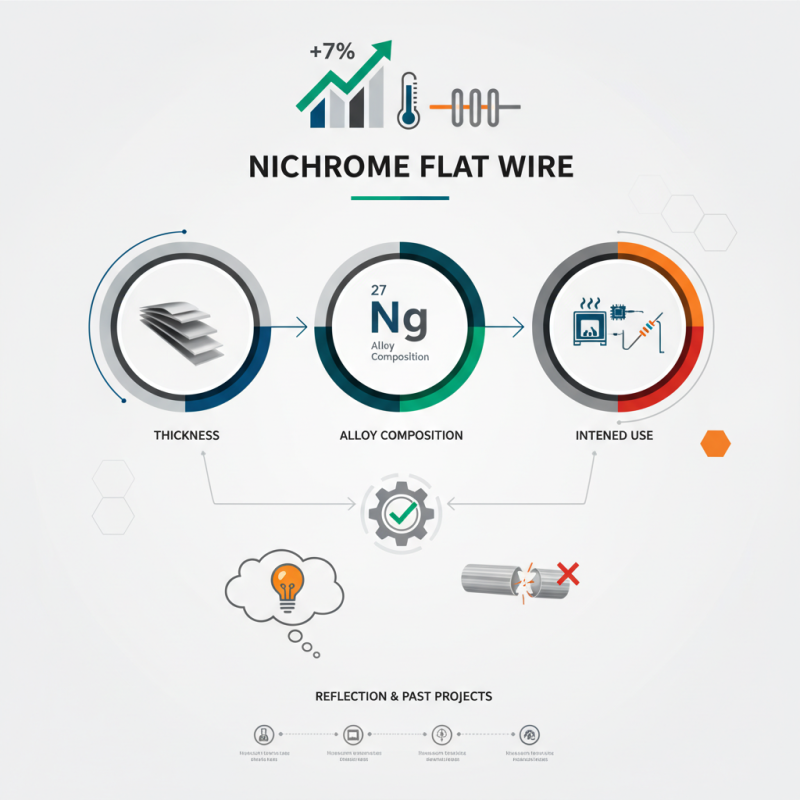
Nichrome Flat Wire is essential in various industries due to its unique properties. It is widely used in heating elements, temperature probes, and resistors. According to a recent industry report, the demand for Nichrome Flat Wire is expected to increase by 7% annually. This growth stems from its excellent oxidation resistance and durability under high temperatures.
When choosing Nichrome Flat Wire for a project, factors like thickness, alloy composition, and intended use are crucial. A detailed understanding of these aspects can lead to optimal performance and longevity. However, obtaining precise measurements can sometimes be challenging. This may lead to potential errors in selecting the right type of Nichrome Flat Wire.
Selecting the appropriate Nichrome Flat Wire can seem straightforward. Yet, many projects falter due to improper choices. Understanding the specific requirements of your application is vital. Relying solely on general specifications may not yield the best results. Reflection on past projects can provide insights into making better choices in the future.
Understanding Nichrome Flat Wire and Its Applications
Nichrome flat wire is widely used in heating applications due to its unique properties. This alloy, made primarily of nickel and chromium, exhibits high electrical resistance and excellent oxidation resistance. Reports suggest that nichrome can withstand temperatures up to 1,200°C (2,192°F) while maintaining its stability. This makes it ideal for creating heating elements in appliances, industrial furnaces, and scientific equipment.
The versatility of nichrome flat wire lies in its ability to be customized for various applications. It can be engineered into different widths and thicknesses to suit specific heating requirements. For example, thinner wires can produce lower heat, making them suitable for delicate tasks, while thicker wires are used for more arduous heating applications. This adaptability is supported by industry research, which indicates that nichrome’s electrical resistance can be manipulated within a range of 0.3 to 1.0 ohm per meter.
While nichrome flat wire is highly effective, it is essential to consider factors like corrosion resistance and thermal efficiency in your project. High humidity or exposure to certain chemicals can affect its longevity. Conducting thorough research and consulting with experts can help mitigate risks. Balancing these considerations ensures that your application runs effectively and safely.
Identifying Project Requirements for Nichrome Flat Wire
When identifying project requirements for nichrome flat wire, consider the wire's specific characteristics. Nichrome flat wire comes in various gauges and widths. Each size serves different heating applications or resistance needs. Understanding your project helps in selecting the correct specifications.
Temperature range is also crucial. Nichrome wires can withstand high temperatures but have limits. Ensure your project doesn’t exceed these limits. It’s wise to also factor in electrical resistance. Different widths and thicknesses yield different resistance values. A slight change can affect overall performance.
It’s also important to assess the environment in which you'll use the wire. Will it face moisture or corrosion? Nichrome resists oxidation but isn’t immune to extreme conditions. Therefore, consider potential risks and challenges. Testing your chosen wire under real conditions can reveal unexpected issues. Attention to these details will elevate your project outcomes.
Evaluating Different Sizes and Gauges of Nichrome Flat Wire
Choosing the right nichrome flat wire involves understanding its sizes and gauges. Nichrome is popular for its outstanding resistance to high temperatures. Flat wire comes in various sizes, which can affect heating efficiency and durability in your projects. It’s essential to consider these factors before making a selection.
When evaluating sizes and gauges, look at the wire's thickness. Thicker wires have higher resistance but offer better heating efficiency. They can last longer but might not fit all applications. Thinner wires are easier to work with but may not withstand high temperatures that well. Consider what fits your project.
**Tip:** Always test different gauges in small-scale applications before committing. This helps you determine if the wire meets your specific heating needs.
Another aspect to consider is the width. Wider wires distribute heat more evenly, which can be an advantage. However, they can be less flexible, making them harder to install. Understand the trade-offs you might make when selecting the width.
**Tip:** Using a micrometer can help you accurately measure wire dimensions. This ensures you get the right fit for your project. With some trial and adjustment, finding the ideal nichrome flat wire can become clearer.
Choosing the Right Resistance and Thermal Properties
Choosing the right nichrome flat wire is crucial for any heating project. The resistance and thermal properties are key factors to consider. Nichrome, commonly used for its high melting point and excellent oxidation resistance, is available in various grades. Each grade has distinct thermal characteristics that can significantly affect performance.
Resistance defines how much the wire opposes electric current. Higher resistance means more heat generation for the same voltage. For example, nichrome wire with a resistance of 1.0 ohm per meter will produce less heat compared to a wire with a resistance of 2.0 ohms per meter. The wire’s cross-sectional area also impacts resistance. Finer wires offer higher resistance, but they may not handle large currents without overheating.
Thermal properties are equally important. The wire's ability to conduct heat influences its performance in applications like heating elements. Nichrome typically has a thermal conductivity of 15.7 W/m·K. This is relatively low compared to copper, making nichrome ideal for situations where controlled heating is necessary. However, users must be cautious. Misjudging the wire’s specifications can lead to insufficient heating or overheating, damaging the equipment. Therefore, understanding the specific requirements of your project is vital.
How to Choose the Right Nichrome Flat Wire for Your Project?
| Wire Gauge | Resistance (Ohms per Meter) | Max Temperature (°C) | Applications |
| 20 AWG | 0.13 | 1150 | Heating Elements, Oven Components |
| 22 AWG | 0.16 | 1100 | Heat Tapes, Jewelry Making |
| 24 AWG | 0.25 | 1050 | Small Heating Elements, Soldering |
| 26 AWG | 0.33 | 1000 | Crafting, Model Heating |
Considering Cost and Availability in Your Selection Process
When selecting nichrome flat wire, cost and availability are crucial factors. Nichrome wire is commonly used in heating elements, but prices can vary widely based on market fluctuations and raw material costs. Recent industry reports indicate that the cost of nickel has risen by over 30% in the past year, specifically impacting nichrome prices. Availability can also be influenced by geographical location and supplier relationships, making it important to consider your local sources.
Choosing the right gauge and length of wire directly affects your project's budget and functionality. Larger gauges typically cost more, but they can handle higher currents. For instance, a 0.5mm nichrome wire can often be found at competitive pricing, but sourcing it locally may save on shipping costs.
**Tips:** Always compare multiple suppliers to gauge price differences. Check for bulk purchase options—they can offer significant savings. Lastly, do not overlook the importance of reliable suppliers. Established suppliers often provide better customer service and product quality. Looking for alternatives that meet your specifications can help you stick to your budget while ensuring your project's success.
Cost and Availability of Nichrome Flat Wire in Different Gauges
This chart illustrates the average cost and availability of various gauges of nichrome flat wire. The data helps to understand which sizes are more cost-effective and readily available for projects.
 Skip to content


 English
 Russian
  German
  Spanish
  French
  Portuguese