SUNDI TOOLS
- Copyright © Wuxi Sundi Precision Tools Co.,LTD All rights reserved.
- Site Map
Choosing the right Track Drive Motor is not simply a matter of matching horsepower to machine size. Field experience shows that incorrect selection can cause slow travel, overheating, seal damage, and costly downtime. A compact excavator working on wet clay needs different torque, braking capacity, and protection from a tracked loader moving across broken rock.
“Torque, pressure, and duty cycle must be evaluated together, not separately,” says Martin Keller, a mobile-hydraulics specialist with more than two decades of equipment experience. This practical principle guides the seven tips in this article. The motor must suit the machine’s operating weight, final-drive ratio, hydraulic flow, terrain, and expected travel speed.
Small details matter.
Check the hydraulic circuit before choosing a replacement. Measure actual flow and pressure rather than trusting an old specification sheet. Inspect the sprocket, track tension, oil condition, and mounting space. A motor that fits the housing may still fail under continuous side loading or steep-slope operation.
Reliability also depends on honest assessment. Some buyers focus on peak torque and overlook heat rejection. Others choose the cheapest unit, then discover poor low-speed control. That mistake is understandable, but expensive. Service access, warranty terms, parts availability, and supplier technical support deserve equal attention.
The following seven tips explain how to compare displacement, torque, braking performance, efficiency, sealing, compatibility, and lifecycle cost. They also highlight areas where product data can mislead. A careful Track Drive Motor decision begins with real working conditions, not attractive numbers on a brochure.
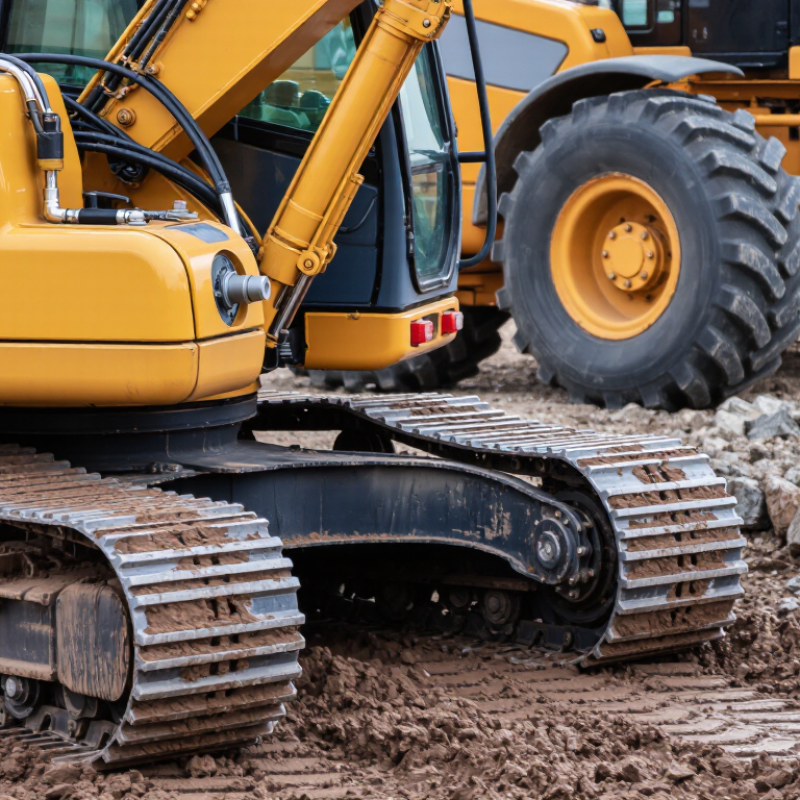
7 Tips for Choosing the Right Track Drive Motor
Understand the Role of a Track Drive Motor in Mobile Machinery
A track drive motor converts hydraulic energy into controlled movement. It drives the sprocket, supports turning, and manages traction on uneven ground. In excavators, compact track loaders, and drilling machines, this component faces shock loads, dust, water, and changing gradients.
Choose by torque, speed, displacement, pressure rating, efficiency, sealing, and service access. Start with the machine’s operating weight and required drawbar pull. A motor with excessive speed may reduce control. Insufficient torque can overheat the hydraulic system. Check the reduction ratio carefully. It affects travel speed and climbing ability.
Industry data provides useful context. Grand View Research valued the global construction equipment market at about 232.9 billion dollars in 2023. Its report forecasts approximately 6.3 percent annual growth from 2024 to 2030. More machines mean greater demand for reliable mobile power systems. However, market growth does not guarantee correct motor selection. Field technicians often find that contamination causes earlier failures than normal wear. Better filtration and sealed housings matter.
Review continuous and peak pressure separately. Confirm compatibility with the pump, valve block, sprocket, and final drive. Ask for verified efficiency curves, not only maximum torque figures. ISO 4413 guidance also reinforces cleanliness, pressure control, and safe hydraulic design. I would not select a motor from a catalogue number alone. Installation space, oil temperature, and operator habits can change performance. Small oversights become expensive repairs.
7 Tips for Choosing the Right Track Drive Motor
Match Motor Torque and Speed to Operating Requirements
Selecting a track drive motor starts with the work, not the catalog. Estimate total machine mass, payload, attachment weight, and operating slope. Include soil resistance and rolling losses. Use the steepest route, not the average route, for calculations.
Calculate required sprocket torque from tractive effort and sprocket radius. Then add a practical safety margin. Avoid excessive oversizing. It can increase cost, weight, and heat. Check the motor’s continuous torque, not only its short peak rating. Peak torque may move a machine briefly, but continuous torque controls reliable daily operation. Confirm the gearbox ratio matches the target travel speed. A slow motor with high reduction may deliver strong pull, yet it can waste energy during repositioning. Measure real speed under load.
Hydraulic systems require suitable flow and pressure. Electric systems need correct voltage, current, and controller capacity. Check duty cycle, ambient temperature, and cooling conditions. Mud, water, and shock loads demand suitable sealing and structural protection. Compare service intervals and access to the drive assembly. Difficult maintenance becomes expensive quickly. A common field mistake is trusting unloaded speed tests. They look impressive. Loaded performance matters more. Recheck calculations with actual site data, because uneven ground can expose assumptions that seemed reasonable in the workshop.
7 Tips for Choosing the Right Track Drive Motor?
Check Hydraulic, Electrical, and Mechanical Compatibility
Choosing a track drive motor starts with the machine’s real working conditions. Check hydraulic flow, pressure, and return-line limits against the motor’s technical data. A motor may fit physically but still move too slowly under low flow. Measure the machine’s actual pressure during climbing, turning, and loaded operation. Do not rely only on the pump’s maximum rating. Confirm the motor’s displacement matches the required travel speed and pulling force. Small details matter.
Electrical compatibility also affects reliability. Check voltage, current draw, connector type, and control-signal requirements for any integrated sensors or valves. Inspect the wiring length and protection near mud, water, and sharp metal edges. A loose connector can imitate a motor failure. It is easy to miss. Confirm the controller can manage startup current without overheating. Record these values during a practical test, not only from a catalogue.
Mechanical checks need equal attention. Compare shaft dimensions, mounting holes, spline details, brake capacity, and available installation space. Verify the final drive accepts the motor’s torque without excessive side loading. Examine hose routing when the track frame moves through its full range. I once underestimated clearance by a few millimeters, and vibration exposed the mistake quickly. Allow room for servicing and use suitable seals for the operating environment. When uncertain, ask for drawings, installation limits, and test data from a qualified supplier.
Hydraulic, electrical, and mechanical compatibility can be screened by comparing the application requirement with the motor's nominal or rated capacity. The chart shows the requirement as a percentage of the corresponding motor rating; values below 100% indicate operating margin.
Reference example: 210 bar system pressure versus a 250 bar motor rating, 60 L/min flow versus 75 L/min capacity, 24 V DC versus 24 V DC, 35 A versus 40 A, 750 Nm versus 900 Nm, 12 kN radial load versus 15 kN, and 30 rpm versus 36 rpm. Always confirm actual values using the machine duty cycle, hydraulic circuit, electrical supply, mounting dimensions, shaft geometry, and manufacturer documentation.
7 Tips for Choosing the Right Track Drive Motor
Evaluate the working terrain before comparing motor specifications. Soft soil, gravel, slopes, and wet ground create different resistance. A motor that performs well on concrete may struggle in mud. Tip: Inspect the route in real working conditions. Note inclines, turning areas, ground changes, and seasonal moisture. Small details often expose hidden traction demands.
Load capacity includes more than the machine’s rated payload. Add tools, attachments, fuel, and material carried during operation. Uneven loading can increase stress on one track. Tip: Calculate the heaviest realistic condition, not the average one. Leave a sensible margin for sudden impacts. Overlooking this margin is a mistake I have seen during field testing.
Duty cycle affects heat, wear, and service life. Short movements need different cooling performance than continuous travel. Record travel time, stopping frequency, slope duration, and daily operating hours. Tip: Match the motor to repeated starts and long pushes. Check speed, torque, thermal limits, and braking behavior together. A smaller motor may fit physically, yet disappoint under sustained demand. Test the selected motor with representative loads whenever possible. Real measurements can challenge an attractive spreadsheet estimate.
Choosing a track drive motor starts with the worksite, not the catalog. Measure machine weight, travel speed, slope, ground condition, and duty cycle. A motor that looks powerful may waste energy when oversized. Compare efficiency under real load, not only the rated figure. Ask for test data during low-speed travel and repeated starts. These details matter.
Durability depends on shock loads, sealing, heat control, and gear quality. Inspect housing protection and bearing support for muddy or rocky sites. Check whether torque remains stable after long operation. Maintenance should be practical, with accessible ports, inspection points, and clear service procedures. Record oil temperature, leakage, noise, and vibration. Small changes often appear before failure. Easy access helps. I have seen maintenance plans fail because operators could not reach the drain plug.
Total cost includes purchase, installation, energy, parts, labor, and lost production. Calculate cost per operating hour across the expected service life. A cheaper motor can become expensive after repeated seal replacement. Compare warranty conditions, spare-part availability, and technical support response times. Do not trust a spreadsheet based on perfect conditions. Include cold starts, overloads, and an occasional missed inspection. The best choice balances efficiency, durability, maintenance access, and realistic lifetime cost.
| No. | Selection Tip | Key Data to Compare | Recommended Benchmark | Why It Matters | Potential Cost Impact |
|---|---|---|---|---|---|
| 1 | Match the motor to the machine weight and gradeability. | Required tractive force, slope angle, machine mass, rolling resistance, and desired travel speed. | Select a motor with at least 15–20% more continuous tractive-force capacity than the calculated operating requirement. | Adequate reserve reduces overheating, pressure spikes, and premature bearing or gear wear. | Correct sizing generally lowers repair frequency and avoids the cost of replacing an undersized motor. |
| 2 | Compare efficiency across the full duty cycle. | Hydraulic-to-mechanical efficiency at working speed, low-speed torque, and peak-load frequency. | Typical travel-motor hydraulic-to-shaft efficiency is approximately 75–90% at rated operating conditions, depending on design and load. | Higher efficiency reduces heat generation and hydraulic power consumption, especially during long travel cycles. | A 5% efficiency improvement can significantly reduce fuel or electrical energy use in high-hour applications. |
| 3 | Choose the correct displacement and speed range. | Fixed or variable displacement, maximum speed, continuous torque, peak torque, and displacement ratio. | Variable-displacement motors are generally better for machines requiring both high breakout torque and efficient high-speed travel; fixed-displacement motors suit simpler, steady-duty systems. | Correct displacement prevents excessive motor speed, weak low-speed performance, and unnecessary hydraulic losses. | A simpler fixed-displacement unit often has a lower purchase price, while a variable unit may reduce energy cost over extended use. |
| 4 | Evaluate durability for shock loads and contamination. | Housing strength, bearing capacity, shaft load rating, case-pressure limit, sealing system, and contamination tolerance. | For construction and tracked equipment, prioritize high shock-load capacity, robust bearings, protected seals, and a documented cleanliness requirement such as ISO 4406 18/16/13 or cleaner. | Water, dust, metal particles, and excessive case pressure are common causes of early motor failure. | Better protection may increase initial cost but can reduce downtime and major component replacement expenses. |
| 5 | Check maintenance requirements and service access. | Oil filtration, case-drain inspection, leakage checks, port accessibility, seal replacement, and overhaul procedures. | Use clean hydraulic oil, monitor case-drain flow, and inspect connections and seals at routine service intervals; hydraulic oil replacement commonly falls within approximately 500–2,000 operating hours depending on the system and oil condition. | Good service access shortens inspection time and helps detect wear before a complete failure occurs. | Lower routine labor and easier seal or bearing service reduce the total maintenance burden. |
| 6 | Calculate total cost of ownership, not only purchase price. | Purchase price, installation, energy use, scheduled maintenance, downtime, overhaul, and expected service life. | Use a five-year cost model. As an illustrative index, set the lowest-cost option at 100 and compare alternatives using energy, maintenance, and downtime assumptions. | A motor with a higher initial price can be less expensive when it operates more efficiently and requires fewer repairs. | For high-utilization equipment, energy and downtime may represent a larger cost than the original motor purchase. |
| 7 | Verify system compatibility before final selection. | Rated pressure, peak pressure, flow rate, port size, mounting dimensions, shaft interface, brake compatibility, and control requirements. | Confirm that continuous and peak pressure ratings exceed the machine's measured operating conditions, with at least 10–15% practical margin where appropriate. | Mechanical or hydraulic incompatibility can cause leakage, poor braking, excessive heat, or immediate installation problems. | Correct compatibility avoids adapter costs, installation delays, rework, and damage caused by incorrect pressure or flow. |
Note: The numerical ranges are general engineering benchmarks for comparison only. Actual performance, service life, and total cost depend on machine load, hydraulic-fluid cleanliness, operating temperature, duty cycle, installation quality, and maintenance practices.