How to Choose the Right Wire for Thermal Spray Applications?
Choosing the right Wire for Thermal Spray is crucial for achieving optimal coating results. The performance of a thermal spray process depends largely on the materials used. Wire for thermal spray applications comes in various types, each suited for specific tasks. Understanding these differences is essential for various industries, including aerospace, automotive, and manufacturing.
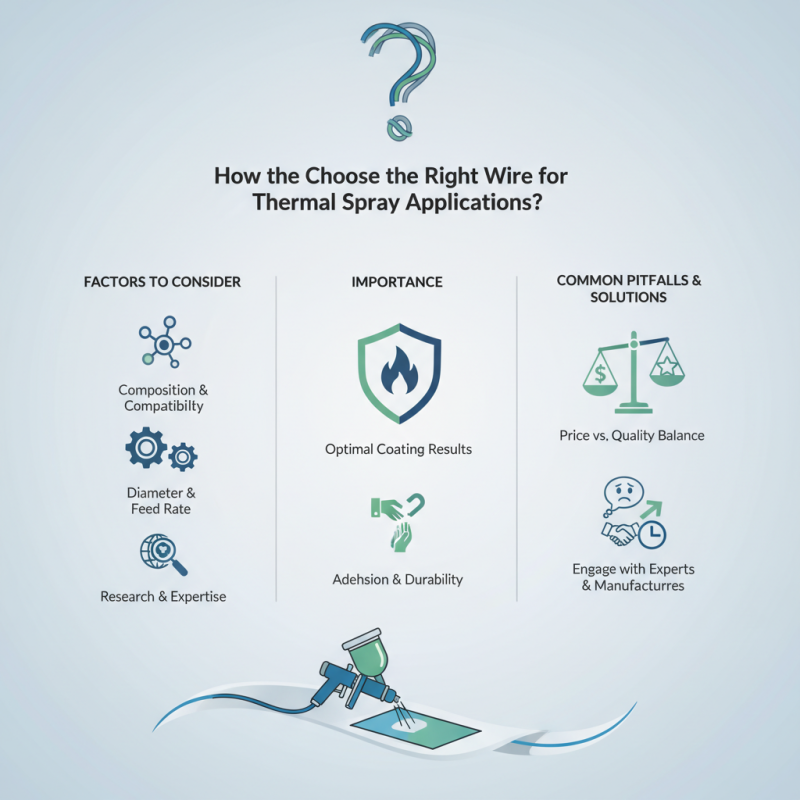
When selecting wire for thermal spray, consider factors like composition and compatibility with the substrate. A mismatch can lead to poor adhesion and reduced durability of the coating. Additionally, the wire's diameter and feed rate affect the spray process efficiency. Conducting thorough research is important, as decisions made here can impact your project's success.
Despite the abundance of information, many still struggle with wire selection. Some may choose based on price alone, overlooking performance. It is vital to balance cost with quality. Engaging with industry experts and manufacturers can help clarify these choices. Ultimately, making an informed decision ensures a reliable thermal spray application that meets specific needs.
Understanding Thermal Spray Applications and Their Requirements
Thermal spray applications play a crucial role in industries like aerospace, automotive, and manufacturing. These processes involve depositing materials onto surfaces for protective or functional purposes. The requirements for thermal spray applications can vary significantly based on the desired outcome, surface preparation, and the environment in which the coatings will function.
According to industry reports, about 35% of component failures can be traced back to inadequate surface treatments. Hence, understanding the specific needs of each application is essential for success.
When choosing the right wire, factors like thermal conductivity, melting point, and chemical compatibility come into play. Data indicates that more than 60% of unsatisfactory results stem from improper material selection. For instance, wires with high melting points can lead to issues during application, such as reduced adhesion. Conversely, materials with lower melting points may not withstand the operational environment. It's vital to consider the long-term performance of the coating and its interaction with the base material.
Expert analysis suggests that testing different wire materials under realistic conditions is beneficial. This approach helps in identifying potential issues early on. Over 40% of engineers report that experimenting with various materials has improved their process efficiency. Failing to verify compatibility can lead to increased maintenance costs and operational downtime, marking a significant area for reflection within thermal spray practices.
Key Factors to Consider When Selecting Wire for Thermal Spraying
When selecting the right wire for thermal spray applications, several key factors must be considered. The wire material composition plays a crucial role in defining the final coat's properties. For instance, aluminum wires are commonly used for corrosion resistance, while nickel-based alloys offer enhanced wear resistance. According to industry reports, wire choice can affect the adhesion strength of coatings by up to 30%, influencing application performance directly.
The wire diameter is another important consideration. Smaller diameters improve particle velocity and reduce the heat loss, leading to better coating qualities. It’s estimated that precise control over wire diameter can result in a 15% improvement in coating density. Conversely, using incorrect diameters can lead to defects like porosity and reduced durability.
Additionally, one must evaluate the spray process parameters. Factors like feed rate and spray distance significantly impact the coating's structure. Professionals highlight that even slight adjustments in these parameters can alter the coating outcomes. Hence, careful calibration is essential for achieving optimal results in thermal spray applications.
How to Choose the Right Wire for Thermal Spray Applications?
| Wire Material | Coating Purpose | Wire Diameter (mm) | Application Temperature (°C) | Efficiency (% of Coating) |
| Stainless Steel | Corrosion Resistance | 1.6 | 300 | 85 |
| Tungsten Carbide | Wear Resistance | 1.2 | 600 | 90 |
| Aluminum | Electrical Conductivity | 1.0 | 250 | 80 |
| Nickel Alloy | Heat Resistance | 1.5 | 700 | 87 |
| Cobalt | High-Temperature Strength | 1.4 | 800 | 89 |
Types of Wires Commonly Used in Thermal Spray Processes
When selecting wires for thermal spray processes, it is crucial to understand the types available. This understanding helps in achieving the desired coating properties. Common wire types include metal wires, ceramic wires, and composite wires. Each type has distinct characteristics and applications.
Metal wires are often used for their excellent conductivity and mechanical properties. They can provide good bonding strength and wear resistance. Copper and aluminum wires are popular choices for applications requiring electrical conductivity. Ceramic wires, on the other hand, are ideal for high-temperature environments. They are often used to produce coatings resistant to oxidation and wear.
Composite wires combine the benefits of both metal and ceramic. These wires can enhance performance in challenging environments. However, selecting the correct wire can be complex. Factors such as the substrate material and the desired coating thickness need consideration. Be prepared to experiment with different wires. Not every wire will suit your specific application consistently. It's an ongoing learning process.
Wire Types for Thermal Spray Applications
This chart displays the percentage distribution of different types of wires commonly used in thermal spray applications. Metallizing wires are the most widely used, followed by ceramic and composite wires. Understanding the application of each type is crucial for selecting the right wire for your specific needs.
Evaluating Material Compatibility for Thermal Spray Wires
Choosing the right wire for thermal spray applications requires a deep understanding of material compatibility. Different applications demand specific properties, and not all wires will perform equally. Recent reports indicate that nearly 70% of thermal spray failures stem from material incompatibility. This highlights the importance of selecting wires that align with the substrate material and the desired coating properties.
For instance, aluminum wires are often advanced for applications requiring high corrosion resistance. In contrast, nickel-based wires offer superior wear resistance in demanding environments. Identifying the right thermal spray wire means considering factors such as thermal conductivity, melting point, and structural integrity under operating conditions. Many practitioners overlook these crucial aspects, leading to suboptimal performance and increased operational costs.
Evaluating the compatibility isn't always straightforward. The chemical composition of the wire should match or complement the substrate material. Additionally, factors like thermal expansion must be taken into account. Research has shown that a significant number of coatings fail due to mismatched coefficients of thermal expansion, resulting in cracks and delamination. These failures emphasize the need for thorough material evaluations and stress the role of detailed assessments in ensuring successful thermal spray applications.
Best Practices for Wire Handling and Preparation in Thermal Spraying
Choosing the right wire for thermal spray applications is crucial for successful outcomes. Proper handling and preparation of the wire can significantly influence the final coating quality. Always inspect the wire for defects before use. Minor imperfections, like surface scratches, can impact adhesion and performance.
During wire preparation, maintain a clean environment. Dust and moisture can compromise the quality of the coating. Ensure that the wire is handled with gloves; oils from hands can lead to contamination. A thorough cleaning process, such as using lint-free wipes, can help remove any unwanted residues.
Improper storage can lead to rust and corrosion. Store wires in a controlled environment to maintain their integrity. Think about organizing your workspace efficiently. Clutter can lead to accidents or damage to the wire. Regularly review your handling practices. Continuous improvement is essential for achieving the best results in thermal spraying.
 Skip to content


 English
 Russian
  German
  Spanish
  French
  Portuguese