10 Essential Tips for Choosing Double-Ended Dowel Pins?
Choosing the right fasteners is crucial for ensuring structural integrity in various applications. Among these fasteners, the Double-Ended Dowel Pin is a popular choice. According to a recent industry report by Markets and Markets, the global market for dowel pins is expected to grow significantly, driven by increasing demand in woodworking and construction sectors. This trend underscores the importance of selecting the correct type of hardware for your needs.
When considering a Double-Ended Dowel Pin, factors like material, diameter, and length should not be overlooked. The material alone can affect the durability and strength of the pin. For instance, stainless steel pins offer high resistance to corrosion, making them ideal for outdoor applications. However, they can be costlier compared to alternatives like plastic or aluminum options. Reviewing specifications and mechanical properties is essential for achieving optimal performance.
Lastly, quality assurance and supplier reliability are critical in this industry. Not all manufacturers adhere to the same standards. Therefore, thorough research and consultations could prevent costly mistakes. Ensuring the right choice demands careful consideration, not just of the pin itself but of the entire assembly it will support.
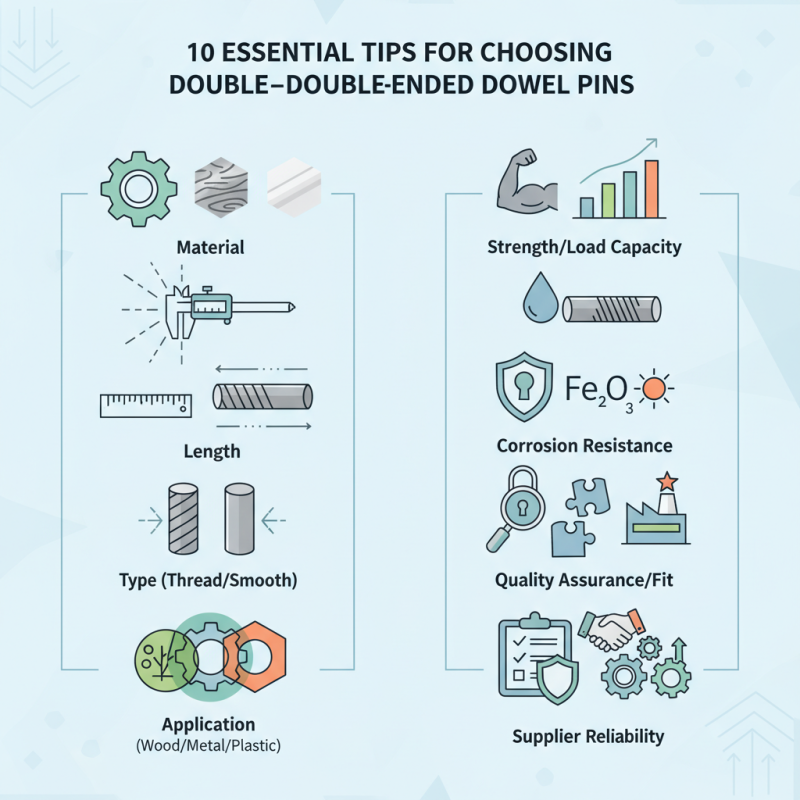
Understanding Double-Ended Dowel Pins and Their Applications
Double-ended dowel pins are versatile fasteners used in woodworking and metalworking. They feature a uniform diameter and can be inserted into matching holes in two separate workpieces. This allows for precise alignment and strong joins. Many industries rely on these pins for their ability to secure parts without intrusive hardware. Their applications range from cabinetry to machinery assembly.
When selecting double-ended dowel pins, consider the material. Steel pins offer strength, while nylon or brass can provide corrosion resistance. The length and diameter should match the project’s requirements. Ensure that the hole sizes are compatible. Overly tight or loose fits can lead to misalignment. Testing different sizes may be a wise choice.
In addition, surface finish matters. Smooth surfaces allow for easier insertion, while rough ones can create friction. Be mindful of the load the joints will bear. Not every dowel pin will hold up under heavy stress. It’s crucial to choose wisely based on your project’s demands. This thoughtful approach helps avoid potential issues down the line.
Key Factors to Consider When Selecting Double-Ended Dowel Pins
When selecting double-ended dowel pins, there are several key factors to consider. Material choice plays a crucial role in ensuring durability and performance. Different materials, such as steel or stainless steel, can affect the strength and corrosion resistance of the pins. Consider the environment where they will be used. Outdoor applications might require more robust, weather-resistant materials.
Another important factor is the size and length of the dowel pins. Choosing the correct diameter and length ensures a snug fit in your application. Measure the holes carefully to avoid unnecessary gaps. Tolerances should also be checked to ensure compatibility. In some cases, even minor variations can lead to significant issues later on.
You should also consider the manufacturing standards of the dowel pins. Reliable sourcing from reputable suppliers can enhance quality assurance. However, it can be tempting to cut costs and choose cheaper options. This decision might lead to failures in critical applications. Taking time to research and evaluate suppliers can save headaches down the line.
Material Options for Double-Ended Dowel Pins: Which Is Best?
When considering double-ended dowel pins, material selection is crucial. Common options include steel, stainless steel, and plastic. Steel dowel pins are strong but can corrode without protection. According to a recent industry report, the global market for dowel pins is expected to grow by 4% annually, driven partly by the demand for durable materials in manufacturing.
Stainless steel offers corrosion resistance. It is a preferred choice in environments where moisture is present. Dowels made from stainless steel may be more expensive but provide long-term reliability. A 2022 study indicated that stainless steel dowel pins have a failure rate of less than 2% in challenging conditions. This reliability is essential in high-precision applications.
Plastic dowel pins, on the other hand, are lightweight and non-corrosive. They are suitable for low-stress applications. However, their tensile strength is lower than metal options. A survey reported that over 30% of users experienced issues with plastic dowel pins in high-load scenarios. Each material has its pros and cons, which requires careful consideration based on specific needs and contexts.
Sizing and Tolerances: Ensuring Proper Fit for Your Project
When selecting double-ended dowel pins, sizing and tolerances play a crucial role in ensuring compatibility with your project requirements. According to a report by the American National Standards Institute (ANSI), nearly 30% of assembly issues arise from improper dowel sizing. Dowel pins, made from materials like steel and brass, need precise dimensions. For example, a standard 1/4-inch pin must have a diameter tolerance of +/- 0.001 inches to fit well in pre-drilled holes.
Manufacturers often provide detailed specifications for their dowels. It's essential to review these measurements carefully. An incorrect size can lead to loose joints or, worse, structural failures. Tolerances impact not just the fit, but also the longevity of the assembly. Projects that hinge on stability cannot afford such inconsistencies.
Some might underestimate the importance of proper fit. It's easy to assume that a slight variation won’t matter. However, data from the International Organization for Standardization (ISO) suggests that even minor discrepancies can significantly affect load-bearing capabilities. Striving for an exact fit ensures reliability and prevents future complications.
10 Essential Tips for Choosing Double-Ended Dowel Pins - Sizing and Tolerances: Ensuring Proper Fit for Your Project
| Tip No. | Tip | Considerations |
| 1 | Determine the Size | Measure the diameter and length required for your specific application. |
| 2 | Check Material Compatibility | Ensure that the dowel pin material matches the properties of the materials being joined. |
| 3 | Assess Weight Load | Evaluate the load that will be placed on the dowel pins to ensure they can handle it. |
| 4 | Consider Tolerances | Review tolerance levels to avoid fitting issues during assembly. |
| 5 | Use Precision Machinery | Employ precise tools for drilling holes to keep dimensions accurate. |
| 6 | Account for Expansion | Consider environmental factors that may cause materials to expand or contract. |
| 7 | Select the Right Finish | Choose finishes that prevent corrosion and enhance durability. |
| 8 | Test for Fit | Conduct trial fittings before final assembly to verify proper fit. |
| 9 | Consider Load Direction | Evaluate how the load will be applied to ensure dowel pin placement is appropriate. |
| 10 | Keep Standards in Mind | Refer to industry standards for sizing and application guidance. |
Common Mistakes to Avoid When Choosing Double-Ended Dowel Pins
When selecting double-ended dowel pins, many make critical mistakes. One common error is neglecting the material. Different applications require specific materials. A study by the Manufacturing Institute shows that 30% of mechanical failures occur due to improper material selection. For instance, stainless steel pins may rust in humid environments. Choosing the right material can save costs in the long run.
Another mistake is overlooking the diameter and length. Pins that are too short or too thin can compromise structural integrity. Surprisingly, nearly 40% of dowel pin failures are linked to improper sizing, as highlighted in the latest industry report. Measure your application space accurately before purchase. It might seem tedious, but precision pays off.
Consider these tips: Always check load ratings. Understand your application’s demands. Look for pins that have undergone rigorous testing for quality assurance. Reading user reviews can provide insights. It's vital to weigh these factors carefully, as rushing into a decision may lead to costly repairs later.
 Skip to content


 English
 Russian
  German
  Spanish
  French
  Portuguese