How to Use Facial Scanner Analysis for Enhanced Security?
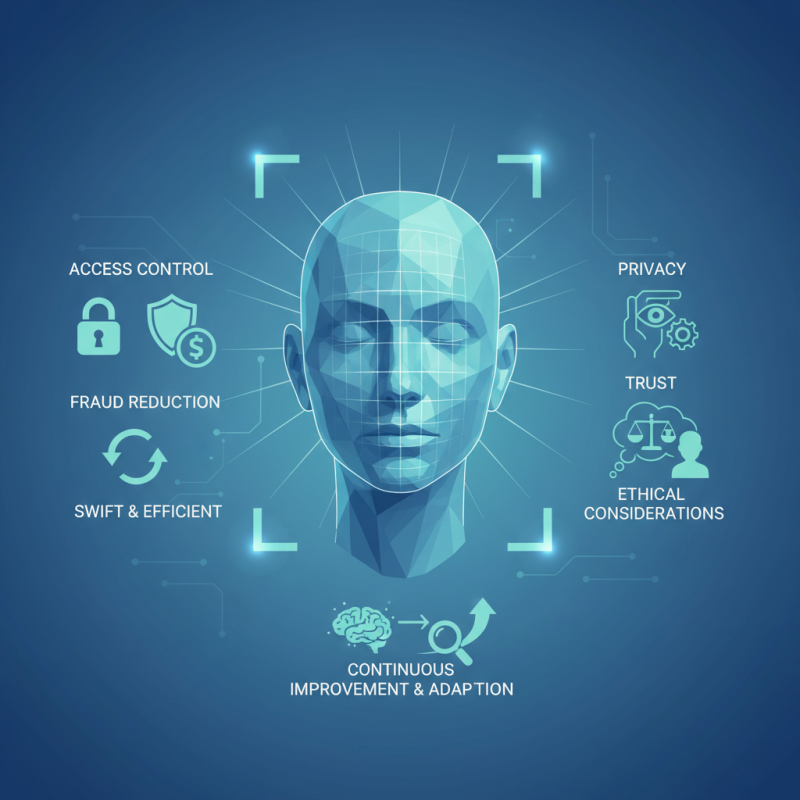
Facial Scanner Analysis has emerged as a crucial tool in enhancing security measures across various sectors. This technology leverages advanced algorithms to analyze facial features and verify identities. Organizations are increasingly adopting this system to strengthen access control and reduce fraud risks.
The reliability of Facial Scanner Analysis is rooted in its accuracy. Unlike traditional methods, it can operate swiftly and efficiently. However, it is essential to acknowledge that no system is infallible. Factors such as lighting conditions or facial obstructions can impact performance. Continuous improvement and adaptation are vital for optimal results.
Integrating Facial Scanner Analysis into security frameworks raises critical questions on privacy and consent. Organizations must balance security with ethical considerations. This dialogue is necessary to build trust and ensure that individuals feel secure rather than surveilled. As we explore the potential of this technology, reflection on its implications will guide responsible usage.
Understanding Facial Scanner Technology and Its Mechanisms
Facial scanner technology is revolutionizing security measures across various industries. This technology relies on complex algorithms to analyze facial features. According to a report from MarketsandMarkets, the facial recognition market is expected to grow from $3.2 billion in 2020 to $7 billion by 2025. This rapid growth indicates its rising importance in security solutions.
Understanding the mechanisms behind facial scanners can enhance their effectiveness. At their core, these scanners capture facial images and convert them into unique data points. The technology measures distances between key facial features, creating a biometric template. Successful identification relies on the quality of data captured and the sophistication of the algorithm used. However, data privacy concerns and inaccuracies in image recognition remain challenges that require attention.
Tips: Ensure proper lighting and angle when using facial scanners to improve accuracy. Regularly update software to maintain security standards. Consider using multi-factor authentication in conjunction with facial scanning for enhanced protection.
As facial scanner technology progresses, addressing its shortcomings is vital. People may still face issues with recognition, particularly in diverse populations. Continuous learning and development will improve reliability and user trust.
Applications of Facial Scanning for Enhanced Security Measures
Facial scanning technology has become integral in enhancing security measures across various sectors. This advanced method captures facial structures using specialized algorithms, ensuring accurate identification. Airports and public transportation hubs are now adopting this technology for efficient passenger screening. It speeds up the security check process, making travel safer and more convenient.
Implementing facial scanners comes with its share of challenges. Privacy concerns can arise among individuals, as people may feel monitored. Transparency in how data is collected and used is essential. Organizations must communicate their policies clearly to alleviate these concerns.
Tips for successful implementation include regular system updates to maintain accuracy. Conducting training sessions for staff can improve operational efficiency. It's also vital to incorporate feedback mechanisms for users to express concerns. This fosters a more trusting environment, ensuring that the adoption of facial scanning technology aligns with both security objectives and ethical standards.
Facial Scanner Applications for Enhanced Security Measures
Implementation Strategies for Facial Scanner Systems in Security
Facial scanner systems have transformed security protocols across various sectors. These systems can enhance surveillance effectiveness. However, implementation demands careful planning and ongoing assessment.
Integrating facial recognition technology requires robust infrastructure. A 2022 Frost & Sullivan report indicates that the global facial recognition market is projected to reach $7 billion by 2024. This growth underscores a rising trust in biometric systems. Yet, organizations must address privacy concerns. Data security can be challenging, especially with sensitive personal information involved. Experts emphasize that deploying encryption techniques is vital. This ensures that collected data remains protected.
The training of facial recognition models is a critical aspect. Diverse datasets improve accuracy, but they may also introduce bias. Reports from the National Institute of Standards and Technology (NIST) highlight that certain demographic groups face higher error rates. Continuous evaluation of the technology's performance is necessary. Regular updates and feedback loops can aid in refining the system. While facial scanners present innovative solutions for security, transparency and ethical considerations remain crucial.
Challenges and Limitations of Facial Scanner Usage in Security
Facial recognition technology has become a vital tool in enhancing security across various sectors. However, several challenges and limitations must be acknowledged. For instance, a report by the National Institute of Standards and Technology (NIST) revealed that facial recognition systems misidentify individuals in 1 out of 1,000 cases. This can lead to wrongful accusations or security breaches, raising significant concerns.
Another critical issue is bias in facial recognition systems. Research shows that models trained on predominantly Caucasian faces perform poorly on ethnic minorities. Data from various sources highlight that Black individuals are 10 times more likely to be misidentified than their white counterparts. This discrepancy underscores the ethical implications of relying solely on facial analysis for security purposes.
In addition to these challenges, privacy concerns loom large. Many individuals are unaware of the extent to which their facial data is collected. A survey indicated that 70% of participants expressed anxiety about surveillance through facial recognition. Ensuring transparency and building trust in these technologies remain significant hurdles for organizations aiming to implement facial scanners effectively. These complexities require careful consideration and ongoing dialogue among stakeholders to optimize the use of facial scanner analysis in security.
How to Use Facial Scanner Analysis for Enhanced Security? - Challenges and Limitations of Facial Scanner Usage in Security
| Dimension | Description | Example |
| Accuracy | The degree to which the facial recognition system correctly identifies or matches a face. | 95% match rate in optimal conditions |
| Speed | The time taken to process and identify a face from the database. | Under 1 second per scan |
| Privacy Concerns | Issues related to the collection, storage, and use of biometric data. | Increased surveillance leading to user mistrust |
| Environmental Factors | Conditions affecting the performance of facial scanners, such as lighting and distance. | Diminished performance in low light conditions |
| Cost | The financial expenditure required for implementing facial recognition technology. | Initial setup costs can exceed $100,000 |
| Bias and Fairness | The potential for facial recognition systems to misidentify or discriminate against certain demographic groups. | Higher false positive rates for minority groups |
Future Trends in Facial Scanner Technology and Security Enhancements
Facial scanner technology is rapidly evolving. The future holds promising advancements that could shape security protocols across various sectors. Enhanced algorithms will improve accuracy and speed, making identity verification seamless. In crowded spaces, quick scans will ensure safety without causing delays.
Emerging trends include the integration of artificial intelligence in facial analysis. This can provide deeper insights into user authenticity and intent. While these developments are exciting, they also raise privacy concerns. Striking a balance between security and individual rights is crucial. Technologies must focus on ethical standards to foster public trust.
Another anticipated trend involves multi-modal biometrics. Combining facial recognition with other identifiers, such as voice or gait analysis, could enhance security further. However, challenges remain. Implementing these systems requires careful consideration of accuracy and potential biases. Continuous evaluation is necessary to refine approaches and ensure fairness in application.
 Skip to content


 English
 Russian
  German
  Spanish
  French
  Portuguese