What Is a Fresh Air Fan and How Does It Work?
A Fresh Air Fan brings outdoor air into a home or building, helping dilute stale air, odors, and indoor pollutants. The need is real: the U.S. Environmental Protection Agency reports that concentrations of some pollutants indoors are often two to five times higher than outdoors, and can be higher still. But opening a window is not always practical. Weather, noise, outdoor pollution, and security can all affect that choice.
That sounds simple. It isn’t always. A basic supply fan pushes outdoor air indoors, while a system with exhaust fans helps move stale air back out. More advanced heat-recovery or energy-recovery ventilators transfer heat, and sometimes moisture, between outgoing and incoming air. This can reduce energy loss, though performance depends on design, installation, and maintenance. ASHRAE Standard 62.2-2022 sets residential ventilation and acceptable indoor-air-quality requirements; it is a useful technical reference, not a guarantee that every room receives adequate airflow. A fan can also bring in pollen or traffic-related particles if filtration and placement are poorly considered. That detail is easy to miss. Understanding how a Fresh Air Fan works means looking beyond the motor: airflow rate, filtration, controls, and the building’s existing ventilation all matter. EPA and ASHRAE guidance offer reliable starting points, but actual needs vary with occupancy and climate. A little uncertainty remains until the system is measured in place.
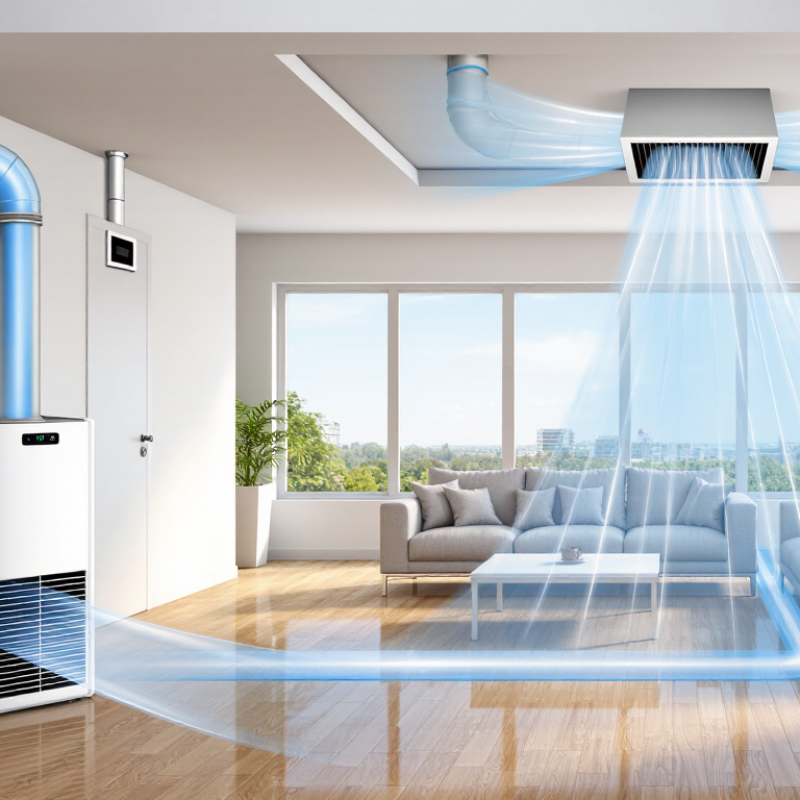
What a Fresh Air Fan Is
A fresh air fan is a ventilation device that brings outdoor air into an indoor space. It differs from an exhaust fan, which mainly pushes stale air outside. Some fresh air fans operate alone, while others connect to a home’s heating and cooling ducts. Their purpose is to support air exchange, especially in rooms that stay closed for long periods. A small grille on an exterior wall may be the only visible sign. Simple, but useful.
The fan draws outside air through an intake and moves it indoors. Many models include a filter to catch dust and larger particles, though filtration levels vary. Some systems also temper incoming air or coordinate with exhaust fans to help maintain balanced airflow. A fan does not automatically make indoor air clean; filter condition, outdoor air quality, and correct sizing all matter. In a bedroom, for example, a quiet unit can provide ventilation without an open window, but a poorly placed intake may pull in traffic odors. Installation details matter. It is easy to overlook them. The right setup depends on the building, local climate, and how the rooms are used.
The Main Components of a Fresh Air Fan
A fresh air fan brings outdoor air into a building, and its parts work together to move and condition that air. The intake grille keeps out leaves and larger debris, while a filter catches finer dust before it reaches the fan. That small screen matters. A clogged filter can reduce airflow, even when the motor still sounds normal.
Inside the housing, the motor turns an impeller or fan wheel to push air through the unit. The housing helps guide airflow and limit vibration, though poor mounting can still create a faint hum in a nearby room. Ductwork carries the air to chosen spaces, and adjustable dampers help balance how much each room receives. These components need to be sized and installed for the building; a powerful fan alone does not guarantee even ventilation.
Some systems also include a heat-recovery core, which transfers heat between outgoing and incoming air without mixing the two streams. It can reduce heating or cooling losses, but adds parts that need periodic inspection. Controls may use a timer, manual switch, or sensor to adjust operation. Simple controls are easier to understand, yet they may not respond well to changing occupancy. A pressure check and airflow measurement can reveal problems that a quick glance misses.
What Is a Fresh Air Fan and How Does It Work? - The Main Components of a Fresh Air Fan
| Component | Main Function | How It Works in the Airflow |
| Outdoor air intake grille | Provides an entry point for outside air and helps keep out larger debris. | Air enters through the grille before moving into the fan system. |
| Air filter | Captures some airborne particles, depending on the filter type and condition. | Incoming air passes through the filter, which should be inspected and replaced or cleaned as specified by its manufacturer. |
| Fan wheel or impeller | Moves air through the unit and connected ductwork. | Rotation creates airflow; the fan’s design and operating speed affect the amount of air delivered. |
| Electric motor | Supplies the mechanical power that turns the fan wheel. | When powered, the motor drives the impeller directly or through a drive arrangement, depending on the unit design. |
| Fan housing | Encloses and supports the fan assembly and guides air toward the outlet. | Its shape helps direct airflow while providing a mounting structure for internal components. |
| Ductwork and supply outlet | Carry outdoor air from the fan to the intended room or building area. | The fan pushes air through the connected ducts, where it exits through one or more supply openings. |
| Damper (if fitted) | Regulates or shuts off airflow through a duct. | A manual or motorized blade changes position to adjust airflow or close the passage when required. |
| Controls and sensors (if fitted) | Manage when the fan runs and, in some systems, its operating speed. | A switch, timer, or sensor-based control can start, stop, or adjust the fan according to its settings. |
A fresh air fan brings outdoor air into a building. Exact components and layouts vary by system; a basic fan does not necessarily heat, cool, or recover heat from the incoming air.
How a Fresh Air Fan Draws In and Distributes Outdoor Air
A fresh air fan moves outdoor air into a building through an intake, rather than simply recirculating room air. A grille helps keep out leaves and insects, while a filter catches particles before air reaches the fan. The fan pushes air through supply ducts to rooms, often near bedrooms or living areas. Quietly, but not perfectly. Doors, transfer grilles, or return paths guide air toward exhaust points and help reduce stagnant corners. Blocked paths can create uneven pressure and leave some rooms short of fresh air.
The U.S. EPA’s The Inside Story: A Guide to Indoor Air Quality reports that concentrations of some pollutants indoors are often two to five times higher than typical outdoor levels. ASHRAE Standard 62.2-2022 sets a whole-dwelling ventilation calculation based on floor area and bedroom count: 0.03 cfm per square foot, plus 7.5 cfm for each bedroom and one additional occupant. For a 1,500-square-foot, three-bedroom home, that formula gives 75 cfm before applicable adjustments. This is a design reference, not a promise of equal airflow in every room. Duct length, a loaded filter, closed doors, and outdoor conditions affect delivery. A flow-hood measurement can reveal the difference between a fan’s rated capacity and the air reaching each register. That gap is easy to overlook.
Common Types of Fresh Air Fans
Fresh air fans bring outdoor air into a home and help dilute indoor pollutants, odors, and excess moisture. Common types include through-wall fans, ducted supply fans, and balanced ventilation units. A through-wall fan sits in an exterior wall and serves one room. It is simple to install, but airflow may be uneven across larger spaces. Ducted fans move air through ceiling or wall ducts, making them useful for several rooms. They need careful planning and clean, unobstructed ductwork.
Balanced units, such as heat-recovery or energy-recovery ventilators, use separate fans to supply and exhaust air. A heat-recovery unit transfers heat between outgoing and incoming air; an energy-recovery unit can also transfer some moisture. Neither creates heat. The difference matters in cold or humid weather. Fan sizing, filter condition, and duct layout affect real performance, so a unit’s advertised airflow alone may not tell the whole story. The terminology can be confusing, even for careful buyers.
Tips: Check the airflow rating and noise level before choosing. Clean or replace filters as directed. Keep outdoor intakes clear of leaves and snow, and have airflow checked after installation. A quiet fan is easier to live with, but I would still verify that it supplies enough air for the room.
What Is a Fresh Air Fan and How Does It Work?
A fresh air fan brings outdoor air indoors, typically through a filter and ductwork. The chart compares representative airflow capacity ranges for common fan types; actual performance depends on the model and duct resistance.
Typical indicative ranges (m³/h), not a specification for every fan. Higher airflow does not necessarily mean better performance; choose a fan to suit the required ventilation rate and system pressure.
Where Fresh Air Fans Are Used and Why They Matter
A fresh air fan supplies outdoor air to occupied spaces through a wall opening or duct. It is common in homes, classrooms, offices, clinics, and workshops where closed windows limit natural ventilation. In a busy classroom, for example, a correctly sized fan can replace stale air while students work. Some systems include filters; others do not, so outdoor air may need treatment before entering.
The need is substantial. The U.S. Environmental Protection Agency reports that people spend about 90% of their time indoors, and concentrations of some pollutants can be two to five times higher indoors than outdoors. Its indoor-air guidance points to sources such as cooking, cleaning products, and building materials. A fresh air fan can dilute indoor pollutants, but it cannot remove every source. That matters.
In homes, ASHRAE Standard 62.2 provides residential ventilation requirements based on factors such as floor area and occupancy. Commercial spaces follow different guidance, so choosing a fan by room size alone can miss the mark. Intake placement, filter condition, noise, and humidity also affect real-world performance. A fan can bring in pollen or damp air, too; that trade-off is easy to overlook. For reliable results, designers consider local conditions and balance incoming air with exhaust airflow.
 Skip to content



 English
 Russian
 German
 Spanish
 French
 Portuguese