What is a Roll Down Fire Door and How Does It Work?
A Roll Down Fire Door is a crucial safety feature in many buildings. These doors play an important role in fire protection and life safety. They are designed to close automatically during a fire, preventing the spread of flames and smoke.
Made from strong materials, a Roll Down Fire Door can withstand extreme temperatures. They are often found in industrial settings, shopping malls, and warehouses. When installed properly, these doors can save lives and protect property. However, they can also present challenges. Regular maintenance is vital to ensure they function correctly.
Many people overlook the importance of these doors. They may function perfectly, but what about after years of use? It's crucial to inspect them routinely, ensuring they meet safety standards. Understanding how a Roll Down Fire Door works can foster awareness about fire safety. Knowing its mechanism helps in responding effectively during emergencies.
What is a Roll Down Fire Door? Definition and Purpose
A roll down fire door is a crucial safety feature in many buildings. It is designed to act as a barrier against smoke and flames during a fire. Unlike regular doors, these doors roll down vertically, providing effective protection for larger openings. They can be installed in warehouses, shopping centers, and other commercial spaces.
The primary purpose of a roll down fire door is to compartmentalize a building. This helps to slow down the spread of fire and smoke, giving occupants more time to evacuate. These doors are usually made of durable materials that can withstand high temperatures. Yet, they are not foolproof. Regular maintenance is needed to ensure they function correctly in an emergency.
Unfortunately, some installations may not meet safety codes or have operational issues. For example, a door may malfunction or fail to roll down quickly. This can become a significant risk during an actual fire. Owners must be vigilant in checking their systems. A little oversight can lead to serious consequences when it matters most.
What is a Roll Down Fire Door and How Does It Work?
| Feature | Description |
| Definition | A roll down fire door is a type of fire barrier designed to prevent the spread of fire and smoke in a building. |
| Purpose | To protect building occupants and property by containing a fire within a designated area. |
| Material | Typically made from steel or other fire-resistant materials. |
| Mechanism | Operated by a motorized mechanism that allows the door to roll up and down as needed. |
| Activation | Can be activated manually or automatically through fire alarm systems. |
| Compliance | Must meet fire safety codes and regulations applicable to the building. |
| Maintenance | Regular inspections and maintenance are required to ensure proper functionality. |
Key Components of Roll Down Fire Doors and Their Functionality
Roll down fire doors play a crucial role in fire safety. These doors are designed to close automatically during a fire, preventing the spread of flames and smoke. They consist of several key components that help them function effectively.
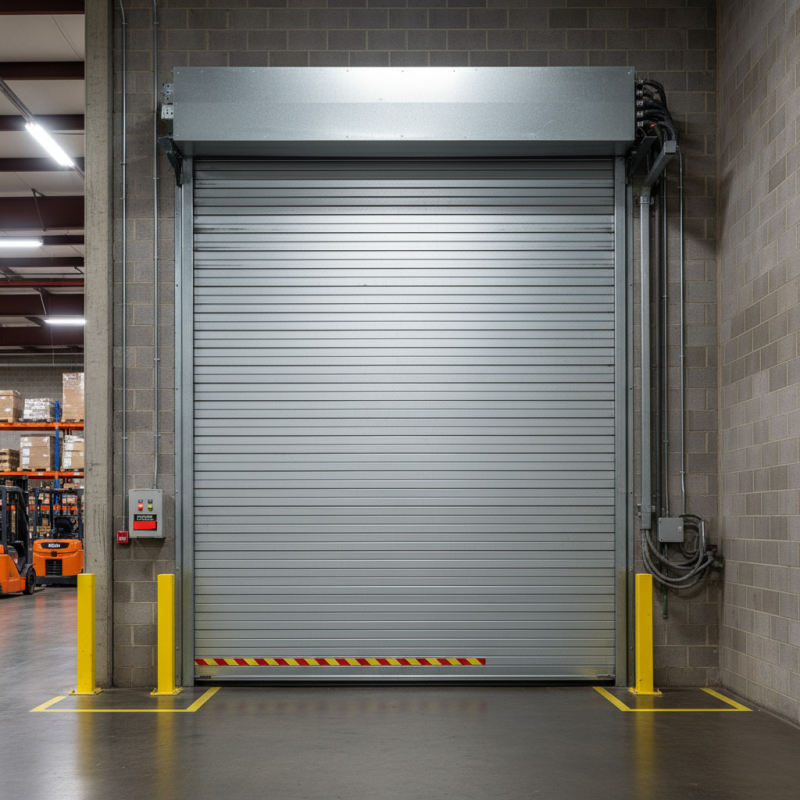
One important component is the door curtain, which is a series of interlocking slats. These slats form a barrier when the door is closed. The door also includes a roll drum that houses the curtain when it is opened. The motorized or manual mechanism controls how the curtain rolls down and up.
Tip: Regular maintenance of these doors is vital. Inspect the curtain for any damage. Check the roll drum to ensure it functions smoothly.
Another essential feature is the fire-sensing system. This component detects heat and smoke. When a fire is detected, it triggers the door to close. This automatic response can make a difference during emergencies.
Tip: Make sure the fire-sensing system is regularly tested. It should be operational and reliable for safety measures.
While roll down fire doors are effective, they can have issues. Sometimes, the door may not close properly due to mechanical failure. It is essential to address such problems promptly. Regular training for staff on the importance of these doors can also improve fire safety awareness.
Standards and Regulations Governing Roll Down Fire Doors in the Industry
Roll down fire doors are critical safety features in many buildings. They provide an essential layer of protection during a fire. These doors deploy automatically when a fire is detected. This helps contain flames and smoke, limiting their spread. However, not all roll down fire doors meet the necessary safety standards. It's crucial for building owners to understand the requirements.
Standards and regulations govern the installation and maintenance of roll down fire doors. Organizations like the National Fire Protection Association (NFPA) set these guidelines. They ensure doors can withstand high temperatures and that they close properly. Compliance is not just about functionality; it’s about safety for all occupants. Regular inspections are needed to ensure doors operate as intended. Some may overlook this, leading to potential risks.
In many cases, buildings are not up to code. Owners might be unaware of these regulations or neglect inspections. This places people at risk during emergencies. Proper training is essential for staff involved in maintenance. Understanding the specific standards pertaining to roll down fire doors can save lives. Awareness and adherence must improve across the industry to ensure a safer environment.
Fire Door Compliance and Testing Statistics
This chart illustrates the compliance statistics for Roll Down Fire Doors based on recent industry surveys. A total of 75% of the doors tested were found to be compliant with the relevant safety standards, while 25% failed to meet the necessary regulations.
Operational Mechanisms: How Roll Down Fire Doors Deploy in Emergencies
Roll down fire doors are essential safety features in various buildings. They deploy quickly in emergencies, creating a fire barrier to prevent the spread of flames. According to a report by the National Fire Protection Association (NFPA), nearly 50% of commercial property fires occur in buildings without adequate fire protection measures. This highlights the importance of having reliable fire doors in place.
The deployment mechanism of roll down fire doors relies on a simple yet effective system. When a fire alarm is activated, the door engages and rolls down into place. The average deployment time is about 10 seconds, crucial for containing fire and smoke. In a real-world scenario, this rapid response can significantly reduce damage and injuries. Recent studies indicate that buildings equipped with such fire doors can reduce fire propagation by up to 80%.
However, there are areas for improvement. Regular maintenance is often overlooked. Many facilities fail to test their fire doors annually, risking potential malfunction during an emergency. An estimated 25% of fire doors are found non-compliant or inoperable during inspections. This raises serious concerns about preparedness in real emergency situations. Fire doors must function perfectly to protect lives and property. Regular checks and updates to fire door systems should never be neglected.
Maintenance and Inspection: Ensuring Reliability of Fire Safety Systems
Regular maintenance and inspection of roll down fire doors is crucial. These doors serve as a barrier against fire and smoke. Ensuring they operate correctly can save lives. It is easy to overlook these systems. Many buildings may neglect regular check-ups, which can lead to dangerous situations.
Routine inspections should focus on functionality. Check the door’s movement, ensuring it opens and closes smoothly. Watch for any obstructions in the tracks. Inspect the sensors and alarms that trigger the door. Dirty or damaged components can compromise safety. Some might think a simple visual check is enough, but deeper inspections reveal hidden issues.
Recordkeeping is vital for maintenance history. Without it, assessing the door's reliability becomes challenging. Facility managers may forget prior repairs or concerns. Documentation also helps track compliance with safety regulations. Regular training for staff on how to operate and inspect these systems is often missed. Awareness about fire safety should be a priority for everyone. Little mistakes can lead to significant risks. Regular attention can prevent tragedies.
 Skip to content


 English
 Russian
  German
  Spanish
  French
  Portuguese