How to Use a Back Stretcher Board Safely?
A Back Stretcher Board can look simple: a curved surface, raised points, and a few adjustment levels. Using it safely takes more care than the design suggests. The goal is gentle support, not forcing your spine into a deeper arch. Start on a clear, level floor, and check the board for damage before each use. Follow its instructions, since shapes and adjustment systems differ.
Wear comfortable clothing and lower yourself onto the board slowly, keeping your movements controlled. Begin with the lowest setting and a brief session, perhaps just a few minutes. Breathe normally. Small steps matter. If you feel sharp pain, numbness, tingling, dizziness, or worsening symptoms, get off carefully and stop using it. A mild stretch may feel unfamiliar, but discomfort is not proof that the board is working. Less is often wiser.
Your body’s response should guide the next step, not a timer or an online routine. Increase the angle or duration only gradually, and change one thing at a time. Keep nearby support within reach if getting up feels awkward. People with back injuries, osteoporosis, recent surgery, balance problems, or ongoing symptoms should ask a qualified healthcare professional before trying a stretcher board. It may not suit everyone, and it should not replace an assessment of persistent pain. Even with careful use, results can vary. That uncertainty is worth taking seriously.
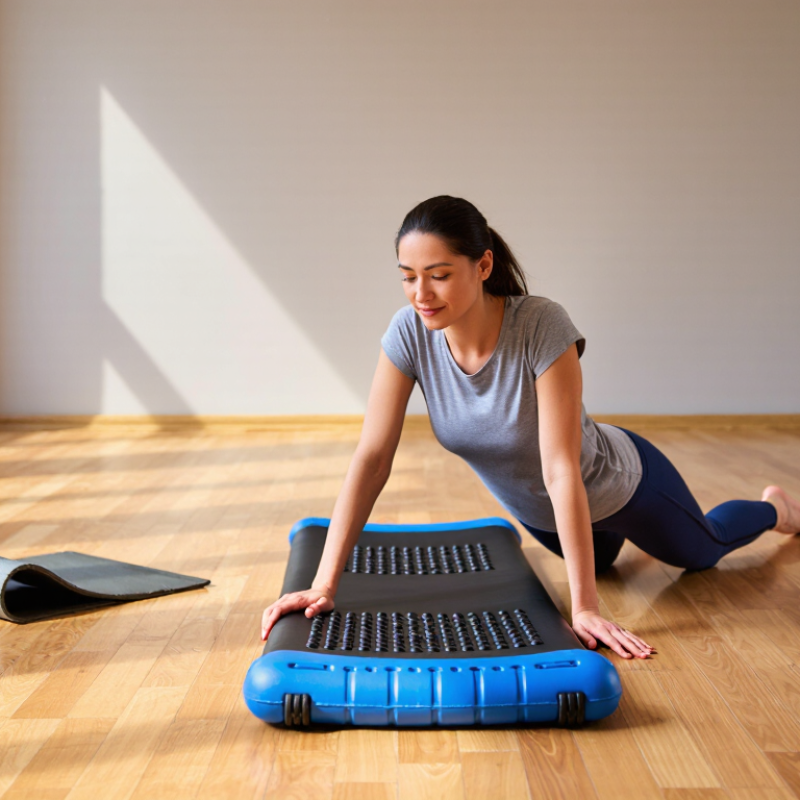
Understand the Purpose and Limits of a Back Stretcher Board
A back stretcher board is a positioning aid, not a cure or a diagnostic tool. Its curved surface gently places the spine in extension, which some people find temporarily comfortable. Relief is individual, and evidence for consumer boards specifically remains limited. It cannot identify why your back hurts or reliably “realign” the spine. The scale of the problem is real: the WHO estimated that 619 million people had low back pain in 2020, with cases projected to reach 843 million by 2050 (WHO, 2023). In the United States, 39% of adults reported back pain during the previous three months in 2019 (NCHS Data Brief No. 415, 2021). Big numbers, but they do not prove a board will help you.
Use the board on a stable, non-slip surface, and begin at its lowest arch. Keep the first session brief; breathe normally and avoid forcing your back down. A mild stretch may be acceptable. Sharp pain is not. Stop if pain increases, travels down a leg, or comes with numbness or weakness. This is easy to overlook when the stretch feels intense. Ask a clinician before use if you have osteoporosis, a recent spinal injury or surgery, or another condition affecting your spine. The board should support comfortable movement, not replace assessment or a broader care plan.
Check the Board and Review Its Safety Instructions
Before using a back stretcher board, inspect it in good light. Check the surface for cracks, loose parts, sharp edges, or worn non-slip feet. Press gently on the board while it rests on a flat floor. It should not rock or shift. Small details matter. A loose hinge can change how the board supports your weight.
Read the safety instructions for the exact model, including its weight limit, adjustment steps, and recommended use time. Do not assume every board works the same way. Set the arch to its lowest position if the instructions allow this, and make sure each support clicks or locks into place. I once thought a part was secure because it looked aligned; it needed another check. That was an easy mistake. Follow any warnings about medical conditions, and ask a healthcare professional before use if you have back pain, recent surgery, or another health concern. Keep the board on a dry, uncluttered floor, with enough space to get on and off without reaching for nearby furniture.
Prepare a Clear, Stable Area for Use
Before using a back stretcher board, choose a flat, firm surface with enough room to lie down and get up comfortably. A clear floor works better than a soft mattress, which may shift or sink under your weight. Move furniture, loose cables, and small objects out of the way. Check that the floor is dry, and remove slippery rugs. Keep the board within easy reach so you do not need to twist or stretch awkwardly to pick it up. It is easy to overlook the space needed to sit up again.
Tips: Test the area with your hands before placing the board down. If it rocks, slides, or tilts, find another spot. Keep a phone nearby if you use one for safety, but leave the path beside you clear.
Inspect the board for cracks, loose parts, or rough edges, and follow its instructions for placement and use. Wear clothing that will not catch on the surface. If you feel unsteady, ask someone to stay nearby. A tidy area can make setup feel simple, but do not assume the board is secure just because it looks level. Recheck its position before lying down. Stop if the board shifts or you feel pain, dizziness, or unusual discomfort.
Position Your Body and Increase the Stretch Gradually
Place the back stretcher board on a firm, nonslip floor. Sit close to its lower end, then lower yourself slowly so your spine rests along the arch. Keep your head supported and your feet planted, with knees bent if that feels more comfortable. Start at the lowest arch setting. Let your back settle rather than pressing it down with your hands. Keep it gentle. Breathe normally, and leave your arms wherever your shoulders feel relaxed. Add more stretch only after the current position feels comfortable; a deeper arch is not a measure of success.
WHO’s 2023 fact sheet estimates 619 million people experienced low back pain in 2020. That figure shows the scale of the problem, not that a board treats it.
Notice how your body responds during and after each session. Mild tension may be expected, but stop if you feel sharp pain, numbness, tingling, weakness, or dizziness. NICE guideline NG59 recommends tailored exercise for low back pain. It says manual therapy should be part of a care package that includes exercise; it does not establish a board-specific dose. So avoid treating a suggested time or setting as universal.
If you have osteoporosis, previous spine surgery, or pain travelling down a leg, ask a clinician before using the board. I would also reassess the fit: even a gentle arch can feel wrong if your hips slide or your lower back is forced into position.
Stop if You Feel Pain or Unusual Symptoms
How to Use a Back Stretcher Board Safely?
A back stretcher board should feel controlled, not forced. Place it on a stable, nonslip floor, and lower yourself onto it slowly. Begin with the lowest arch setting and a brief session. Keep your knees bent and feet planted if that feels comfortable. A gentle stretch may feel unfamiliar, but it should not hurt.
Stop if you feel pain or unusual symptoms. Sharp, increasing, or spreading pain is a clear reason to get off the board carefully. Stop too if you notice tingling, numbness, weakness, dizziness, or nausea. Don’t try to “stretch through” these signs; that advice can be tempting, but it isn’t a useful test of progress. If symptoms are severe, persist after stopping, or concern you, contact a healthcare professional. Ask a clinician before use if you have a back condition, recent surgery, or another health concern.
Tips: Keep the first session short, and change only one setting at a time. Use your hands for support as you rise, rather than sitting up suddenly. Check that the board stays steady beneath you. If you’re unsure whether a sensation is safe, stop and seek professional guidance.
 Skip to content



 English
 Russian
 German
 Spanish
 French
 Portuguese