...

7 Tips for Choosing a Football Ball Launcher Machine

Choosing a Football Ball Launcher Machine is not just about finding the model with the highest speed. The right choice depends on who will use it, where training happens, and which skills need regular practice. A youth coach working on short passes has different needs from a goalkeeper training for fast shots. Small details matter.

Before comparing machines, picture a real session. Will the unit fit beside the goal? Can one person move it across wet grass? Do its settings support repeatable changes in speed, spin, and launch angle? Check which ball sizes it accepts, how quickly it reloads, and whether its power source suits your field. These details can shape a session more than a flashy maximum-speed figure.

This guide outlines seven practical points to consider, including performance, portability, controls, safety features, durability, and support. Specifications are useful, but they do not tell the whole story. A machine may look simple in a product photo and feel awkward when coaches adjust it between drills. If possible, ask for a demonstration using the balls you already own. Review the manual, setup requirements, and maintenance guidance before buying. I would not assume that one machine suits every player or practice plan; that is an easy mistake to make. A careful comparison can help you choose equipment that fits your training space, budget, and daily routine.
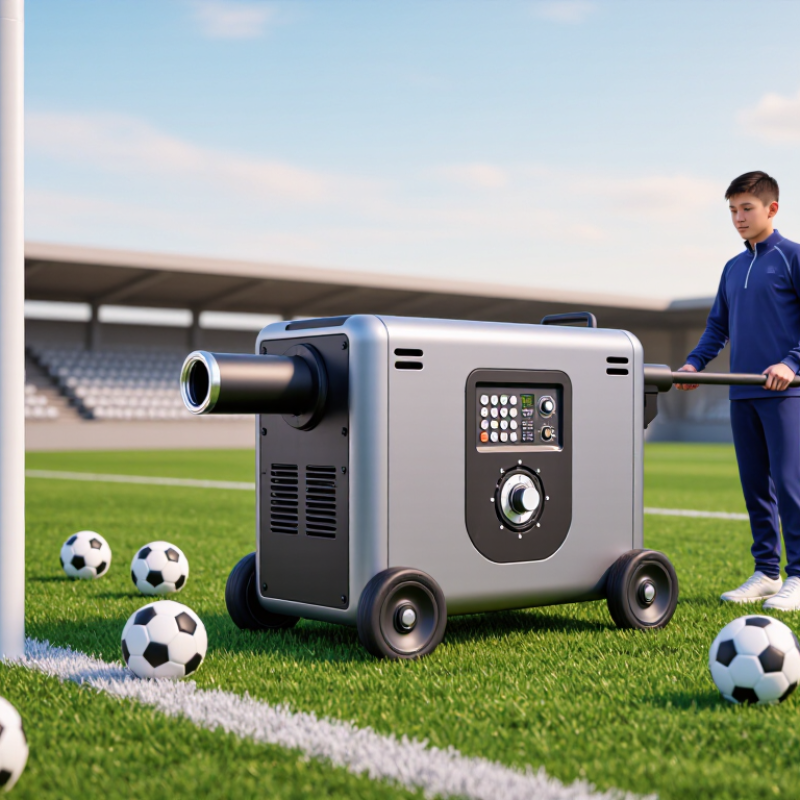
7 Tips for Choosing a Football Ball Launcher Machine

What Is a Football Ball Launcher Machine?

7 Tips for Choosing a Football Ball Launcher Machine

What Is a Football Ball Launcher Machine?

A football ball launcher machine is a training device that feeds and propels balls toward a player. It can repeat passes, crosses, or shots at a selected pace and direction. Coaches use it to practise first touch, movement, and finishing without relying on a partner to deliver every ball. The machine does not read a player’s technique, though. A coach still needs to adjust drills and watch for fatigue.

Most models hold several balls in a hopper, then release them through a powered mechanism. Controls may let users change speed, launch angle, and interval. On a field, check how firmly the unit stands on uneven grass, how easily it can be moved, and whether its settings suit the players’ age and skill. Follow the manufacturer’s operating and maintenance instructions, and keep people clear of the launch path. Small details matter.

Tips: Match the machine’s ball capacity and adjustment range to your drills. Check setup time, transport weight, and cleaning needs before choosing. Ask for a demonstration if possible; specifications alone can be misleading. It is tempting to choose the fastest launcher, but realistic, repeatable delivery often makes a better practice session.


7 Tips for Choosing a Football Ball Launcher Machine

Compare the features that matter when selecting a launcher for your training needs.

The 1–5 scores are illustrative buyer-priority ratings, not measured product performance. Priorities can vary by player, training goals, and setting. Check each machine’s specifications and safety instructions before buying.

Which Launch Settings Match Your Training Goals?

For passing accuracy, choose a launcher with adjustable speed and a steady feed rate. Begin with moderate pace and short intervals, then increase distance as players control the first touch. A ball arriving too quickly can turn a technique drill into a reaction test. Start low.

For crossing practice, adjustable launch angle matters more than maximum speed. Use a higher arc for aerial challenges and a flatter trajectory for driven deliveries. Check whether the machine can repeat the same angle; consistent feeds make it easier to compare runs and timing. Change one setting at a time. Random delivery can help players scan and adapt, but keep variation limited for beginners. Too much unpredictability may hide basic errors.

For goalkeepers, look for independent control of speed, direction, and launch frequency. Mix ground balls with mid-height and high shots, while leaving enough recovery time between attempts. Short bursts can build reactions; longer pauses support positioning and decision-making. Match settings to age, ability, and the drill’s purpose. I would resist choosing the fastest setting just because it looks demanding. A slightly slower feed often reveals footwork faults more clearly, though every group responds differently. Review how players move, not just how many shots they stop.

How Should You Compare Capacity, Portability, and Power?

Capacity is not just a number of balls. Check how many fit in the feeder and how quickly the machine can launch them. A large hopper suits long drills, but it adds weight and takes up storage space. Count the balls you actually use in a session. More is not always better. Also ask whether the feed rate can be adjusted; a steady rhythm helps players reset between shots.

Portability depends on more than wheels. Measure the machine, check its weight, and picture carrying it across grass or loading it into a car. Small wheels can struggle on uneven fields. Power matters just as much: compare launch speed, distance, and adjustment range with the drills you plan to run. Battery models offer freedom from outlets, but check run time and charging needs. Mains-powered units avoid battery limits, yet need a nearby power source. I would test setup time, too; product descriptions can make transport sound easier than it feels. A short trial on your usual field may reveal awkward handles, slow loading, or controls that are hard to reach.

7 Tips for Choosing a Football Ball Launcher Machine — How Should You Compare Capacity, Portability, and Power?

Use this checklist to compare machines using measurable specifications and a consistent on-field test. Ball capacity, launch speed, range, and runtime vary by model, ball type, settings, and conditions; verify them with the manufacturer and a practical demonstration.

Tip What to Compare Useful Data to Record How to Evaluate It
1. Match the feeder capacity to your session Maximum ball capacity and whether balls feed consistently Balls loaded per batch; successful feeds; interruptions during a timed test Test with the number of balls your drills require. A larger hopper reduces reloading, but only if the feeder handles your ball sizes reliably.
2. Check compatibility with your footballs Supported ball sizes, surface condition, and inflation range Ball size; manufacturer’s stated pressure range; feed consistency across the balls you use For reference, a size 5 ball under the IFAB Laws of the Game has a circumference of 68–70 cm and a mass of 410–450 g at the start of a match. Confirm that the machine supports your ball type.
3. Compare portability, not just weight Machine weight, folded dimensions, handle, wheels, and setup time Weight in kg; packed length × width × height; number of people needed to move it Check that it fits your vehicle and can be moved over the surfaces at your training site. A wheeled unit may be easier to transport across a field than a lighter unit without wheels.
4. Verify power requirements and runtime Mains or battery operation, rated input, battery capacity, and charging time Input voltage and power in W; battery capacity in Wh; measured runtime at your intended settings For battery-powered equipment, watt-hours describe stored energy, not guaranteed operating time. Ask for runtime under load and confirm whether a spare battery or extension cable is practical.
5. Test launch speed, range, and repeatability Adjustable output, target distance, trajectory, and shot-to-shot consistency Speed in km/h or m/s if provided; landing distance; spread of landing points over repeated launches Compare machines using the same balls, settings, and measured field conditions. Check whether the available speed and trajectory settings suit your drills rather than relying on a maximum-speed claim alone.
6. Assess controls and safety features Remote control, emergency stop, guarding, warning indicators, and setup instructions Control range stated by the manufacturer; safety features present; time needed to stop and reset Review the operating manual and demonstrate the stop procedure before use. Keep people clear of the launch path and follow the manufacturer’s safety distances.
7. Include durability, maintenance, and support Weather limitations, cleaning access, replaceable parts, warranty, and service availability Warranty duration and coverage; maintenance intervals; parts availability; stated operating conditions Ask which components need routine inspection and whether the machine must be stored indoors. Compare the total cost of ownership, not only the purchase price.

Comparison tip: Record the same measurements for every machine—capacity, packed dimensions, weight, power source, runtime, and results from a repeatable launch test—so the comparison reflects your actual training needs.

What Safety Features and Setup Requirements Matter?

When choosing a football launcher, check how it stops, not just how fast it throws. A clearly marked emergency stop should sit within the operator’s reach. Feed-wheel guards and an interlock can help prevent hands from reaching moving parts. Keep the loading area separate from the ball’s path. Small details matter.

The NCAA Injury Surveillance Program recorded 8.13 injuries per 1,000 athlete-exposures in collegiate football competitions, compared with 2.02 during practices, across 2014–15 to 2018–19. These figures are not specific to launcher use, but they show why controlled practice conditions matter. Set the machine on firm, level ground, secure its wheels, and keep players out of the firing lane during setup. I would also check that the stop remains reachable after the machine is positioned. Easy to overlook.

Follow the manufacturer’s clearance, power, and anchoring instructions; models differ. Inspect the cord or battery, frame, guards, and feed area before use. Start at a low setting, aim toward a suitable net or open receiving zone, and test only when the lane is clear. The CDC estimates 1.6–3.8 million sports- and recreation-related concussions occur annually in the United States, so avoid treating a launcher as harmless equipment. A written setup checklist helps, though someone still has to use it.

How Can You Maintain a Launcher for Reliable Performance?

Reliable launches start with a clean machine. After each session, switch off the launcher and disconnect its power source before cleaning. Use a dry cloth to remove dust, grass, and grit from the feed wheels and surrounding surfaces. Small debris can affect how a ball enters the wheels. Keep water away from motors and electrical connections.

Check the wheels for cracks, flat spots, or uneven wear. These signs may cause inconsistent speed or direction. Inspect the frame and fasteners for looseness, especially after moving the machine over rough ground. It is easy to blame the settings too soon; worn wheels may be the quieter cause. Check ball pressure, too, since soft or damaged balls can distort results. Follow the machine’s manual for pressure ranges and replacement guidance.

A quick wipe is not a full inspection. Still, it often gets skipped after practice. Before storage, keep the launcher dry and follow the manual’s battery instructions. Note unusual sounds, changes in ball flight, and maintenance dates in a simple log. Patterns become easier to spot. If performance stays inconsistent after basic checks, stop using the machine and arrange qualified service rather than adjusting internal parts blindly.

en_USEnglish

PCD Inserts

PCBN Inserts

Solid CBN Inserts

PCD Milling Cutter

PCD Drilling Tools

PCD Reamer

Diamond Special Tool

Diamond Dressers