...

Top 10 Types of Coffee Pouches for Global Buyers?

Coffee packaging is not merely a container choice. It affects freshness, shelf appeal, shipping efficiency, and how easily customers use a product. For global buyers, the right Coffee Pouch depends on more than appearance. Roast level, whole-bean or ground format, filling equipment, and sales channel all matter. Small details matter.

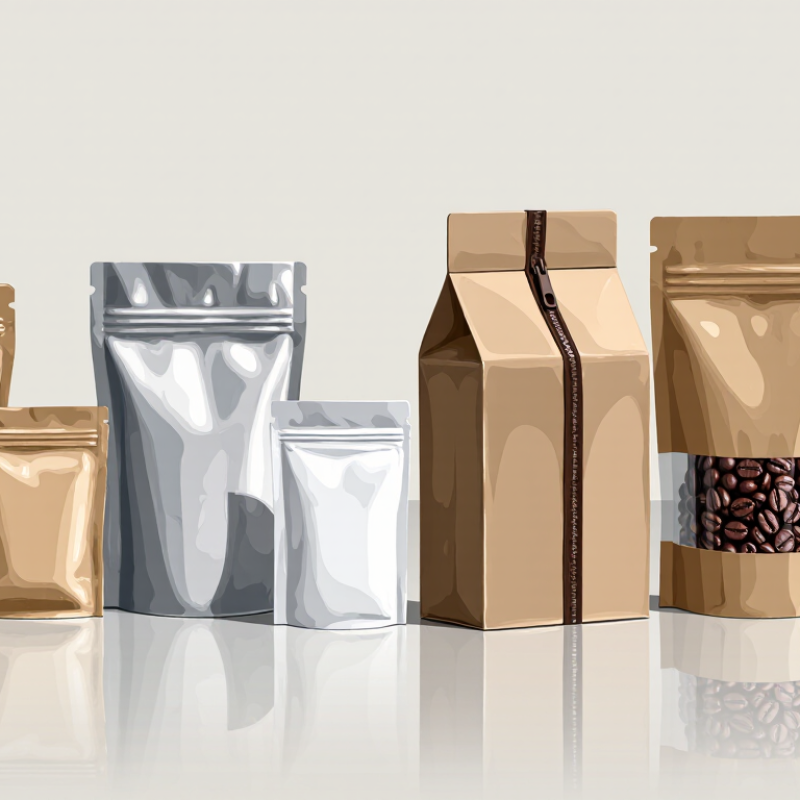
This guide introduces ten common pouch types, including stand-up, flat-bottom, side-gusset, quad-seal, and single-serve formats. Each offers different benefits and trade-offs. A flat-bottom pouch may stand neatly on a retail shelf, while a compact sachet can suit sampling or travel. These are practical tendencies, not guarantees. Performance depends on material structure, closure quality, valve design, and manufacturing consistency.

Buyers should also check barrier specifications, seal strength, print quality, and compatibility with their packing line. Ask suppliers for technical data and representative samples, then test them with the actual coffee and filling process. A pouch that looks excellent in a catalogue can behave differently on a fast production line. That part is often underestimated.

There is no universal best option. Budget, transport conditions, local recycling systems, and customer expectations vary across markets. Some trade-offs remain imperfect, even after careful testing. This overview provides a grounded starting point for comparing pouch styles and asking suppliers better questions. The final choice should be based on verified requirements, not packaging trends alone.
Top 10 Types of Coffee Pouches for Global Buyers?

Coffee Pouch Basics: 60-kg Trade Sacks and Retail Pack Formats

Coffee packaging changes with the journey. Green beans commonly move in 60-kg trade sacks, often made from jute or woven material. The USDA Foreign Agricultural Service’s Coffee: World Markets and Trade reports production in 60-kg bags; its 2024/25 estimate was about 174.9 million bags. That unit helps buyers compare supply volumes, but it does not describe every shipment. Exporters may use liners or larger bulk containers when moisture control and handling requirements call for them. A sack is not a moisture barrier.

Retail packs serve a different job. Common formats include 250-g and 500-g side-gusset bags, flat-bottom pouches, one-kilogram packs, and small single-serve sachets. One-way valves can release gas from freshly roasted coffee while limiting air entry; foil laminates can provide a stronger barrier to oxygen and light. Buyers should check seal quality, material structure, filling equipment, and storage conditions—not just the pouch shape. The International Coffee Organization’s statistics also use 60-kg bags as a trade-volume measure, but retail weights vary by market and product. I would not assume one format fits all. A neat pouch can still fail if its seal wrinkles or its barrier is too weak.


Degassing Valve Pouches: One-Way CO₂ Release for Freshly Roasted Beans

A degassing valve pouch gives freshly roasted coffee a controlled exit for carbon dioxide. After roasting, beans release CO₂; trapped gas can inflate a sealed pouch and strain its seams. The one-way valve lets gas escape while limiting outside air entry. It is not a freshness guarantee. The pouch’s oxygen barrier, heat seals, and storage conditions matter too.

The International Coffee Organization estimated world coffee consumption at 177.0 million 60-kilogram bags in 2023/24, in its Coffee Market Report. That scale makes dependable packaging important across export routes, where transit times and temperatures vary. For buyers, check valve placement, seal consistency, and barrier specifications with the packer. A valve cannot remove oxygen already trapped inside. That detail is easy to miss.

Tips: Match pouch size to the roast batch, and avoid excessive empty headspace. Ask suppliers for barrier test data and seal checks, not only a valve description. Keep bags away from heat and sunlight after filling. Small trials help. Even then, valve performance can vary with pouch construction, so test the actual packed coffee before placing a large order.

Barrier Pouches: Screen for OTR <1 cc/m²/day and WVTR <1 g/m²/day

For coffee pouches, barrier figures are a useful starting point, not a freshness guarantee. Screen for an oxygen transmission rate (OTR) below 1 cc/m²/day and a water vapor transmission rate (WVTR) below 1 g/m²/day. These limits can help reduce oxygen exposure and moisture pickup, both of which can dull aroma and affect roasted coffee’s quality.

Check the test conditions behind every reported number. Temperature, humidity, and test method can change results, so compare data measured on the same basis. Ask whether the figures apply to the packaging film or the finished pouch. There is a difference. Seams, zippers, and any degassing valve can create weak points even when the film performs well. A small leak can undo a strong barrier result.

It is tempting to chase lower numbers. That can be a poor shortcut. Ask suppliers for test reports, then evaluate filled pouches through seal checks and storage trials under realistic conditions. Look closely at corners and seals after handling; flexing may damage some barrier structures. For coffee shipped through humid or hot regions, repeat checks after exposure to those conditions. The limits are useful screening targets, but the right pouch depends on the coffee, filling process, and distribution route.

Top 10 Types of Coffee Pouches for Global Buyers? - Barrier Pouches: Screen for OTR <1 cc/m²/day and WVTR <1 g/m²/day

Use the barrier figures below as procurement screening limits, not guaranteed performance for every pouch. Confirm results on the finished package with an agreed test method, temperature, humidity, and specimen configuration. For roasted coffee, assess valve performance and seal integrity as well as film barrier.

# Pouch type Typical format and construction Barrier screening target Common application and buying considerations
1 Quad-seal pouch Four-corner sealed side-gusset format; often PET / aluminum foil / PE or another qualified high-barrier laminate. Specify OTR <1 cc/m²/day and WVTR <1 g/m²/day for the finished pouch. Suitable for larger whole-bean packs and shelf display. Check corner seals, filling-line compatibility, and whether a one-way degassing valve is required.
2 Flat-bottom pouch Gusseted pouch with a broad, stable base; commonly made from foil-based or otherwise qualified high-barrier laminates. Specify OTR <1 cc/m²/day and WVTR <1 g/m²/day; verify seals and folds on the completed pack. Provides a stable shelf footprint and good printable panels. More complex folds and seals make package-level testing important.
3 Stand-up pouch (doypack-style) Flexible pouch with a bottom gusset; may use PET / foil / PE, metallized laminate, or a qualified high-barrier structure. Set OTR <1 cc/m²/day and WVTR <1 g/m²/day as acceptance limits for the selected structure. Common for retail packs. Zippers improve convenience but are not hermetic; the primary heat seal remains essential.
4 Side-gusset pouch Rectangular bag with expandable side folds; often produced from a rollstock laminate with a longitudinal back seal. Specify OTR <1 cc/m²/day and WVTR <1 g/m²/day; assess the back seal and gusset areas. Efficient for bulk and retail coffee formats. Confirm filling equipment, closure design, and valve placement before ordering.
5 Pillow pouch Form-fill-seal pack with a back seam and end seals; made from a barrier rollstock selected for the product and line. Use OTR <1 cc/m²/day and WVTR <1 g/m²/day as film or package specifications, as applicable. A cost-efficient format for compatible high-speed lines and portion packs. Validate seal strength and leakage at the longitudinal seam.
6 Three-side-seal pouch Flat pouch sealed on three edges, typically supplied pre-made; can be manufactured with foil or other qualified barrier laminates. Specify OTR <1 cc/m²/day and WVTR <1 g/m²/day for the selected package configuration. Useful for samples, single servings, and small portions. For ground coffee, check aroma protection and seal cleanliness during filling.
7 Flat-bottom box pouch Box-shaped pack with a flat base and side panels; usually converted from a multilayer barrier web. Require OTR <1 cc/m²/day and WVTR <1 g/m²/day, and test the finished pouch including its formed base. Combines shelf stability with a squared-off appearance. The base construction and multiple seals need particular attention during validation.
8 Spouted pouch Flexible pack fitted with a spout and cap; typically uses a multilayer barrier film compatible with the product and filling process. Set OTR <1 cc/m²/day and WVTR <1 g/m²/day for the film, then evaluate the spout, fitment, and seals separately. More relevant to liquid coffee or concentrates than roasted beans. Confirm product compatibility, fitment integrity, and transport leak resistance.
9 Shaped pouch Custom-cut flexible pack made from a barrier laminate; shape and edge-seal design vary by application. Specify OTR <1 cc/m²/day and WVTR <1 g/m²/day, with package-level checks at cut edges and seals. Offers distinctive contours for promotions or specialty packs. Custom tooling and nonstandard seals can increase validation requirements.
10 Reclosable zipper pouch Stand-up or gusseted pouch with a press-to-close zipper, made from a qualified high-barrier laminate. Set OTR <1 cc/m²/day and WVTR <1 g/m²/day for the pouch body; do not treat the zipper as a hermetic barrier. Supports repeated opening for whole-bean or ground coffee. Keep the initial heat seal intact until first use and assess zipper closure usability.

Buyer note: OTR (oxygen transmission rate) and WVTR (water vapor transmission rate) depend on material construction, thickness, test conditions, and test method. Include the required units and agreed test conditions in the purchase specification; request current test reports and validate the finished pouch, seals, closure, and valve where applicable.

Ten Retail Types: Stand-Up, Flat-Bottom, Gusseted and Single-Serve Pouches

Stand-up pouches hold their shape on shelves and suit resealable whole-bean coffee. Flat-bottom bags offer a broad, stable front panel for clear labels. Side-gusset pouches expand as they fill, while quad-seal bags add reinforced corners for heavier packs. Pillow pouches use less structure and work for simple, high-volume retail. Three-side-seal pouches keep smaller portions compact. A one-way valve can release gas from freshly roasted beans, but it adds cost and another seal to check.

Single-serve formats answer different needs.Sachets hold measured portions; stick packs are slim and easy to carry. Drip Coffee Bags contain a filter pouch that clips over a cup. Vacuum brick pouches compress ground coffee into a firm block, saving shelf space. The National Coffee Association’s 2024 National Coffee Data Trends report found that67% of U.S. adults had coffee the previous day. That is one market, not a global forecast, but it shows why portion convenience matters.

Small packs matter.

The International Coffee Organization estimated global coffee consumption at 177.0 million 60-kilogram bags for 2023/24. This signals broad demand, not a winning pouch shape. Match format to roast, fill weight, shipping, and display space. A tidy empty sample can mislead; filled bags may slump or tip. Test seals and shelf stability with the actual product before choosing a production format.

Global Material Compliance: EU Rules Set Recyclability Requirements for 2030

For global coffee buyers, the pouch format matters—but its material structure increasingly matters more. The EU Packaging and Packaging Waste Regulation sets design-for-recycling requirements for packaging by 2030, with recyclability at scale required from 2035. This affects stand-up pouches, flat-bottom bags, side-gusset bags, and other formats sold into Europe.

A pouch may look like one smooth film, yet contain several bonded layers that are difficult to separate. Small details matter.

Eurostat reported that the EU generated 186.5 kilograms of packaging waste per person in 2022. Plastic packaging recycling reached about 41 percent. These figures show why material choices receive scrutiny.

For coffee pouches, buyers should ask suppliers for the full layer structure, material specifications, and evidence supporting recyclability claims. Mono-material designs can simplify sorting, but performance still depends on local collection and recycling systems. A recyclable label alone is not enough.

Practical trials are essential.

Check whether a thinner structure still protects roasted coffee from oxygen and moisture, and whether its zipper, valve, and seals fit the chosen material. In sourcing reviews, a pouch that performs well on a sample line may behave differently at commercial speed. That part is easy to overlook.

The European Commission’s PPWR framework and Eurostat’s waste data offer useful reference points, but buyers should also verify current national guidance and request up-to-date technical documentation.

en_USEnglish

PCD Inserts

PCBN Inserts

Solid CBN Inserts

PCD Milling Cutter

PCD Drilling Tools

PCD Reamer

Diamond Special Tool

Diamond Dressers