SUNDI TOOLS
- Copyright © Wuxi Sundi Precision Tools Co.,LTD All rights reserved.
- Site Map
Mechanical seals protect pumps, mixers, and rotating equipment from leakage, contamination, and premature failure. Among current options, the Non Cartridge Mechanical Seal remains important for process plants, refineries, water systems, and general industrial applications. Its separate components can reduce initial costs and support flexible equipment configurations. However, installation demands careful measurement, clean faces, and disciplined alignment.
Recent market studies support this continuing demand. Grand View Research identifies industrial machinery, oil and gas, chemicals, and water treatment as major mechanical seal application sectors. MarketsandMarkets also links market growth with expanding process industries and stricter fluid-management requirements. Their estimates differ because each report defines products, regions, and revenue categories differently. That limitation deserves attention.
This guide evaluates ten leading manufacturers through practical criteria, not brand visibility alone. Product depth, material quality, engineering support, documented testing, and field reliability all matter. Face combinations, elastomer selection, spring design, pressure limits, and shaft size can change performance significantly. A seal that succeeds on a clean-water pump may fail quickly with abrasive slurry or crystallizing chemicals.
Small details matter. A scratched silicon-carbide face can create leakage within hours. Poor gland measurements can also distort installation results. API 682 and ISO 21049 provide useful design and qualification references for many process applications. Still, standards do not replace application engineering. The best manufacturer should explain its assumptions, publish technical data, and help verify compatibility before purchase. Rankings are never absolute. Site conditions can change the answer.
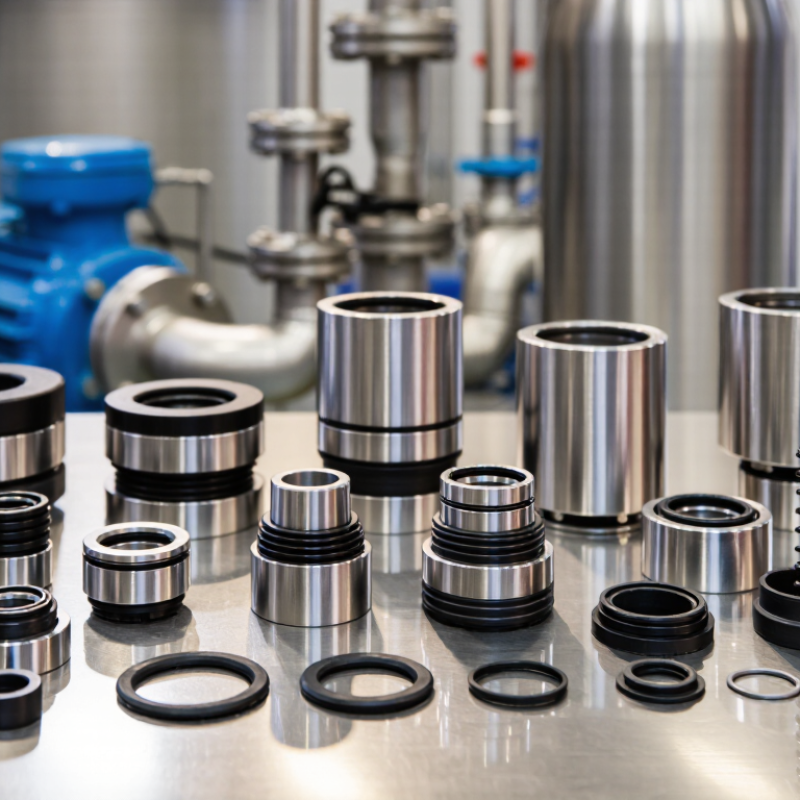
10 Best Non Cartridge Mechanical Seal Manufacturers
What Are Non-Cartridge Mechanical Seals?
A non-cartridge mechanical seal is assembled directly onto a pump shaft during installation. Its parts include rotating faces, a stationary seat, springs, secondary seals, and a gland. Unlike cartridge seals, these components arrive separately. Technicians must set each dimension accurately.
That difference matters. A small setting error can create face distortion, leakage, or early wear. On a workshop bench, the shaft may look clean and straight. In service, heat, vibration, dry running, and abrasive particles can change the result quickly. Careful measurement is essential.
The U.S. Department of Energy reports that pumping systems can consume 25% to 50% of industrial facility electricity, depending on the process. Seal reliability therefore supports both maintenance control and energy performance. API 682 and ISO 21049 provide widely used guidance for seal selection, materials, piping plans, and testing.
Non-cartridge designs remain useful where standard dimensions, easy part replacement, and lower initial cost are priorities. They also suit experienced maintenance teams with proper installation tools. However, their apparent simplicity can be misleading. Spring orientation, face cleanliness, shaft finish, and compression settings all deserve inspection. A practical selection should review pressure, temperature, speed, fluid chemistry, and solids content before comparing manufacturers.
Choosing among non-cartridge mechanical seal manufacturers requires more than comparing prices. Examine their engineering experience with pumps, mixers, and rotating equipment. A capable manufacturer should discuss shaft diameter, pressure, temperature, speed, and fluid chemistry in practical terms. Vague answers are warning signs.
Inspect the manufacturing process closely. Ask how seal faces are lapped, measured, and matched. Request material certificates for silicon carbide, carbon, ceramic, elastomers, and metal parts. Reliable suppliers should explain dimensional tolerances and inspection records. Their testing should include pressure checks, rotation tests, and leakage evaluation. A polished website proves little.
Field support matters just as much. Look for clear installation drawings, torque guidance, and troubleshooting instructions. Ask whether engineers can review photographs of damaged seals. Their response may reveal real technical experience. A strong manufacturer also keeps consistent production records and traceable batch information.
Do not overlook customization. A seal may fit the drawing but fail in service because of vibration, dry running, or poor flushing. Discuss the actual operating conditions, including startup cycles and unexpected temperature changes. I would also request references from similar applications, while remembering that references can be selective. No evaluation is perfect. Factory visits help, but they can still show only a prepared area. Independent testing may add cost, yet it can expose weaknesses before installation. The best decision balances evidence, communication, and long-term support.
The strongest non-cartridge mechanical seal manufacturers often specialize in demanding operating conditions. A German precision manufacturer may focus on tight tolerances, stainless steel faces, and documented inspection records. A Japanese supplier may emphasize quiet operation and stable performance in compact pumps. An American engineering team often supports custom dimensions for older equipment. These details matter during replacement work.
An Italian manufacturer may develop seals for chemical processing, using corrosion-resistant alloys and carefully selected elastomers. A South Korean producer may offer efficient production for standardized water and wastewater applications. A Swiss specialist may concentrate on laboratory and pharmaceutical equipment, where cleanliness and traceability are essential. Another European manufacturer may build heavy-duty seals for pulp, paper, and mining pumps. Field experience helps here. Catalog claims do not replace site measurements.
A Chinese manufacturer with strong export controls may provide competitive seals and practical technical support. An Indian producer may serve agricultural, food-processing, and general industrial pumps with flexible configurations. The best choice depends on shaft size, pressure, temperature, fluid, and installation quality. That sounds obvious, yet mistakes happen. I have seen a suitable seal fail because the sleeve was scored and the spring was installed incorrectly. Reliable manufacturers provide drawings, material data, test procedures, and responsive engineering advice. Still, buyers should verify compatibility independently. “Best” is never permanent. Availability, quality consistency, and after-sales communication can change over time.
This chart summarizes the main technical dimensions commonly used to evaluate non-cartridge mechanical seal manufacturers. The reference values represent typical industrial design ranges rather than company-specific ratings. Actual limits depend on seal construction, face materials, elastomers, fluid properties, pressure, temperature, and operating speed.
10 Best Non Cartridge Mechanical Seal Manufacturers
Comparing Materials, Designs, Applications, and Performance
Choosing among ten leading non-cartridge mechanical seal manufacturers requires more than catalog comparison. In field maintenance, shaft diameter, pump speed, fluid chemistry, and installation habits determine actual performance. Non-cartridge designs expose their components, making inspection and spring adjustment easier. They also punish careless assembly. A single scratch on the sleeve can cause leakage within hours. Small details matter.
Material selection strongly affects service life. Carbon against silicon carbide suits many clean-water duties. Tungsten carbide handles abrasive slurries more confidently. Elastomers must tolerate temperature and chemicals. EPDM, FKM, and PTFE each have operating limits. Stainless steel provides practical corrosion resistance, while chloride service may require a higher alloy. I have seen a seal survive pressure but fail after dry running. The data sheet did not show that risk. That oversight was mine.
Compare balanced and unbalanced designs, stationary and rotating springs, and single versus double arrangements. Balanced seals reduce face loading at higher pressure. Double seals require compatible barrier fluid and reliable monitoring. For hot oil, cooling and face stability deserve close attention. For wastewater, clog-resistant springs may matter more than appearance. Ask manufacturers for test conditions, leakage limits, face flatness, and cycle results. Their answers reveal engineering depth. Price matters, but replacement labor can quickly exceed purchase cost. I would not trust a ranking based only on marketing language.
| Anonymous Manufacturer Profile | Primary Non-Cartridge Seal Design | Typical Face Combination | Secondary Sealing Material | Metal Components | Typical Pressure Range | Typical Speed Range | Typical Temperature Range | Recommended Applications | Key Performance Strength | Important Limitation | Overall Suitability |
|---|---|---|---|---|---|---|---|---|---|---|---|
| Profile 01 — General-Process Specialist | Inside-mounted, single-spring, component seal | Carbon versus silicon carbide | EPDM or FKM | 316 stainless steel | Up to approximately 10 bar | Up to approximately 3,600 rpm | About −20°C to 180°C, depending on elastomer | Water transfer, HVAC circulation, light chemical service | Balanced cost, availability, and maintainability | Not ideal for highly abrasive slurries or severe dry running | Excellent for general-purpose pumps |
| Profile 02 — High-Temperature Specialist | Rotating multiple-spring, O-ring-mounted seal | Carbon versus reaction-bonded silicon carbide | Flexible graphite or high-temperature FKM | 316 stainless steel or nickel alloy | Up to approximately 25 bar | Up to approximately 3,600 rpm | About 200°C to 350°C, subject to design and medium | Thermal-oil pumps, hot water, heat-transfer systems | Strong thermal stability and reliable face loading | Requires careful installation and compatible secondary seals | Excellent for elevated-temperature service |
| Profile 03 — Abrasive-Service Specialist | Heavy-duty component seal with protected springs | Silicon carbide versus silicon carbide | EPDM, FKM, or polyurethane | 316 stainless steel or duplex stainless steel | Up to approximately 20 bar | Up to approximately 2,400 rpm | About −30°C to 180°C | Slurry pumps, wastewater, mineral processing | High resistance to abrasive wear and solids damage | Higher friction and heat generation than carbon-faced designs | Excellent for abrasive or particle-laden fluids |
| Profile 04 — Chemical-Compatibility Specialist | Stationary multi-spring component seal | Silicon carbide versus resin-impregnated carbon | FKM, FFKM, or PTFE-based sealing elements | Hastelloy-type alloy or 316 stainless steel | Up to approximately 30 bar | Up to approximately 3,600 rpm | About −40°C to 220°C, depending on materials | Acids, solvents, specialty chemicals, corrosive process fluids | Broad chemical resistance and stable leakage control | Material selection must be verified against the exact chemical mixture | Excellent for chemically demanding applications |
| Profile 05 — Food and Hygienic-Service Specialist | Sanitary component seal with cleanable geometry | Carbon versus silicon carbide or ceramic | FDA-compliant EPDM, FKM, or PTFE | 316L stainless steel | Up to approximately 16 bar | Up to approximately 3,000 rpm | About −20°C to 150°C | Food processing, beverage production, dairy, pharmaceutical utilities | Low dead space and compatibility with cleaning cycles | Not all elastomers are suitable for every sterilization or cleaning chemical | Excellent for hygienic pump systems |
| Profile 06 — High-Pressure Specialist | Balanced component seal with stationary springs | Silicon carbide versus tungsten carbide | FKM, FFKM, or PTFE | Duplex stainless steel or nickel alloy | Approximately 25–50 bar, depending on diameter and design | Up to approximately 3,600 rpm | About −30°C to 200°C | Boiler feedwater, high-pressure process pumps, hydrocarbon service | Improved pressure management and reduced face loading | More sensitive to shaft runout, alignment, and installation quality | Excellent for high-pressure rotating equipment |
| Profile 07 — Low-Emission Specialist | Balanced, stationary, multiple-spring seal with controlled leakage path | Silicon carbide versus carbon or silicon carbide | Graphite, FKM, or PTFE | 316 stainless steel or alloy steel with protective coating | Up to approximately 25 bar | Up to approximately 4,500 rpm | About −40°C to 200°C | Hydrocarbon pumps, volatile solvents, emission-sensitive processes | Low fugitive-emission potential when correctly installed and operated | Performance depends strongly on flush quality and equipment condition | Excellent where leakage control is a priority |
| Profile 08 — Slurry and Wastewater Specialist | Unbalanced heavy-duty seal with spring protection | Silicon carbide versus silicon carbide | EPDM or polyurethane | 316 stainless steel or duplex stainless steel | Up to approximately 16 bar | Up to approximately 1,800 rpm | About −20°C to 140°C | Municipal wastewater, sewage, paper stock, sludge handling | Good tolerance of suspended solids and intermittent operation | Lower speed and pressure capability than many clean-fluid designs | Excellent for wastewater and slurry pumps |
| Profile 09 — Low-Temperature Specialist | Component seal with low-temperature elastomer package | Carbon versus silicon carbide | Low-temperature FKM, EPDM, or PTFE | 316 stainless steel or nickel alloy | Up to approximately 20 bar | Up to approximately 3,600 rpm | About −60°C to 150°C, subject to material selection | Refrigeration auxiliaries, cryogenic support systems, cold-process fluids | Reliable elasticity and face contact at reduced temperatures | Thermal contraction and lubricant viscosity must be considered during startup | Excellent for cold-service equipment |
| Profile 10 — Custom-Engineering Specialist | Application-specific balanced component seal | Selected from carbon, silicon carbide, tungsten carbide, or ceramic | Selected from EPDM, FKM, FFKM, PTFE, or graphite | 316 stainless steel, duplex stainless steel, or nickel alloy | Approximately 10–50 bar, depending on engineered configuration | Up to approximately 5,000 rpm, depending on diameter | About −60°C to 350°C, subject to the complete material set | Non-standard pumps, difficult fluids, retrofit and special-duty equipment | Best flexibility for unusual operating conditions | Longer engineering lead time and higher qualification requirements | Excellent for custom or highly specialized applications |
Choosing the right non-cartridge mechanical seal manufacturer starts with your operating conditions. Record shaft diameter, rotational speed, pressure, temperature, and fluid type. A seal for abrasive slurry needs different faces from one used with clean water. Small details matter.
Look for manufacturers with proven application experience, not only attractive catalogs. Ask how they select face materials, elastomers, springs, and metal parts. Reliable suppliers should provide dimensional drawings, material certificates, inspection records, and pressure-test results. Batch traceability is important when a seal fails months later. It helps identify the cause instead of encouraging guesswork.
Visit the factory if possible, or request a clear quality-process description. Check machining accuracy, surface-finishing methods, assembly controls, and final testing. Ask about replacement support and technical response times. A capable engineering team should explain installation tolerances in practical terms. For example, they may warn about shaft runout, dry running, or excessive vibration before recommending a design.
Do not choose only by unit price. A cheaper seal can increase leakage, downtime, and maintenance labor. I have seen specifications look complete while omitting operating cycles or startup conditions. That is a useful warning. No selection process is perfect. Compare samples under realistic conditions, review failure feedback, and confirm whether the manufacturer can maintain consistent quality during repeat orders. Availability, communication, and honest limitations often reveal more than a polished sales presentation.