...

China Top 10 Robot Capacitor Manufacturers

China’s robotics industry is expanding from factory floors into warehouses, hospitals, laboratories, and outdoor inspection sites. Every movement depends on stable electrical performance. The Robot Capacitor therefore deserves closer attention than its small physical size suggests.

A suitable capacitor can absorb braking energy, reduce voltage fluctuations, and support sudden motor acceleration. It must also tolerate vibration, heat, dust, and frequent charge-discharge cycles. Small details matter. Low ESR matters. So does ripple-current capability.

Dr. John M. Miller, a recognized ultracapacitor specialist, has stated, “Ultracapacitors are power devices first, energy devices second.” This observation helps explain why robotic applications need more than basic capacitance ratings. Engineers must examine lifetime data, thermal behavior, insulation quality, and production consistency. They should also review testing methods and traceability.

This guide introduces China’s top ten Robot Capacitor manufacturers through practical industry criteria. The evaluation considers product range, manufacturing experience, technical support, customization ability, and quality-control systems. It also considers whether a supplier can provide clear test reports and stable delivery.

No ranking is flawless.

Some manufacturers publish excellent specifications but provide limited field evidence. Others may offer strong pricing while giving less attention to documentation. That difference can affect maintenance costs and machine downtime. Buyers should therefore compare datasheets with samples, factory audits, and application feedback.

The selected companies represent different strengths, including aluminum electrolytic capacitors, film capacitors, supercapacitors, and customized energy-storage solutions. Their products may suit servo drives, robotic arms, autonomous mobile robots, and automated production lines. Careful selection remains essential. A dependable component can protect the whole motion system.
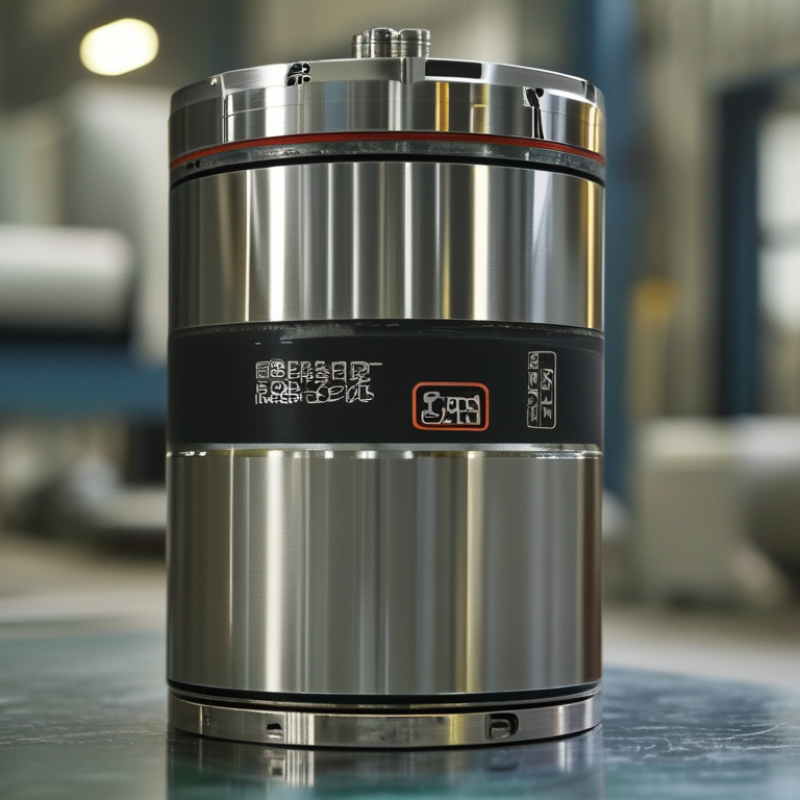
China Top 10 Robot Capacitor Manufacturers

China’s Robot Capacitor Market: 400–800 V DC-Link Applications and Demand

China’s robot capacitor demand is increasingly tied to 400–800 V DC-link systems. IFR’s World Robotics 2024 report recorded 276,288 industrial robot installations in China during 2023. China also reached 470 robots per 10,000 manufacturing employees. These figures do not measure capacitor sales directly. They indicate a large installed base for servo drives, robotic arms, and automated production lines.

In a 400–800 V DC-link, capacitors smooth switching pulses and absorb regenerative energy. Film capacitors are often preferred where low loss, high ripple-current capacity, and long operating life are essential.

The voltage boundary is not universal.

The National Bureau of Statistics reported about 429,000 industrial robots produced in China in 2023. That output supports continued demand for compact DC-link components, especially in high-duty-cycle motor drives.

Designers must check capacitance, ripple current, insulation, thermal rise, and discharge performance together. IEC 61071 provides a useful reference for power electronic capacitors. Thermal margins matter.

An inverter cabinet near a welding cell may face dust, vibration, and repeated temperature changes. A capacitor rated only by nominal voltage can therefore be a weak choice.

Public market reports often combine capacitors for robots, electric vehicles, and energy storage. This weakens direct market comparisons. Some estimates also treat 800 V systems as a single category, although their control strategies differ.

For a China top-ten manufacturer review, buyers should verify test conditions, lifetime curves, and actual 400–800 V DC-link experience rather than relying only on headline revenue.

Ranking the Top 10 Manufacturers by Quality, Capacity, Certifications, and Exports

China Top 10 Robot Capacitor Manufacturers

Ranking the Top 10 Manufacturers by Quality, Capacity, Certifications, and Exports

China’s robot capacitor sector is expanding with industrial automation. The International Federation of Robotics reported 276,288 industrial robot installations in China during 2023. That represented about 51% of global installations. This demand increases pressure on capacitor suppliers. A serious top-ten ranking should measure more than factory size.

Quality deserves the highest weight. Auditors should check capacitance tolerance, ESR stability, ripple-current performance, and thermal aging. ISO 9001 systems provide a useful baseline. IATF 16949 experience can show stronger process discipline, even outside automotive supply chains. Capacity should include monthly output, automated winding lines, testing stations, and emergency production space. Export performance also matters. Customs records, overseas service teams, and stable delivery histories offer practical evidence. Certifications must be verified, not copied from outdated brochures. Many rankings fail here. That weakness deserves attention.

Tips: Ask for batch-level test reports, not only certificates. Request samples from normal production. Check performance after high-temperature and humidity testing. The best suppliers usually explain failure rates clearly. They may also disclose weaknesses. That is a good sign, though not proof. Public trade data and factory audits should support the final ranking. A supplier with lower output may still lead in reliability, especially for compact servo drives and precision robot joints.

Core Products: Film, Aluminum Electrolytic, Ceramic, and Supercapacitors

China’s robot capacitor manufacturers serve a rapidly expanding automation sector. The International Federation of Robotics reported 541,302 industrial robot installations worldwide in 2023. China accounted for more than half of that annual demand. This scale raises expectations for reliable capacitors in servo drives, control cabinets, vision systems, and robotic joints.

Film capacitors support high-frequency switching and stable DC-link filtering. Aluminum electrolytic capacitors provide high capacitance in compact power supplies. Ceramic capacitors handle fast noise suppression near processors and sensors. Supercapacitors deliver short bursts during power interruptions or emergency braking. The U.S. Department of Energy identifies supercapacitors as useful for rapid charge and discharge applications. Different jobs require different endurance.

Heat matters greatly. A capacitor beside an inverter may face vibration, ripple current, and repeated thermal cycling. The IEC 61071 standard is widely used when evaluating power electronic capacitors. Industry reports from MarketsandMarkets also project continued growth in the global supercapacitor market through the decade, driven by energy recovery and backup systems. However, rankings can be imperfect. A supplier with strong volume may offer weaker customization. Buyers should review impedance, lifetime testing, humidity resistance, and traceability records. Laboratory claims are not field experience. That distinction deserves attention.

Technical Benchmarks: 105°C Ratings, 2,000-Hour Life, ESR, and Ripple Current

China Top 10 Robot Capacitor Manufacturers

China’s leading robot capacitor manufacturers should be judged by measurable endurance, not catalog size. The 2024 IFR World Robotics report recorded 541,302 industrial robot installations worldwide in 2023. This growth increases demand for stable capacitors in servo drives, controllers, and power supplies. In these systems, heat, vibration, and repeated acceleration can expose weak designs quickly.

A 105°C rating is a useful baseline. It is not a guarantee. Under IEC 60384-4 endurance testing, many aluminum electrolytic capacitors are evaluated for 2,000 hours at rated temperature and voltage. Buyers should also check capacitance loss, leakage current, and ESR after testing. Low ESR reduces heat generation, but the value must remain stable across frequency and temperature. A laboratory figure can look excellent.

Ripple current deserves practical attention. Excess ripple creates internal heating, especially inside crowded robot cabinets. Manufacturers should provide ripple values at defined frequencies, temperatures, and cooling conditions. Thermal design usually follows the relationship P = I² × ESR, so small ESR changes matter. The IEA’s World Energy Outlook 2024 highlights rising industrial electrification, making efficiency and component lifetime more important. I would still request production-test records, not only datasheets. Some endurance claims need closer review.

Buyer’s Guide: IEC 60384 Compliance, 10+ Year Design Life, and Safety Testing

China Top 10 Robot Capacitor Manufacturers

When comparing China’s top robot capacitor manufacturers, buyers should verify IEC 60384 compliance for the exact capacitor series. A general certificate is not enough. Ask for the applicable part standard, test report, rated voltage, temperature class, and production traceability. Robotic servo drives often face rapid acceleration, electrical noise, and repeated braking. Capacitors must tolerate these conditions without excessive heating or capacitance loss.

A claimed 10+ year design life should include test assumptions. Check operating temperature, ripple current, applied voltage, humidity, switching frequency, and daily working hours. A capacitor rated for 10 years at 70°C may perform differently inside a sealed robot arm at 85°C. Look for endurance testing, thermal cycling, vibration testing, insulation resistance checks, and dielectric withstand results. For EMI suppression parts, confirm the correct safety classification and failure behavior under the relevant IEC 60384 section.

Manufacturers with strong engineering practice usually provide batch records, material controls, aging data, and clear derating curves. They should explain how safety tests are repeated during production, not only during development. I would also request samples before approving a large order. A perfect datasheet is not enough. Real assembly conditions can reveal terminal stress, acoustic noise, or unexpected temperature rise. Some supplier claims may be technically valid, yet poorly matched to the robot’s duty cycle. That deserves careful review.

en_USEnglish

PCD Inserts

PCBN Inserts

Solid CBN Inserts

PCD Milling Cutter

PCD Drilling Tools

PCD Reamer

Diamond Special Tool

Diamond Dressers