Top 10 Applications of Motors You Should Know About?
In today's fast-paced world, the application of motors is vital across numerous industries. According to the International Electrotechnical Commission, the global motor market is projected to reach $155 billion by 2026. This growth reflects the increasing reliance on efficient motor technology in sectors such as automotive, manufacturing, and robotics.
One expert in the field, Dr. Emily Carter, emphasizes the significance of motor applications. She states, "The application of motors enhances productivity and drives innovation in modern technologies." This assertion highlights the role of motors in optimizing operational efficiency.
However, the diverse range of motor applications also brings complexity. Different industries require specific motor types to meet unique demands. This inconsistency can lead to challenges in selection and implementation. Understanding these applications is crucial for individuals and businesses aiming to harness motor technology effectively.
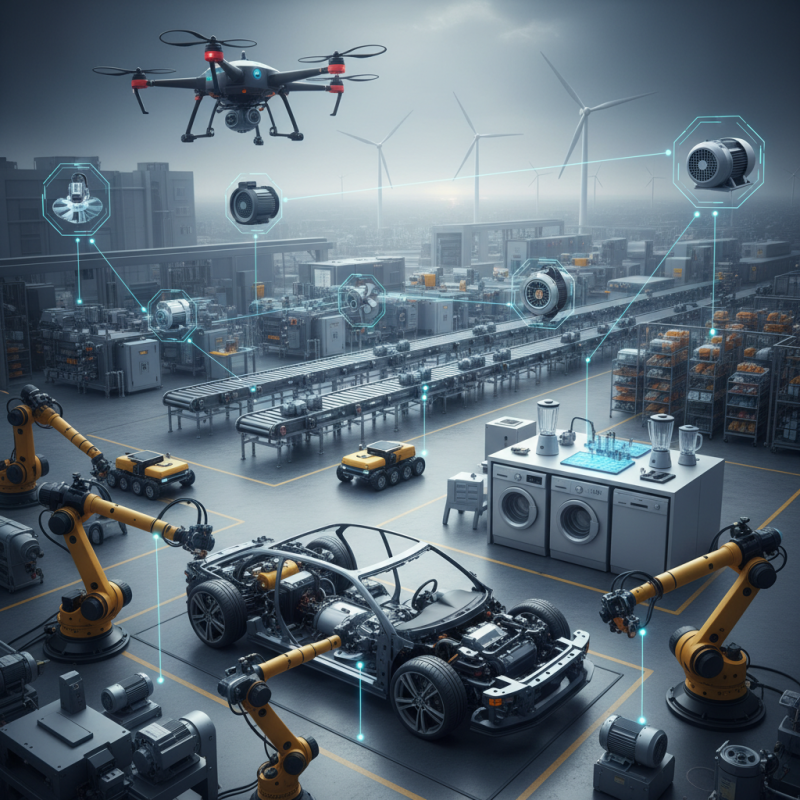
Applications of Motors in Industrial Automation and Robotics
In the realm of industrial automation and robotics, motors play a crucial role. They convert electrical energy into mechanical energy, driving machines and robots that automate processes. Motors are the heartbeat of factories, ensuring efficiency and precision. Applications include conveyor belts that transport materials smoothly, and robotic arms that assemble products with accuracy.
One compelling example is pneumatic motors used in robotic grippers. These motors allow for adaptive movement, gripping items of various shapes and sizes. Another usage is in servo motors, where precise control of position and speed is essential. These motors adjust to feedback systems, allowing robots to perform intricate tasks. Yet, the complexity of motor integration can lead to challenges. Misalignment in settings can affect performance and efficiency.
Furthermore, various motors have different energy consumption levels. This discrepancy can pose sustainability issues. Considering energy efficiency during selection can help mitigate impact. As the industry evolves, only through continuous learning and adjustment can we truly harness the capabilities of motors in automation.
Top 10 Applications of Motors You Should Know About
| Application | Industry | Motor Type | Key Features |
| Conveyor Systems | Manufacturing | AC Motors | High torque, continuous operation |
| Robotic Arms | Automation | Servo Motors | Precise control, high responsiveness |
| Electric Vehicles | Automotive | DC Motors | Efficient, high power-to-weight ratio |
| Pumps | Water Management | Submersible Motors | Durability, efficiency in fluid handling |
| Fans and Blowers | HVAC | EC Motors | Energy-efficient, variable speed control |
| Industrial Mixers | Food and Beverage | Gear Motors | High torque at low speed, reliable |
| CNC Machines | Machining | Stepper Motors | High precision, open-loop control |
| Home Appliances | Consumer Goods | Universal Motors | Versatile, high speed |
| Wind Turbines | Renewable Energy | Synchronous Motors | High efficiency, variable load |
| Medical Devices | Healthcare | Brushless DC Motors | Quiet operation, longevity |
Electric Motors in Electric Vehicles: Trends and Innovations
Electric vehicles (EVs) are transforming the automotive industry. At the core of this revolution are electric motors, which play a crucial role in driving performance. These motors convert electrical energy into mechanical energy, propelling vehicles with impressive efficiency. Recent innovations focus on improving energy density and reducing weight. This allows for longer ranges and better performance.
As EV technology evolves, trends have emerged that shape the future of electric motors. For instance, advancements in materials are enhancing magnet and coil efficiency. Moreover, the integration of intelligent control systems optimizes motor performance. This reflects a growing emphasis on sustainability and reducing carbon footprints. There's ongoing research into solid-state batteries, which could further enhance performance.
However, challenges remain. The production of high-performance materials can be resource-intensive. Furthermore, charging infrastructure needs expansion to support widespread adoption of EVs. Consumer acceptance is also critical. Many still have concerns about range anxiety and charging times. Addressing these aspects is essential for the continued growth of electric vehicles.
Role of Motors in HVAC Systems for Energy Efficiency
In HVAC systems, motors play a crucial role in maintaining energy efficiency. They power fans, pumps, and compressors, ensuring proper air circulation and temperature control. When motors operate effectively, the entire system reduces energy consumption significantly. This is essential for both cost savings and environmental sustainability.
However, not all motors are created equal. Many older motors can waste energy due to inefficiencies. Regular maintenance and upgrades can improve performance, but they require time and investment. In some cases, facility managers may overlook signs of motor inefficiency, leading to higher operational costs. Training staff to recognize these issues can help mitigate this risk.
Incorporating variable speed drives can also enhance motor efficiency. These devices adjust motor speed according to demand, optimizing energy use. Yet, their installation might be seen as complex. Resistance to change can delay progress in improving HVAC systems. Embracing new technologies is essential for achieving long-term energy efficiency. Monitoring performance continuously is vital for realizing these benefits fully.
The Impact of Motors in Renewable Energy Systems
Motors play a pivotal role in renewable energy systems, especially in wind and solar applications. In wind turbines, motors convert kinetic energy into electrical power efficiently. This process is crucial as it determines the overall performance of these systems. Each rotation of the turbine blades requires precise control of motor functions to ensure optimal energy generation.
In solar energy systems, motors are essential for tracking sun paths. This tracking increases energy capture by up to 25%. However, the reliability of motors can sometimes be an issue. Environmental factors and wear and tear can lead to motor failures. Such challenges highlight the need for continuous monitoring and maintenance, which is often overlooked. Utilizing advanced sensor technologies can mitigate these risks. Still, the initial investment can be daunting for many stakeholders.
The impact of motors extends beyond mere functionality. They influence the efficiency and longevity of renewable systems. The balance of performance and reliability is delicate. Innovations in motor technology promise to enhance these systems, but many questions remain. How do we ensure consistency while scaling production? Addressing these concerns is vital for the future of renewable energy.
Motors in Household Appliances: Enhancing Consumer Convenience
Motors play a crucial role in enhancing the functionality of household appliances, making everyday tasks simpler. According to the International Electrotechnical Commission (IEC), around 70% of global electricity consumption in industries is attributed to electric motors. This high statistic underscores their efficiency in powering appliances such as washing machines, blenders, and vacuum cleaners.
In terms of convenience, modern appliances utilize brushless DC motors for quieter and more energy-efficient operation. These motors often result in reduced energy consumption, contributing to lower electricity bills. The U.S. Department of Energy reports that energy-efficient appliances can save a household around $500 annually. However, not all appliances prioritize this, and consumers should be vigilant about their energy ratings when making purchases.
Tips: Always check the energy label before buying. Higher energy class ratings can lead to greater long-term savings. Consider maintenance as well; a well-maintained motor performs better and lasts longer. Sometimes, overlooking regular care can lead to higher costs in the long run. When choosing appliances, weigh convenience against energy efficiency to find the right balance for your home.
 Skip to content


 English
 Russian
  German
  Spanish
  French
  Portuguese