What Are the Top Carbide Tools for CNC Machining?
CNC machining rewards the right carbide tool, not merely the hardest one. A small end mill can leave a clean slot in aluminum, while the same geometry may chatter in stainless steel. Material, coating, flute count, tool shape, and cutting conditions all matter. So does the machine’s rigidity. There is no universal winner.
Professor Tony Schmitz, a machining-dynamics researcher, offers a useful perspective. In paraphrase: “A carbide cutter performs only as well as the cutting conditions allow.” That point is easy to overlook. Even a premium tool can wear quickly when run with poor chip evacuation or unstable workholding. The reverse is also true: a well-matched, modest cutter may deliver reliable results.
This guide compares the top Carbide Tools used in CNC machining, including solid carbide end mills, drills, inserts, and specialized cutters. It explains where each type excels, what trade-offs to expect, and which details deserve a closer look before buying. Expect practical distinctions, not a single product crowned best. Tool catalogs can make every option sound essential; shop results are less tidy. The right choice depends on the workpiece, operation, tolerance, and production goals. One recommendation may still need testing on your machine.
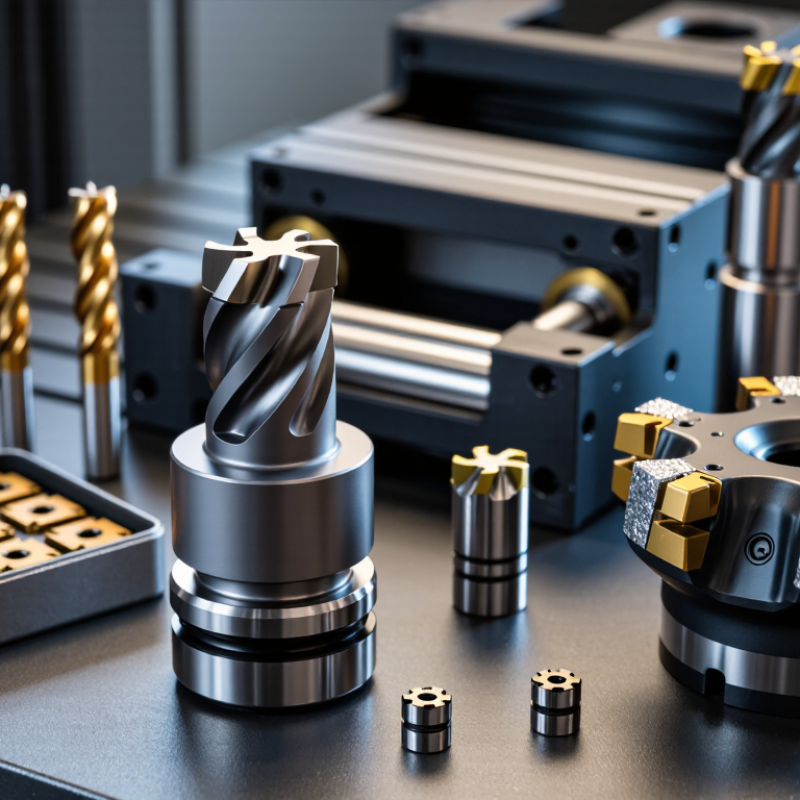
Carbide Tools in CNC Machining: Materials and Key Properties
Carbide cutting tools are usually made from tungsten carbide grains held together by a metallic binder, often cobalt. The carbide provides hardness and wear resistance; the binder helps the tool withstand cutting forces. The balance matters. More binder can improve toughness, but may reduce hardness. Finer grains can support a sharp cutting edge and resist wear, though they do not make every tool suitable for interrupted cuts. Material choice depends on the workpiece, cutting speed, and setup stiffness.
Some grades include other carbides, such as titanium carbide or tantalum carbide, to improve resistance to heat, crater wear, or abrasion. Coatings may add another layer of wear protection, but they cannot fix a weak tool setup. Hot hardness helps carbide retain its cutting edge as temperatures rise. Still, the edge can chip if a cut repeatedly starts and stops or the workpiece contains hard spots. Watch the chips and listen for changes in cutting sound. They offer clues, not a diagnosis. In practice, a grade that lasts longer in a steady cut may fail sooner under vibration, so test conditions should match the actual operation.
How Carbide Tools Are Classified by Cutting Operation
What Are the Top Carbide Tools for CNC Machining?
How Carbide Tools Are Classified by Cutting Operation
Carbide tools are best classified by the cut they make, not just by their material. For turning, replaceable inserts shear material as the workpiece rotates. Their edge shape and nose radius affect chip formation, cutting forces, and surface finish. Milling cutters rotate against a moving workpiece. End mills cut slots, pockets, and shoulders; face mills cover broader surfaces. Drills create holes, while carbide reamers refine existing holes. Different jobs. Different edges.
Tips: Match the tool to the operation before choosing a carbide grade. Check the workpiece material, machine rigidity, coolant delivery, and chip evacuation. A long-reach end mill may chatter even when its grade suits the metal. Begin with recommended cutting data, then adjust carefully while checking chips, sound, and tool wear.
Categories can overlap. A grooving insert still performs a turning operation, while a thread mill creates threads through a milling path. The tool label alone is not enough. Short, rigid setups often improve results, but actual performance depends on the holder, runout, and workholding. Cutting charts can seem precise; real machines introduce variation.
Top Carbide Tools for CNC Milling, Turning, and Drilling
For CNC milling, solid-carbide end mills suit small features, hard materials, and tight tool paths. Choose the flute count and helix angle for the material and chip space: aluminum needs room for chips, while hardened steel often benefits from a tougher edge. For larger pockets, indexable carbide cutters can reduce tool-change time. Watch the sound and finish. Chatter may point to excessive reach, weak workholding, or an overly aggressive cut—not just a poor tool.
In turning, carbide inserts are practical because operators can replace or index the cutting edge without changing the whole tool. Match insert geometry, grade, and coating to the workpiece and whether the cut is continuous or interrupted. For drilling, solid-carbide drills offer rigidity and accuracy in suitable setups; through-coolant designs help clear chips from deeper holes. Small details matter. A long drill in a flexible holder can still wander.
Tool choice also sits within a wider material supply picture. The U.S. Geological Survey’s Mineral Commodity Summaries 2025 estimates 2024 world tungsten mine production at 81,000 metric tons, including 67,000 from China. Tungsten is a key raw material in cemented carbide, so supply conditions matter, though they do not determine a tool’s performance. In practice, test cutting speed and feed on the actual machine. The “best” insert on paper may chatter at the spindle’s weakest point.
Typical Carbide Cutting-Speed Starting Ranges
Approximate starting ranges for machining austenitic stainless steel, such as 304, with carbide tools. Actual speeds depend on the tool grade and coating, workpiece condition, machine rigidity, and cutting setup; follow the toolmaker’s recommendations.
How to Match Carbide Tools to Workpiece Materials
Matching carbide tools to the workpiece starts with hardness, abrasiveness, and heat behavior, not just the material name. Check the tool’s geometry, carbide grade, and coating together. A sharp edge can reduce cutting forces, while a tougher grade may better withstand interrupted cuts. Small differences matter.
For carbon and alloy steels, a tough carbide grade and a wear-resistant coating can help manage heat and flank wear. Stainless steel tends to work-harden, so use a sharp cutting edge and avoid rubbing with a dull tool. Keep the feed steady.
Cast iron is abrasive and produces gritty chips; a wear-resistant grade is often useful, with dust extraction suited to the operation. Dry cutting may work, but not in every setup.
Aluminum usually benefits from a polished, sharp flute and generous chip space, which help limit built-up material on the edge. Composite workpieces call for abrasion-resistant tooling and careful attention to dust control. Tool choice still depends on machine rigidity, tool overhang, and coolant delivery. A test cut can reveal chatter or chip packing before a long run. I would not treat any material chart as a fixed answer; the first result may need adjustment.
How to Select Carbide Tools for CNC Machining Needs
Selecting carbide tools for CNC machining starts with the workpiece, not the tool catalogue. For stainless steel, prioritize a tough grade and a geometry that limits built-up edge. Cast iron often suits sharper, wear-resistant edges. Aluminum needs polished flutes and enough chip space to prevent clogging. USGS Mineral Commodity Summaries 2025 estimates 2024 global tungsten mine production at about 81,000 metric tons, including roughly 67,000 from China. This supply context matters because tungsten carbide depends on tungsten, though it cannot tell you which tool will perform best.
Match the tool to the operation. A short, thick end mill is usually more stable in a deep pocket than a long-reach cutter. Check flute count, helix angle, coating, and recommended cutting data against the material and machine rigidity. Then inspect spindle runout and chip evacuation; tiny errors can spoil a promising setup. That matters. In practice, a controlled test cut is more useful than copying a feed rate without context. Record tool life, surface finish, and chip shape, then adjust one variable at a time. I still find tool selection easy to overthink. The perfect grade on paper may disappoint when coolant delivery or workholding is poor.
 Skip to content







 English
 Russian
 German
 Spanish
 French
 Portuguese