China Top 90 Degree Long Radius Elbow Suppliers?
Selecting a China-based supplier for a 90° Long Radius Elbow begins with service conditions, not a catalogue photograph. These fittings redirect flow, and their longer radius can help avoid the sharper change associated with short-radius designs. Details matter. Buyers should confirm nominal size, wall thickness, material grade, end preparation, and inspection requirements before comparing quotations. ASME B16.9, Factory-Made Wrought Buttwelding Fittings, provides dimensional and tolerance requirements useful for evaluating applicable products. Yet citing a standard does not prove that every supplied lot conforms. Request traceable material certificates, clear product markings, and inspection records linked to the actual order.
China’s manufacturing scale offers context, but it is not a quality guarantee. The World Steel Association’s World Steel in Figures 2024 reports that China produced 1,019.1 million tonnes of crude steel in 2023. This figure reflects the scale of the country’s steel sector; it does not measure elbow quality, alloy chemistry, or delivery performance. Supplier assessment should therefore examine production capabilities, forming controls, material traceability, testing specified for the project, packaging, and procedures for handling nonconformities. Ask for recent records relevant to the exact product. Compare suppliers on the same technical basis. One limitation remains: certificates and polished factory images are snapshots, not independent proof of consistent performance. A more reliable shortlist comes from cross-checking documents, sample markings, and inspection plans against the purchase specification.
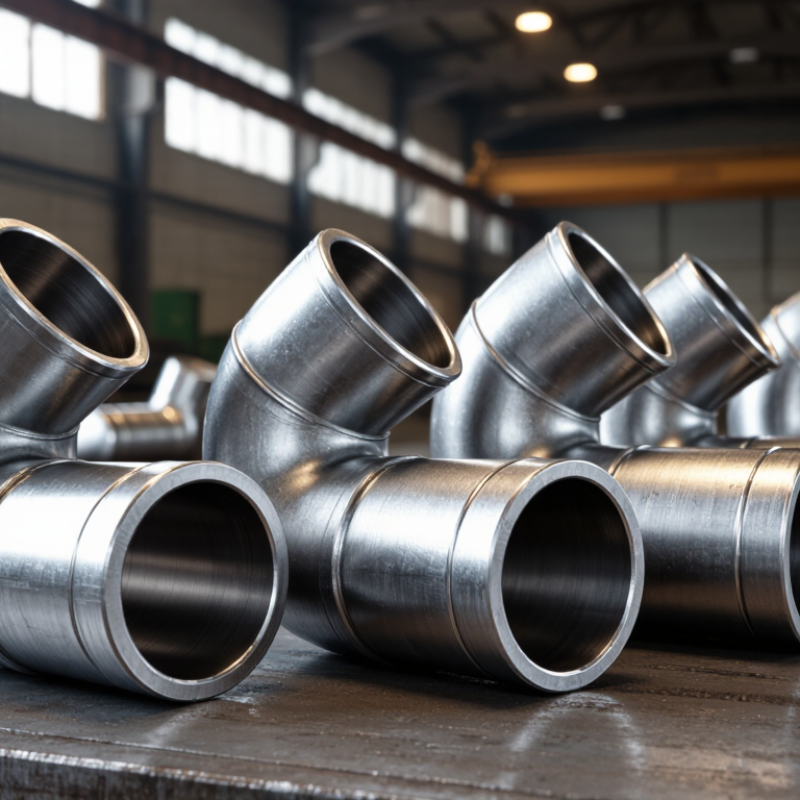
What Is a 90-Degree Long Radius Elbow?
China Top 90 Degree Long Radius Elbow Suppliers?
What Is a 90-Degree Long Radius Elbow?
A 90-degree long radius elbow changes a pipe’s direction by a right angle. Its curved centerline radius is commonly about 1.5 times the pipe’s nominal diameter. Exact dimensions can vary by standard and product specification, so confirm the drawing before ordering. The gradual curve helps reduce flow disturbance compared with a tighter elbow. That matters in systems carrying water, steam, or process fluids. It does not eliminate pressure loss.
The longer curve also needs more installation space. Check the center-to-end dimensions, wall thickness, material, and connection type against the piping design. An elbow that looks correct on a product page may not match the site measurements. A detail is easy to miss: nominal pipe size alone does not confirm the fitting’s actual outside diameter or schedule. Verify compatibility with the connected pipe and operating conditions.
Tips: Ask for a dimensional drawing and material documentation. Compare the elbow’s radius and end dimensions with the project specification. Measure twice. It sounds obvious, but crowded pipe racks make small clearance errors surprisingly easy.
How Are Long Radius Elbows Designed and Manufactured?
A 90-degree long radius elbow is generally designed with a centerline radius of about 1.5 times the pipe’s nominal diameter. This gradual curve helps reduce flow disturbance and pressure loss compared with a tighter bend, though it does not eliminate either. Designers check pipe size, wall thickness, operating pressure, temperature, and fluid conditions before selecting dimensions. Small details matter. Corrosion allowance and connection type can change the specification.
Manufacturing often starts with a suitable pipe section, which is heated and formed over a die or mandrel to create the bend. The process must control the elbow’s radius, angle, ovality, and wall thickness. Forming can thin the outer wall, so measurements at several points help reveal uneven areas. A drawing may look precise, but the finished part still needs inspection. Depending on the order, checks can include dimensional measurement, material verification, weld examination, and pressure testing. In practice, the textbook radius is only a starting point; actual service conditions and project requirements should guide final selection.
Which Materials and Standards Apply to These Pipe Fittings?
For a 90-degree long-radius elbow, material selection starts with the fluid, temperature, pressure, and corrosion risks. Carbon-steel fittings commonly use ASTM A234 WPB for many standard-temperature services. Low-temperature lines may require ASTM A420 WPL6. Stainless-steel options such as ASTM A403 WP304 or WP316 suit many corrosive environments, but neither is suitable for every chemical. Check the actual process conditions.
Dimensional requirements commonly reference ASME B16.9 for factory-made wrought butt-welding fittings. It specifies dimensions and tolerances; it does not choose the alloy for a project. The piping code and purchase specification must also align. Confirm that the elbow’s schedule, outside diameter, wall thickness, and bevel match the adjoining pipe. Small mismatch, costly rework.
When reviewing a supplier’s documents, request material test reports with heat numbers traceable to each fitting, along with dimensional inspection records. Check the marking, radius, wall thickness, and end preparation against the approved drawing. Sour, cyclic, or unusually cold service may require additional project-specific tests. A certificate helps, but the fitting still needs inspection. That detail is easy to miss. Verify the applicable standard edition and supplemental requirements before release.
Which Industries Rely on Long Radius Elbows?
Oil and gas facilities use long radius elbows in gathering lines, refinery pipe racks, and gas transmission systems. Their gradual curve can reduce flow resistance compared with a tighter bend. That matters when pumps or compressors move large volumes through long pipe runs. Operators still need to match the elbow’s material and wall thickness to the fluid, pressure, and temperature.
Water treatment plants and municipal networks rely on them to guide water around tanks, pumps, and structural supports. Power stations use them in cooling-water and steam systems, where stable flow and dependable joints matter. Chemical plants also use long radius elbows, but corrosion resistance must be considered alongside geometry. Small details matter. Food-processing lines may favor smooth internal surfaces that are easier to clean, though the required finish depends on the process.
When selecting a supplier in China, engineers should check dimensions, material documentation, manufacturing tolerances, and inspection records. A polished product description is not enough. Ask whether the elbow’s radius and schedule suit the actual piping layout, especially where space is limited. Long radius is not always the best choice; I have seen space constraints make a shorter fitting more practical. The right decision comes from operating data, not habit.
90° Long-Radius Elbows: Standard Dimensions and Industrial Applications
Long-radius elbows are commonly used in oil and gas, chemical and petrochemical processing, power generation, and water and wastewater systems. Their gradual change in direction helps reduce flow resistance compared with tighter-radius bends.
The chart shows representative ASME B16.9 center-to-end dimensions for 90° Long-Radius Elbows. Dimensions are in millimeters; verify the applicable standard and product specification for a particular piping project.
How to Evaluate 90-Degree Long Radius Elbow Suppliers in China?
How to Evaluate 90-Degree Long Radius Elbow Suppliers in China?
Start with the drawing and the applicable standard, not a low quotation. Under ASME B16.9, a standard long-radius elbow’s center-to-end dimension is generally 1.5 times its nominal pipe size; confirm the required dimensions and tolerances against the specified edition. Ask for material test certificates, heat-number traceability, and inspection records linked to the actual production batch. For a 12-inch elbow, check the measured center-to-end length, wall thickness, ovality, and bevel before acceptance. Small details matter.
Production scale is useful context, but it does not prove product quality. World Steel Association’s World Steel in Figures 2024 reports China produced about 1,019 million tonnes of crude steel in 2023. That figure describes national steel output, not elbow capacity or quality.
Ask suppliers to identify material origin and demonstrate how they control forming, heat treatment, and dimensional inspection. Review sample reports, calibration records, and nonconformance handling. A polished audit sheet can still miss a weak inspection process.
I would also compare a trial order with the approved drawing; it takes extra time, and can reveal gaps that a video call will not.
 Skip to content



 English
 Russian
 German
 Spanish
 French
 Portuguese