China Top Air Separation Unit Gearbox Suppliers?
China has a broad industrial gearbox market, but finding a dependable Air Separation Unit Gearbox supplier takes more than comparing prices. Air separation plants run continuously, and their compressors, expanders, and auxiliary drives depend on stable transmission performance. A gearbox that looks suitable on paper may still fall short under actual speed, torque, temperature, or vibration conditions. Details matter.
This guide introduces key supplier-selection factors for buyers reviewing manufacturers in China. It explains how to assess design capability, materials, machining quality, lubrication systems, sealing, testing, and after-sales support. Ask for technical drawings, rated operating data, inspection records, and references from comparable plants. Where possible, confirm how the supplier handles alignment, startup, maintenance intervals, and replacement parts. These are practical questions, not paperwork for its own sake.
There is no single supplier that fits every project. Requirements differ between process layouts, operating loads, and local service arrangements, while published rankings can change over time. A shortlist is only a starting point. Buyers should verify claims directly and compare documented performance against their own specifications. Some details may remain unclear until a technical review; that is a reason to ask more, not to assume. The sections ahead provide a structured way to compare China-based suppliers and identify the questions worth resolving before purchase. A careful review can reduce avoidable risk, though it cannot replace engineering validation for a specific installation. Each supplier deserves the same evidence-based check. That takes time. It is time well spent.
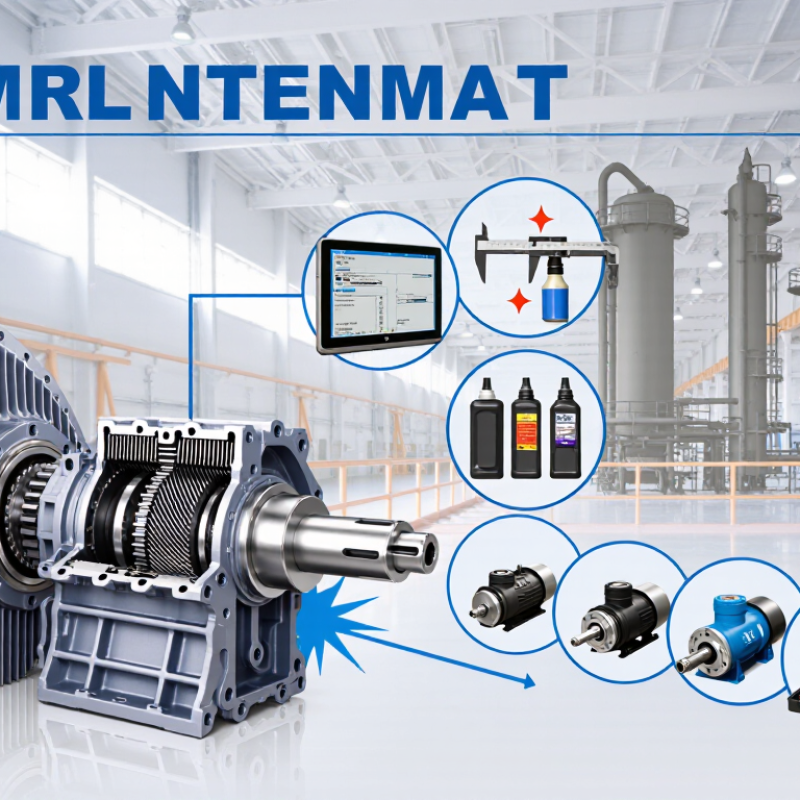
Air Separation Unit Gearboxes: Purpose and Operating Principles
In an air separation unit, the gearbox transfers power from a motor to a compressor at the speed the process requires. Many centrifugal compressors need a higher shaft speed than a standard motor provides. The gearbox’s gear ratio raises speed while reducing torque. Gear teeth, shafts, and bearings carry the load continuously. Small losses matter.
The International Energy Agency’s Energy Efficiency 2023 report estimates that industry accounts for about 37% of global final energy use. That figure is not specific to air separation, but it shows why efficient power transmission deserves attention. In operation, a stable oil film separates moving bearing surfaces and limits heat and wear. Oil temperature, vibration, and unusual tooth noise can reveal trouble early. A rising temperature is not proof of failure; it is a reason to check load, lubrication, and alignment.
There is no single ideal ratio for every unit. Compressor design, motor speed, and required gas flow all affect selection. During commissioning, operators should record baseline vibration and oil temperatures under known conditions. Later readings become more useful when compared against that baseline. I would not treat gearbox efficiency figures alone as a reliability guarantee. Fouled filters or a small alignment error can still shorten service life.
Air Separation Unit Gearboxes: Purpose and Operating Principles
A gearbox matches motor speed to the speed required by rotating equipment such as a compressor. This calculated example shows how an illustrative speed-increasing ratio affects output speed and ideal torque ratio. Actual equipment specifications vary; real losses are not included.
Key Performance Requirements for ASU Gearboxes
An ASU gearbox must deliver steady torque through long, often uninterrupted operating cycles. Its rating should match compressor power, speed range, start-up conditions, and expected load changes. The IEA’s Energy Efficiency 2023 report estimates that industry accounts for roughly 37% of global final energy use, making avoidable mechanical losses worth attention. For an ASU, gear mesh accuracy, shaft alignment, and bearing condition all affect vibration and heat. ISO 20816-9 provides guidance for evaluating gear-unit vibration, but project and equipment-maker limits still matter.
Specify the gearbox’s duty cycle, lubrication method, allowable vibration, and inspection access before comparing suppliers. Ask for test records at relevant speed and load, plus documented gear-contact patterns and bearing temperatures. Oil cleanliness is easy to overlook. A small leak or blocked filter can gradually raise operating temperature. Cold starts also deserve review, since lubricant viscosity changes with ambient conditions. These details are not glamorous, and they are sometimes missed.
Tips: Record vibration and oil temperature at commissioning, then trend them under comparable loads. A single reading is less useful. Confirm alarm limits with the equipment maker, and keep sampling points accessible for routine oil analysis.
China’s ASU Gearbox Supplier Landscape
China’s ASU gearbox supplier landscape is broad, but it is not a simple list of interchangeable factories. Suppliers range from general industrial transmission makers to workshops experienced with large, continuously operated air-separation plants. For buyers, the difference appears in engineering records, not polished catalogues. A gearbox may run for years beside compressors, yet a small alignment error can raise vibration and bearing temperatures. Details matter.
A capable supplier should explain the design basis: input power, reduction ratio, shaft arrangement, starting torque, lubrication method, and duty cycle. Ask how gear accuracy, tooth contact, and casing stiffness are checked. Request material certificates, heat-treatment data, inspection results, and a clear factory test procedure. Load testing may not reproduce every site condition. That limitation should be stated plainly. Field references can help, but confirm comparable speed, power, and operating hours rather than relying on broad claims.
Local manufacturing can offer shorter communication loops and easier access to machining or service teams. However, delivery speed alone says little about long-term reliability. Discuss spare-part availability, inspection intervals, vibration limits, and response time before ordering. A site visit can reveal practical habits: clean oil lines, protected machined faces, and traceable parts. Some suppliers may have strong production skills but thinner application engineering. I would not dismiss them automatically, though that gap deserves a real conversation. Public information is uneven, so verify each claim directly.
How to Evaluate and Compare Chinese Gearbox Suppliers
How to Evaluate and Compare Chinese Gearbox Suppliers
For an air separation unit, compare suppliers against the actual compressor duty, not catalogue power alone. Confirm input speed, torque, gear ratio, start-up frequency, ambient temperature, and expected service life. A mismatch can cause vibration, overheating, or premature bearing wear. Small details matter. Ask for gear-rating calculations, material certificates, heat-treatment records, and inspection procedures. ISO 6336 calculations and vibration checks aligned with ISO 20816-9 provide useful technical reference points.
Review the supplier’s evidence, not just its claims. Request test records for noise, temperature rise, vibration, and oil-system performance, plus documented quality controls and traceable parts. Check whether the proposed design supports your maintenance interval and site conditions. The International Energy Agency’s Global Hydrogen Review 2024 reports that announced low-emissions hydrogen projects could reach 49 million tonnes per year by 2030, while projects at final investment decision or construction represent about 3.4 million tonnes. That gap makes delivery schedules and production capacity worth checking carefully.
Compare warranty terms, spare-parts lead times, commissioning support, and response procedures in writing. Ask for references from comparable continuous-duty installations, then verify operating hours and service history directly. A polished factory visit helps, but it cannot replace test data. I would still ask one uncomfortable question: what failed in the last five years, and what changed afterward? Some suppliers may not answer fully. Note that, and weigh it against measurable records.
 Skip to content



 English
 Russian
 German
 Spanish
 French
 Portuguese