...

China Top Battery Cooler Manufacturers for Global Buyers

Electric vehicle growth is raising the stakes for battery temperature control. The International Energy Agency’s Global EV Outlook 2024 reports nearly 14 million electric car sales in 2023, while EV battery demand reached about 750 GWh. These figures help explain why global buyers are examining the Battery Cooler as a core thermal-management component, not just another line on a parts list.

A well-matched cooling system can help manage heat during charging, acceleration, and repeated operation. But performance depends on the full design: cooling plates or channels, coolant flow, sealing, materials, and integration with the battery pack. Buyers should compare documented test conditions, temperature uniformity, pressure-drop data, and durability evidence. Ask how samples were tested. Ask what happens when the operating conditions change. A polished catalogue is not proof of long-term reliability.

This guide introduces leading China-based battery cooler manufacturers for international buyers. It considers product range, engineering support, manufacturing capability, and the clarity of technical documentation. Supplier claims should be checked against verifiable records and application requirements; factory scale alone cannot guarantee a suitable product. Small details matter. A connector position or unclear tolerance can complicate installation. The IEA data describes market demand, not the quality of any individual supplier, so buyers still need careful due diligence. No shortlist is perfect. Use it as a starting point, then request drawings, test reports, and samples before making a sourcing decision.
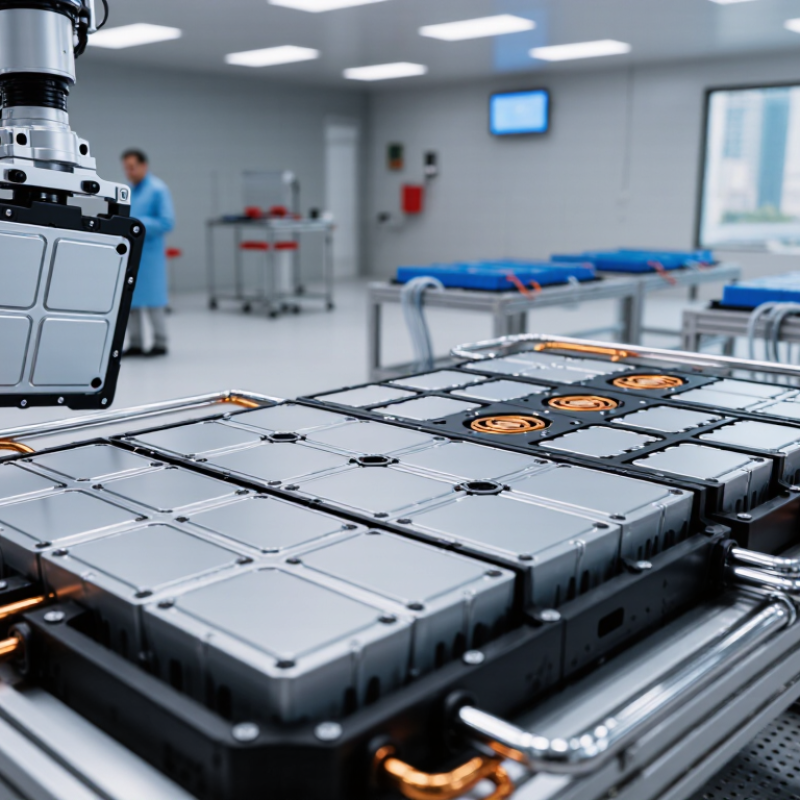
China Top Battery Cooler Manufacturers for Global Buyers

Battery Coolers: Purpose, Types, and Key Technologies

Battery coolers control heat inside battery packs during charging, discharging, and demanding operating conditions. Keeping cell temperatures within a suitable range can support performance and slow uneven aging. The exact range depends on cell chemistry and pack design. Heat matters.

Air cooling uses fans and channels to move heat across cells. It is relatively simple, but airflow can vary between pack sections. Liquid cooling sends coolant through plates or tubes beside the cells. It can remove heat more evenly, though pumps, seals, and service access add complexity. Immersion systems place cells in a dielectric fluid, but fluid compatibility and maintenance need careful evaluation.

Key technologies include temperature sensors, coolant-flow control, thermal interface materials, and battery management software. Sensors reveal hot spots; control systems adjust fan speed or pump flow as conditions change. In real installations, a small gap between a cell and cooling plate can reduce heat transfer. Design drawings may not reveal that problem. A cooler is not automatically better: excess cooling can waste energy, while poor flow balancing leaves some cells warmer than others. Regular checks help confirm that the installed system behaves as intended.


China’s Battery Cooler Manufacturing Landscape

China’s battery cooler manufacturing landscape is shaped by dense industrial supply chains and varied production capabilities. In several manufacturing regions, suppliers can source aluminum parts, pumps, valves, sensors, and control components within relatively short distances. This can support flexible production, from cooling plates for battery packs to assembled liquid-cooling systems.

Details matter. A neatly welded manifold is useful, but only if its channels maintain stable flow under operating pressure.

Factories differ in engineering depth, testing routines, and experience with overseas projects. Buyers should ask how suppliers check leakage, temperature uniformity, corrosion resistance, and performance across changing loads. Requesting test conditions and sample data helps make comparisons more meaningful. A low quoted price alone tells little. It may exclude controls, installation guidance, or service support.

Yet documents cannot replace a practical sample review. Inspect joints, fittings, and sensor placement, then clarify how design changes are handled. China’s manufacturing base offers choice, but that choice takes careful verification. Even capable suppliers may need time to adapt a standard design to a particular battery layout.

That part is easy to underestimate.

Leading Chinese Manufacturers and Their Product Strengths

Chinese battery cooler manufacturers serve varied pack formats, from compact storage modules to commercial vehicle systems. Their strengths often lie in configurable liquid-cooling plates, circulation units, and integrated thermal-management assemblies. Some factories support custom port layouts and mounting points, helping match a cooler to an existing battery enclosure. Practical details matter: hose diameter, coolant flow, pressure drop, and service access can shape field performance more than a polished brochure.

Capable suppliers can provide temperature-uniformity data, leak-test records, and operating limits for a proposed design. Ask how results were measured, including ambient temperature, battery load, and coolant conditions. Not every catalog figure transfers directly. Some manufacturers focus on compact aluminum cold plates, while others offer complete systems with pumps, Heat Exchangers, and controls. This range lets buyers compare a single component with a ready-to-integrate package. Yet customization may extend lead times, and technical documentation may need clarification. Request drawings, sample inspection criteria, and a defined response process before approving production. Small gaps matter. Check weld quality, channel cleanliness, and thermal results across multiple samples.

China Battery Cooler Manufacturers: Thermal Conductivity of Common Cooling Media

A comparison of typical thermal conductivity values for media used in battery thermal-management designs. Higher conductivity can support heat transfer, while actual system performance also depends on flow, design, and operating conditions.

Approximate reference values at 25°C: air, 0.026 W/(m·K); a 50/50 water–ethylene glycol mixture, 0.40 W/(m·K); water, 0.60 W/(m·K). Values vary with composition and conditions. This chart compares cooling media, not manufacturers or products.

How Global Buyers Compare Suppliers and Certifications

Global buyers comparing China-based battery cooler suppliers should look beyond price and cooling capacity. The IEA’s Global EV Outlook 2024 reports that electric-car battery demand reached about 750 GWh in 2023, roughly 40% above 2022. That scale makes stable thermal performance important. Request temperature-uniformity maps, flow-rate data, and test results at stated ambient temperatures. A brochure alone is thin evidence.

Check certificates by scope, model, and issuing body. ISO 9001 can indicate a quality-management system, but it does not certify cooler performance. IEC 62619 applies to certain industrial lithium batteries, while UN 38.3 concerns transport testing of cells and batteries; neither should be presented as blanket approval of a cooling unit. Ask which electrical-safety and EMC requirements apply in your destination market. I would not treat a polished certificate scan as proof. It is easy to miss the model number.

Tips: Ask for raw test logs, component traceability, and a written warranty response time. Compare the same operating conditions across suppliers. Small checks matter. Also request a sample inspection, since neatly finished housings can still conceal inconsistent seals or uneven coolant flow.

Sourcing, Quality Control, and After-Sales Considerations

For global buyers, sourcing battery coolers starts with operating conditions, not catalog claims. Share cell format, heat load, coolant type, ambient range, vibration exposure, and installation space. Ask suppliers for drawings, flow curves, pressure-drop data, and material specifications. A sample that fits a test bench may clash with a vehicle bracket. Check production capacity and lot traceability, not just stated monthly output.

Quality control should be visible at several stages. Review incoming-material checks, leak-test pressure, joining records, and final flow results. Request clear acceptance limits and sample inspection reports. During pilot builds, record inlet and outlet temperatures at fixed flow rates. Small differences matter. Test repeatability across units and after thermal cycling; one pass sheet may hide variation. Ask how measuring instruments are calibrated. Neat records are reassuring, but they do not always prove a result can be repeated.

Tips: Agree on a written warranty scope, response times, spare-part availability, and escalation contacts before ordering. Keep serial numbers and test records for each batch. Ask how a supplier handles a cooler that leaks after installation. A fast answer helps, but practical repair guidance matters more. Be cautious when after-sales promises sound vague; clarify them in writing.

Article Source:

en_USEnglish

PCD Inserts

PCBN Inserts

Solid CBN Inserts

PCD Milling Cutter

PCD Drilling Tools

PCD Reamer

Diamond Special Tool

Diamond Dressers