SUNDI TOOLS
- Copyright © Wuxi Sundi Precision Tools Co.,LTD All rights reserved.
- Site Map
Choosing a cargo strap supplier in China requires more than comparing prices. Buyers should examine webbing strength, stitching quality, hardware finish, production consistency, and communication. A strap may look solid on a sample table, yet perform differently after repeated handling. Details matter.
As an illustrative industry perspective, cargo-securing specialist Alex Chen puts the principle this way: “A dependable strap is proven by its construction, not its appearance.” This is an original summary, not a sourced quotation. It reflects a practical point: supplier claims should be checked against product specifications, sample inspections, and clear quality records.
This guide explores what makes a China-based Cargo Straps supplier worth considering. It will cover manufacturing capabilities, material choices, customization, quality control, and export experience. Readers will also find questions to ask before requesting a quotation, such as how the supplier verifies stitching strength or manages production batches. Ask for evidence.
No single supplier fits every buyer. A distributor may need flexible order quantities, while an equipment brand may prioritize custom labels and stable production schedules. Those differences can change the shortlist. And sometimes, the cheapest quote is not the best value.
Supplier rankings and claims can become outdated. Treat any list as a starting point, then verify current product details directly. This article aims to make that comparison clearer, while recognizing that specifications alone cannot replace careful evaluation.
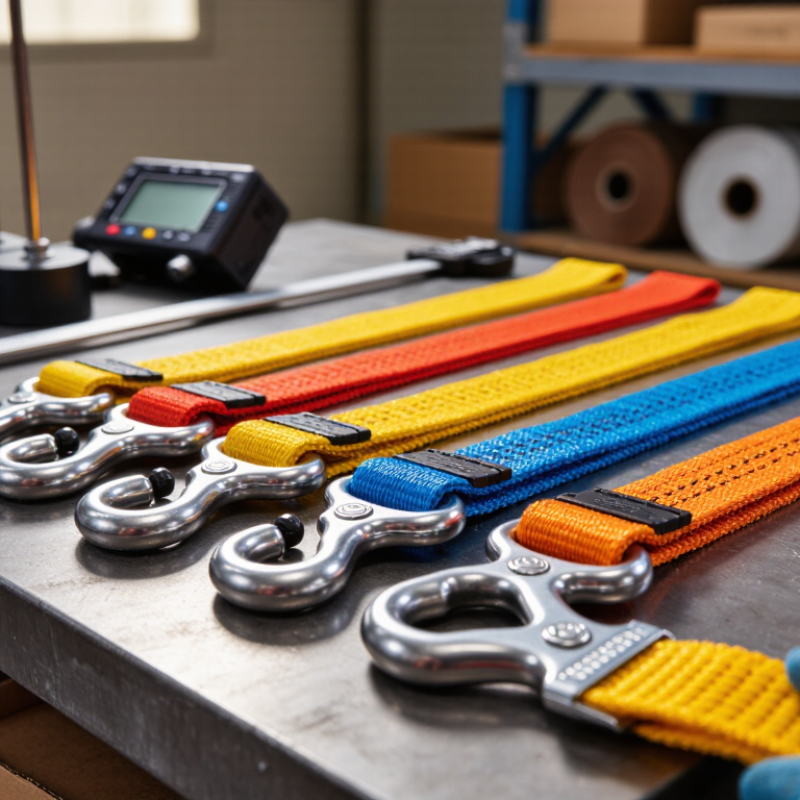
Cargo straps secure loads against movement during road, warehouse, and intermodal transport. They commonly hold palletized boxes, timber, machinery, and building materials in place. A strap usually works with an anchor point and a tensioning device, such as a ratchet. The fit matters. A strap that is too loose can let cargo shift; one routed over a sharp edge may suffer damage. Operators should check the strap’s working load limit, inspect webbing and fittings, and protect contact points where needed.
The scale of freight helps explain why securement matters. The U.S. Department of Transportation’s Bureau of Transportation Statistics, in Freight Facts and Figures 2023, reports that U.S. freight shipments totaled about 19.7 billion tons in 2022. That figure covers many modes and goods, not just loads secured with straps, but it shows the volume moving through supply chains. In practice, straps are useful when loads need restraint without bulky equipment, especially on flatbed trailers and during short-term staging. Small details count: a twisted strap, a worn ratchet, or an overlooked edge can weaken a setup. Checks can be rushed, and that is worth reflecting on. A quick pull is not a full inspection.
China’s cargo strap supply industry is organized around a network of material producers, component makers, and finished-goods factories. Polyester yarn is woven into webbing, then paired with hardware such as ratchets, hooks, and buckles. Some suppliers handle most stages in-house. Others rely on nearby workshops for sewing, metal forming, or packaging. The arrangement can make production flexible. It can also make quality less consistent.
Factories often specialize by product type, load range, or order size. A webbing-focused producer may offer several widths and colors, while an assembly workshop adds stitching and hardware. Export-oriented suppliers commonly provide samples, specification sheets, and inspection records. These details help buyers compare products beyond price. Ask how breaking strength is tested, and whether stated figures refer to the strap alone or a complete assembly. Small distinctions matter.
The supply chain is practical, but not perfectly transparent. A trading company may coordinate several factories, which can simplify communication yet obscure where each component comes from. That is not automatically a problem. Still, buyers should confirm production locations, material specifications, stitching patterns, and batch traceability before placing large orders. Requesting a sample under realistic conditions can reveal issues that a polished catalog misses. Sometimes, the paperwork looks better than the product.
When evaluating Chinese cargo strap suppliers, begin with verifiable load ratings, not catalog claims. The U.S. Federal Motor Carrier Safety Administration’s cargo-securement rules require aggregate working load limit to equal at least half the cargo’s weight. That figure is a useful reminder: buyers should check how a supplier calculates and labels working load limit, rather than relying on breaking strength alone. Ask for test reports identifying strap width, material, stitching, buckle, and test method. A tidy certificate is not enough if it covers a different product.
Check production consistency on the factory floor. Compare sample stitching, edge finishing, and ratchet operation with bulk-order specifications; record the batch number and retain a reference sample. Request evidence of routine tensile testing and calibration records for test equipment. For shipments exposed to rain or salt, ask how webbing and metal fittings are assessed for moisture and corrosion. The details matter. Confirm inspection frequency, defect handling, lead times, and whether changes to yarn or hardware trigger retesting. A supplier may answer quickly, yet still provide vague documents. That deserves follow-up. Third-party audits and clearly traceable test records help, but neither replaces checking the actual strap against its stated rating and intended use.
What Are the Top China Cargo Straps Suppliers?
How to Verify Supplier Quality, Compliance, and Production Capacity
Choosing a China cargo straps supplier requires evidence, not polished catalog photos. UNCTAD’s Review of Maritime Transport 2024 reports that maritime trade grew 2.4% in 2023, underscoring the importance of dependable cargo handling as freight volumes rise. Ask suppliers for traceable test reports showing strap material, width, breaking strength, and batch identification. Check that rated capacity is clearly marked and supported by testing against relevant industry standards, such as WSTDA guidelines. Paperwork alone is not proof. Request a recent test record and match its batch number to a sample strap.
Verify production capacity on the factory floor, or through a qualified independent audit. Look for functioning tensile-testing equipment, calibration records, documented inspection steps, and enough trained staff for the quoted order. Ask for monthly output, current lead times, and evidence that the supplier can maintain quality during peak demand. A small trial order can reveal inconsistent stitching, rough edges, or labels that detach after handling. It is easy to overvalue a neat audit file; I would also check how workers record defects on an ordinary production day. Supplier claims deserve a second look. Compare test results, certifications, and shipment records, and confirm that the named factory—not just a trading office—will make the straps.
How to read this chart: Lashing Capacity (LC) is expressed in daN on cargo-lashing labels. The bars show unit conversions only: 1 daN = 10 N = 0.01 kN. These example values are not supplier ratings or product recommendations. When assessing a supplier, verify product labels and test documentation against the applicable standard, such as EN 12195-2, and confirm that quoted capacity matches the intended use.
China cargo strap suppliers serve different needs, from small workshops producing basic tie-downs to established manufacturers offering tested assemblies and custom specifications. The right supplier depends on your load, transport conditions, and inspection process—not just price. For palletized goods moving in dry conditions, standard polyester webbing with clearly rated hardware may be sufficient. For repeated use or rough handling, ask about stitching patterns, buckle strength, and batch traceability. Details matter.
Some suppliers focus on broad product catalogs and quick availability; others specialize in custom lengths, edge protection, or complete lashing systems. Request product specifications and sample straps before placing a large order. Check that the stated working load limit is clearly distinguished from breaking strength. A neat label is not proof of performance. I’ve seen buyers overlook buckle compatibility, then struggle to secure loads evenly.
Tips: Share the cargo weight, packaging shape, and likely weather exposure with suppliers. Ask how ratings are verified and how damaged straps should be identified. Keep one sample for comparison during future deliveries. Supplier claims can vary; verify the details that matter to your operation.