2026 Top Cryo Chiller Types for Global Buyers
Choosing a Cryo Chiller is not simply a matter of chasing the lowest temperature on a specification sheet. Global buyers must match cooling capacity to the actual heat load, process temperature, operating schedule, and site conditions. A system that performs well in a laboratory may struggle beside a warm production line or in a dusty plant room. Small details matter: hose length, access for maintenance, and temperature stability during peak demand.
Cryogenic engineering expert Dr. Steven W. Van Sciver is a relevant authority in this field. No verified, attributable quotation from him was provided, so this guide will not invent one. Instead, its editorial principle is: “Choose for the heat load and operating conditions—not the headline temperature.” It is a practical reminder, not a quotation from Dr. Van Sciver.
This guide compares major Cryo Chiller types for buyers evaluating performance, efficiency, and service needs in 2026. It considers the differences between compressor-based and other cooling approaches, along with factors such as control accuracy, footprint, noise, and maintenance access. Not every option suits every facility. Specifications also deserve careful reading; nominal capacity alone can hide important operating limits. Buyers should verify performance at their required conditions and ask suppliers for clear documentation. That extra check takes time. It can prevent a costly mismatch.
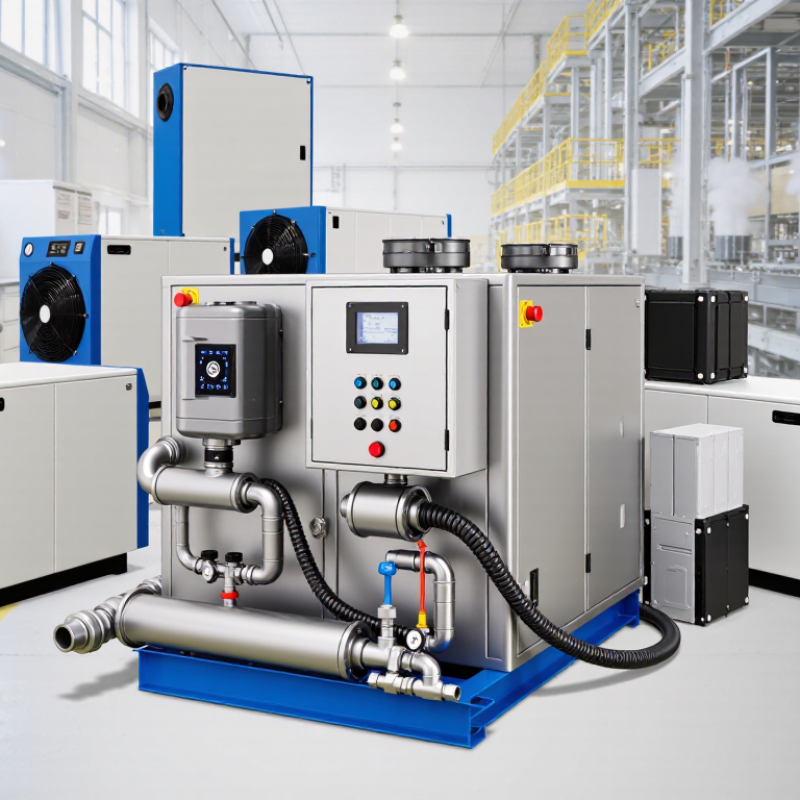
What Cryo Chillers Are and How They Produce Low Temperatures
A cryo chiller removes heat from equipment or a process and transfers it elsewhere, keeping a circulating fluid at a controlled low temperature. The term is not used consistently: some suppliers apply it to chillers below standard industrial ranges, while cryogenic systems operate at much lower temperatures. The Cryogenic Society of America commonly places cryogenic temperatures below 120 K, or about −153°C. That distinction matters. NIST’s Chemistry WebBook lists nitrogen’s normal boiling point as 77.34 K (−195.81°C), illustrating how far cryogenic operation sits below ordinary cooling.
Most systems move heat through a refrigeration cycle. A compressor raises the working gas’s pressure, a heat exchanger releases heat, and an expansion stage cools the gas. Some designs use Stirling, pulse-tube, or Gifford–McMahon cycles instead. A secondary coolant then carries the cold to a machine, test chamber, or process line. The exact arrangement depends on the target temperature and heat load.
In practice, a stable temperature matters as much as a very low one. Engineers check cooling capacity, temperature uniformity, cooldown time, and heat leaks through insulation and piping. A door opening or warm sample can quickly disturb the setpoint. Yet “cryo chiller” alone does not specify performance. Buyers should compare rated conditions and coolant details, not just the lowest temperature in a brochure. That detail is easy to overlook.
The Main Cooling Technologies Used in Cryo Chillers
“Cryo chiller” can describe several cooling technologies, not one standard machine. Vapor-compression systems suit many moderate sub-zero process loads. They circulate refrigerant through a compressor, condenser, expansion device, and evaporator. For lower temperatures, regenerative cycles are common. Gifford–McMahon units are valued for robust operation, while pulse-tube designs avoid moving parts at the cold end. Stirling coolers offer compact configurations. Joule–Thomson systems cool gas as it expands and may need precooling.
The right choice depends on setpoint, cooling load, vibration limits, and maintenance access. A pulse-tube cold head may suit sensitive instruments; a GM system may better fit steady industrial duty. The boundary is not always neat: systems can combine stages, and labels alone may hide practical differences. The International Institute of Refrigeration’s 2022 report estimates that refrigeration used about 17% of global electricity in 2019. That figure covers refrigeration broadly, not cryo chillers alone, but it underlines why buyers should compare energy use at the required operating temperature.
Tips: Ask suppliers for capacity at your actual setpoint, not only peak capacity. Check cooldown time, heat rejection, service intervals, and vibration data. A small mismatch matters. Review test conditions before comparing figures.
Leading Cryo Chiller Types Available to Global Buyers in 2026
In 2026, global buyers will find several distinct cryo chiller types, each suited to a different temperature range and workload. Two-stage and cascade vapor-compression chillers are common choices for process cooling below the reach of standard water chillers. They use staged refrigeration circuits to manage heat loads and low temperatures. Check the specified operating range, not just the lowest advertised temperature.
For colder, localized cooling, mechanical cryocoolers, including pulse-tube and Gifford–McMahon designs, may suit laboratory instruments and detector systems. These systems can provide stable cooling without a continuous supply of cryogenic liquid, but installation, vibration, and maintenance needs vary. Fit matters. For high-throughput or intermittent cooling, liquid-nitrogen-based systems can cool rapidly, though buyers should account for supply logistics and liquid consumption. Not always the simplest option.
Compare heat-load capacity at the actual setpoint; capacity often falls as operating temperatures drop. Ask for performance data under your expected ambient conditions, plus details on controls, electrical supply, service access, and compatible heat-transfer fluids. Requirements differ by site and application. A polished specification sheet can still leave unanswered questions about startup behavior or recovery time after a door opens. Request those figures before comparing prices.
How Cryo Chiller Types Differ in Performance and Operation
Cryo chiller types are best compared by usable temperature range, cooling capacity, and operating method. Standard vapor-compression units suit many subzero process loads. For lower setpoints, cascade systems use separate refrigerant circuits to manage heat in stages. Pulse-tube and Gifford-McMahon cryocoolers can reach cryogenic temperatures in sealed systems. That difference matters.
Operation changes with the design. A compressor-based chiller typically needs checks for refrigerant condition, airflow, and condenser cleanliness. A cascade model adds another circuit, so service requires attention to both stages. Cryocoolers have fewer moving parts at the cold head, but compressors and vibration isolation still need consideration. Quiet does not mean maintenance-free.
Compare capacity at your actual setpoint, not just a headline rating. Cooling output can fall as the target temperature drops, and room heat, insulation, and door openings affect results. Ask for performance data at the required temperature and ambient conditions. Check voltage, cooling-water needs, service access, and spare-part availability for the installation site. One caution: the most efficient option on paper may not be the easiest to maintain locally. That trade-off deserves a closer look.
2026 Top Cryo Chiller Types for Global Buyers
Approximate cold-end operating temperature ranges by cooling technology (°C)
Lower temperatures require cryogenic systems such as GM or pulse-tube cryocoolers. Vapor-compression systems are generally suited to higher temperature ranges. These indicative ranges vary with system design, load, and operating conditions; compare cooling capacity and efficiency at the required temperature when selecting equipment.
How to Select a Cryo Chiller for an Application and Region
A cryo chiller should match the process, not just its lowest advertised temperature. Map the real heat load, target temperature, required stability, flow rate, and operating hours. A laboratory instrument may need tight temperature control at a modest load; a production line may need fast recovery after repeated door openings. Check the full operating range. Oversizing can waste energy and make control less stable.
Region changes the specification. High ambient temperatures can reduce cooling capacity, while altitude affects air-cooled equipment. Confirm local voltage and frequency, water quality, ventilation, and access to trained service technicians. In coastal or dusty sites, ask about corrosion protection and filter maintenance. ASHRAE’s Handbook—Refrigeration treats load and operating conditions as core refrigeration design inputs. Small details matter. A technically suitable unit can still disappoint when replacement parts take weeks to arrive.
Energy use deserves attention, but compare like with like. The IEA’s Future of Cooling report estimated global electricity demand for space cooling at 2,020 TWh in 2016, potentially rising to 6,200 TWh by 2050 under its baseline scenario. That figure is not specific to cryo chillers; it signals broader cooling pressures. Request performance data at your actual inlet and ambient conditions, then compare part-load efficiency and standby consumption. A neat specification sheet is not enough. I would also verify noise, footprint, and restart behavior on site.
 Skip to content



 English
 Russian
 German
 Spanish
 French
 Portuguese