SUNDI TOOLS
- Copyright © Wuxi Sundi Precision Tools Co.,LTD All rights reserved.
- Site Map
Choosing a Chemicals Defoamer supplier is rarely just a matter of comparing prices. Global buyers need products that control foam without disrupting the process, damaging equipment, or affecting the quality of the finished product. The right choice depends on the application: a wastewater tank, paper machine, coating line, and fermentation vessel can each require different chemistry. Small trials matter. A product that performs well in a supplier’s sample test may behave differently in a plant’s actual water, temperature, and mixing conditions.
This guide introduces ten suppliers for buyers to evaluate, not as a universal ranking. Useful comparisons include product range, technical support, supply consistency, documentation, and experience with the relevant industry. Ask for technical data sheets and safety data sheets, and confirm that products meet the requirements of your destination market and intended use. Price alone misleads. Check dosage, handling needs, and performance over a full operating cycle; a low-cost option may need more frequent addition. Practical details count, too, such as delivery lead times and whether a supplier can help troubleshoot persistent foam. Supplier claims deserve careful review, and independent plant trials are valuable where feasible. No supplier is best for every process, and this overview cannot replace application-specific testing. Use it as a starting point for focused questions and a more reliable shortlist.
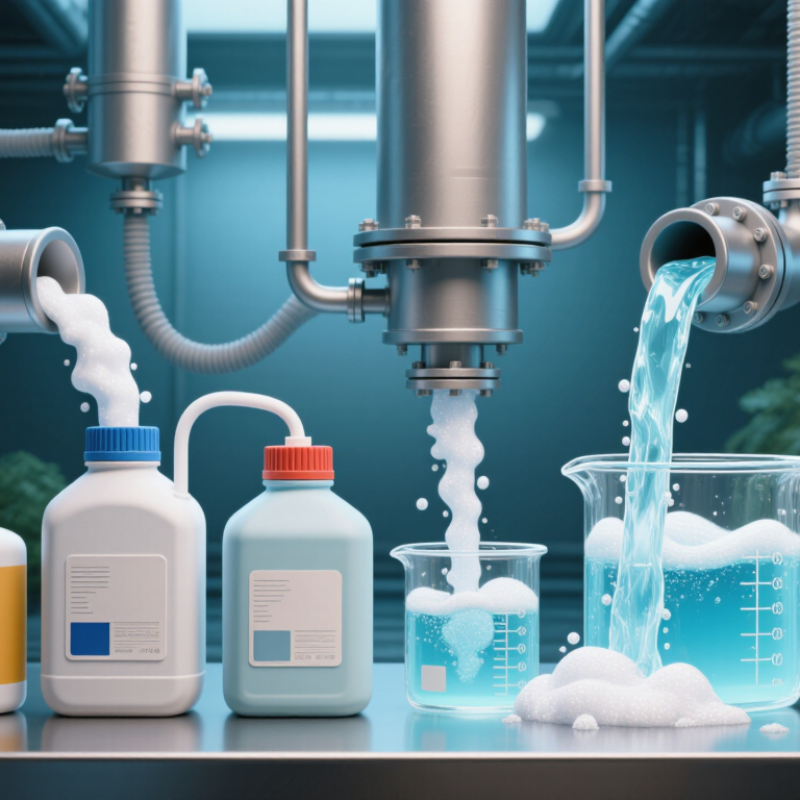
Defoamer chemistry shapes how a product behaves in a real process, not just how quickly foam disappears. Silicone-based formulations can work at low dosages and often spread rapidly across foam films. In a paper-coating line, operators may notice fewer persistent bubbles after a small adjustment. But silicone can cause surface defects or interfere with later coating steps when compatibility is poor.
That matters. Check the process, not only the foam.
Mineral-oil defoamers can suit systems where oil droplets disperse well and residue is acceptable. Water-based formulations may be easier to handle in aqueous processes, though storage stability and temperature can affect performance. None is universally best. A practical supplier discussion should cover active content, recommended dosage, mixing method, and performance across operating temperatures.
Ask for technical data and run a controlled trial using the actual process water or formulation. A clear beaker test helps, but it cannot reproduce every pump, shear rate, or residence time. I would treat trial results as useful evidence, not a guarantee.
The global defoamer supplier landscape is broad, but a useful shortlist should reflect chemistry and application, not just company size. Buyers may encounter manufacturers focused on silicone, mineral-oil, polyether, water-based, or powder formulations. Others build their ranges around pulp and paper, wastewater treatment, coatings, construction materials, or food processing. These ten supplier profiles represent different capabilities, not a verified ranking of named companies.
Performance depends on the process. A formulation that controls foam in a wastewater tank may cause surface defects in a coating line. Ask suppliers for technical data, recommended dosage, storage conditions, and application-specific test results. Then trial samples under actual temperature, pH, and mixing conditions. Small details matter. A drum stored beside a hot loading bay may behave differently from one kept in a cool warehouse.
Global reach also varies. Some manufacturers offer regional technical teams and local stock; others rely on distributors, which can affect lead times and troubleshooting. Check batch consistency, documentation, and support for your operating region before comparing prices. One imperfect point: supplier claims can look precise, while plant conditions rarely are. Keep a simple trial log, including foam height and any impact on product quality.
Choosing a defoamer starts with the process, not a supplier ranking. In pulp production, foam can disrupt washing, drainage, and paper formation. A candidate must work in the actual furnish, where temperature, pH, and dissolved solids affect performance. Check whether it disperses quickly and leaves deposits or defects on the sheet. Small trials matter.
Wastewater systems need a different balance. Foam in an aeration basin may signal surfactants or changing biological conditions, so record where it forms and how long it lasts. A defoamer should control surface foam without unnecessarily affecting oxygen transfer or downstream treatment. Watch the basin over several operating cycles. One quick observation is not enough.
Coatings bring compatibility concerns. An additive that knocks down foam in a beaker may cause craters, poor leveling, or gloss changes in the finished film. Test it in the complete formulation and at the intended dose. Food processing calls for careful review of intended use, process temperature, and applicable food-contact requirements. Confirm documentation with the supplier. Fit matters more than a broad claim. There is rarely one best choice for every line, and early test results can mislead when production conditions shift. Keep a simple record of dosage, foam behavior, and any quality changes.
A practical overview for buyers comparing options across pulp and paper, wastewater, coatings, and food processing.
Bars indicate chemistry families commonly used in each application, not market share or a performance ranking. Actual suitability depends on process conditions, formulation requirements, and applicable food-contact regulations.
For global buyers comparing defoamer suppliers, ASTM D1173 offers a useful, controlled foam-height check. Record the initial foam height and the height after five minutes. A tall initial column signals strong foam generation; a large drop by five minutes suggests faster collapse. Low readings at both points may indicate better control, but only under the tested conditions. Keep concentration, water quality, temperature, and mixing consistent across samples. Otherwise, the comparison gets fuzzy.
There is a caveat. ASTM D1173 primarily measures the foaming properties of surfactant solutions; it is not a universal defoamer pass-or-fail test. Ask suppliers for the full method, blank-control results, dosage, and repeat measurements—not just a single attractive figure. Grand View Research’s defoamers market report estimated the global market at about US$5 billion in 2023, reflecting a broad field of applications and formulations. That scale makes comparable evidence valuable. Small differences matter. A supplier’s five-minute result may look strong in clean lab water, yet change in a process with salts, heat, or pulsing flow. Check the exact conditions. One limitation remains: lab foam is not always plant foam.
When comparing chemical defoamer suppliers, look beyond the quoted price per kilogram. Ask for recommended dosage ranges and the conditions behind them, including temperature, pH, and foam type. A product that works at 20 parts per million in a bench test may need more in a high-shear production line. Small trials matter.
Compatibility deserves equal attention. Check whether the defoamer disperses in the process fluid and whether it affects coating quality, filtration, or downstream treatment. Request a sample for a controlled plant trial, then record addition point, mixing time, and foam response. A clear jar is useful, but not decisive. Real systems are messier.
Review current safety data sheets, technical data sheets, and batch certificates before approval. Confirm that documents match the destination market and intended application; requirements can differ. Ask how the supplier controls raw-material changes and investigates out-of-spec batches. Capacity is practical, too: compare routine output, lead times, shipment options, and contingency stock. One overlooked question is whether urgent orders can be supported during seasonal demand. A polished presentation does not prove dependable supply, and my own checklist would still miss something. Keep trial records and revisit performance after process changes.
| Supplier capability profile | Common applications | Indicative starting dose* | Compatibility points to evaluate | Compliance documents to request | Typical supply-capacity consideration |
|---|---|---|---|---|---|
| 1. Silicone-emulsion specialist | Waterborne coatings, adhesives, latex, and process liquids | About 0.05–0.5 wt% of the batch; confirm by testing | Check dispersion stability, surface defects, recoatability, and effects on gloss or adhesion. | Current SDS, technical data sheet, ingredient or regulatory declarations, and application-specific test results. | Confirm emulsion shelf life, freeze-thaw handling, packaging sizes, and available production locations. |
| 2. Mineral-oil defoamer supplier | Wastewater treatment, paper processes, and selected water-based formulations | About 0.1–1.0 wt% of the batch; optimize against foam and residue | Assess oil separation, deposits, downstream treatment effects, and compatibility with surfactants. | SDS, composition or restricted-substance statement, applicable wastewater-use information, and transport details. | Ask about bulk and drum availability, regional storage, and continuity of base-oil sourcing. |
| 3. Polyether-based defoamer supplier | Fermentation, cleaning systems, and aqueous industrial processes | About 0.05–0.5 wt% of the batch; process trials are essential | Review water solubility, temperature response, residual effects, and suitability for the process stage. | SDS, technical data, residual or extractables information where relevant, and any required food-contact or process-use statements. | Verify grade consistency, lead times, and the supplier’s ability to support controlled process dosing. |
| 4. Silicone-free polymeric defoamer supplier | Coatings, inks, adhesives, and applications sensitive to silicone residues | About 0.1–1.0 wt% of the batch; vary with resin and process conditions | Check compatibility with the binder, pigment wetting, cratering, recoating, and printability. | SDS, silicone-free declaration with defined scope, restricted-substance information, and product-specific application data. | Confirm whether the supplier can provide multiple grades and maintain consistent performance across batches. |
| 5. Powder-defoamer supplier | Dry-mix mortar, cementitious products, and powdered detergents | About 0.1–1.0 wt% of the dry mix; test at the intended mixing conditions | Evaluate dispersion, water demand, setting behavior, strength development, and powder flow. | SDS, technical data, batch specification, and applicable construction-product or chemical regulatory declarations. | Check moisture control, packaging protection, pallet configuration, and capacity for seasonal demand peaks. |
| 6. Food-process defoamer supplier | Food and beverage processing, where legally permitted and suitable for the use | No universal dose; follow the applicable authorization, label, and validated process instructions | Confirm permitted use, process stage, removal or carryover conditions, and sensory impact. | SDS plus jurisdiction-specific food-use status, purity specifications, allergen/GMO statements where relevant, and traceability records. | Review audit readiness, lot traceability, change-control procedures, and continuity of compliant raw materials. |
| 7. Pulp-and-paper process defoamer supplier | Pulping, stock preparation, paper-machine systems, and wastewater circuits | Set by mill trials; process dosing is often controlled by flow or system conditions rather than batch wt% | Assess performance at actual pH, temperature, water hardness, furnish, and retention conditions; check deposits and sheet effects. | SDS, product specification, applicable process-chemical declarations, and evidence relevant to customer or mill requirements. | Confirm site-service coverage, bulk delivery options, emergency stock, and ability to support continuous operations. |
| 8. Construction-chemicals defoamer supplier | Cement admixtures, grouts, repair mortars, and gypsum-based products | About 0.05–0.5 wt% of the formulation; validate against the complete admixture system | Check air content, workability, setting time, strength, and interactions with other admixtures. | SDS, technical data, relevant test methods, and declarations required for the target market and product type. | Evaluate bulk-powder or liquid logistics, regional warehousing, and ability to supply during high-volume building seasons. |
| 9. Detergent and home-care defoamer supplier | Laundry, dishwashing, industrial cleaning, and other formulated cleaning products | About 0.05–0.5 wt% of the formulation; adjust to surfactant system and use conditions | Test foam control, clarity, storage stability, cleaning performance, and compatibility with fragrance and surfactants. | SDS, ingredient and regulatory declarations, biodegradability information where relevant, and market-specific labeling support. | Check capacity for recurring formulation demand, packaging flexibility, and supply coverage in the target sales regions. |
| 10. Metalworking-fluid defoamer supplier | Water-miscible metalworking fluids, coolants, and industrial circulation systems | About 0.05–0.5 wt% of the concentrate or use-fluid, as appropriate; specify the dose basis | Check emulsion stability, filtration, corrosion protection, residue, and compatibility with the complete fluid package. | SDS, technical data, applicable occupational and chemical regulatory declarations, and material-compatibility results. | Assess regional technical support, pack-size range, lead-time reliability, and supply continuity for plant operations. |
| Evaluation note: These are non-company-specific capability profiles, not a verified ranking or claims about named suppliers. Dose ranges are indicative screening levels, not universal recommendations; actual dosage depends on formulation, process conditions, and the basis used. Verify product-specific performance, legal status, documentation, and supply capacity directly with each supplier before qualification. | |||||